
A $36 million renovation of the Central Pavilion at the Giardini della Biennale in Venice, Italy, has finished on schedule—a few months before the May 9 opening of the 61st International Art Exhibition of the Venice Biennale curated by Koyo Kouoh.
La Biennale di Venezia’s special projects department, directed by architect Arianna Laurenzi and engineer Cristiano Frizzele, led the renovation in tandem with architect Fabio Fumagalli, BUROMILAN, Labics, and others.
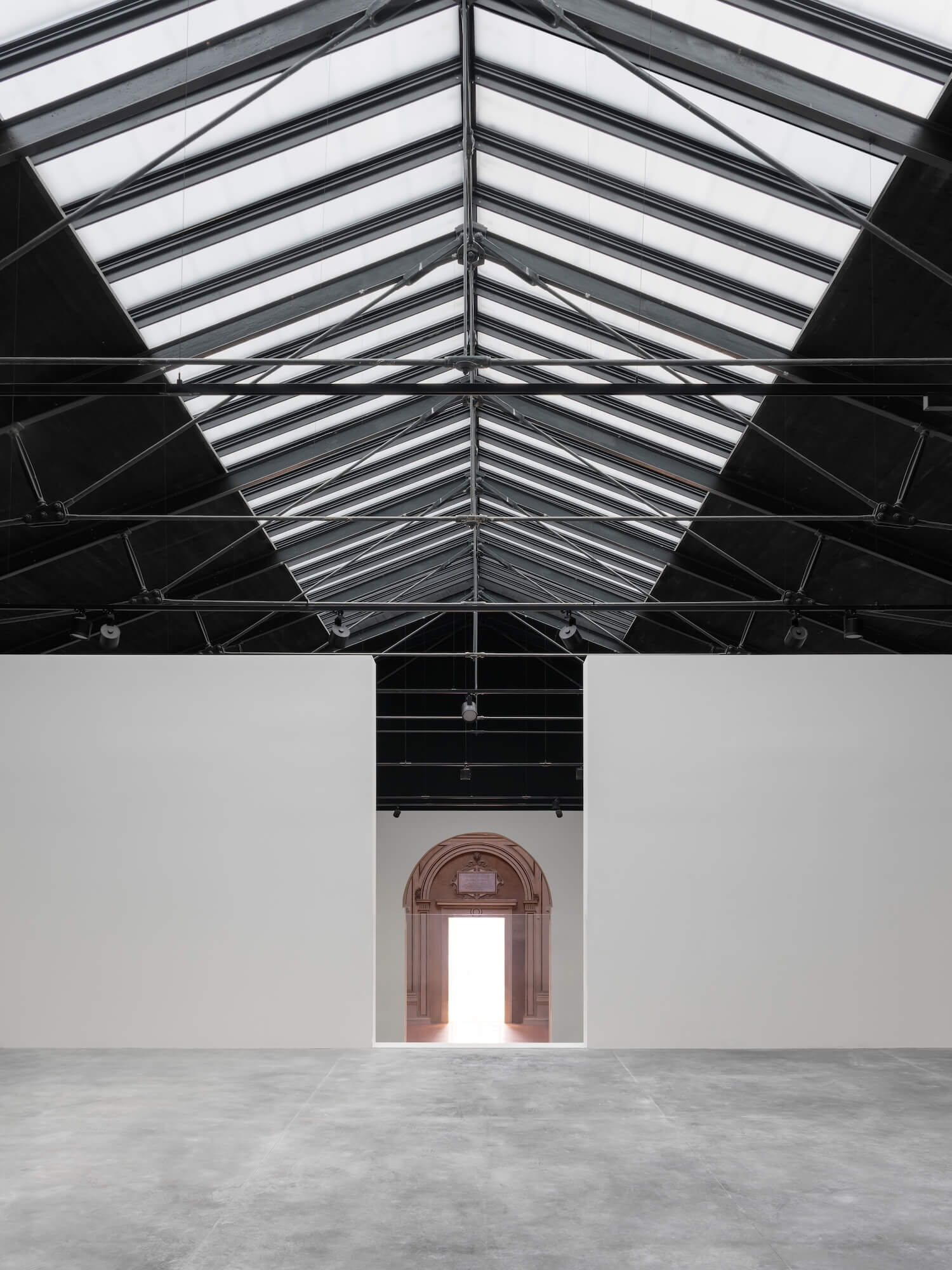
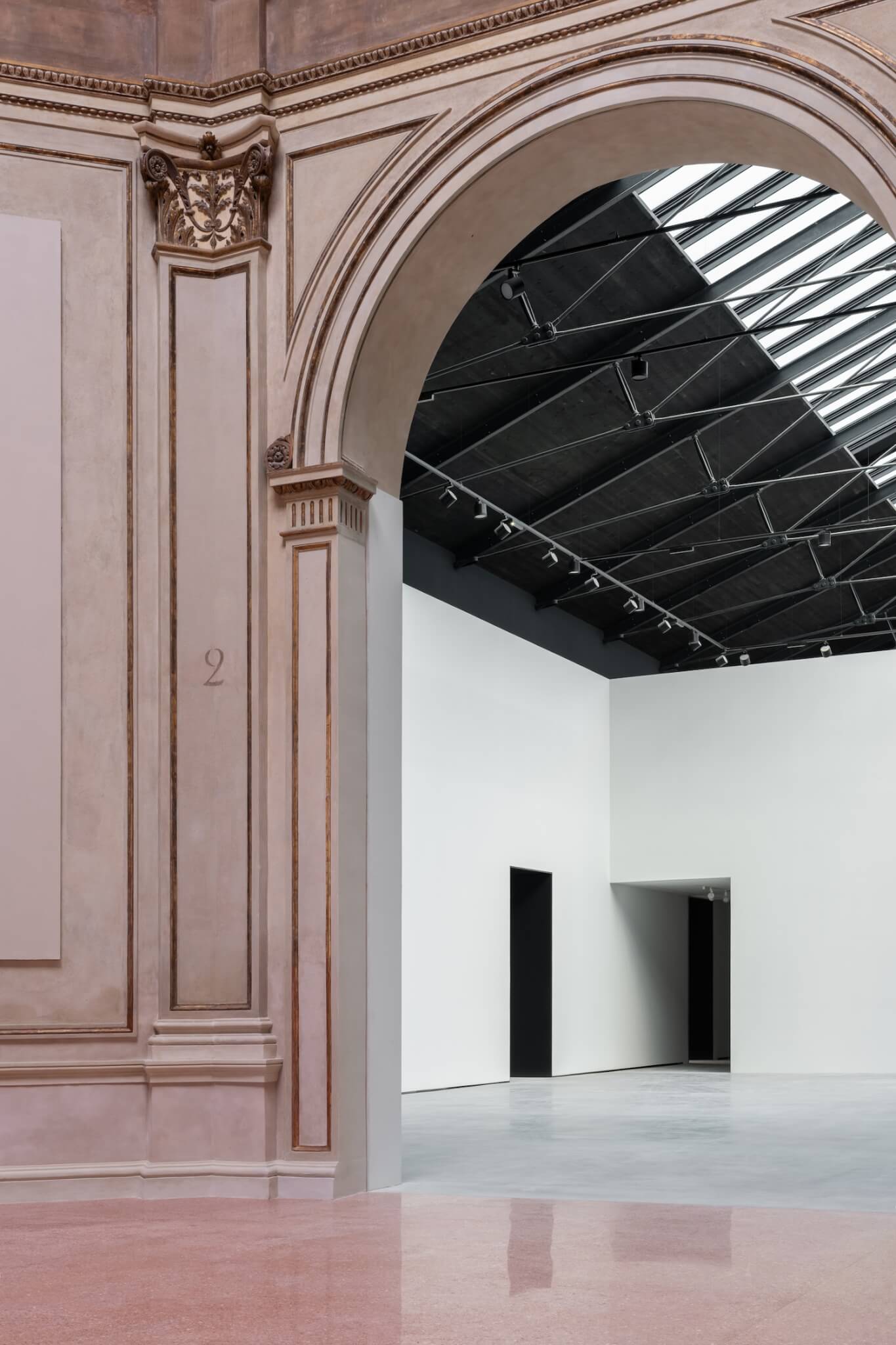
The renovation entailed reorganizing exhibition spaces to improve legibility and accessibility, among other upgrades. The goal was to redefine “relationships, sequences and connections” within the historic building, the La Biennale said in a statement.
The central, accessible core of the Central Pavilion, the Sala Chini, is flanked by a new bookshop, cafe, educational room, and technical spaces.
Exhibition spaces were upgraded to become “neutral and flexible, veritable white boxes,” ideal backdrops for temporary installations and exhibitions. Technical systems were hidden behind new walls.
Original window fixtures designed by Carlo Scarpa were restored and reinstalled. Sala Brenno del Giudice was redesigned based on plans from 1928. Openings onto the terrace parallel with the canal have been reinstated.
Two new structures built outside the Central Pavilion take cues from Venetian roof terraces, altane—deck-like structures for lounging, hanging laundry to dry, and bleaching hair.
Designers infused altane features into the new pavilion structures that shade and shelter dining space for the cafe. They consist of thin wood pillars crafted out of charred laminated wood and X-LAM panels.
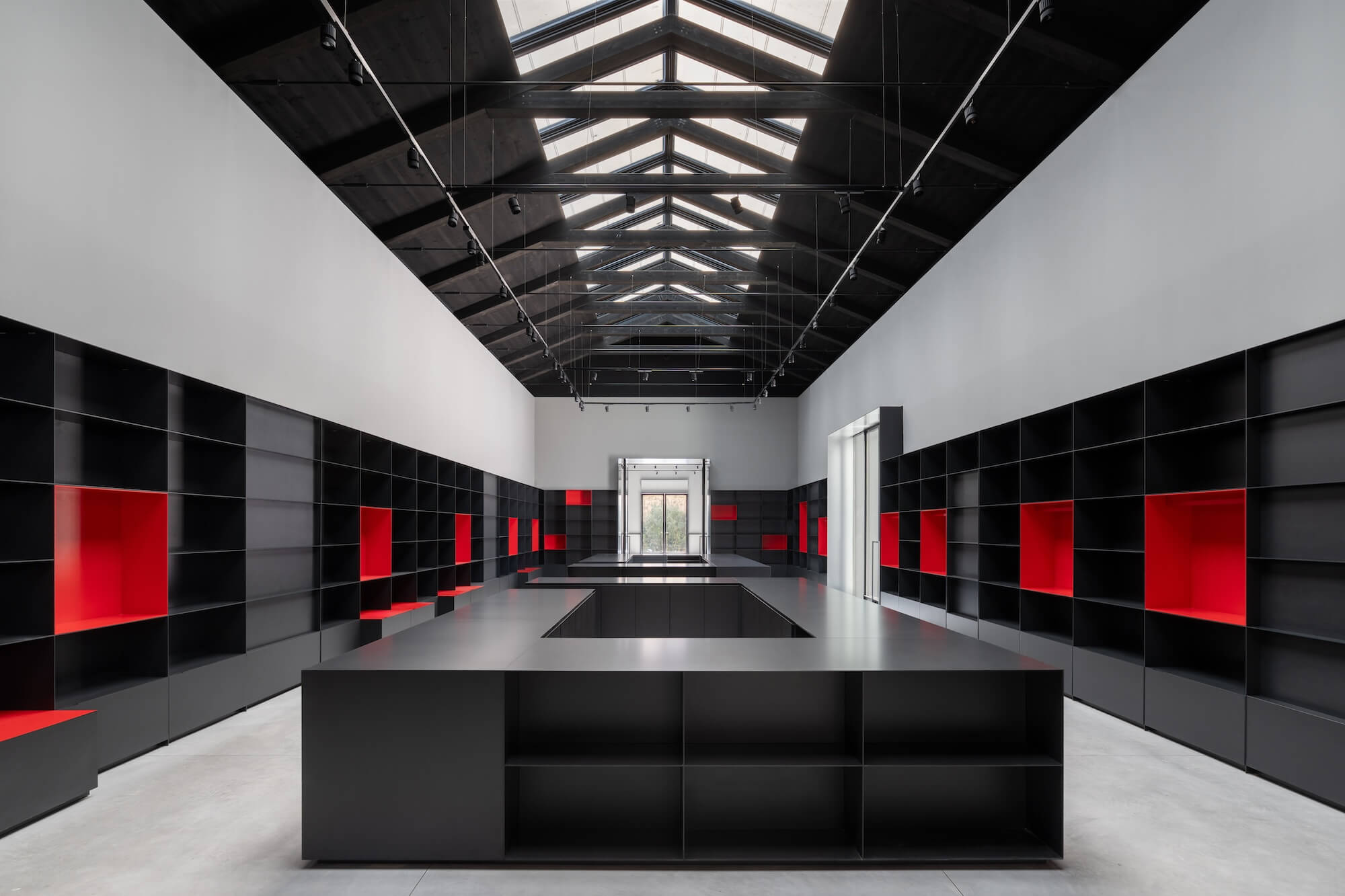
The interior of the bookshop was fitted out with sleek black and red shelving. The units are fixed to the wall, appearing almost like art objects. At the center of the space is a boxy counter for displaying products.
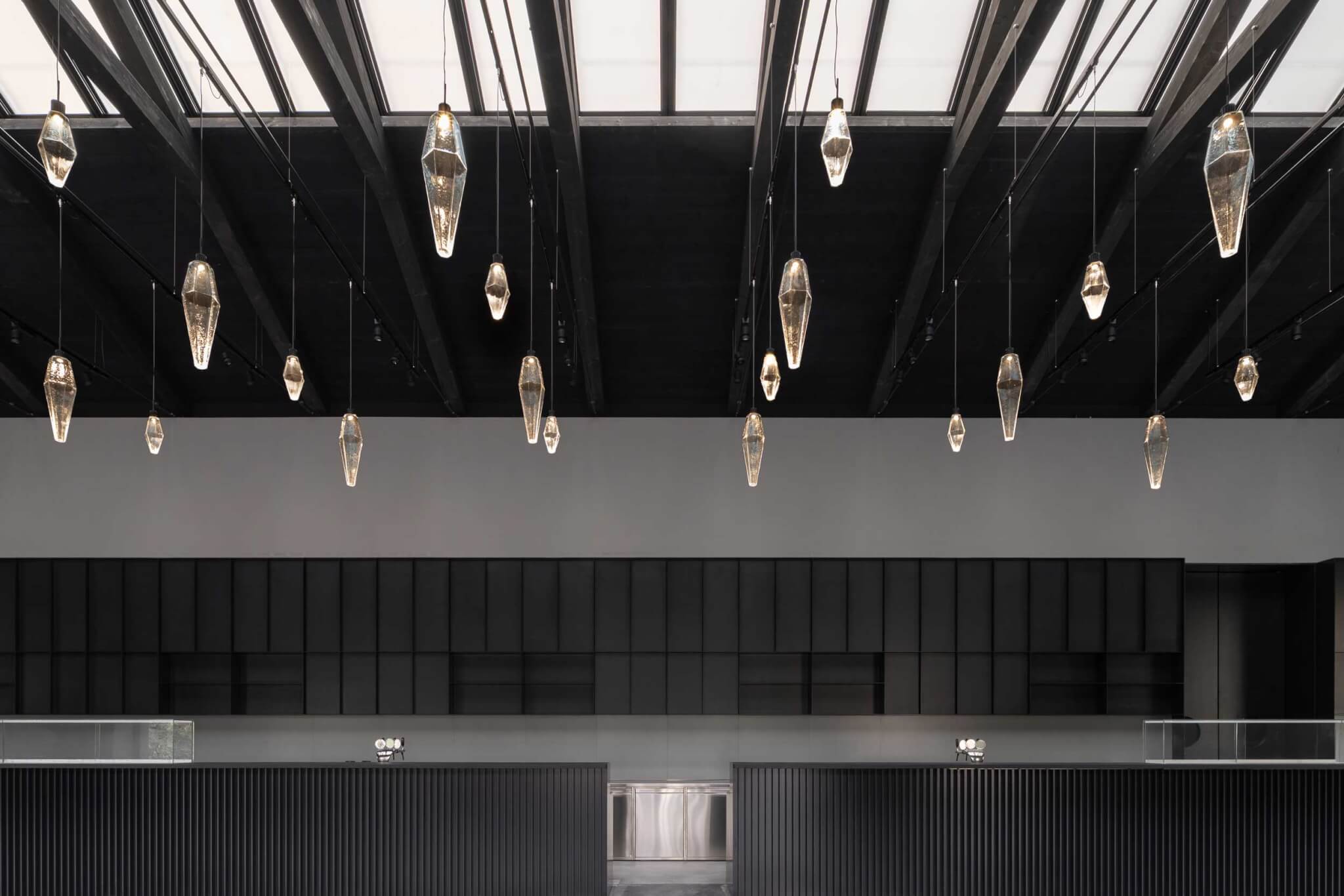
A black palette was also applied to the cafe space. Here, a counter was faced with a fluted surface. Black cabinets hung on the wall mimic the counter’s orthogonal profile.
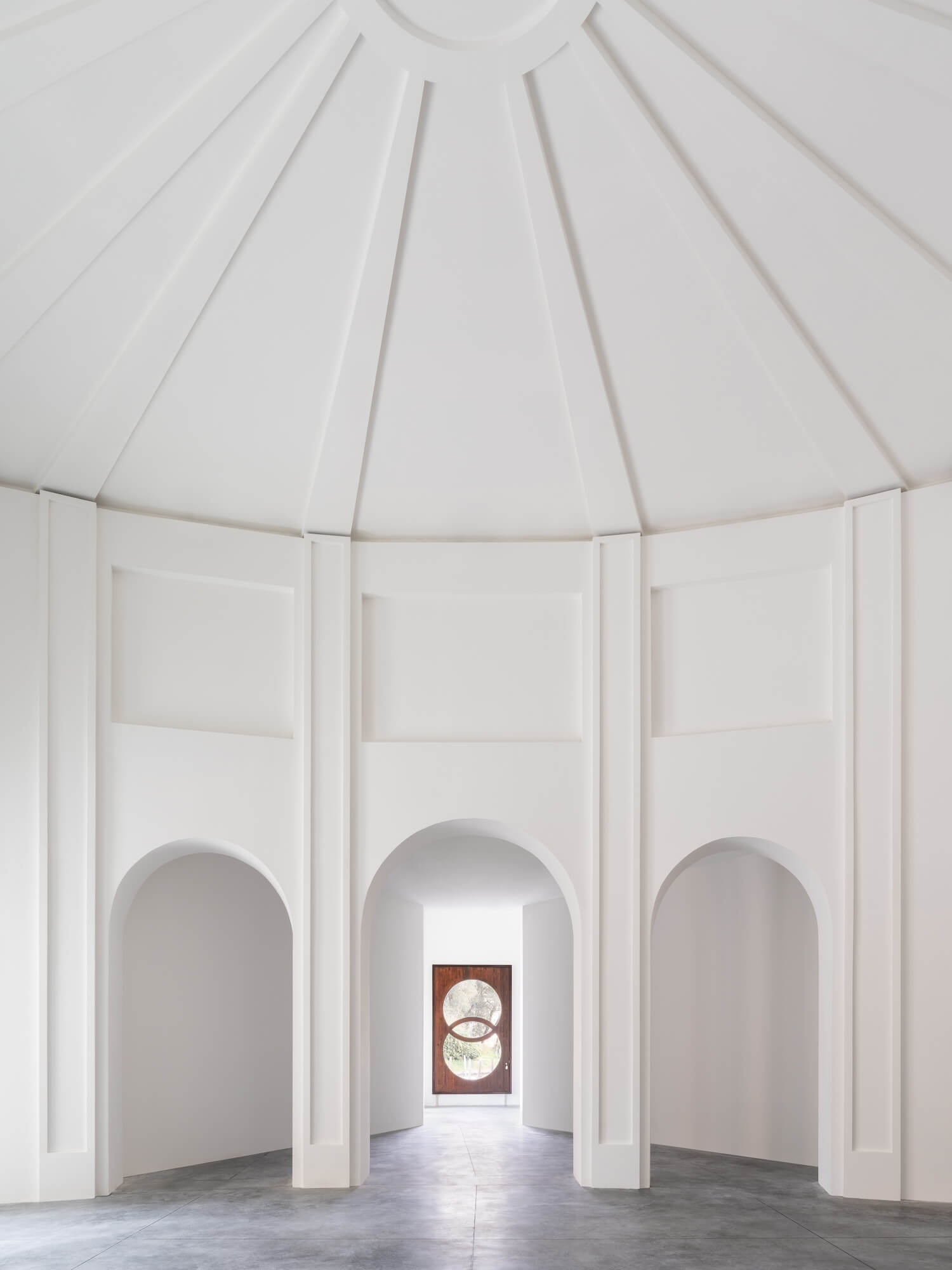
The Central Pavilion itself is a palimpsest of sorts, layered onto over multiple decades. Architect Gian Antonio Selva and municipal engineer Enrico Trevisanato designed and completed it in 1895. The facade was designed by painter Marius De Maria.
In 1909, Galileo Chini installed a fresco in the Central Pavilion’s dome of the octagonal entrance hall. The facade was subsequently modified in 1914 by Guido Cirilli. In 1932 Duilio Torres transformed the building into the official Italian Pavilion.
More built and unbuilt propositions for the Central Pavilion followed throughout the 20th century by Scarpa, Ernesto Basile, Daniele Donghi, Gio Ponti, Louis Kahn, and Francesco Cellini. The building was repurposed as the Central Pavilion in 2009.
After this latest renovation, La Biennale said in a statement the design team relied on “a stratigraphic approach to the building’s history,” and that the project “enhanced the serial and essential nature of the architecture, preserving the memory of the different phases of construction but stripping it of all accretions and incongruous elements.”
The project team is now aiming for LEED Gold certification.
→ Continue reading at The Architect's Newspaper

