
Christopher Payne’s exhibition Made in America is the first large-scale photography show in the history of Cooper Hewitt. On view through September 27, the show is offered as a celebration of the United States’s 250th birthday. It includes more than 70 photographs by Payne, including newly commissioned work for the show. Payne also narrated the audio guide and is the subject of a short documentary film about his work, which plays in one of the galleries.
Payne studied architecture and worked as an architect before becoming a full-time photographer. This trajectory influenced how he sees the built environment. Last year, AN commissioned Payne, who is represented by Esto, to document the New York Sign Museum and to showcase the talent of New York’s model makers. Below, he discusses the Cooper Hewitt exhibition and his work with AN’s editor in chief Jack Murphy.
AN: What was your trajectory from working architect to professional photographer?
Christopher Payne (CP): My interest in photography began when I was an architecture student, working for the Historic American Engineering Record (HAER), an agency within the National Park Service entrusted with documenting the nation’s industrial heritage. After college and during grad school, I had the opportunity to produce measured drawings of cast iron bridges, dams, and grain elevators, living in remote parts of the country that I found interesting precisely because they were not typical tourist destinations. These experiences instilled in me a deep appreciation of American history, technology, and ingenuity. I also got to work alongside some great HAER photographers who transformed these humble structures into architectural masterpieces. It was a skill I envied, though at the time I didn’t realize it would become my calling.
When I moved to New York I embarked on my own personal HAER project, documenting the original direct current substations that once provided power to the subway system. At first, I thought I would produce a series of architectural drawings showing how the substations worked. To help complete the drawings at home, I took scouting shots, but soon I realized I enjoyed making the pictures more than the drawings, so I bought a 4×5 view camera. By that point I had been around enough large-format photographers to feel I could teach myself, with some help of course!
Many of the substations were abandoned or in the process of being decommissioned, but once I was permitted access I could come and go as I pleased. They became my laboratory where I learned how to use the camera and lights. I remember my friends thought I was crazy for wanting to spend the weekend inside these decrepit structures, but I felt like the luckiest person in the world.
I continued to work in various architecture firms until the 2008 financial crash. By then I was well along with my second photography book, Asylum, the result of seven years of documenting abandoned state psychiatric institutions across the country. Like my substation book, it was a typological study: These were buildings designed and constructed at a particular time in history for a single purpose.
While the grand architecture of the asylums first attracted my attention, it was their operation as self-sufficient communities—where everything of necessity was produced on site, like food, water, power, and clothing—that held my fascination and kept me coming back. After I finished Asylum, I discovered an old yarn mill in Maine that reminded me of the state hospital workshops. While those places had long been abandoned, this mill was still functioning like a scene out of a Lewis Hine photograph from a century ago—minus the child labor. I returned to the mill several times and, from conversations with employees, I learned of other mills around New England, hold outs of a once dominant industry that has now moved overseas. From textiles I moved on to pianos, pencils, and newspapers, long-term projects that opened doors to editorial work and commercial commissions.
(Christopher Payne)
How do you build trust with these facilities and their operators?
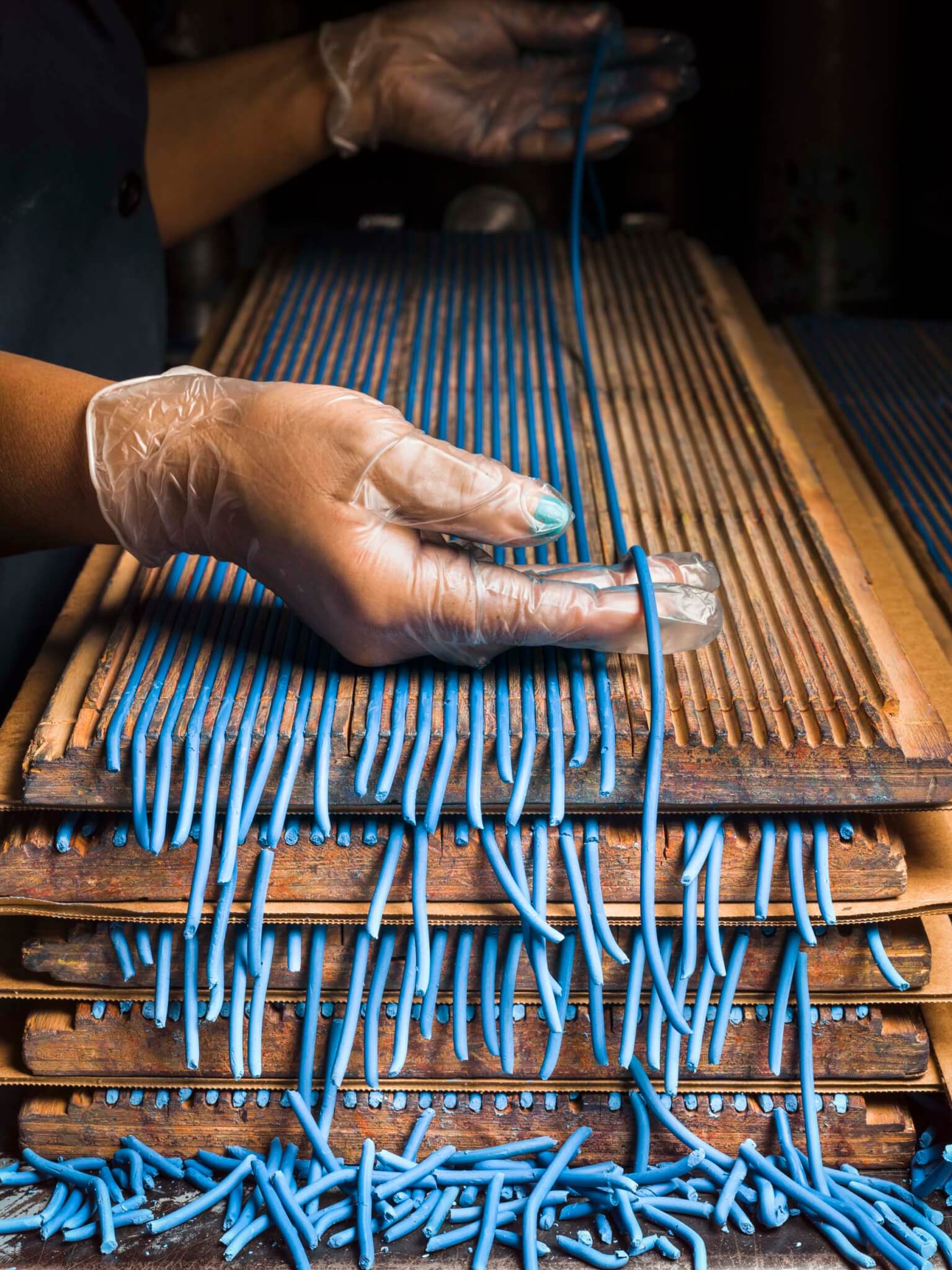
CP: Every company is wary of letting photographers in because they don’t want to divulge proprietary information, nor do they want to be portrayed negatively or as outdated, as is often the case with older factories. It took me five years to win the trust of the owners of General Pencil and several years to get into the New York Times printing plant. Even with access there are always restrictions. At Electric Boat, where nuclear submarines are made for the U.S. Navy, 95 percent of what I saw was top secret. The pictures I wanted to make exist only in my mind.
Once you’re in, how do you find the shots you like?
CP: The informal approach to my long-term personal projects like the Steinway piano factory and General Pencil, where I could let things evolve organically over months and even years, is not possible when I’m on an editorial deadline, where I might have only one or two days to get everything I need. I try to do as much research and planning as I can, but things always change once I’m on the factory floor: A manufacturing line might be down, the desired product or color isn’t in the queue, the person I want to photograph is out sick, etc.
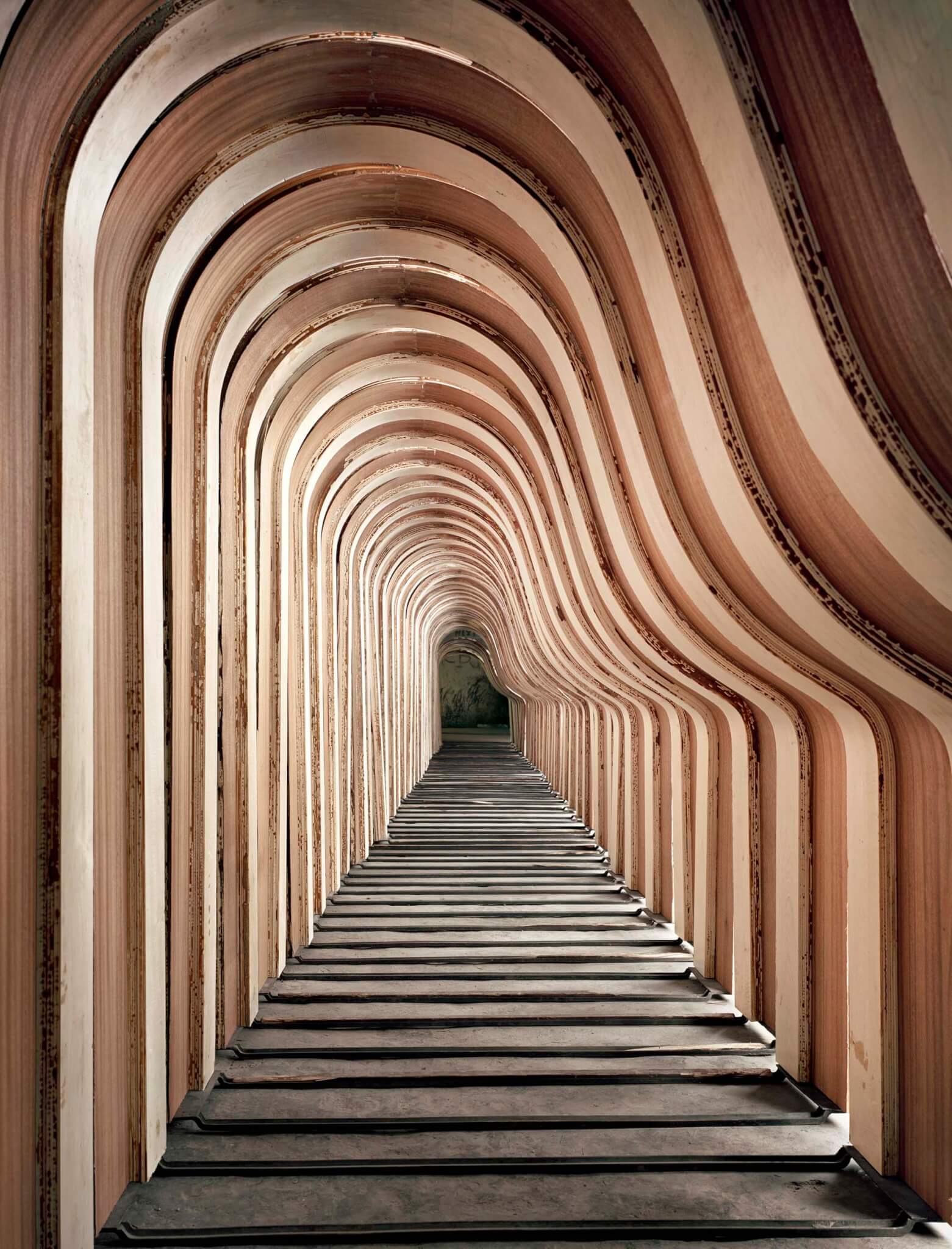
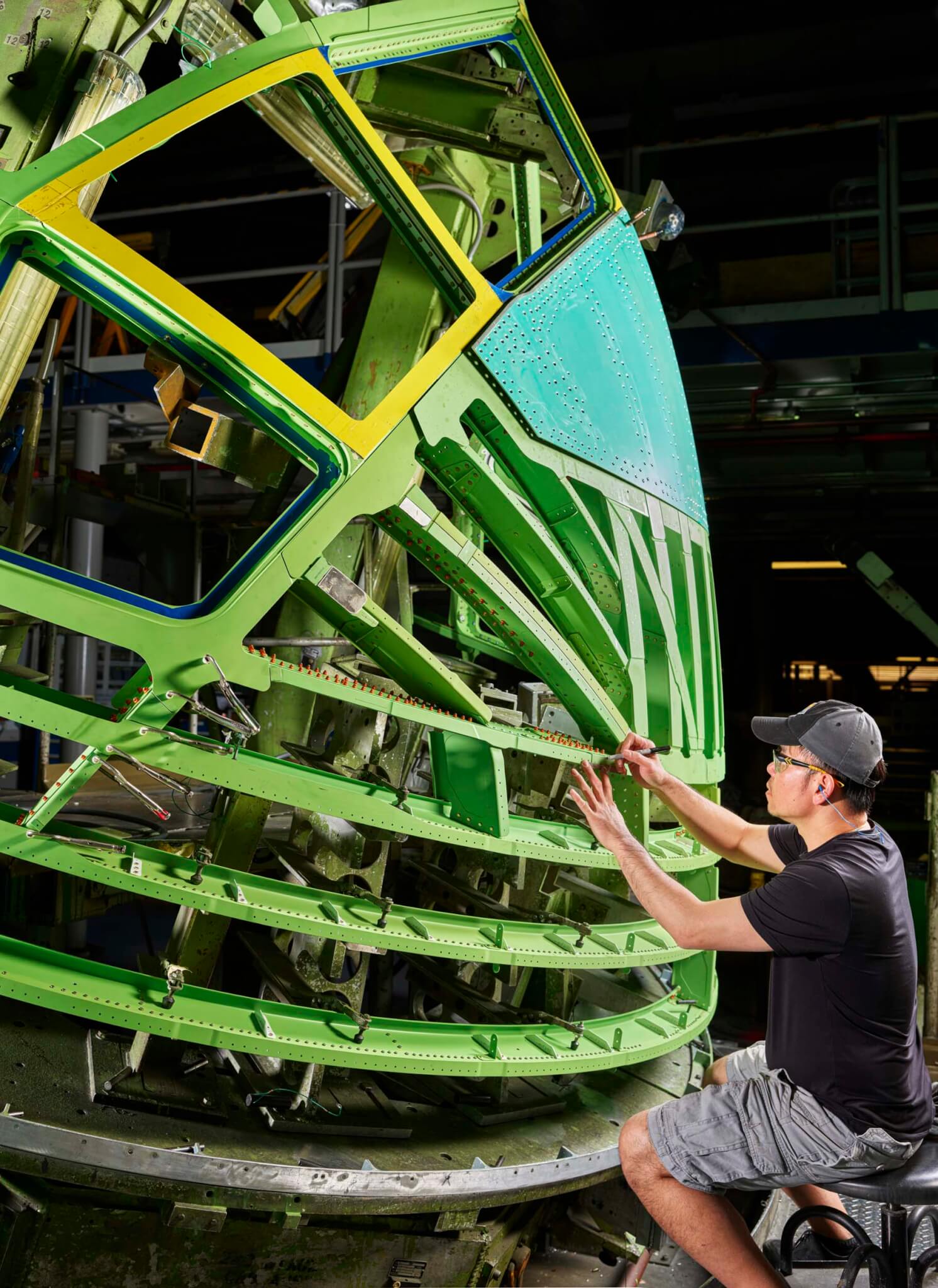
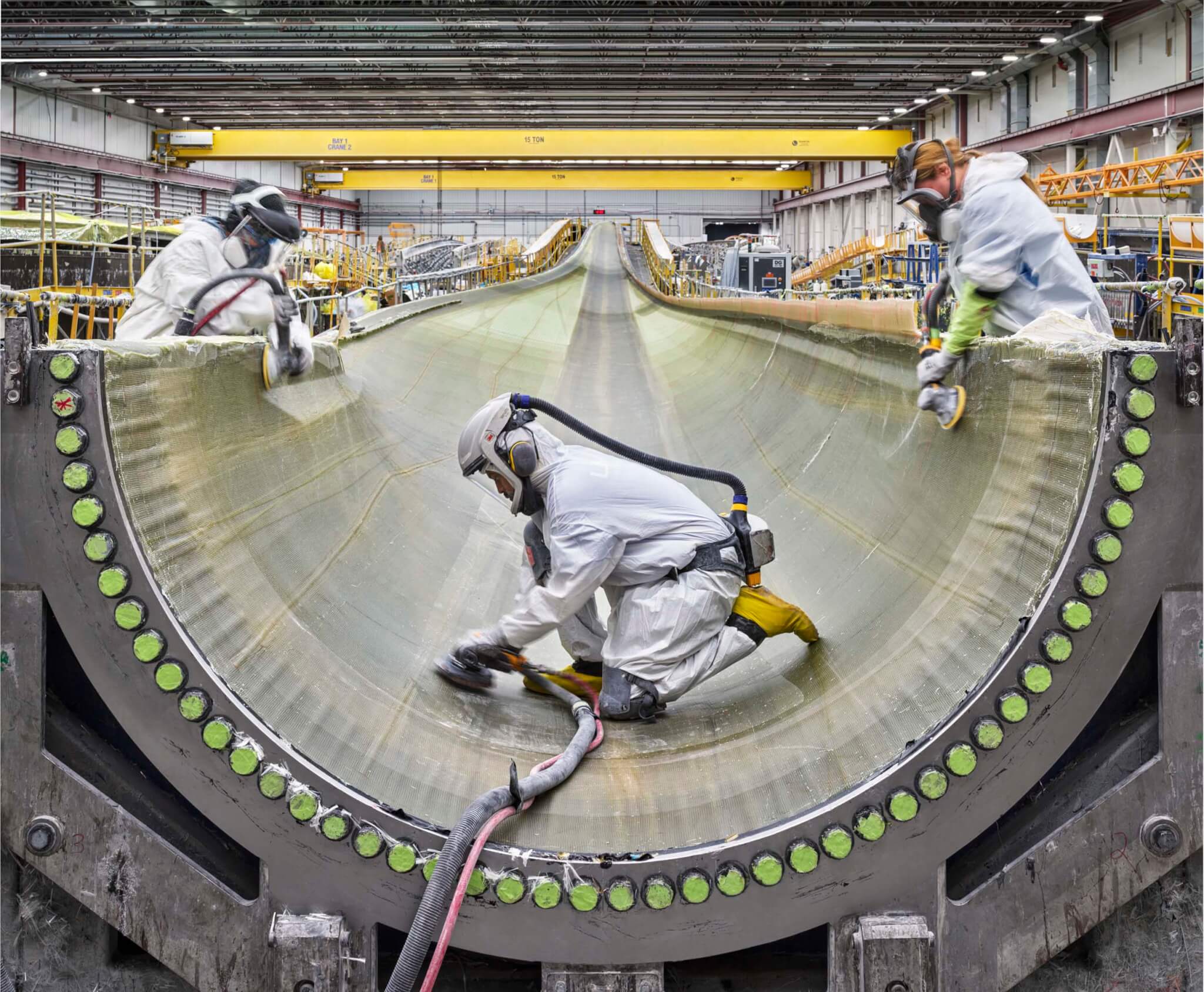
Within these sprawling, sometimes chaotic facilities, I try to find moments that are unique to that place and process: perhaps a special machine or a lovely detail that is representative of the whole, like a perfectly machined submarine hatch or the press that bends wood into the iconic shape of a grand piano. I’m looking for that sweet spot when the thing being made is almost complete and familiar but not yet finished, so we see it in a new, abstract, and interesting way. Ideally, it’s the “a-ha, so that’s how they do it” moment.
How do you think about including people in the photos?
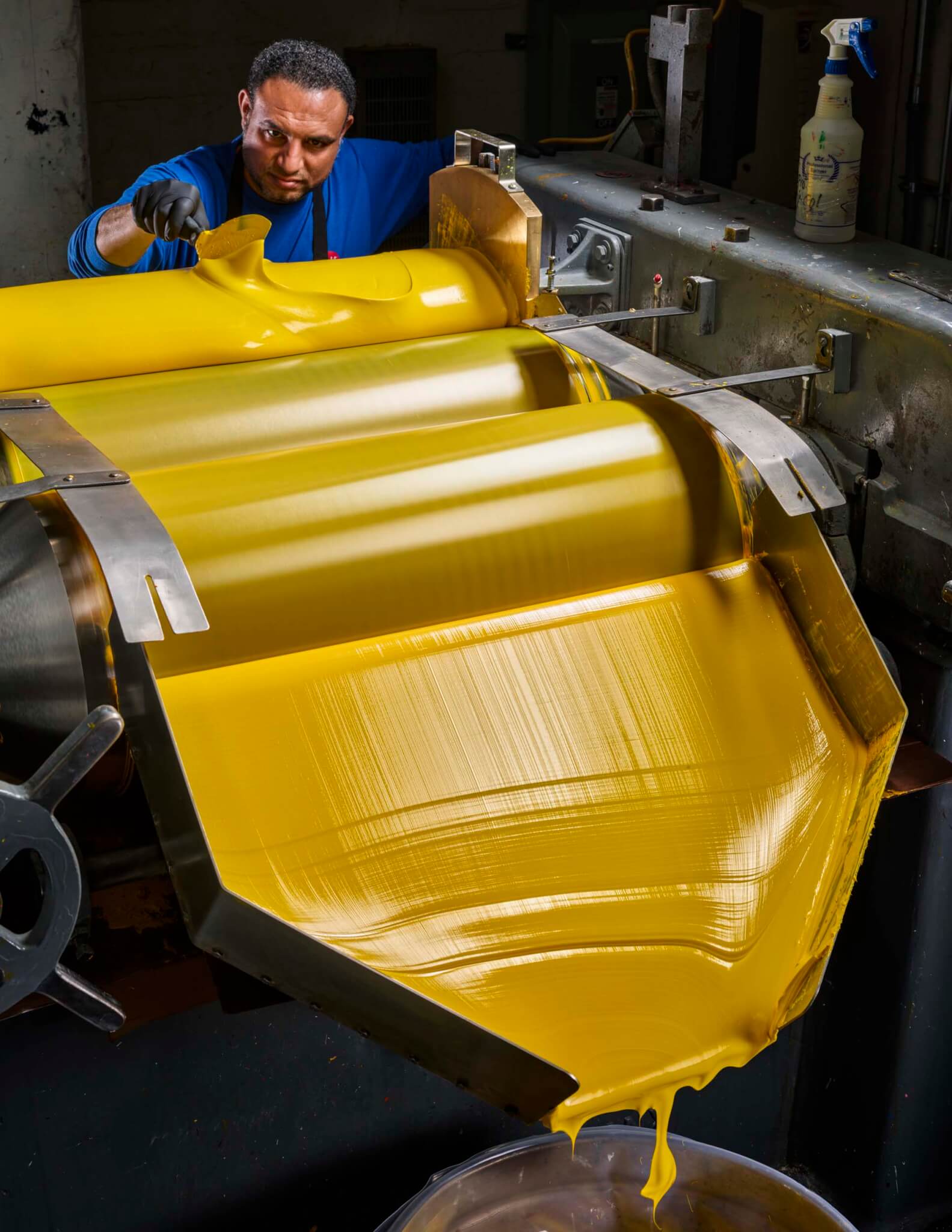
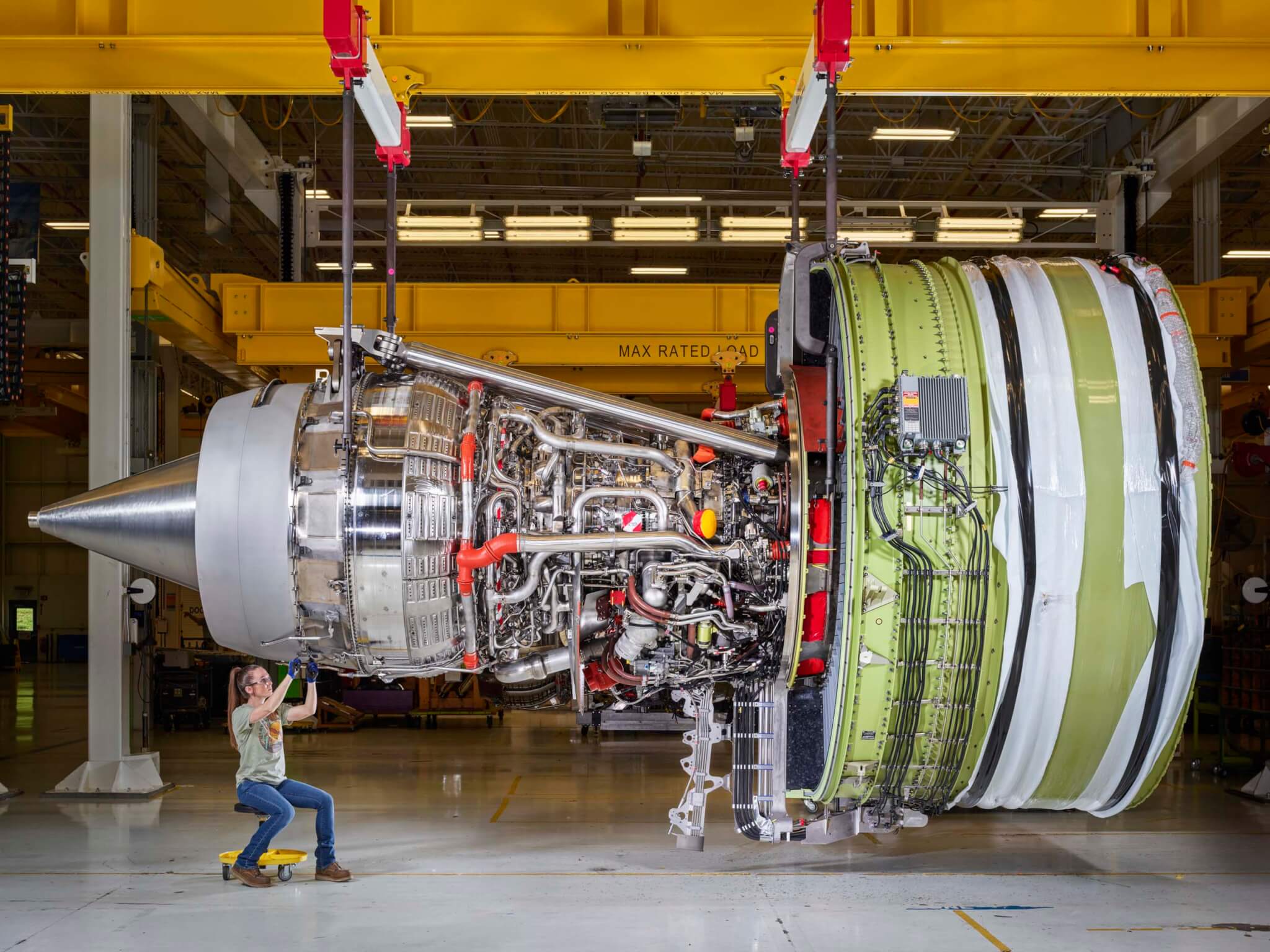
CP: Machines need people to make them come alive; without them, they are just inanimate objects. People also provide a way in for a viewer who might not understand what the machine does. They complete the scene and give it a narrative. I search for people who are masters of their craft. They have a look: a graceful way of moving and assuredness in their actions that comes from years of experience. Interesting clothing, hair, and tattoos are always a plus. Before I start photographing, I watch the person work, looking for minute shifts in position, the rise and fall of their breath, the relaxation of muscles. The task will be repeated, and I want to make sure that I get it right and capture the peak moment of elegance.
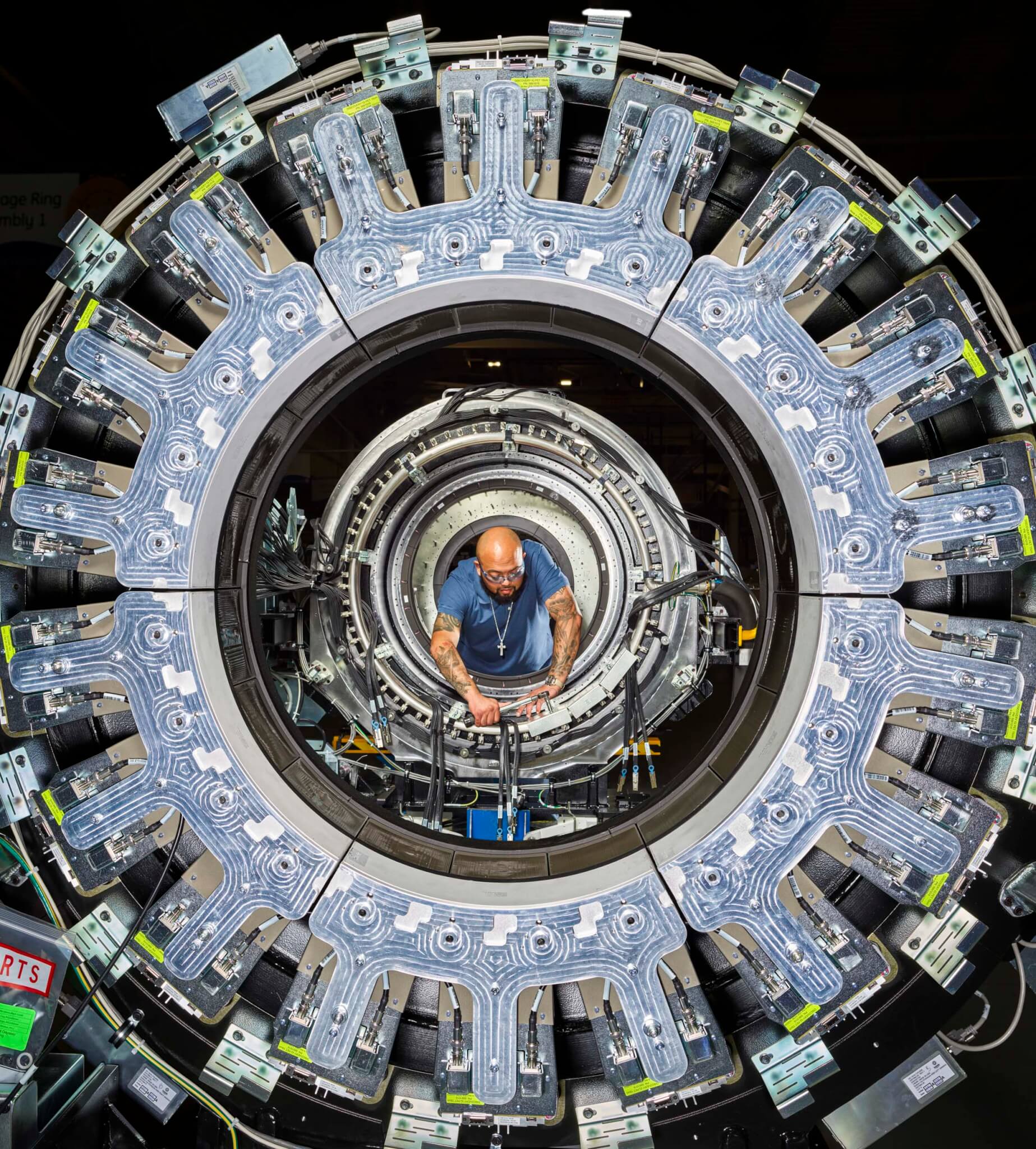
Given my architectural background, I am drawn to underlying geometries that I can use as compositional tools—a framework on which the action unfolds. The welders climbing all over the frame of a BYD electric bus is an almost literal example of this. I also love circles because they draw the eye in. The opening picture in the exhibition shows a technician inside a PET scanner, which is positioned to appear as if it’s inside another scanner—a circle within a circle.
When possible, I use dramatic lighting to focus on the worker while obscuring the background. It’s a theatrical approach that elevates the subject while lending warmth and intimacy, and it’s a practical way to get rid of visual clutter, which is omnipresent in factories. Many photographers I admire—Alfred T. Palmer, Maurice Broomfield, Gordon Parks, and Chris Killip—used similar techniques in factory settings.
How did the book and then the show happen?
CP: As my body of industrial work grew, I realized the story I wanted to tell was much bigger than one factory or industry. When Abrams agreed to publish Made In America, I set about rephotographing factories where I felt I had been rushed, and also visiting new places that I had always wanted to go, to give the book more scope. Two curators from Cooper Hewitt, Smithsonian Design Museum had been following my work for many years. When the book came out in 2023, it was perfect timing, as they were looking for a show to celebrate America’s 250th birthday.
How did you work with the museum on the show’s organization?
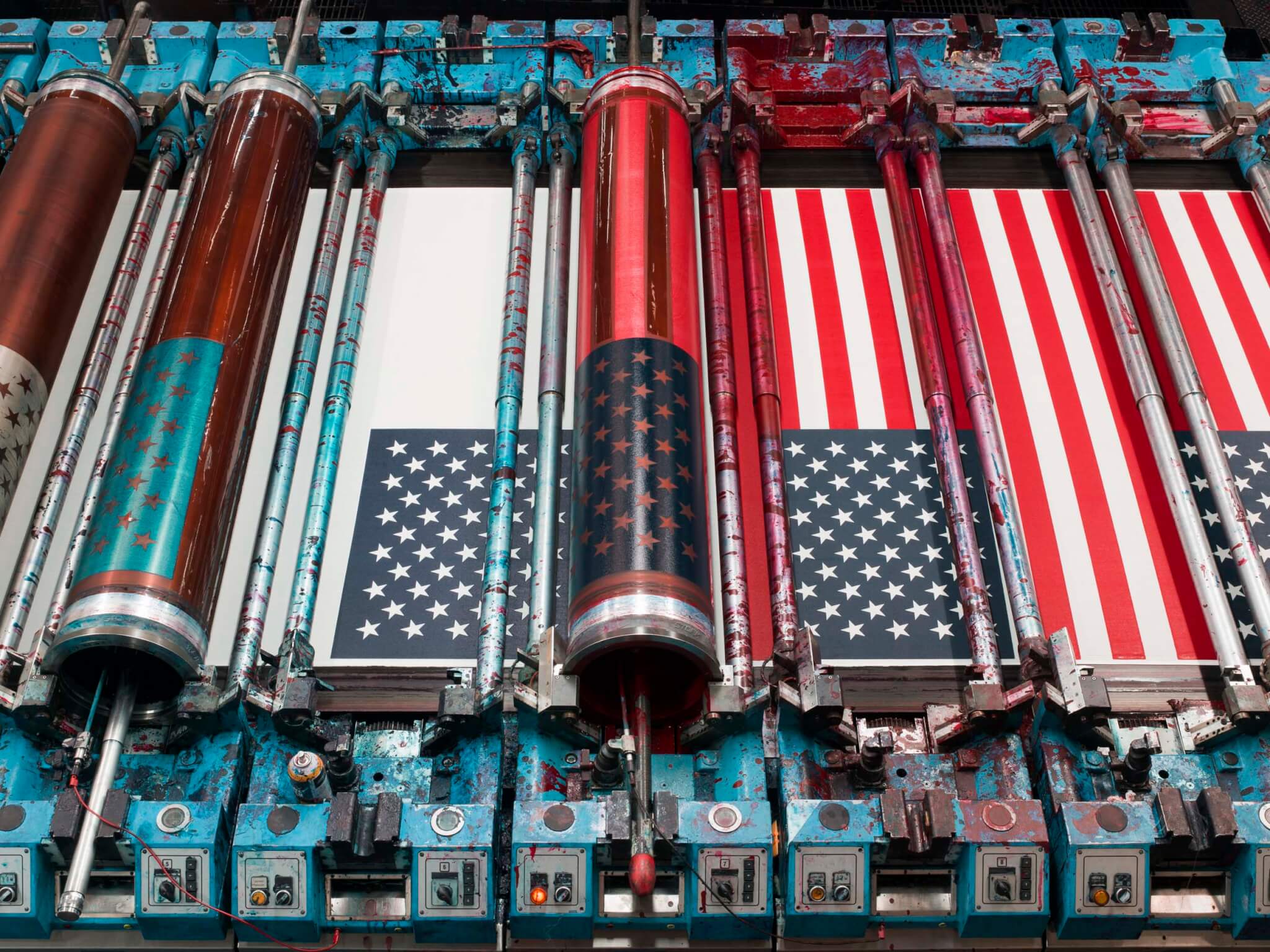
CP: As a design museum, Cooper Hewitt was not only interested in the formal qualities of the photographs but also in the depiction of how things are made, which is important to me too because I want my photographs to convey useful information about the manufacturing process. Susan Brown, the curator, and I spent months editing selections and working with an exhibition designer to create both a visual and narrative arc, where each room touches upon a different theme: handcraft in manufacturing, production at scale, factories of the future, and so on. I wrote and recorded audio descriptions, and a videographer made a documentary of me at work. It was a wonderful collaboration.
My affiliation with Cooper Hewitt also made it easier to get into more factories, and I was able to create a body of new work specifically for the show: the new Axiom space suit that will go on the Artemis III mission, an Apptronik humanoid robot, Peterbilt trucks, the new Amtrak high-speed train, and a Herman Miller factory where the Eames lounge chairs are made. There’s also a room devoted to one factory, Bollman Hat, where you can follow the transformation of raw wool to finished product.
It’s thrilling to see the work printed large because the scale, color, and level of detail engage the viewer in a way that simply isn’t possible online. I found myself reliving the shoots and discovering details I didn’t realize were there. The intensity and focus of the workers also come through.
You’ve seen a lot of factories across the country. Given the national conversation of “America First” and making more things here, do you have insight into the state of domestic manufacturing?
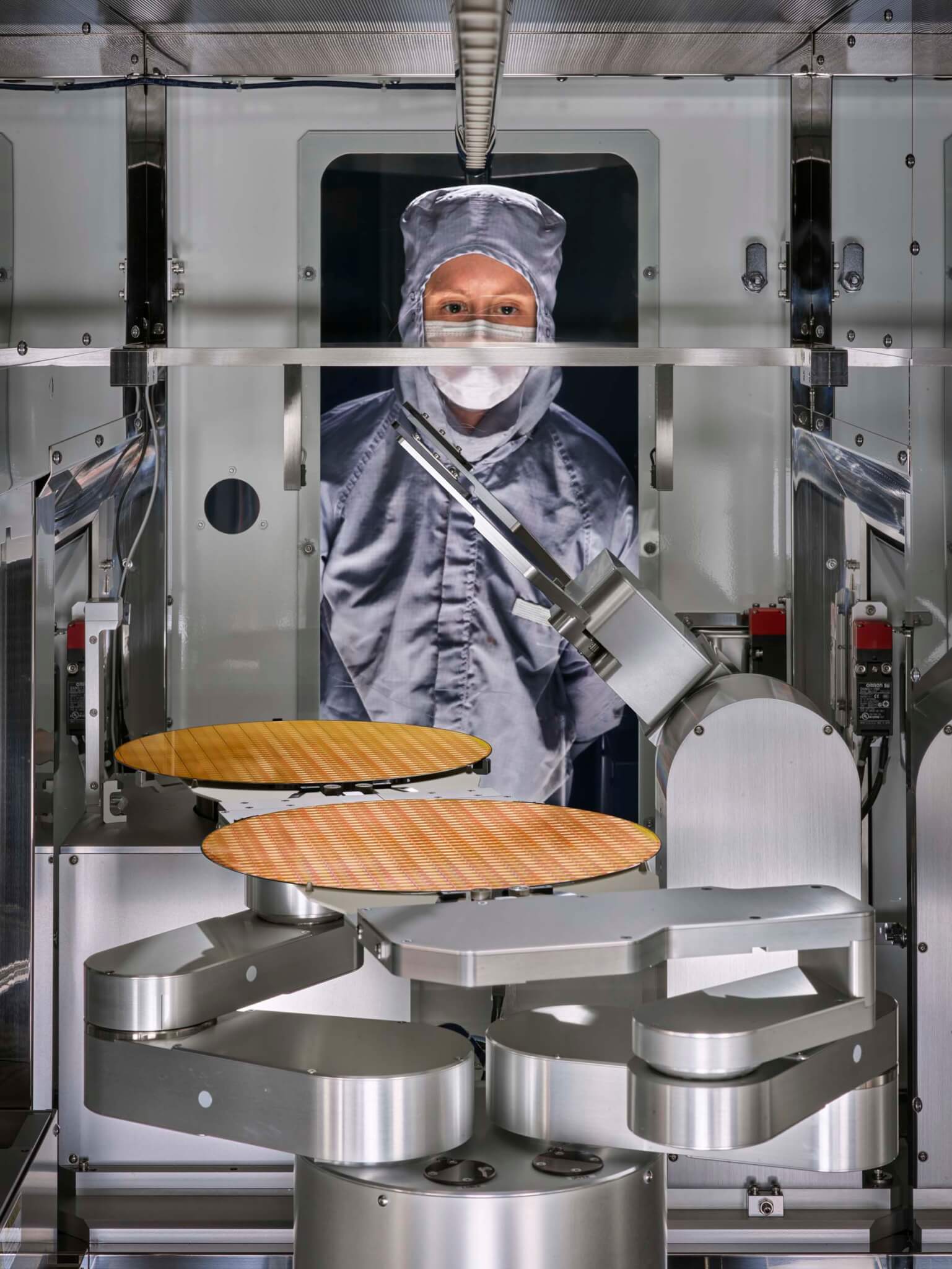
CP: In the last few years, the industrial landscape in America has been re-energized by pandemic supply-chain shortages, competition with China, national security issues, energy concerns, federal legislation, and now tariffs. Yet progress is never linear, and sometimes it’s two steps forward and one step back. Until recently the pendulum was swinging in the direction of clean energy and electric vehicles, but now that momentum has stalled due to a shift in federal policies. Consumer goods like apparel and electronics aren’t coming back anytime soon, but essential technologies like computer chips, perhaps the most complex products on earth, have become a national security priority. We haven’t seen this kind of investment in the future in decades, and some of the newer factories I visited had the buzz of tech startups.
Some traditional manufacturing sectors have not been so fortunate. As I was gathering captions for the book, I was sad to learn that several of the textile mills I’d photographed had closed—not so much due to competition or lack of business but because the owners simply wanted to retire. The challenge with all manufacturing is finding new talent and young people to learn the multitude of vocational trades required to keep production humming. The lack of qualified workers is a common refrain I hear over and over from plant managers, and sometimes I fear the greatest impediment to a resurgence in American manufacturing might not be from abroad but from within.
Has this photography work changed your appreciation of what architects contribute to manufacturing?
CP: When architects are curious about materials and processes, it fosters creativity, which in turn promotes new methods of manufacturing, much like the way architects’ renewed interest in mass timber has spurred that industry and fostered bold new designs.
I wish architects were more involved with the design of the factories themselves, most of which are little more than giant boxes built for efficiency, flexibility, and climate control. The windowless exteriors conceal amazing things happening inside, though this is often the point. People love old industrial spaces because they were built to last and have a sense of character and place; history happened here. I doubt contemporary factories will elicit the same nostalgia.
In a way, you work between architectural photography and industrial photography, each of which has its own history. How do you relate these two traditions?
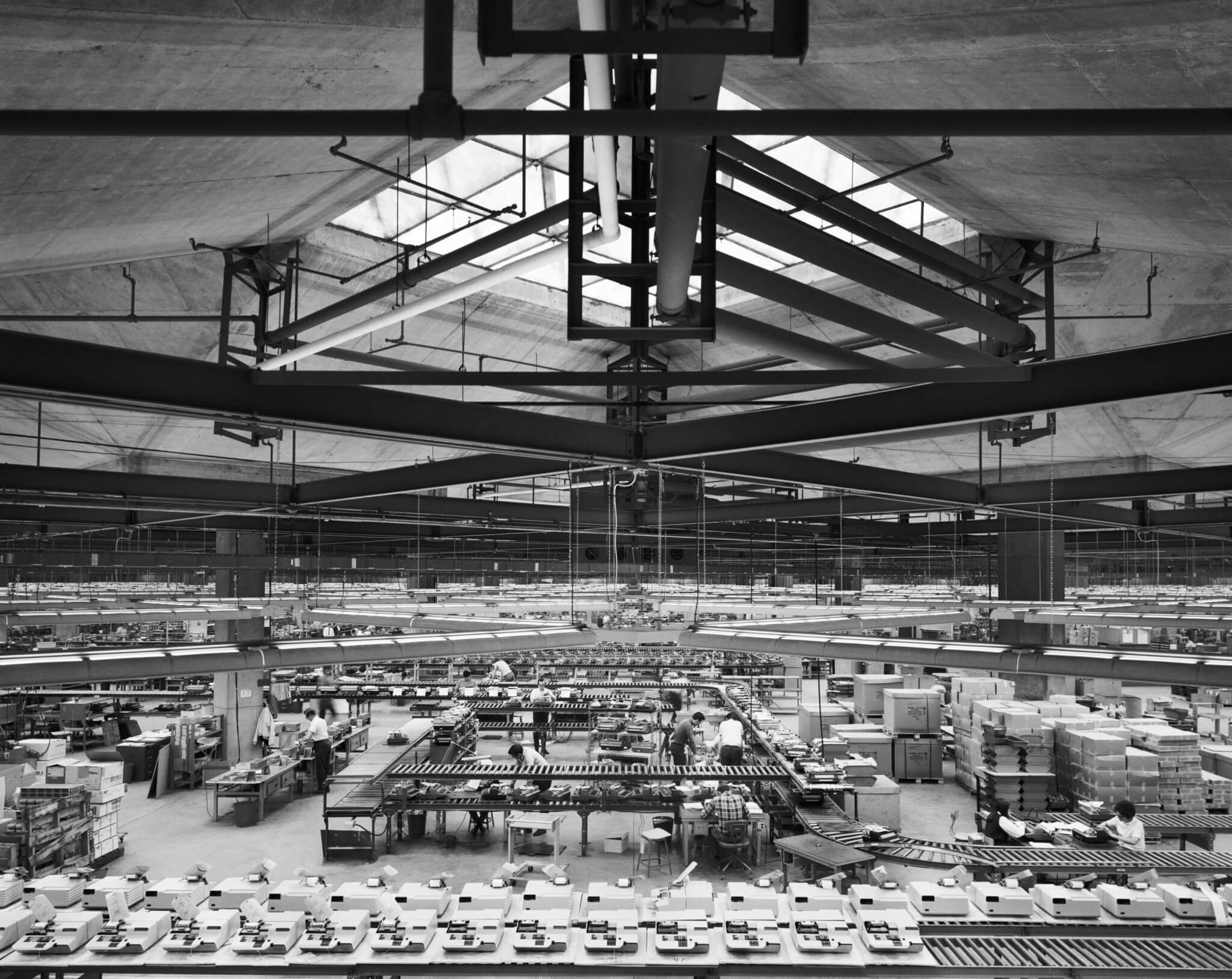
CP: I think architectural and industrial photography are similar in that they both strive to capture the essence of the built form, whether it’s a building or a machine, which is, after all, just architecture on a smaller scale. I am often inspired by Ezra Stoller, who moved effortlessly between the two disciplines, photographing a Frank Lloyd Wright house one day and a LIFESAVERS factory the next. I like to imagine that I work in a similar fashion, using my architectural eye to reveal the underlying beauty of everyday objects and hidden processes we take for granted.
How will you continue to work on this project?
CP: There is a duality to this project that comes from chasing the future while also documenting the past. I’ve always felt a sense of urgency to my work, beginning with the substations and the asylums, many of which were demolished before I could get to them. It’s similar with manufacturing. In the coming years, factories will open and close as economic trends go up and down, consumer tastes will change, new products and technologies will come to market while others will be discontinued. Without a doubt, the ultra-modern places I’ve photographed will themselves become outdated and replaced someday. It’s one long continuum, I hope, towards a brighter future, but I have to stay one step ahead of “progress” before it vanishes.
→ Continue reading at The Architect's Newspaper

