
In Miami, Florida International University’s (FIU) Innovation Building sits perched on a berm. Frits on the outer layer of the transparent glazing serve a dual purpose: to efficiently shade the interior while referencing the effect of sunlight streaming through the trees of the Everglades. At night, the effect is turned outward; the building illuminates its surroundings like the moon glowing over the landscape.
The 120,000-square-foot, $60 million building, designed by Perkins&Will, represents the completion of the first of three phases for Florida International University’s new Innovation Complex. It provides classrooms, computer and research laboratories, offices, and study spaces for graduate students.
“We wanted to challenge the attitude that all glass buildings are not high performing,” Pat Bosch, principal and design director at Perkins&Will’s Miami studio, told AN. “The lines [of the frit] have two aspects to them, which is not only the metaphor of the pine trees and the mangroves, but the parametrics of how we were resolving the problems of heat gain, reflectiveness, and penetration of light.”
Panel mockups determined how opaque the glass frit needed to be to meet solar requirements and allow the proper amount of light into the interior. The frit also modulates the reflectivity of the building, ensuring that it is visible to birds.
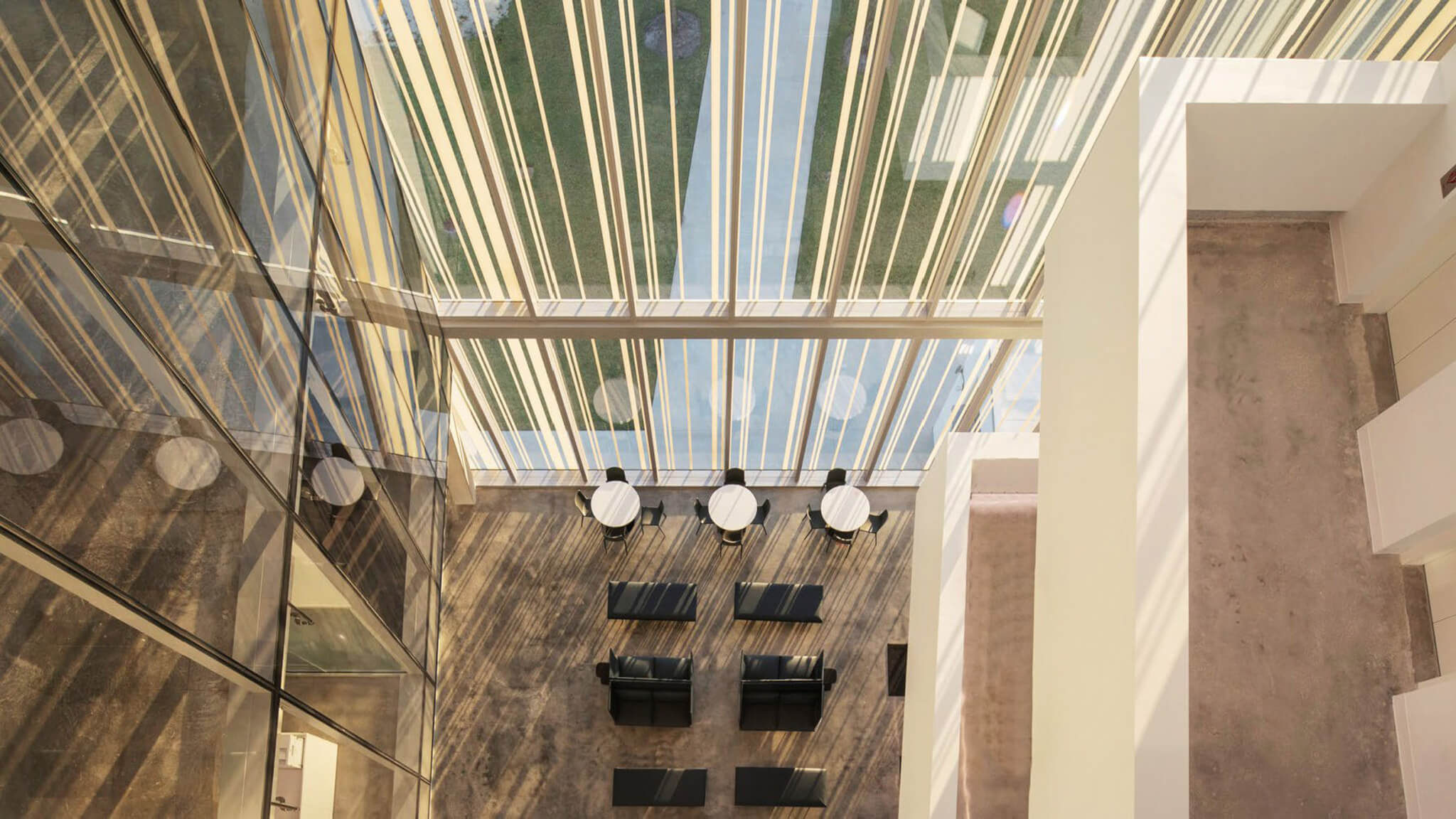
In areas where maximum visibility is desirable, like the atrium staircase, the frit is less discernible, and the facade becomes more window than curtain. Early solar radiation studies helped determine translucency across all facade exposures. Perkins&Will worked closely with facade consultant Physical Security to verify optimal opacity.
“It’s about achieving high performance with levity,” Bosch said. “That you can accomplish this with just glass and simple assemblies, and you don’t have to add ‘stuff’ to a building to make it highly resilient.”
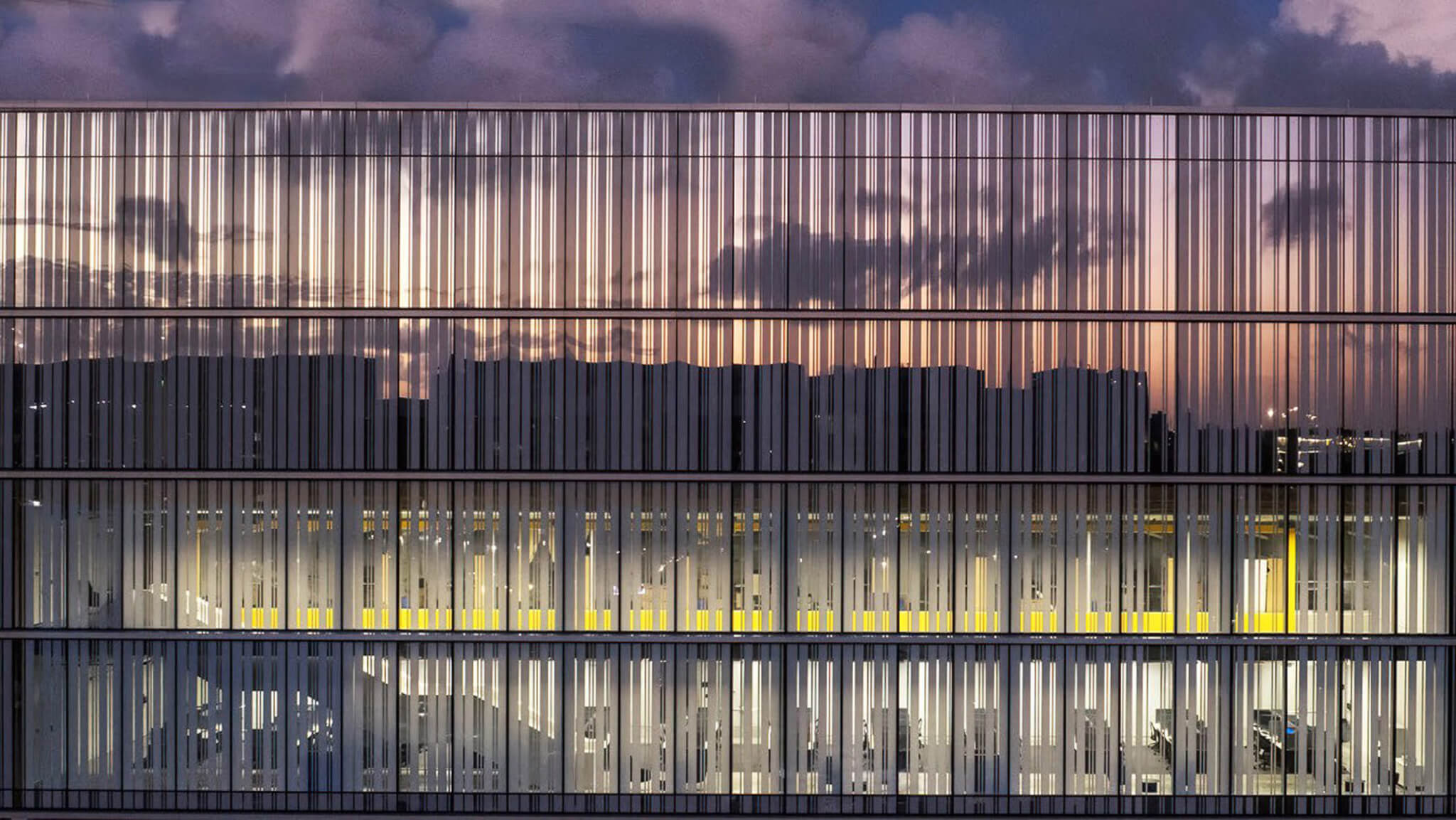
Streams of sunlight stretch through the building during daytime hours, alternating in thickness in response to the vertical cadence of the frit on the facade. In the evening, the illusion reverses. To the outside observer, the glazing becomes reflective or fully transparent depending on whether the lights inside of the building are switched on. The inner happenings of the building are displayed as the surroundings are illuminated, resembling the moon rising over the Everglades.
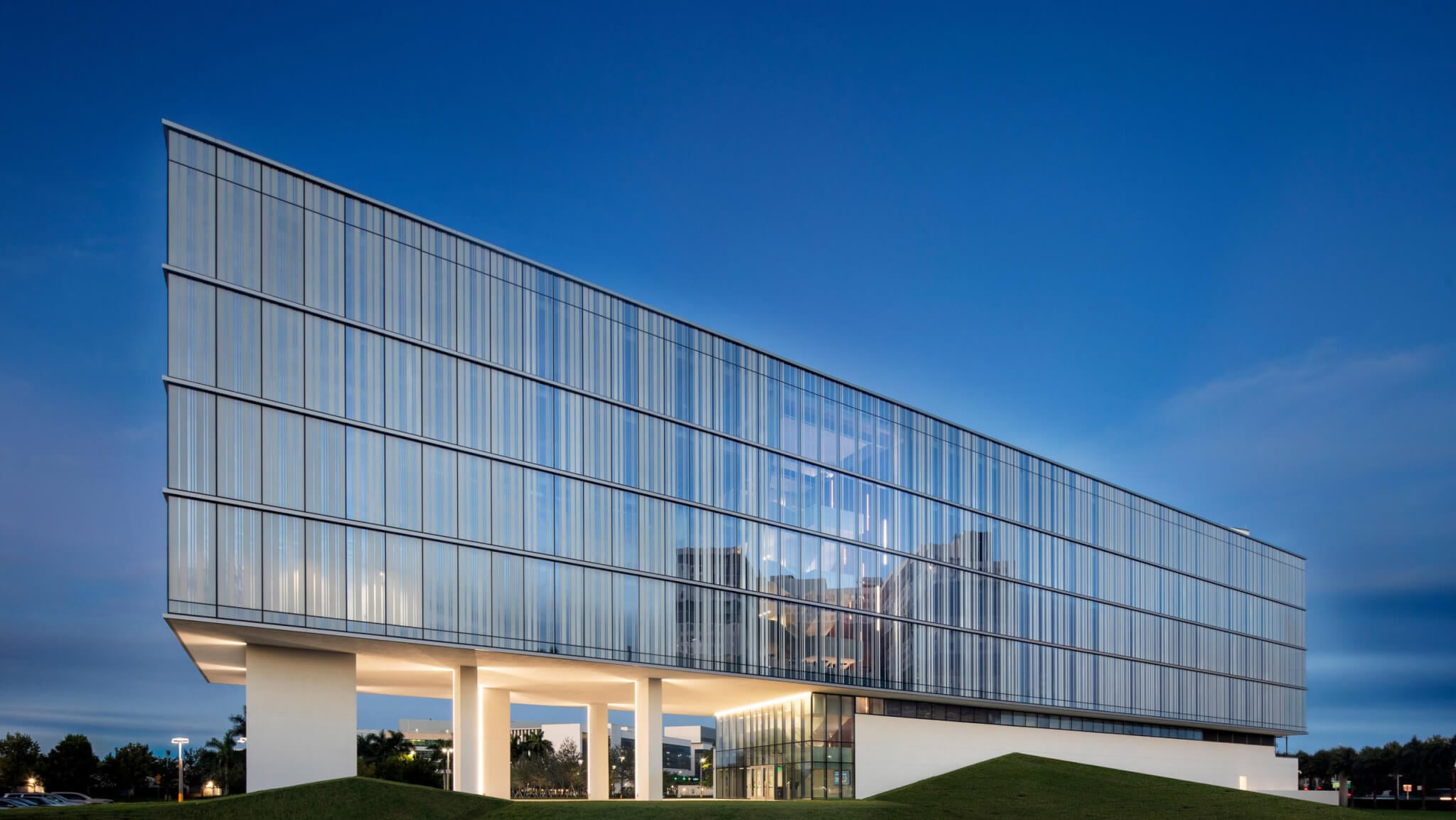
It is often the simplest solutions which satisfy the most complex needs. The frit’s varying concentration achieves high performance while producing an abundance of effects depending on the position of the observer and the time of day, transfiguring the building from great window to billowing curtain to luminous mirror.
Project Specifications
→ Continue reading at The Architect's Newspaper

