
Design studio Safwat by Safwat has balanced a bar, lounge, and restaurant programme at Funny Bar in New York‘s Lower East Side, using glass brick and postmodern details.
Working with New York entertainment operators Tom Moore and Billy Jones, the New York-based studio set out to convert a bar built out for “more of a mainstream audience” into a hip space combining jazz lounge, bar, and restaurant.
For Funny Bar, the studio maintained certain elements “using the original layout as constraint rather than attempting to erase it,” according to founder Safwat Riad.
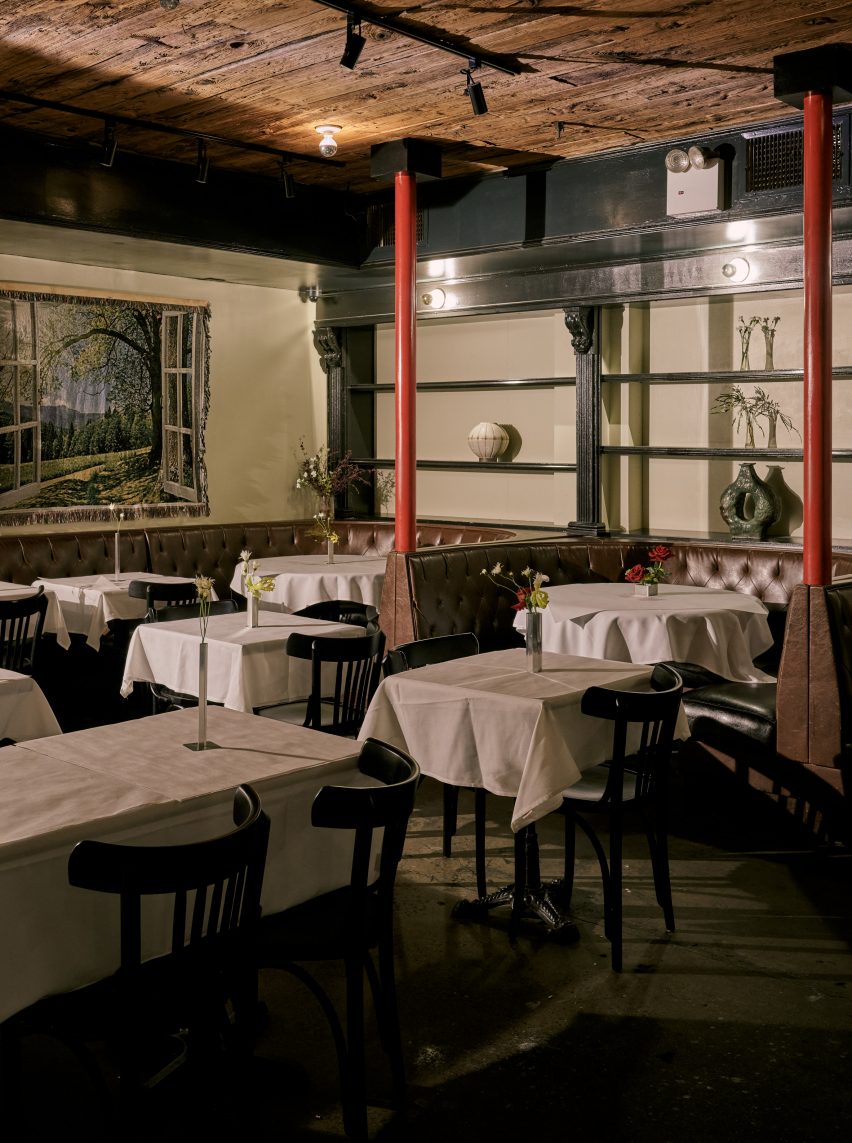
Riad kept the sunken lounge and booths that line the restaurant space at the back, while adding other elements, such as C-seating adjacent to the bar at the entrance, and a stage that sits between the two.
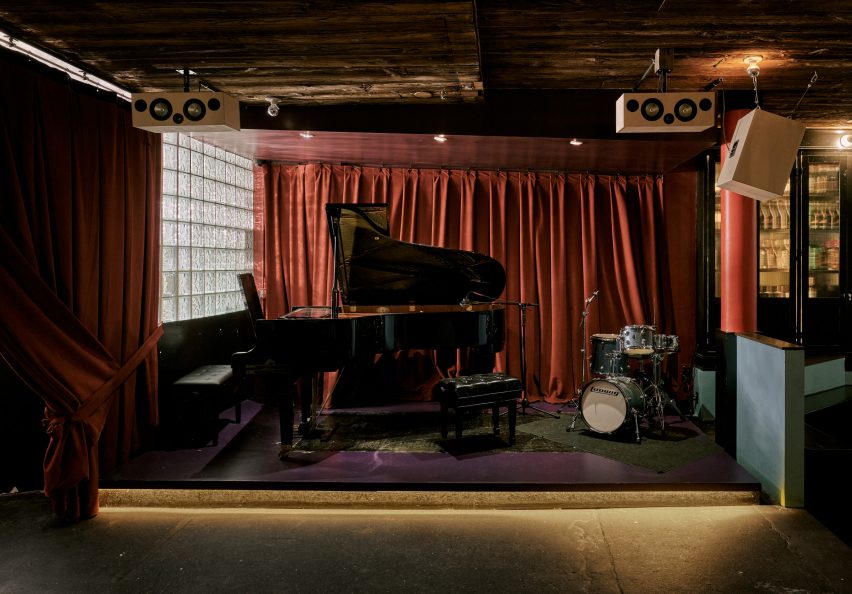
It also added “architectural upgrades”. These included columns with pops of colour and glass brick dividing elements.
“The intervention focused on reworking the space through architecturally built elements, while also working within a budget, lots of material changes and lighting to soften the environment and shift its identity,” Riad told Dezeen.
“The goal was to transform the venue into something more intimate, chic, and clearly aligned with Funny Bar’s role within the Baby’s Alright crowd and sister space to Night Club 101.”
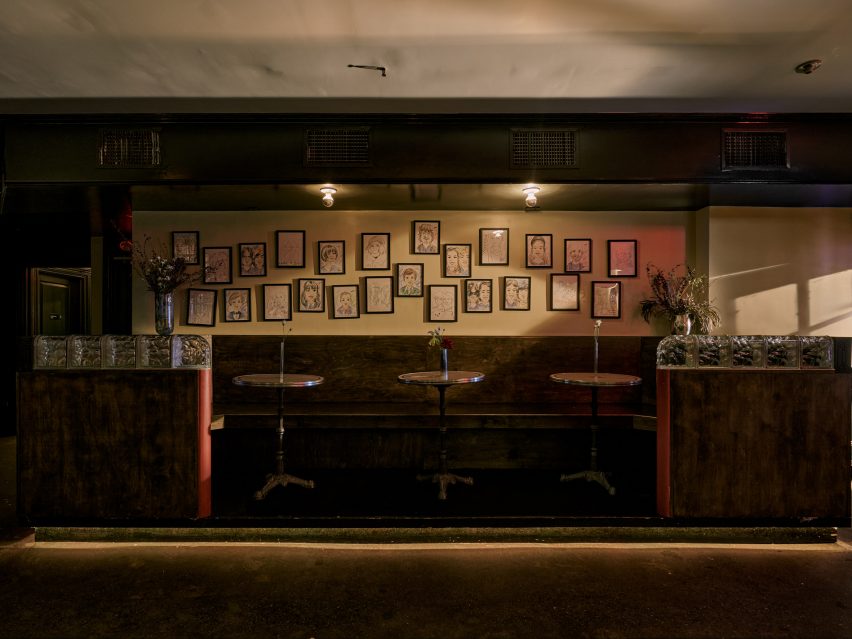
The dividers and shifts in elevation help to keep the spaces separate while creating slight differences in the programming.
“We approached the space as a series of connected moments rather than separate rooms. The bar, the stage, dining room, and sunken area have their own identity, achieved through design gestures rather than walls,” said Riad.
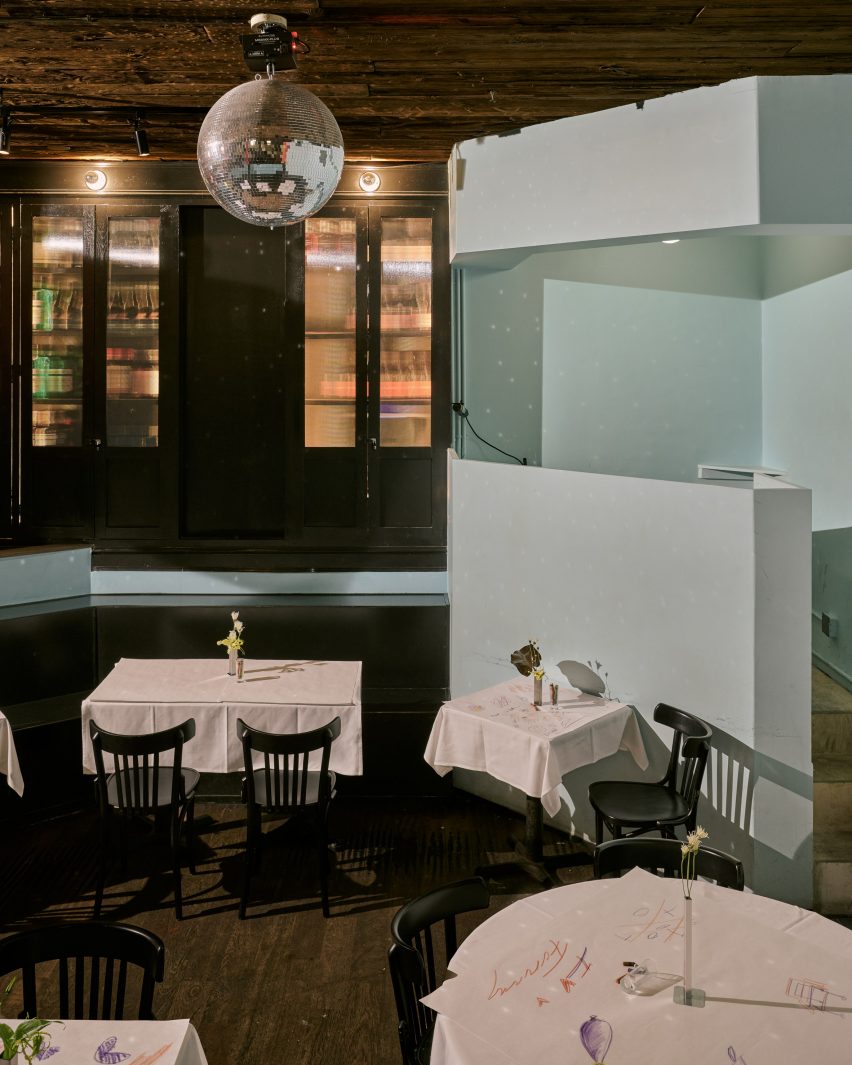
The dining areas are characterised by simple furniture and white tablecloths, with exposed wood on the ceiling.
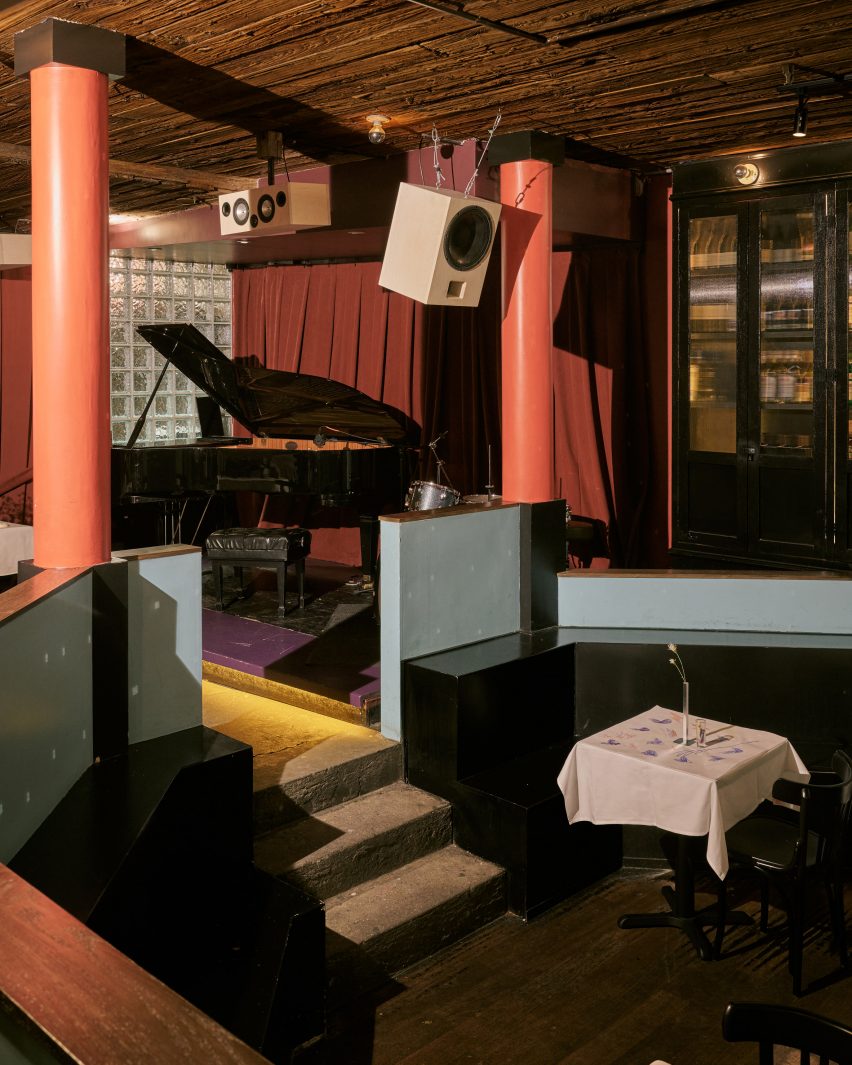
He called the bar a “strong architectural presence” that draws the eye to the “faux playful post-modern columns” at the back of the space
“Consistency in materials and proportions ties everything together,” Riad said. “Even as each space has its own mood, the repeated palettes, finishes, and detailing make the sequence feel coherent and intentional.”
“The goal was to give every area its own character while maintaining a clear, unified narrative throughout the space.”
Riad drew on past experiences working with Jones, who died last year, such as at a Brooklyn record store. According to Riad, Italian postmodernism influenced the project, but the design relied more on flexibility, concepts and collaboration with the clients than any explicit references.
For example, each of the two bathrooms is based on the geometry and colours of specific sports, one in tennis and the other in basketball.
“This balance of humor, clarity, and restraint became a recurring theme throughout the project,” Riad said.
Funny Bar has become a popular location in the city’s Downtown and is known for its jazz programming and simple menu, based around steak frites.
“The crowd is always diverse, ranging from young Wall Street professionals to fashion creatives and musicians,” Riad said.
“At any hour, something is always happening. You might walk in to find couples doodling with crayons, backgammon games unfolding in the pit, or a pianist or trio jamming on stage. The space is consistently alive – full of energy, spontaneity, and action.”
Restaurant and bar design in New York comprises a seemingly endless sequence of closings and openings, with some of the best design talents working on projects.
Other recent openings include Billy Cotton’s Bridges restaurant and a narrow taco spot in Soho by Polonsky & Friends.
The photography is by Matthew Gordon with styling by Pascal Mihr.
→ Continue reading at Dezeen

