
Chinese studio FOG Architecture used tactile materials and natural lighting to create a calm, soothing atmosphere in this Shanghai residence.
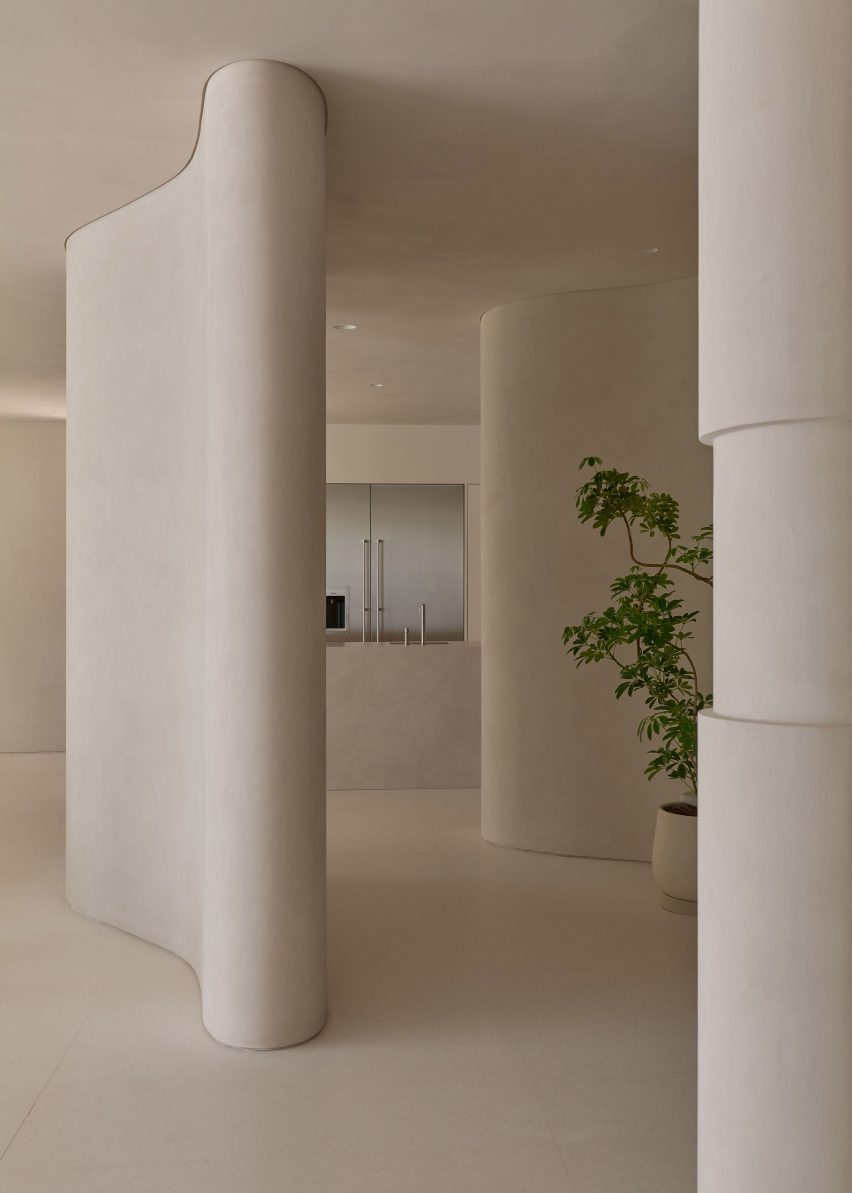
Located in the western suburbs of Shanghai, China, the renovated three-storey villa features plenty of curved lines, designed to connect various functions and create an adaptable, flexible interior for its multigenerational residents.
According to the studio, the 500-square-metre villa’s interior was also designed to create a “soft yet steady” atmosphere.
“Seen through a female perspective, the project cultivates a spatial temperament that is soft yet steady – not fragile, but resilient, porous, and deeply attuned to everyday life,” said FOG Architecture.
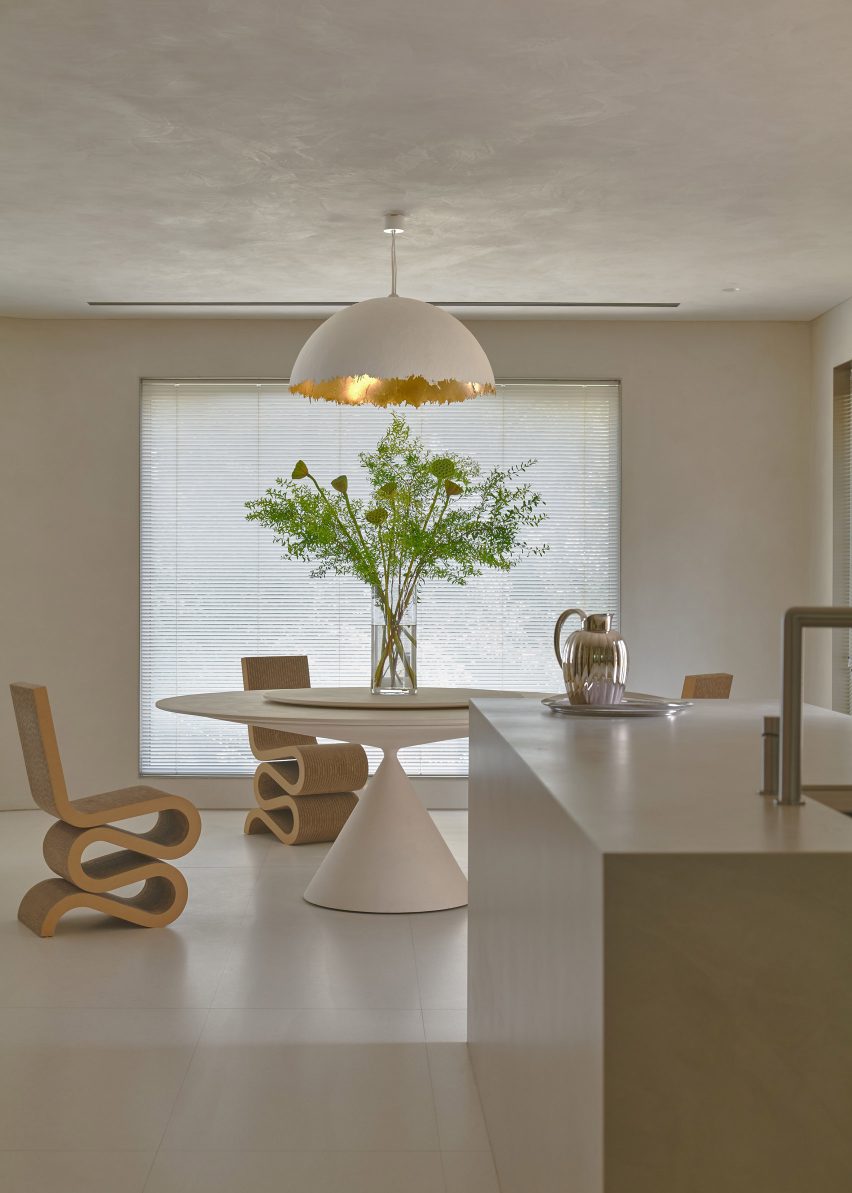
The studio focused on the tactility of the materials used and added large windows to put natural lighting at the centre of the villa’s minimalist interior design.
Textured walls, terrazzo floors, wood-grain concrete, metal and natural textiles come together to create an open, airy atmosphere.
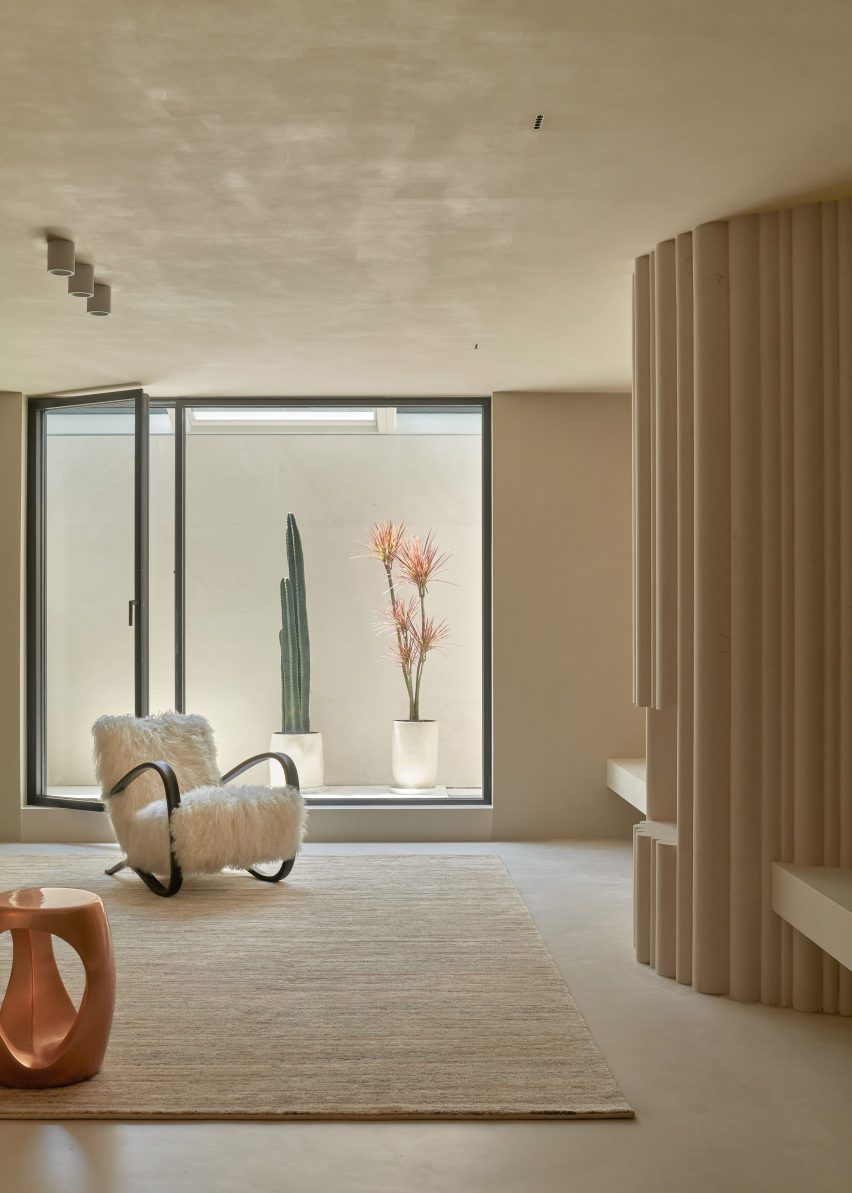
A sandy-hued colour palette was used consistently throughout the space to further highlight the tactility of the different materials.
“The design resists spectacle in favour of tactility, light, and lived experience,” explained FOG Architecture.
“Each floor can function independently yet overlaps with the others, offering three generations moments of solitude as well as connection,” it continued.
Large windows on the ground level invite natural light and garden views into the living room, where the family hosts friends and gatherings.
In the basement, FOG Architecture used textured paint on the walls and added wooden cabinets and subtle lighting to create a quiet and comforting environment.
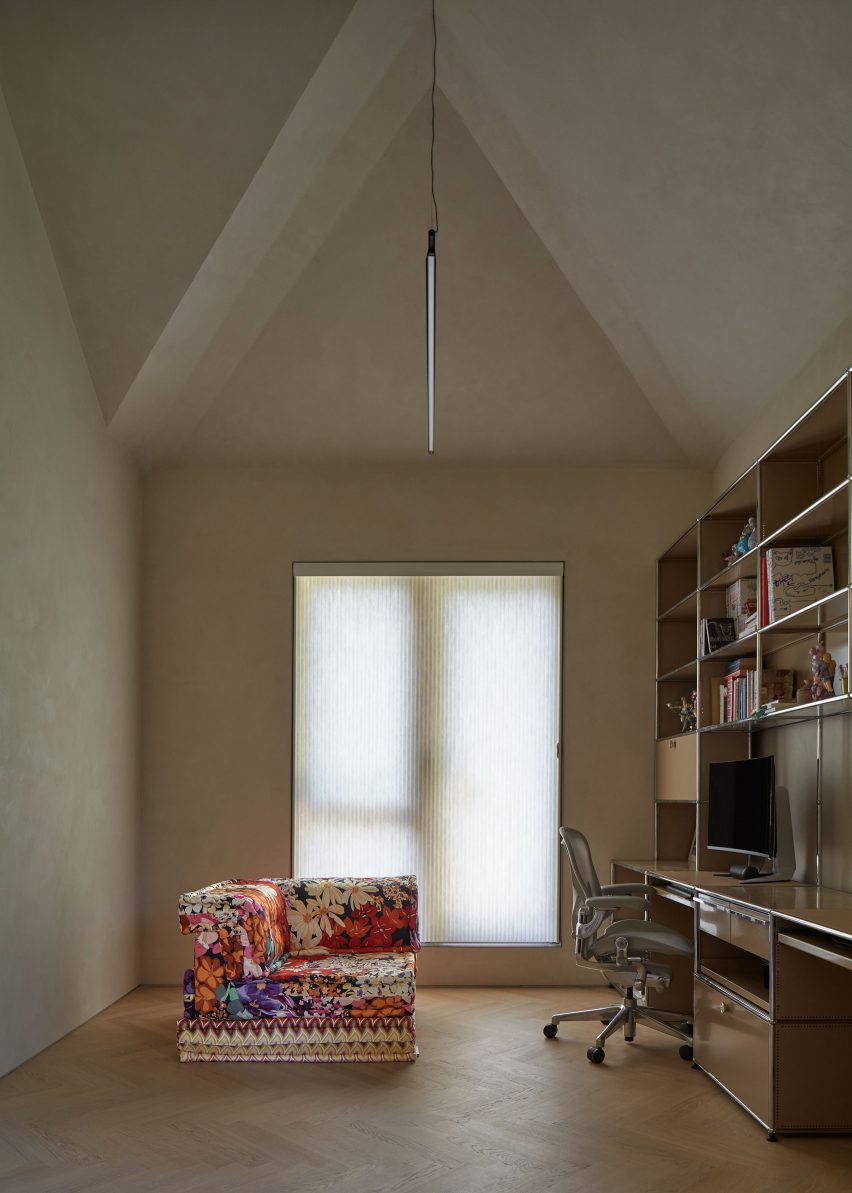
Designed for the younger generation of the family, the first floor and attic were kept deliberately open-planned with limited fixed furnishing pieces, so that the rooms can be easily reconfigured as the kids grow up.
Skylights on the pitched attic roof invite daylight and create a dynamic shadowplay throughout the day. Here, existing windows were repositioned to balance transparency and privacy.
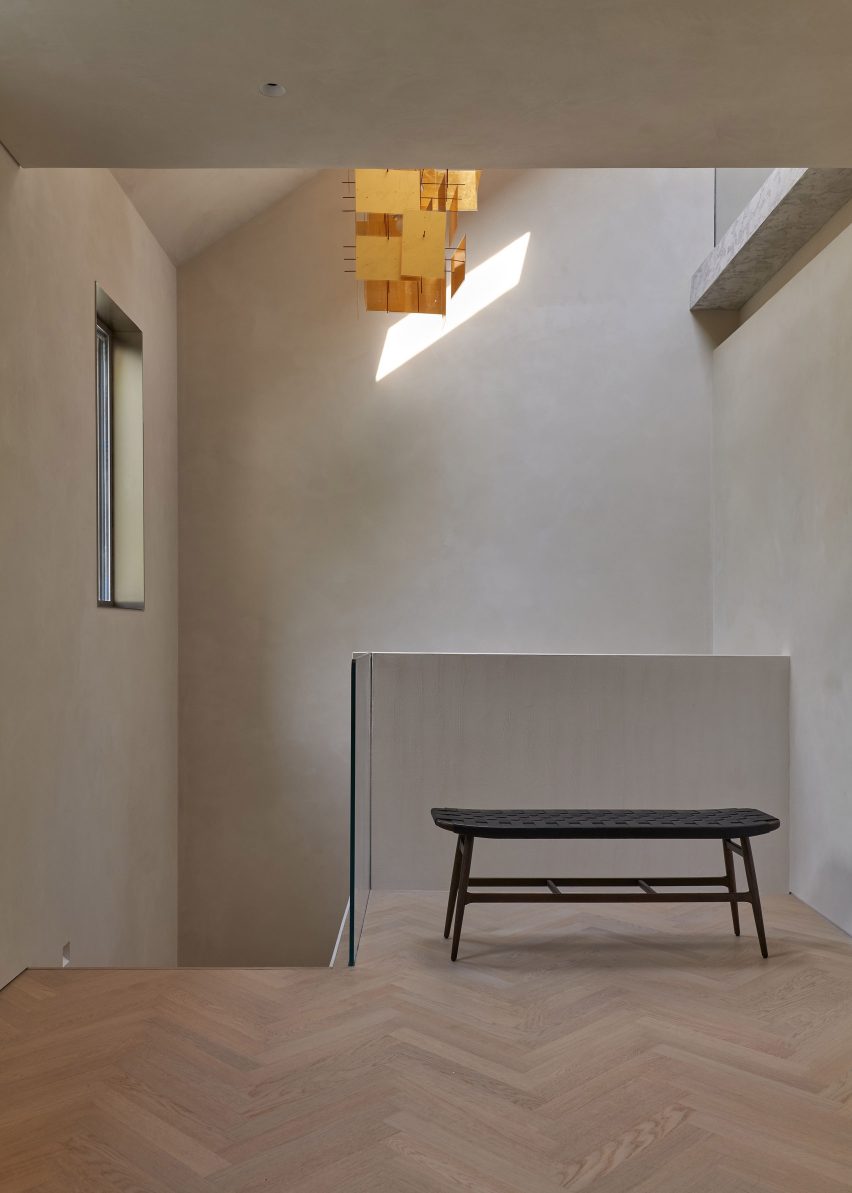
The staircase was redesigned with softer turns and edges, allowing for more fluid movement between levels.
“The floors are not rigidly divided but gently linked through these turns and transitions, giving family members space to follow their own rhythms while remaining subtly connected under the same roof,” said the studio.
“The renovated house is no longer a passive container but a breathing presence, quietly shaped by those who inhabit it and continuously redefined.”
FOG Architecture was founded by Zheng Yu and Zhan Di and won emerging interior designer of the year at Dezeen Awards China 2023.
Previously, the studio has designed a mobile bakery with grain sacks for walls and transformed a traditional courtyard home in Beijing into a flagship store for fragrance brand ToSummer.
The photography is by Zhu Hai.
Project credits:
Team lead: He Yuyu
Design team: Wu Leilei, Hou Shaokai, Lei Ronghua, Wang Shengqi, Zhuang Shaokai, Zhang Zhirui, Li Shinan, Zhan Di, Zheng Yu
General contractor: Shanghai Zhiye
→ Continue reading at Dezeen

