
Antarctica’s population fluctuates with the seasons; in the winter up to 2,000 people typically inhabit the continent and, in the summer months, it balloons to 5,000 residents. Many dwellers are there to work in one of the 70 permanent research centers on the land mass where temperatures can easily drop down to negative 75 degrees Fahrenheit.
 to negative 75 degrees Fahrenheit.
Hugh Broughton Architects, a London office, completed a new facility for the British Antarctic Survey (BAS), the United Kingdom’s national polar research institute. The Discovery Building at Rothera Research Station was built as part of the Antarctic Infrastructure Modernization Program, an initiative steered by BAS. Sweco, Ramboll, NORR, Turner & Townsend were also on the project team.
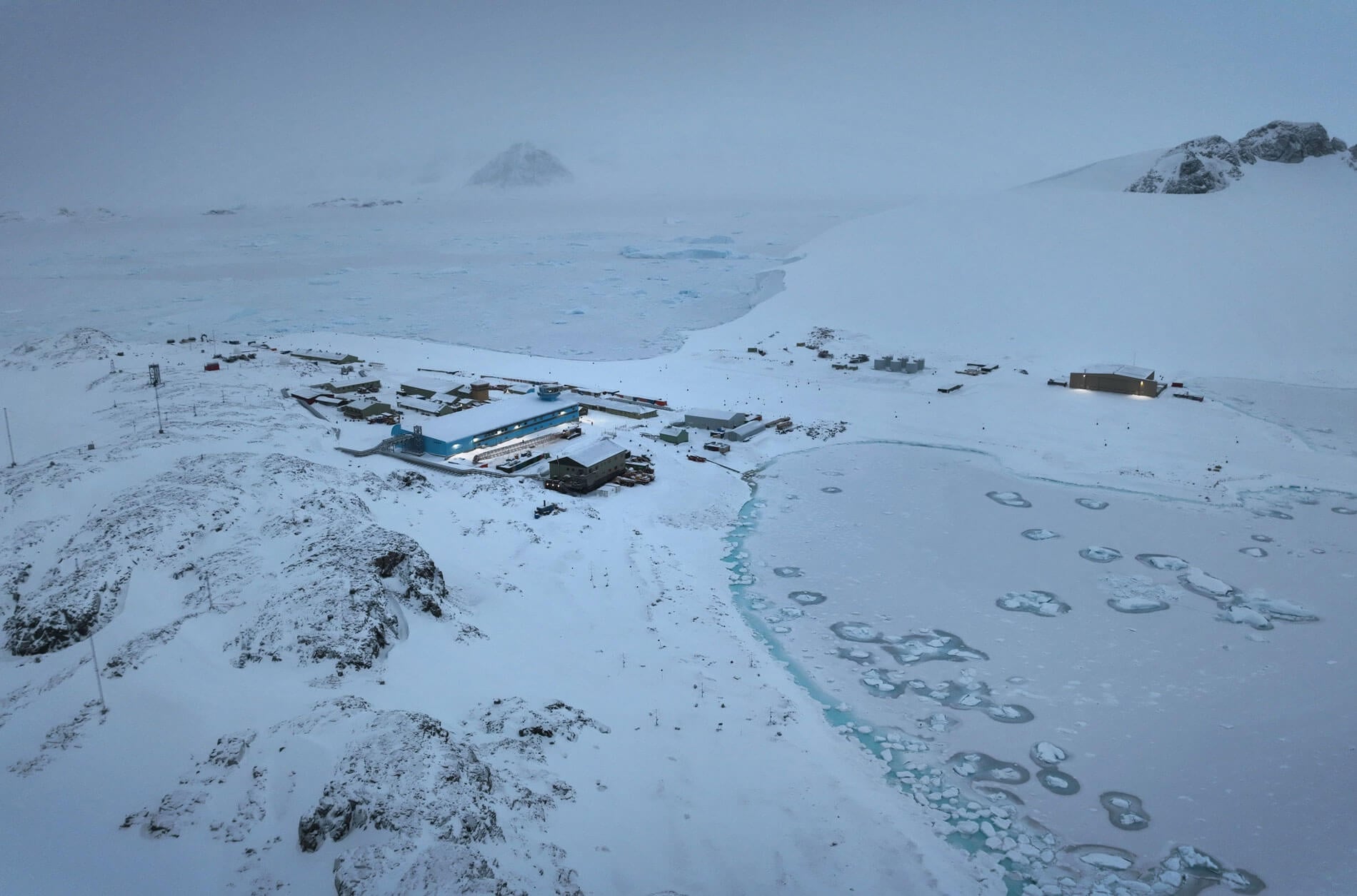
The 2-story Discovery Building measures approximately 48,000 square feet. A panoramic control tower soars over the roof. Its pale blue envelope takes cues from the colors of the Antarctic sky.
Research derived from the facility will “inform critical decisions on climate adaptation, help protect vital industries from fisheries to agriculture, and position U.K. researchers and businesses at the heart of the growing green economy,” said Ian Chapman, Chief Executive of U.K. Research and Innovation.
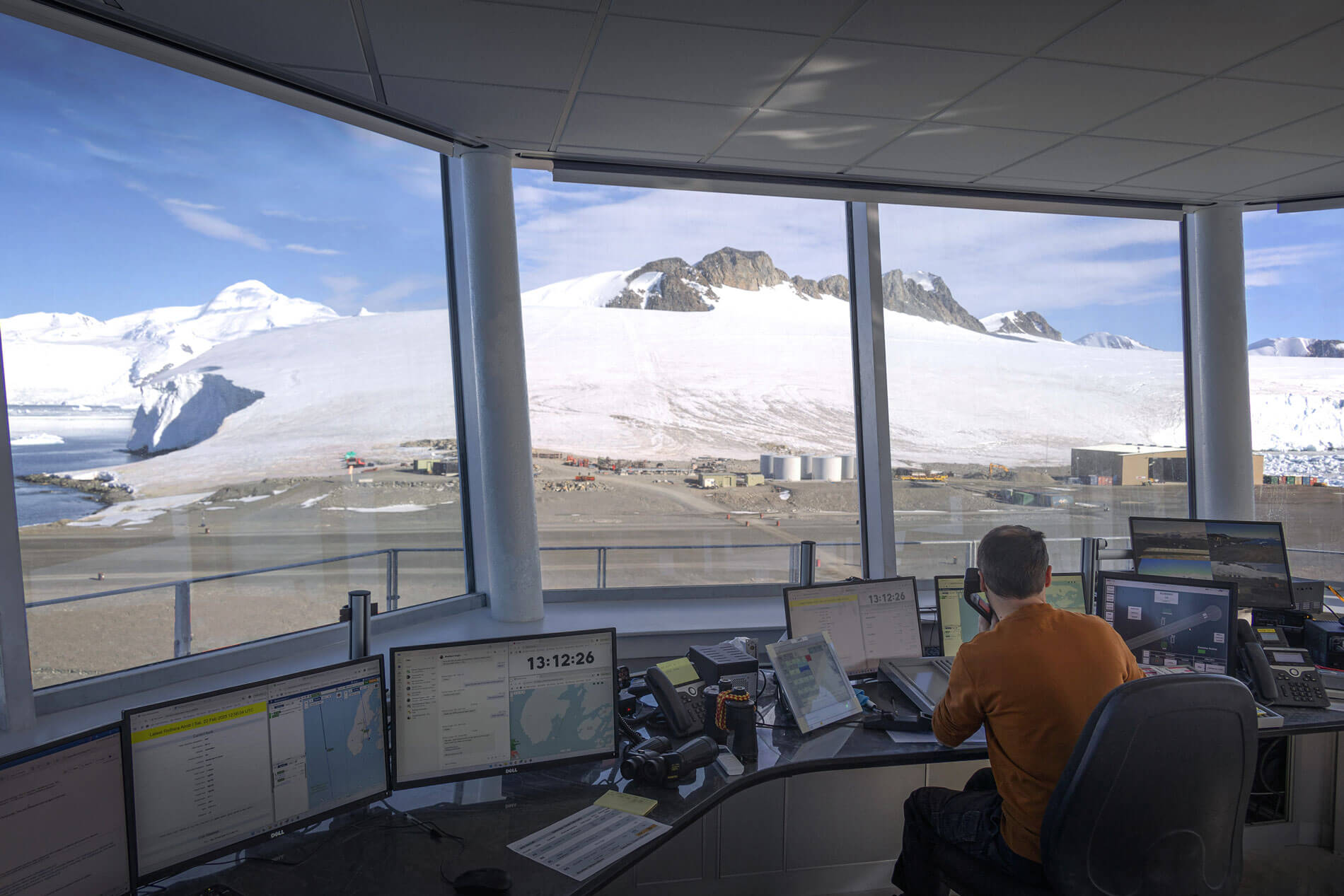
The Discovery Building’s facade is comprised of highly insulated composite panels and triple glazing, for airtightness and energy performance purposes. The envelope was designed to direct airflow to the complex’s leeward side, reducing snow accumulation adjacent to the building.
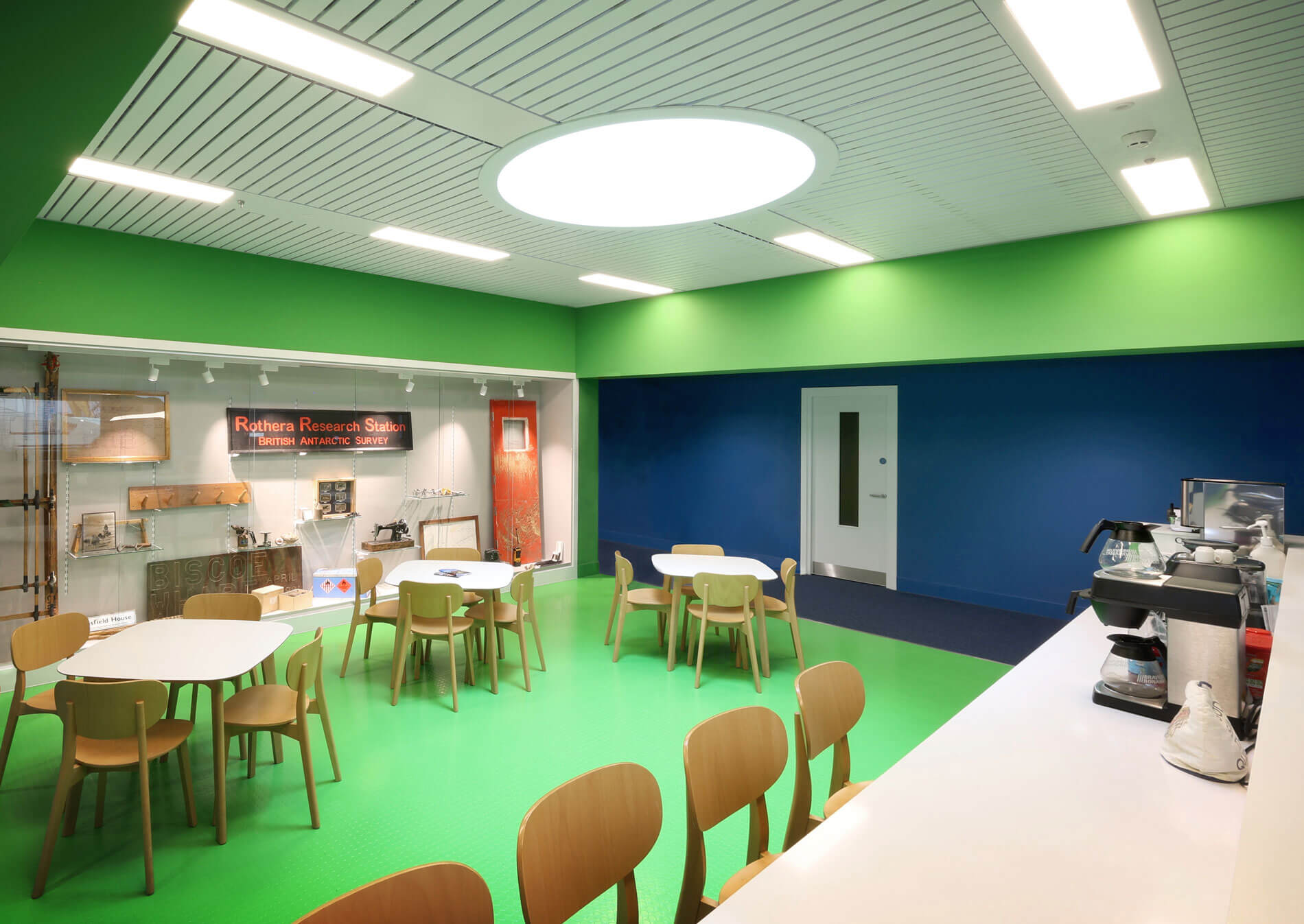
The building consolidates multiple BAS programmatic needs—field preparation areas, workshops, medical facilities, offices, recreational spaces, a central store, and critical plant services—all under the same roof in an aerodynamic form, oriented to perform well with the prevailing winds, the architects said.
Moving forward, the Discovery Building will play an essential role in the fight against global warming, according to Lord Patrick Vallance, U.K. Minister of State for Science, Research, Innovation and Nuclear.
“Antarctic research is essential to understanding how changing climate patterns could affect our planet in the years to come, from food security to flooding risk—so together, we can act,” Vallance said.
Vallance elaborated: “The UK has long been a leader in polar science and this government investment in modern, state of the art facilities will enable current and future generations of researchers to tackle shared challenges with our international partners.”
→ Continue reading at The Architect's Newspaper

