
An appreciation for greenspace is usually unanimous, whether at the foot of the mountains in Colorado, at the banks of the river in Kentucky, or amid the bustle of New York City. That’s not to say parks, protected land, and public plazas don’t get caught up in controversy or find themselves at the center of hard-fought preservation battles, as was the case for a number of sites across the U.S. this year.
AN looks back on the new parks that opened in 2025, the land deemed worth saving, and the sites that came under scrutiny.
Elizabeth Street Garden can stay put, following a long battle for its protection
As 2024 came to a close the future of Elizabeth Street Garden, a plot of green space stewarded as an extension to the Elizabeth Street Gallery, was uncertain to say the least. Housing developers have been eyeing the site in Nolita for years, with hopes of building affordable housing for seniors there. The nonprofit organization has long fought off these plans and much came to head over the course of 2025. In 2024 the garden received an eviction notice, and in February Elizabeth Street Garden Inc. filed a lawsuit aimed at stopping the housing development.
In June a deal was reached, allowing Elizabeth Street Garden to stay open permanently, with the housing instead moved to a site two blocks away. However, incoming mayor Zohran Mandami has indicated he supports the housing plan; to secure the garden’s future, current Mayor Eric Adams designated the garden as official city parkland in November.
A pedestrian bridge in Denver was nixed from a redesign of the city’s civic core
In Denver, a project planned to coincide with Colorado’s 150th anniversary got bad flack from the public. A masterplan shared for Denver’s Civic Center was first shared in 2022 and Studio Gang was tapped to lead Phase 1 of the project. The firm envisioned a snaking pedestrian walkway, informed by the region’s geology, that would connect the Colorado State House with the memorial park across Lincoln Street.
After the renderings were shared and cost estimates publicized, opposition to the project mounted. A survey let the public weigh in and the bridge is no longer a part of the city’s 150th anniversary plans.
A resilient Wagner Park opened in Lower Manhattan
It seems all along New York City’s 520 miles of waterfront construction projects are underway, largely motivated by a need for resiliency. This summer, a 3.5-acre park cleverly disguised as flood infrastructure was completed, insulating a sliver of Lower Manhattan from rising sea levels. At Wagner Park, AECOM re-engineered the site with flood mitigation strategies and Thomas Phifer and Partners designed a new pavilion.
The park’s expansive lawn conceals the sheet pile flood wall built underneath it. The concrete pavilion is defined by its red hue and arched vaults. With this section of waterfront fortified, work moves north.
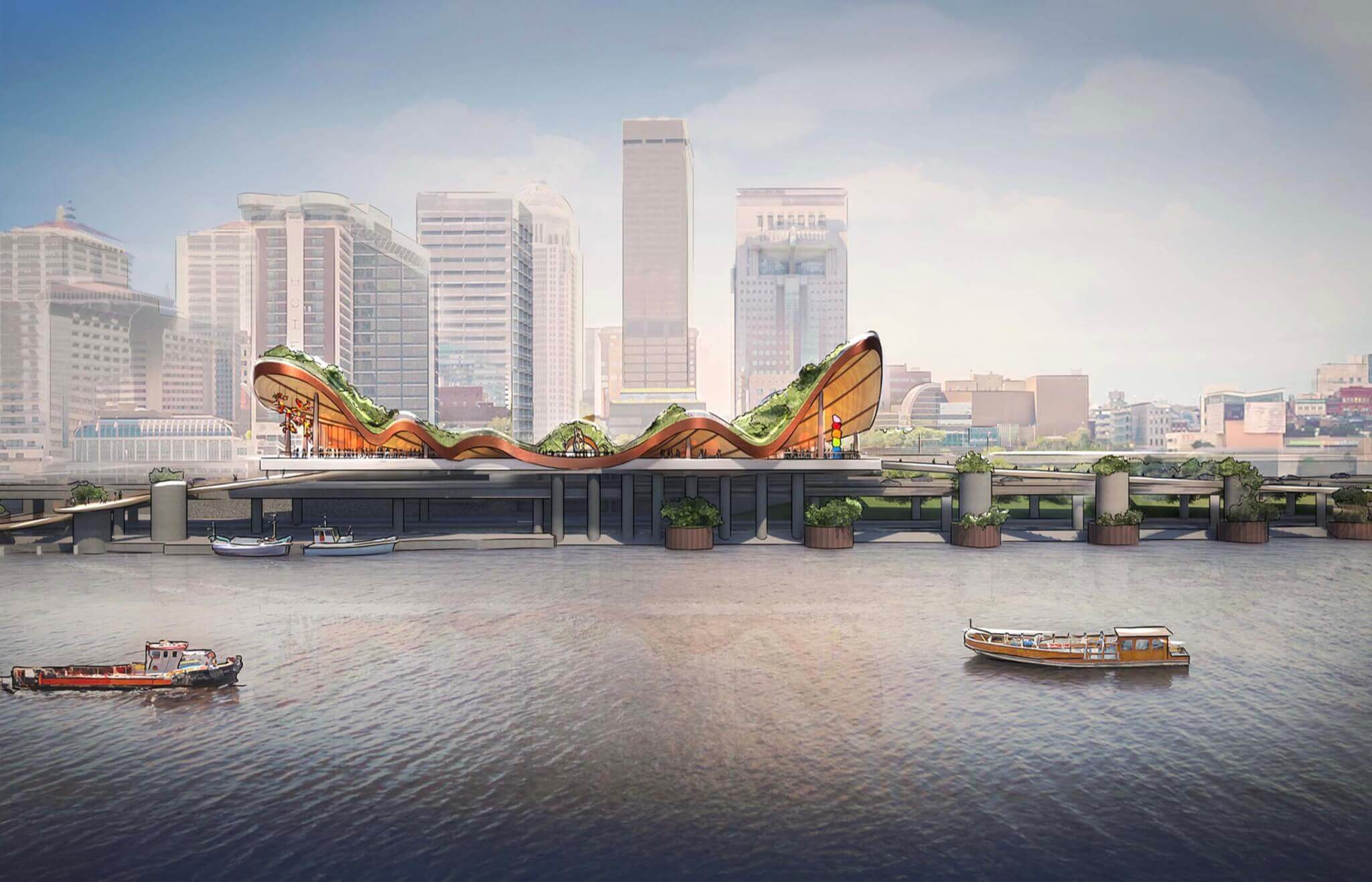
Heatherwick Studio proposed a waterfront park in Louisville, Kentucky
In Louisville, Kentucky, a plan for the unsightly and inefficient “elevated event space,” dubbed the Belvedere, drew public attention this year. The city commissioned Heatherwick Studio to redesign it and the firm delivered an ostentatious proposal in line with its previous organic structures. In January, initial concepts of the Belvedere’s redesign were shared; they proposed an undulating structure and expansive park space for the site comprising a parking garage, interstate, and 7 acres of park.
Months later the firm was asked to take its ideas back to the drawing board. Heatherwick’s proposal must be revised so that the building portion will not extend over the river. The city said the design needed to be pared back because of costs related to bringing construction cranes on barges out on the water, not to mention the safety risk also associated with this.
City officials said they hope to keep the construction cost at $125 million. Shovels are expected to break ground in spring 2027 with completion targeted for 2030.
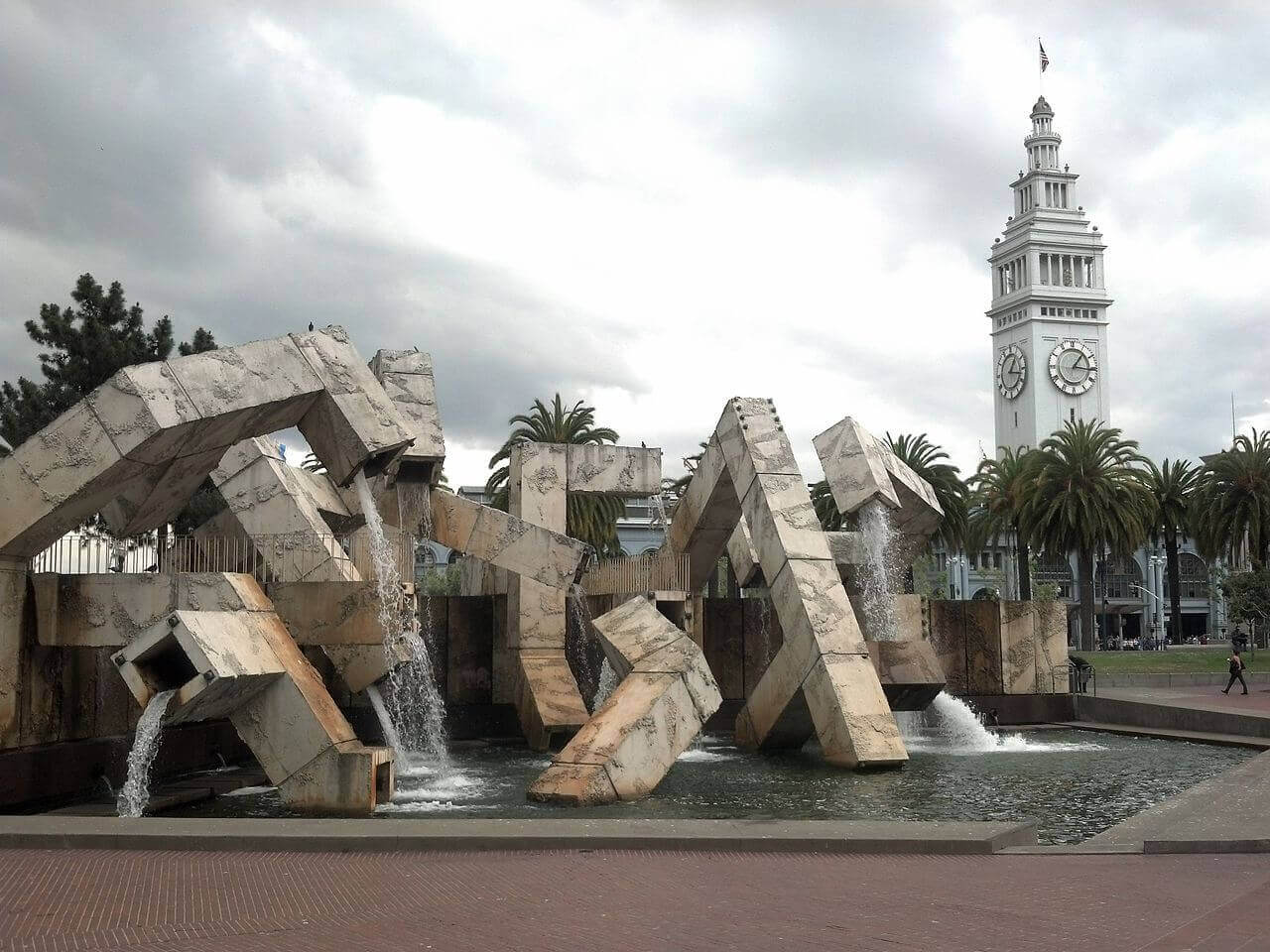
Vaillancourt Fountain was sent to storage after calls for its demolition
In California’s Lawrence Halprin–designed Embarcadero Plaza, it’s a half-win for those who sought a future for the Brutalist sculpture by Armand Vaillancourt.
The fountain was installed in 1971 as the centerpiece of the public plaza. A circulating redevelopment plan would absorb the plaza, connecting it with the adjacent Sue Bierman Park to create a single, unified 5-acre park. In addition to the redevelopment plans, the aging sculpture is in dire need of restoration, spurring calls for its demolition, or at least removal from the park.
The Cultural Landscape Foundation, Docomomo, and the artist’s daughter who lives nearby pushed for its saving, but ultimately the fountain was disassembled from the site and put into storage, where it is slated to be kept for three years. And what happens after that remains to be seen.
In Florida, legislation was enacted protecting State Parks from development
Florida Governor Ron DeSantis signed legislation this year protecting Florida’s 175 state parks from development. It’s a complete reverse of course from a plan announced by the same administration in 2024 that would have opened nine of Florida’s state parks to new development in favor of constructing golf courses, luxury lodges, and pickleball courts.
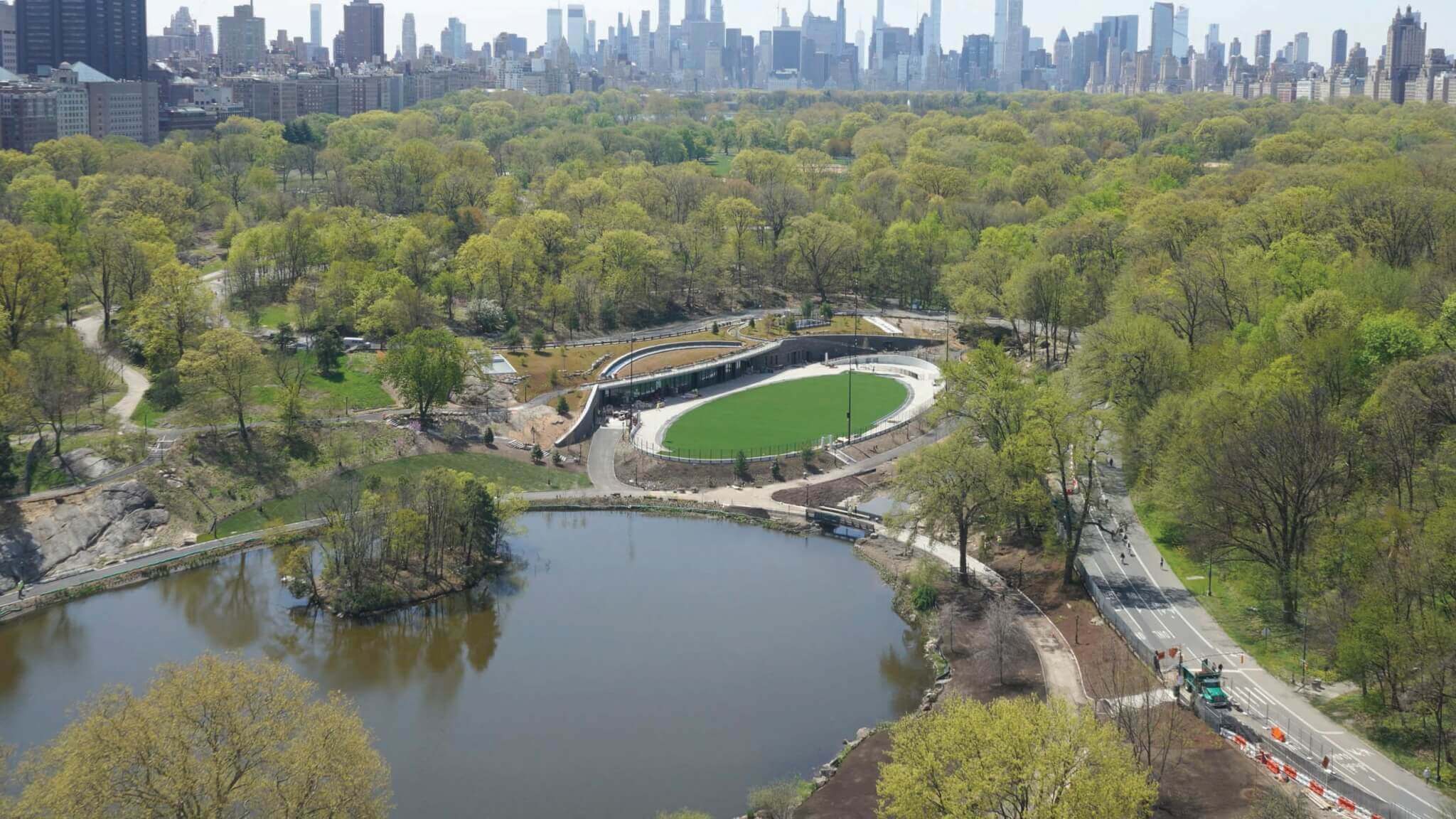
Central Park opened a swimming pool
The swath of Central Park abutting Harlem received a major upgrade this year. Susan T. Rodriguez Architecture and Design and Mitchell Giurgola Architects completed the Davis Center at Harlem Meer, a recreation facility located in the park’s north end. Flexibility was the name of the game in the project: an expansive green lawn can convert into a swimming pool in the summer and a skating rink in the winter months.
The project also entailed the construction of the supplemental recreation building, built out of locally sourced stone, green ceramic tiles, and wood. Restoring water infrastructure was also a major component of the job.
→ Continue reading at The Architect's Newspaper


