
The $900 billion dollar consulting industry has remade all aspects of business, from how the C-suite approaches management to how the public sector operates. The thinking goes: We don’t have the right in-house expertise, so let’s bring in someone else who does. It’s a strategy that now applies to architecture competitions.
Over the past three decades, architectural competition consultants have shifted from niche experts into a full-fledged industry, which AN covered last fall. As more consultants take on influential roles in the business of building, they have reshaped competitions, thereby becoming powerful gatekeepers between important commissions and the firms who want to design them.
Competition can be a very healthy and rewarding part of design (who doesn’t want to win?), but with costs and requirements for participation rising ever higher, stipends that never cover the investments firms make, and a familiar set of firms securing many of the most prestigious commissions, some architects are eager for a fairer way forward. Across architectural practice, many are calling for terms that support vigorous competition, ethical labor practices, and, of course, exceptional and innovative architecture.
Rising Demands
As competition consultants have professionalized, contests themselves have become more demanding. It’s common for competitions to have multiple phases and to ask for digital renderings, 3D models, fly-through animations, a video interview or profile of the architecture firm, and physical models. In later phases, architects are sometimes asked to provide schematic drawings and highly detailed sections. Each deliverable sets the barrier for entry even higher, limiting who can participate.
Marion Weiss and Michael Manfredi launched their firm Weiss/Manfredi by winning two competitions: the Women’s Memorial and Education Center, in Virginia, and Olympia Fields and Community Center in Illinois. Both were built in the 1990s. “Given current competition requirements, that might not have been possible today,” Manfredi told AN.
Back then, competition asks were far more manageable. Olympia Fields, for example, consisted of one stage and only required the submission of two boards. “Those requirements are very different from the elevated criteria of contemporary competitions,” Weiss said. It’s not just deliverables that have become more involved; resumes have to be longer, too. In Weiss/Manfredi’s experience, clients want to see a portfolio of buildings that is aligned with the typology and scale that they seek to commission, which also inhibits firms with less experience from participating.
It’s not like you can show up to an F1 race with a modest sedan; as soon as someone ups the ante, it’s practically an obligation to do the same. To remain viable in rigorous competitions, architecture firms feel an obligation to spend well into the six figures on their entries. One architecture firm audited its competition expenses through the years and, after adjusting for inflation, found that it averaged between $200,000 and $300,000 per entry. For a recent competition, Allied Works spent $250,000 on labor and another $250,000 on models, fly-throughs, and video according to founding principal Brad Cloepfil.
Competition stipends, sometimes tens of thousands of dollars but sometimes reaching into the six figures, rarely cover these sums. On top of that, architects also don’t always retain intellectual property for competition entries that don’t win. “That’s not a fair deal,” said one prominent architect who spoke to AN anonymously about the terms he’s seen. “The intellectual property that architects provide, especially at the top end of the profession, is the most important thing we do.”
But because winning a competition can lead to a career-defining project, provide the opportunity to build groundbreaking ideas, and offer networking opportunities, architects who are invited to the table (and can afford to join) will do whatever it takes to win. Even if they’re runners up, the entries demonstrate what the firm can achieve—and might catch the eye of a future client—making competitions worth it for some.

“We all grouse around and you wish they’d pay you more, right?” Cloepfil said, noting that he enjoys the adrenaline of competing, how energized his firm becomes, and producing big ideas alongside his peers. “Winning is better than not, but still being in the game is really fun. I love it.”
The Business of Competitions vs. The Art of Building
Gone are the days when a competition was simply about commissioning a building. For institutions, the competition can also be a public relations vehicle and a fundraising tool, a way to generate more excitement for the project. So, it behooves competition consultants to organize a vigorous contest to demonstrate their value to their clients. This is where architects raise their eyebrows.
“It turns what we do, which is this serious solemn craft, into a kind of a circus, and I don’t think that’s healthy,” the prominent architect said. He especially took issue with the role media and social media play in competitions, paired with an existing content-driven culture that digests images but doesn’t engage critically with ideas. “I think a lot of it is PR for the intermediary—’Oh, the intermediary got a hundred people to enter the competition and narrowed it down to this list of the same five people that you read about all the time,’” he said. “I can’t tell you how many of my colleagues I’ve spoken to who say that the same consultant will call you after you haven’t been shortlisted and say, ‘There were five shortlisted [firms] and you were number six.’ So ten of us were ‘number six’? They’re trying to make sure we enter the next one.”
Another architect who regularly participates in competitions also spoke on the condition of anonymity compared competitions to the Hollywood studio system. “Somebody wants to make a movie; the agents and producers are largely in control, and they want to provide the greatest range of choices on casting,” he said. “The architects are a bit like the actor pool, with everybody looking for work and jumping through hoops to try to get to an audition.”
One concern the experts AN spoke to for this story expressed is the decision-making that goes into shortlists and eventually selecting a winner. Who ultimately calls the shots? Charles A. Birnbaum, founding president and CEO of The Cultural Landscape Foundation, a Washington, D.C.-based education and advocacy nonprofit, notes that landscapes are especially sensitive and appropriately judging competitions that engage with them requires specialized knowledge. “We live in an era of overwhelming environmental concerns and over-stuffed programmatic agendas,” Birnbaum said. “Unless the jury includes individuals who have dexterity in both natural and cultural systems when managing change, the results of design competitions could have an adverse effect erasing significant historic fabric and nullifying cultural lifeways.
Without that fluency in design and culture, will jury members or boards just go with name recognition? That might be what they want anyway.
“This is in defense of people trying to run competitions and selection processes: Clients oftentimes just want the latest, biggest name,” Cloepfil said. “And so, if you’re asked to organize a selection process or a competition, you want to deliver that. That’s what you’re being asked for. So you may deliver the architect of the moment for a project that is not appropriate, but you got to make that client happy.”
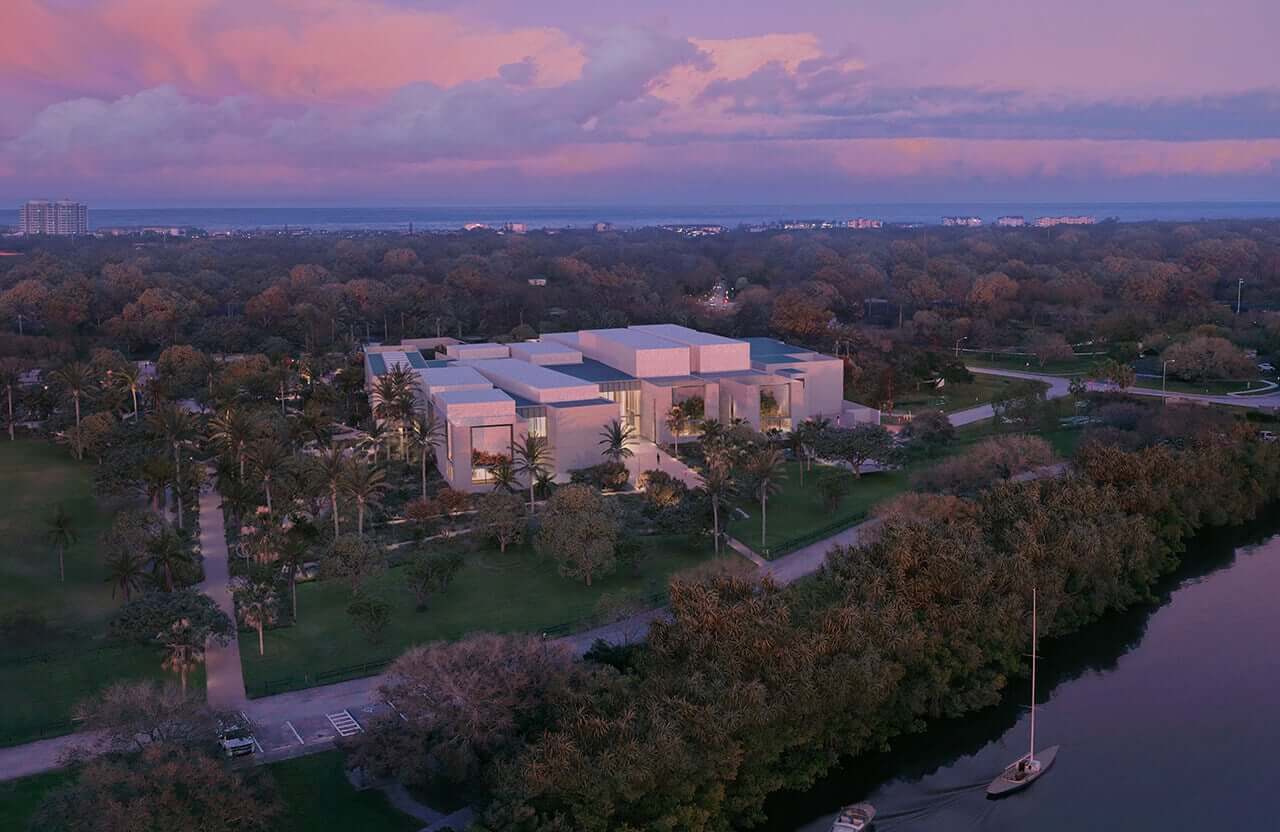
Media and publicity also play a role here. Cloepfil noticed another trend that evolved alongside the rise of more demanding competitions: the decline of architectural criticism and therefore a smaller discerning audience. The caliber of discourse that is part of everyday conversation has changed. Good criticism certainly exists today, but it is often found in specialty publications.
“When we started doing cultural work, every city newspaper had an architecture critic,” Cloepfil reflected. “The major magazines had architecture critics. The information was out there. You could pick and choose. Everybody has their biases, no question, but there was a critical conversation, which doesn’t exist today. So the conversation gets smaller and smaller and smaller. Where do clients go [for information]? Where do boards go? Where do directors go other than to their friends or competition consultants?”
Who clients hire as consultants, and how discerning they are about architecture, shapes the competition too. Cloepfil’s first museum project, the Contemporary Art Museum St. Louis, completed in 2003, resulted from an invited shortlist compiled by Terence Riley, then the curator of architecture and design at MoMA. Since then, he’s noticed a difference between competitions advised by people he regards as critical voices, consultants who have strong architectural backgrounds, and those organized by management consultants.
“It puts a lot of responsibility on the architects to really try to figure out and find out who’s really making the decisions and who’s making the recommendations,” Cloepfil said. “Before you spend your $250,000 in six months, you need to know that the process is really thoughtful and careful and discerning, and the people making the decisions are informed and ideally unbiased and uninfluenced.”

The hope is that competitions run by those who are more familiar with the inner workings of architecture—things like the cost of architectural models, how many hours it takes to produce technical drawings, and firm workflows—might be able to shape terms that are more equitable to architects while managing the expectations of everyone involved.
New consultancies are emerging to help address the equity issues at play. What’s often missing in the commissioning landscape, according to John Patrick, founder of the Detroit-based consultancy Above the Fold, are advocates for architects. His company specializes in curating design teams for architectural projects from clients who are interested in ambitious design but don’t have the know-how, time, or resources to engage in a competition or RFQ/RFP process. After working with some of the country’s leading architecture firms on business development and public relations, Patrick—who has a background in art, economics, and real estate and has worked in the architecture field for nearly 20 years—noticed a gap between eager architects and available projects. He believes his model is a supplement to existing commissioning structures and will make design teams and contemporary architecture more accessible to clients, communities, and cities. “Architecture needs a revamp,” Patrick said. “I just think there’s a better way forward in terms of helping talent and clients both advance their agendas.” He functions like an agent to bring designers and architects to the attention of prospective clients, saving time and, as he believes, ensuring a good fit on both ends without jumping through hoops. “It’s the right team for the right project at the right time,” he said.
Another core question is just how many materials are required for a competition to serve its purpose and is a competition, or something else, more appropriate. “Some of the competitions that we have found to be challenging, but effective, have limited the scope of deliverables so that it is truly a conversation about ideas and possibilities,” Weiss said. “It would be a great benefit to both clients and architects to focus competitions this way. You’re really at the beginning of a process rather than close to something that is nearly complete.”
Diana Budds is a design journalist based in Brooklyn, New York.
→ Continue reading at The Architect's Newspaper


