
Over the next two weeks in Milan, Cortina d’Ampezzo, and Verona, Italy, and smaller Alpine towns, cross country skiers, snowboarders, hockey players, curlers, and figure skaters will perform for an international audience as part of the 2026 Winter Olympic Games.
To kick things off, Snoop Dogg served as a torchbearer during the official Olympic Torch Relay on a procession through the Alto Milanese and Brianza regions. The torch was designed by Carlo Ratti Associati and debuted in the relay on February 4. Snoop was later spotted driving a Zamboni.
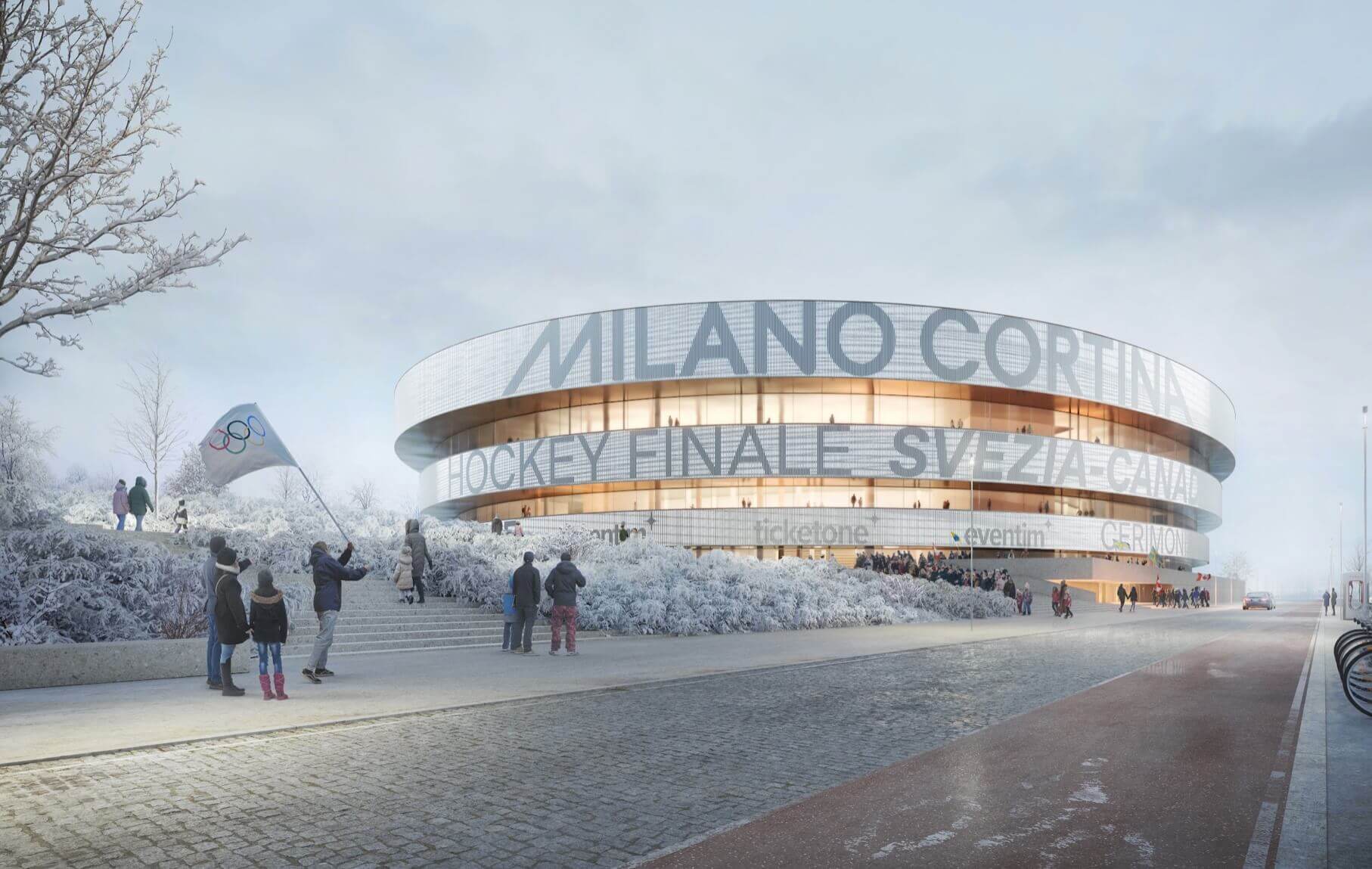
Much has been said about the projects built in Milan to support the 2026 Winter Games—SOM designed the Porta Romana Olympic Village and David Chipperfield Architects the new Arena Santa Giulia—but in fact 85 percent of all Olympic activity will take place within existing infrastructure spread throughout northern Italy, according to officials.
Alpine mountains, for instance, will host cross country ski events. An exhibition center in Milan has been transformed into a hockey venue, a famous football stadium will have music performances, and the closing ceremony will take place inside a Roman amphitheater in Verona built circa 30 AD.
Making Use of Existing Infrastructure
Arena di Verona is a Roman amphitheater built in the first century, now a UNESCO World Heritage Site, that will play an important role in the 2026 Winter Olympics. The ancient arena is close to famous renovation projects by Venetian architect Carlo Scarpa (Castelvecchio Museum and the Banca Popolare di Verona) and will host the 2026 Winter Olympics closing ceremony on February 22.
The Italian government allocated over $21 million for the arena’s refurbishment to support the ceremony. Milan-based architect Giulio Fenyves, of F&M Ingegneria, led the renovation effort, which entailed accessibility upgrades.
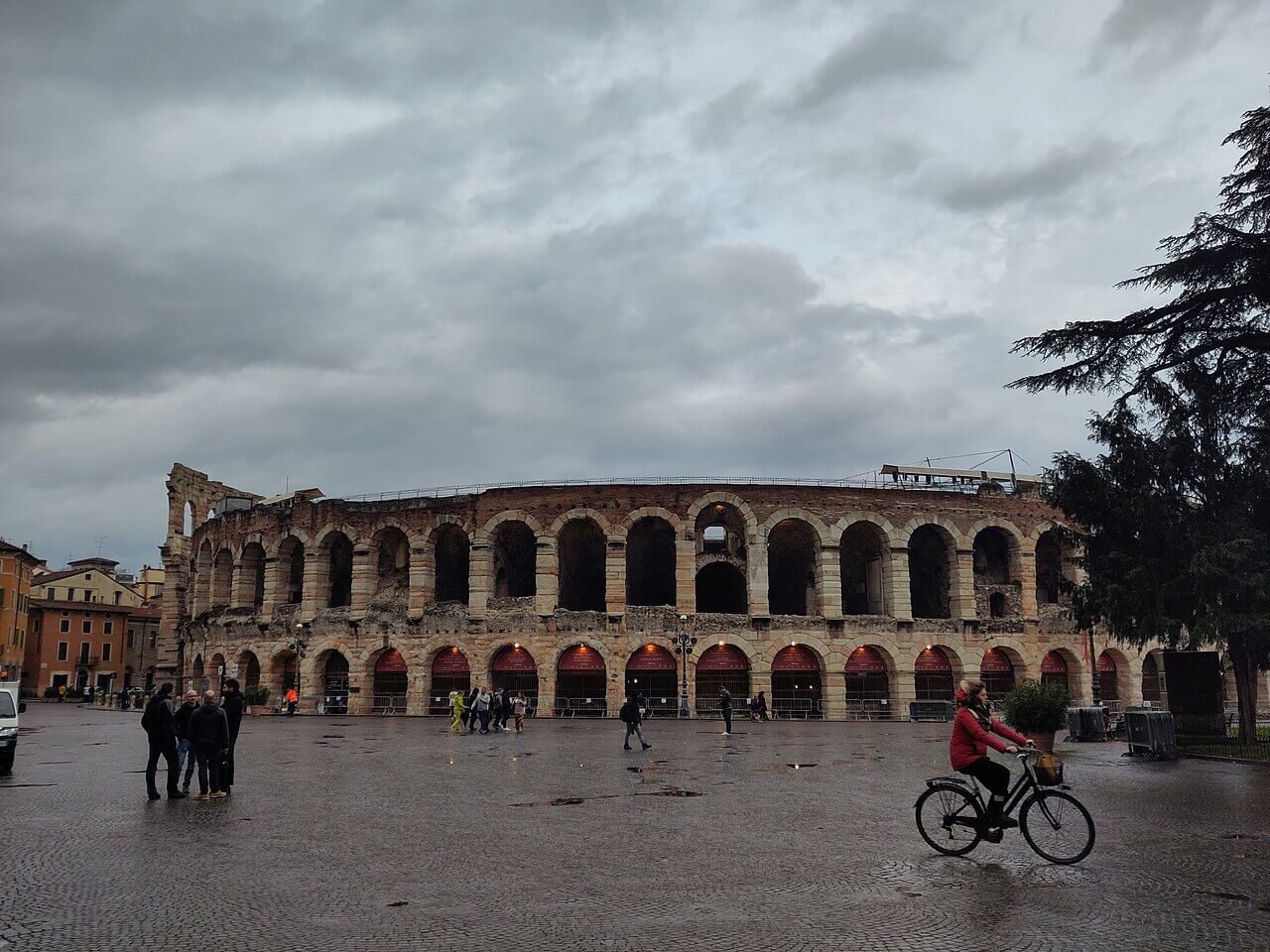
Verona officials revamped the city’s infrastructure ahead of the games, like what we are seeing in Los Angeles before the 2028 Summer Olympics. In Verona, a kilometer-long pedestrian and cycling path between Verona’s main train station, Verona Porta Nuova, and Arena di Verona was built to accommodate visitors in wheelchairs and baby strollers.
“The occasion of the Olympics has made it possible to reconsider a series of logistical aspects, including facilitating entry and exit,” Fenyves recently told local reporters, in regard to the renovations at Arena di Verona, “precisely because it continues to host major events with thousands of people.”
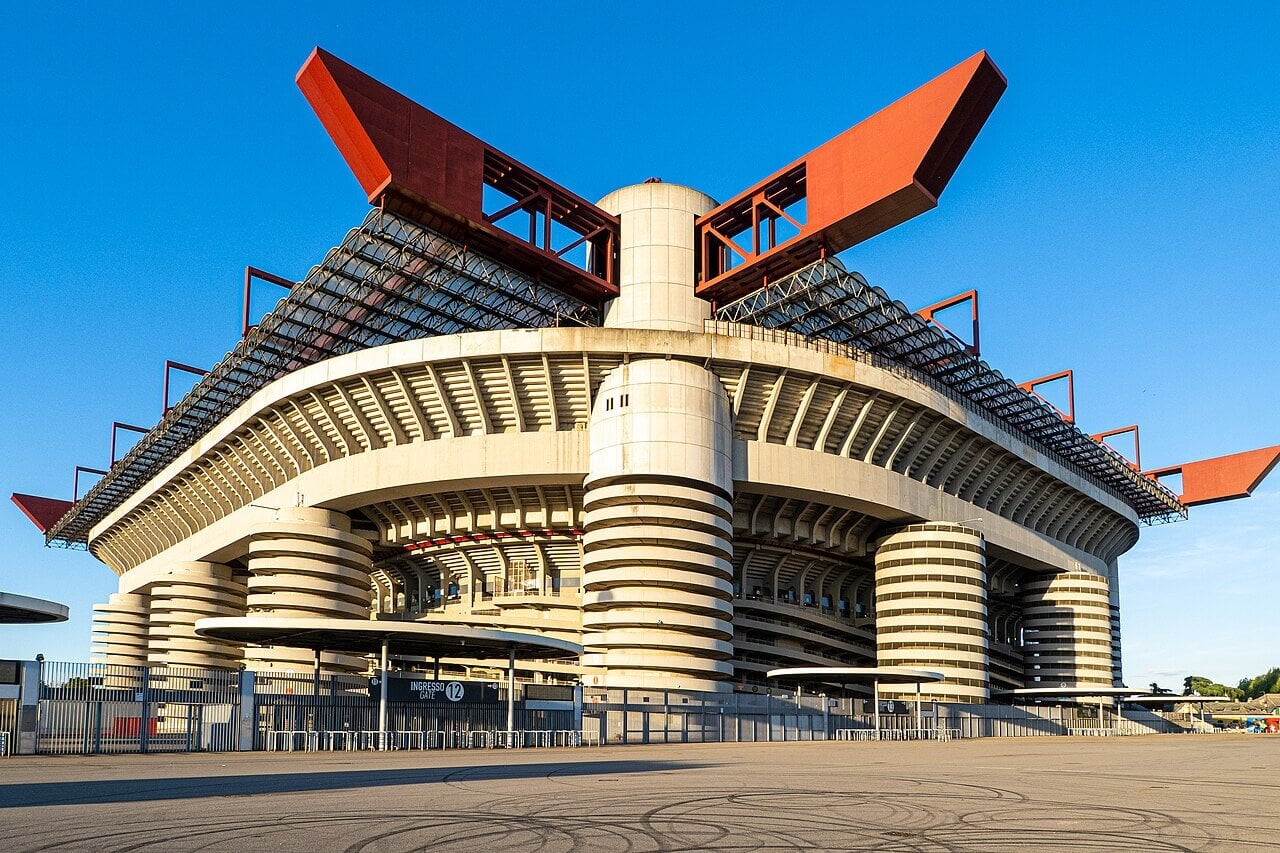
Milan’s San Siro Stadium was completed in 1926 by Ulisse Stacchini and engineer Alberto Cugini. The venue was subsequently expanded several times in the following decades (in 1935, again in 1955, and later in the 1990s). San Siro Stadium is today home to AC Milan, but the historic sports complex is slated for demolition and replacement sometime before the UEFA Euro 2032.
For the 2026 Winter Olympics, San Siro will stage music performances by pop star Mariah Carey, classical singer Andrea Bocelli, classical instrumentalist Lang Lang, and Italian singer-songwriter Laura Pausini.
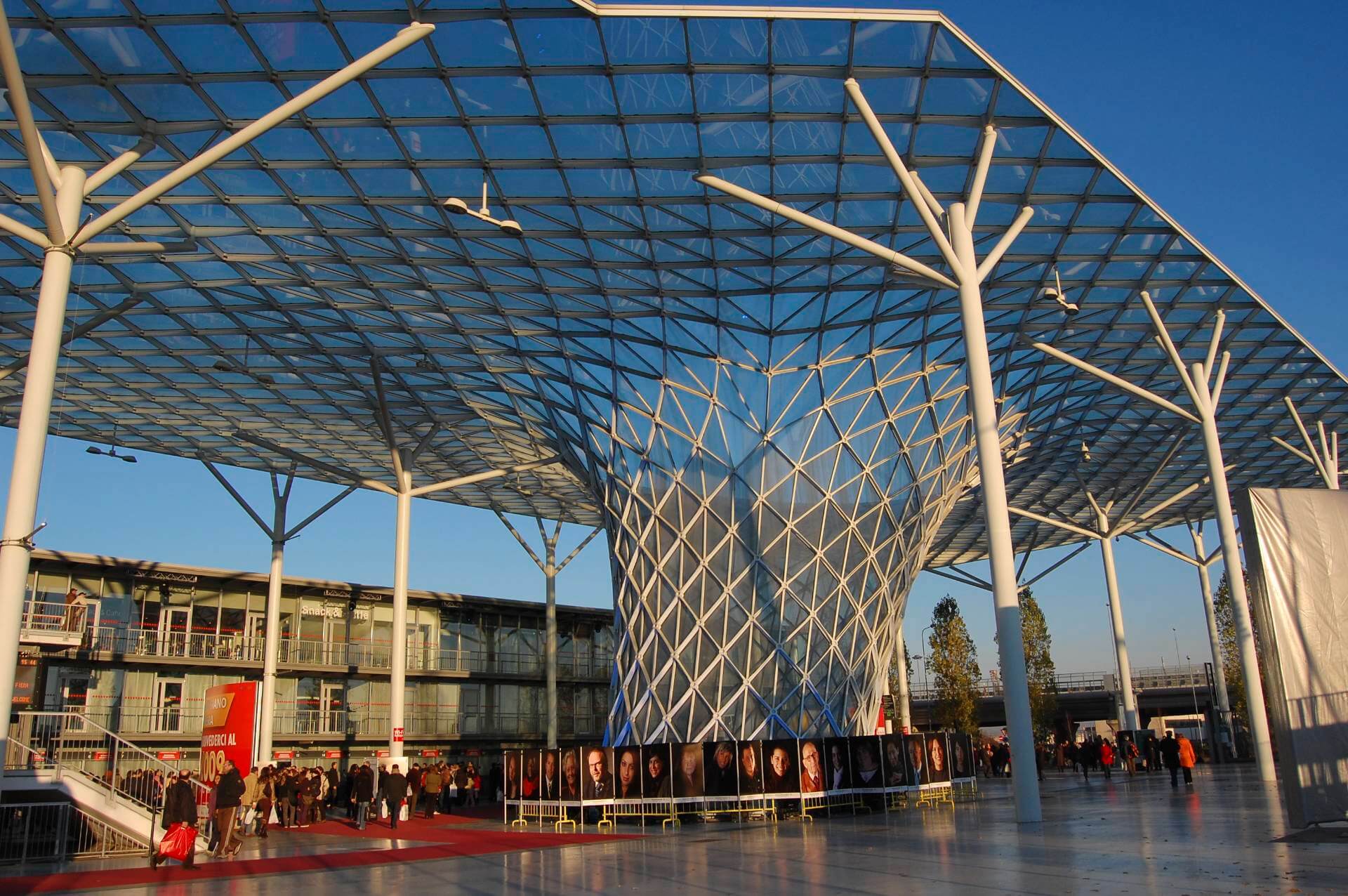
Hockey games will take place in two different facilities: Arena Santa Giulia by David Chipperfield Architects and an existing complex, the Fiera Milano Rho, by Massimiliano Fuksas. Fashioning Fiera Milano Rho for hockey was no easy feat; ESPN described the revamped venue as a “makeshift structure with a maze of supports holding up temporary walkways, with large black curtains surrounding the rink and hanging at each entryway to insulate it.”
In Assago, a small town outside Milan, the Unipol Forum was also refurbished for the games. It is redebuting as the Milano Ice Skating Arena. The Unipol Forum opened in 1990 and was designed by Giuseppe and Luca Cabassi, a father and son pair of architects. It will host figure skating and short track.
Flexibility was key in the renovations: Skating events like short track require thin ice while slower, more performance-based sports like figure skating demand a thicker slab. Additionally, padding needed for hosting track events can be removed to accommodate figure skating.
Cortina d’Ampezzo played host to the 1956 Winter Olympics. On its grounds a new facility for sliding track events like bobsleigh, luge, and skeleton was constructed. The new Sliding Centre in Cortina d’Ampezzo was built out of the Eugenio Monti Olympic Track, shuttered in 2008. It honors the legacy of Eugenio Monti, a bobsledder. After the Olympics, the facility will remain in use for future competitions. Like its predecessor the new 5,675-foot track features 16 curves.
Italian skeleton athlete and Olympian Mattia Gaspari tested the facility last year and touted how it was rebuilt in just 300 days. Gaspari said: “Now Italy, after many years, has its own track again and in the future, the Alps can host many races in a couple of hours of driving distance from each other. The track looks beautiful, with different types of curves, but most importantly, many of them are nearly the same or resemble the ones from the old track!”
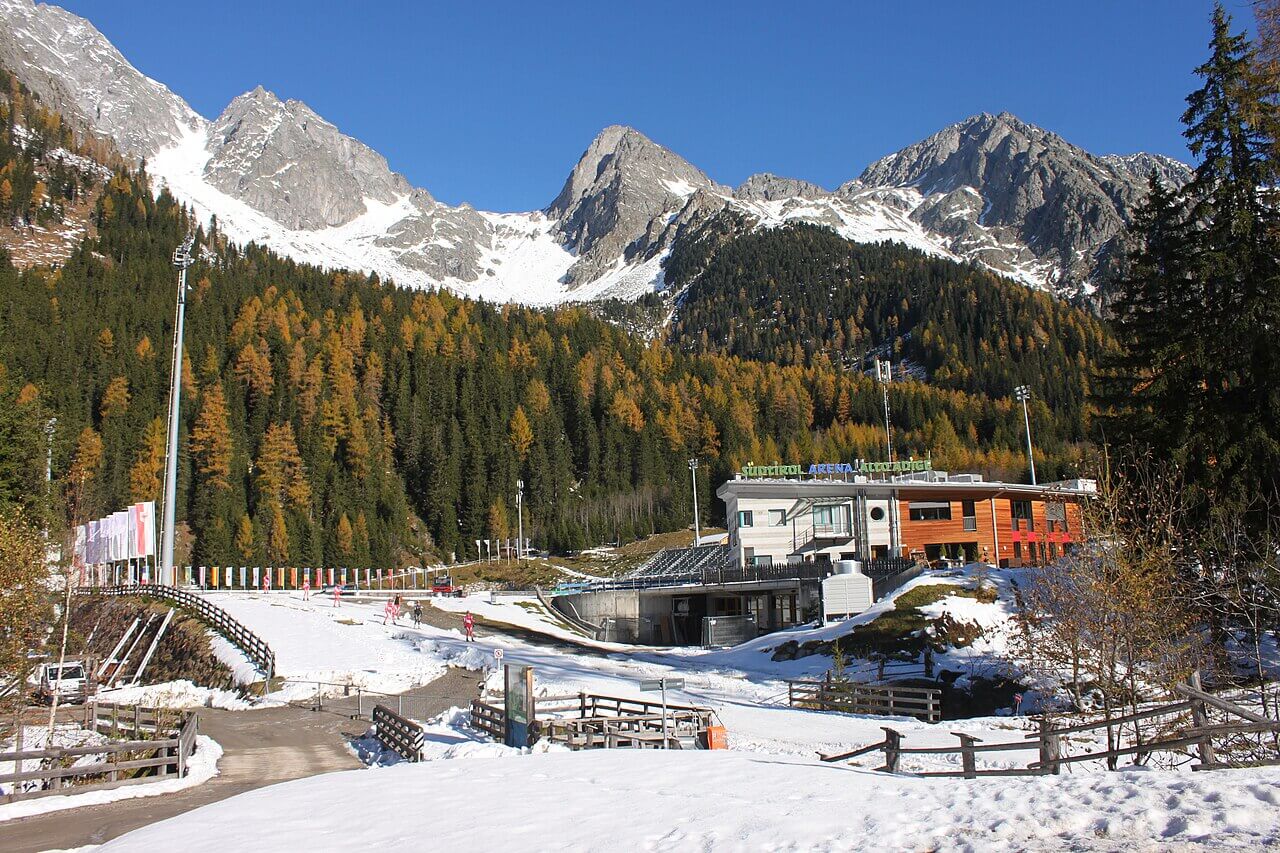
Near the Austrian border, the Antholz-Anterselva Biathlon Arena will host high-altitude snow games. The complex opened in 1971 and is over 5,200 feet above sea-level. Shaded portions form a forested landscape keeping the competition grounds cool and slow.
Forested trails in Predazzo and Tesero will host Nordic and cross-country skiing. Bormio, a medieval spa town, will host men’s alpine skiing and ski mountaineering. Livigno, another town nearby, will have global freestyle and snowboarding competitions. Venues in these more rural and mountainous areas require temporary structures and overlays for hosting the games, but the competition unfolds on land constructed per nature’s conditions.
Gentrification and Environmental Concerns
After the 2026 Winter Olympics wrap up, Porta Romana Olympic Village in Milan by SOM will be converted to student housing. Arena Santa Giulia, the new stadium by David Chipperfield Architects, will serve as a permanent entertainment hub for games, concerts, and more. Emphasis was placed however on leveraging existing structures, as opposed to building new ones, for the games in order to assuage concerns related to environmental and social impact that have plagued past Olympics.
“By anchoring events in existing venues, the Olympic Games reduce the need for new construction, leverage local expertise and help communities deliver projects that meet real needs—accelerating investment in transport and energy upgrades to new housing and community facilities,” IOC sustainability director, said in a statement.
“This is an Olympic Games edition designed to fit its territory,” . “It shows how to honor its host regions, meet their challenges and create a legacy that benefits communities for decades to come.”
Still, questions related to pollution and gentrification hover over the 2026 Winter Olympics. The Washington Post reported this week that the games have driven up property values and exacerbated inequality in Milan.
A sustainability impact report published by the Olympics in 2024 outlined the anticipated carbon footprint of various Olympics-related activities. It estimated that “associated activities” such as spectator
travel and accommodation will be the largest source of carbon emissions.
Activities related to Games Planning and Delivery (for instance, setup of temporary structures) were estimated to account for 30 percent of the game’s carbon footprint, and the construction of permanent infrastructure (building new arenas) was estimated at 29 percent.
“The Winter Olympics and outdoor winter sports have a big problem with worsening climate change and will have to adapt to what’s only going to get more challenging,” University of Michigan School for Environment and Sustainability dean Jonathan Overpeck said in a statement about the 2026 games. “Many favored winter sports locales are seeing shorter winters, less reliable cold and snow, and, sadly, more precipitation falling as rain.”
→ Continue reading at The Architect's Newspaper


