
Mark Cavagnero Associates has thoughtfully renovated and expanded the Bay Area’s largest synagogue, Temple Emanu-El.
The temple, built in the Byzantine Revival style in 1925, stands out against its urban backdrop with its domed terra-cotta roof, arches, and ornate decoration. Bakewell and Brown, the same firm behind San Francisco’s City Hall, designed the building which takes cues from the Second Temple of Jerusalem.
The recent renovation and expansion by Mark Cavagnero Associates reopened the temple’s main entrance, made seismic upgrades, and inserted a 2-story glass structure within the existing structure.
“Our primary intention was to honor and respect this heritage while making the changes necessary for the building to remain useful and relevant for the current and future generations,” Mark Cavagnero shared in a statement.

The original entry into the temple, along Lake Street, was previously shuttered for decades, awaiting security and accessibility upgrades. Mark Cavagnero’s design marries contemporary and historic languages by adding glass to the existing arched entryway.
The local firm first shared its plans for the project in January 2023. A total of 30,000 square feet was added to the campus thanks to the project.
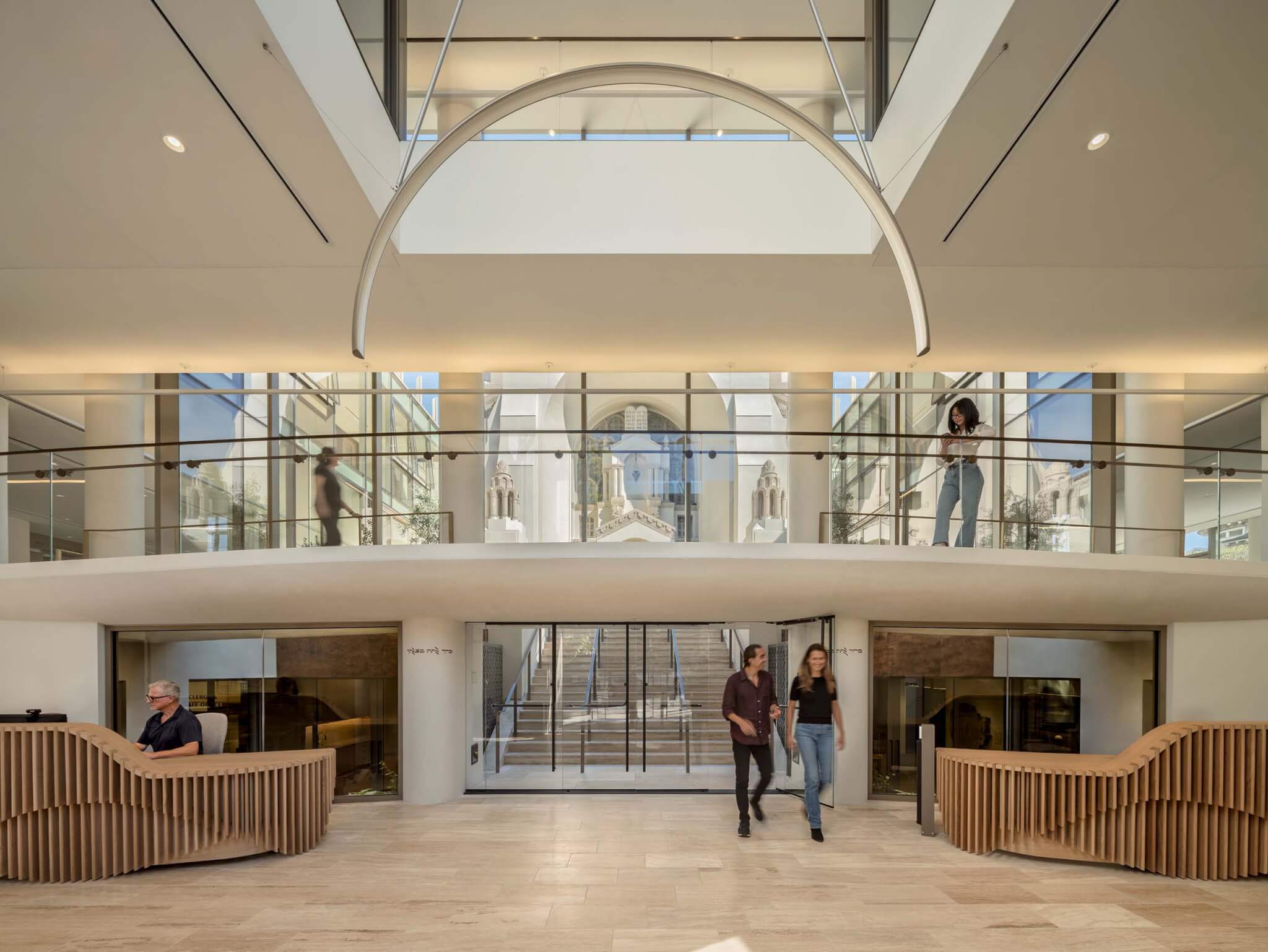
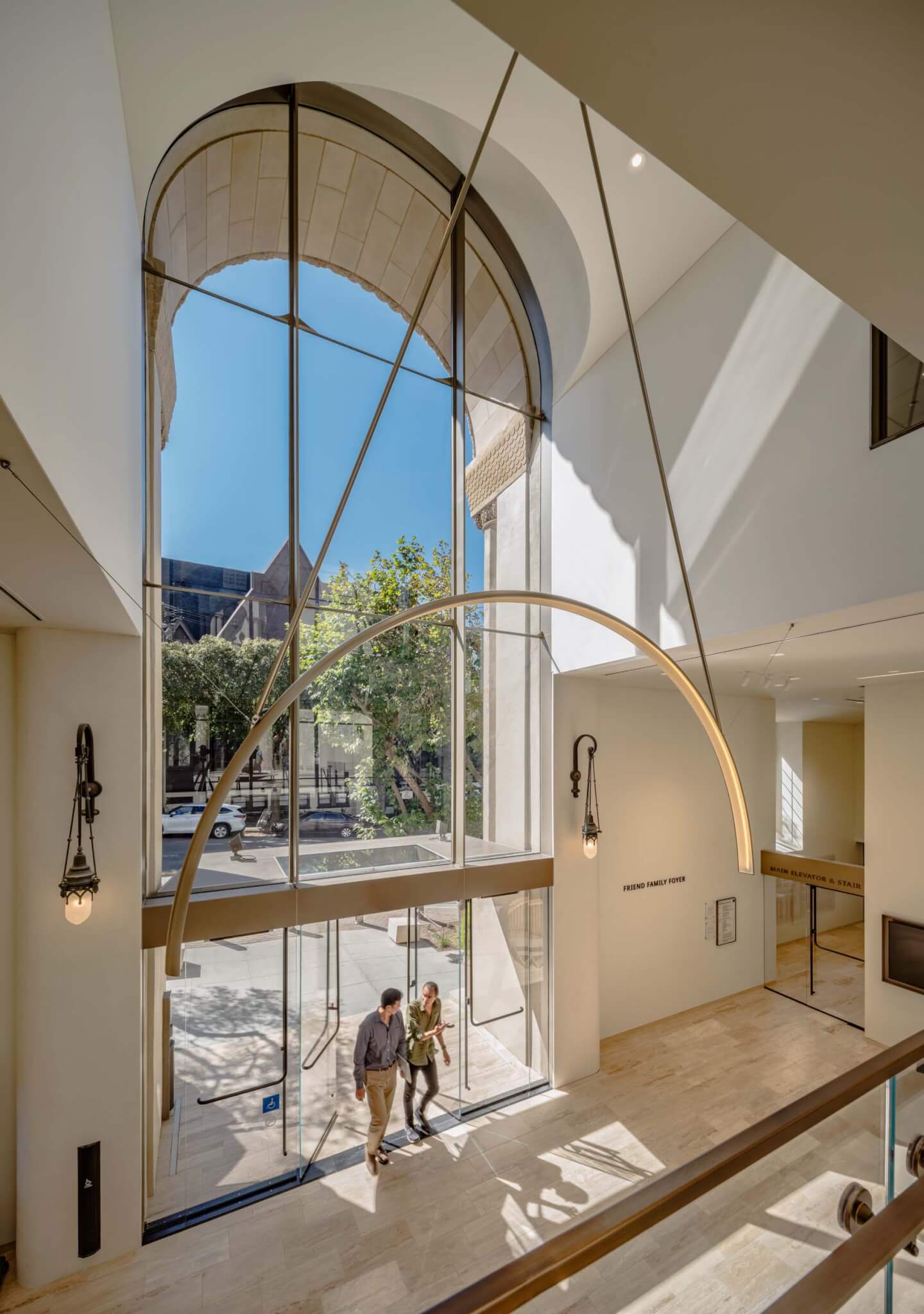
Upgraded lobby space within the 19,000-square-foot addition scantly resembles the ornate exterior with its white walls, pale wood flooring, and light fixture that complement the Byzantine architecture. More glass in the lobby reveals views toward the reconstructed open-air courtyard and the sanctuary just beyond it.
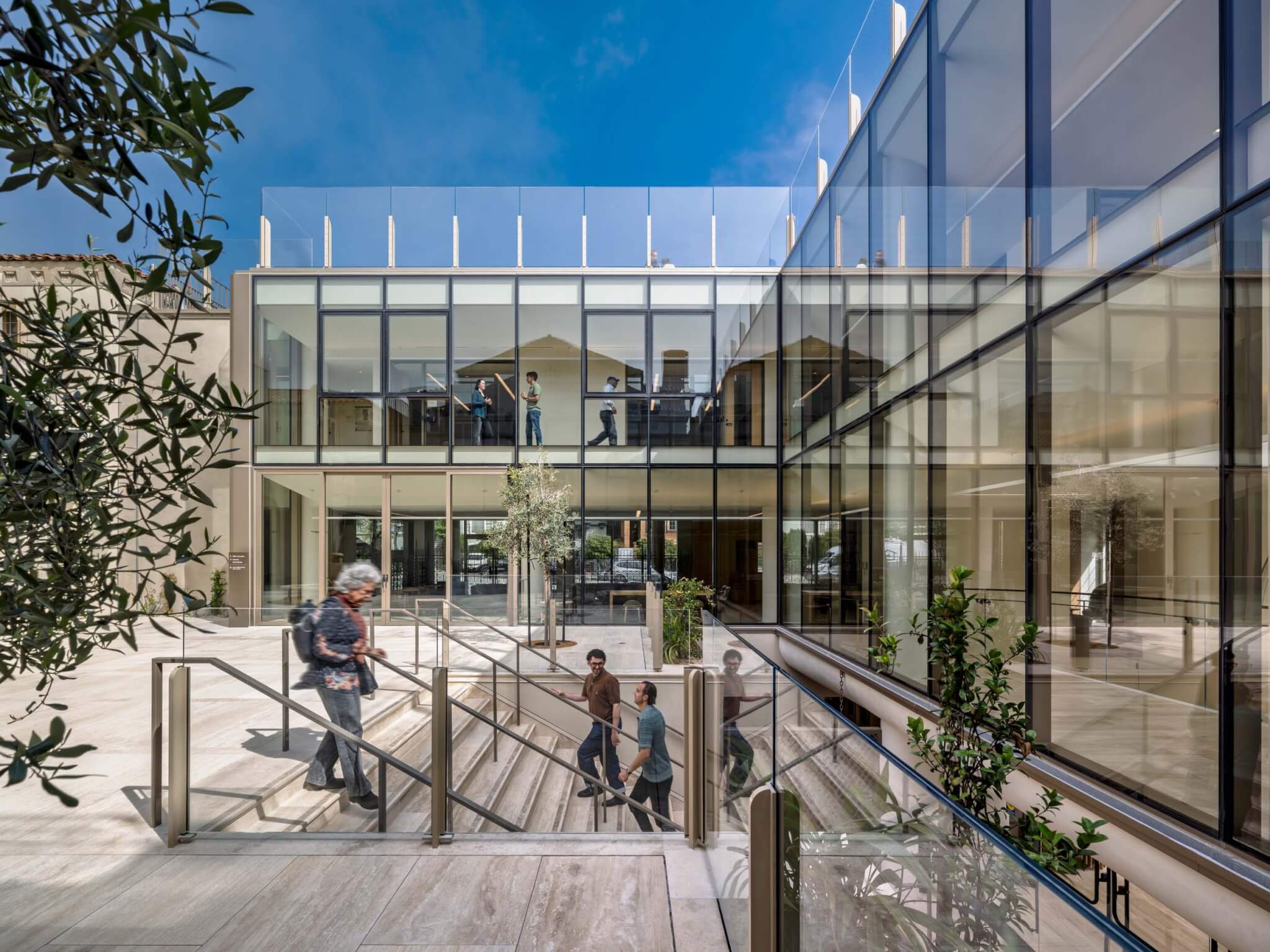
The courtyard, accessed via travertine steps or by elevator from the lobby, is now flanked by a 2-story glass structure. Bronze mullions line the glazing.
Here, the architect’s mesh of old and new is most prevalent. A fountain and tile work remain focal points of the courtyard, as does the facade of the sanctuary, a large worship space untouched by the renovation. On a new roof deck a play area for kids permits up-close views of the building’s dome.
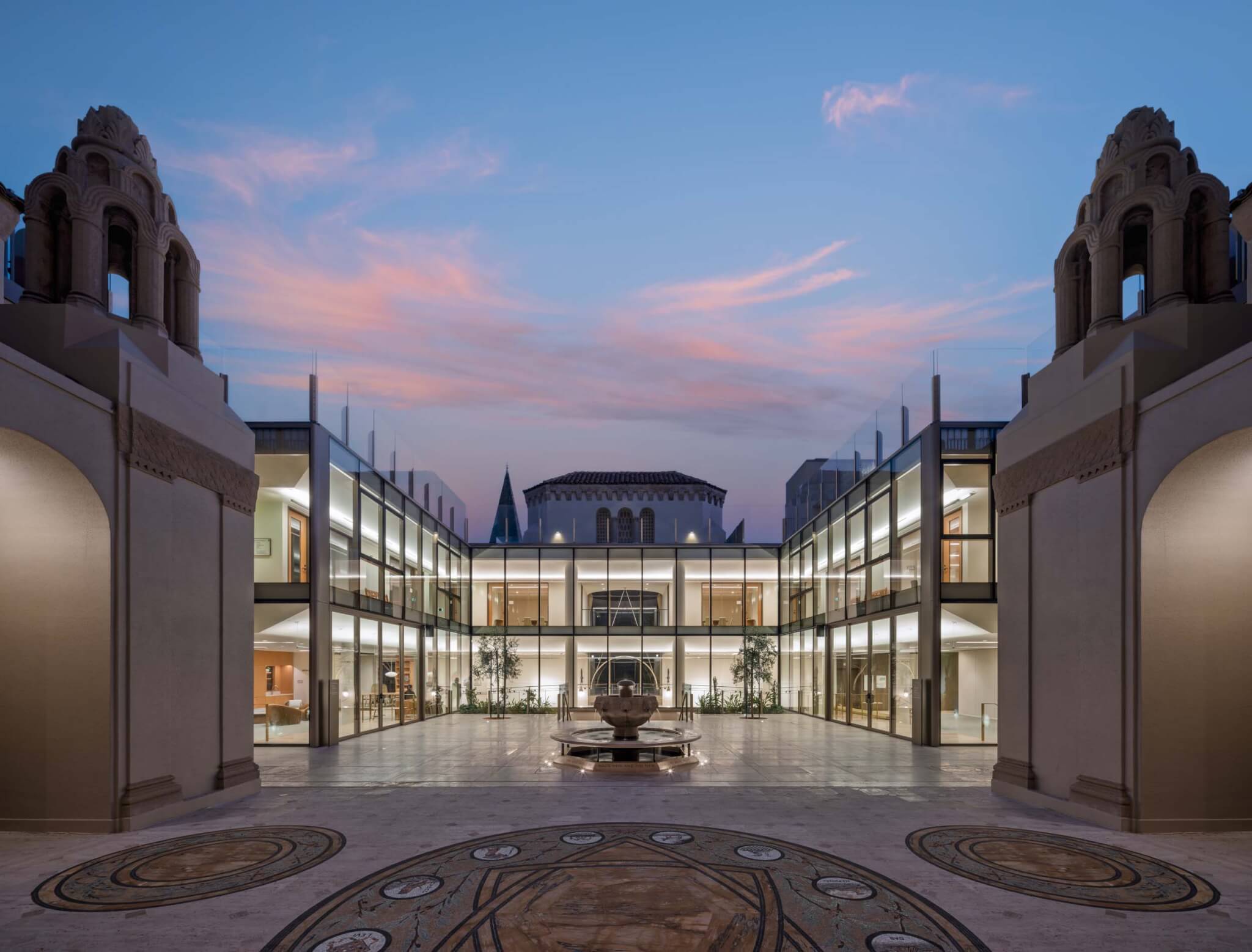
With the additional space, afforded by the glass structure, the synagogue can expand its community and educational offerings, something the congregation was looking to do.
More space was also achieved by excavating below the courtyard, where offices, support spaces and building services were located.
→ Continue reading at The Architect's Newspaper

