
Let’s say an industrial corporation is concerned about climate change. As a moral imperative? Not under capitalism. As a long-term business risk? Perhaps. For a company like Holcim, the world’s second-biggest producer of cement, the risks are enormous, even existential. And one part of their adaptation to changing economic and political conditions was to create a foundation that has given awards and fellowships and, since 2004, organized occasional symposia. So, arriving at its latest international forum for sustainability, held November 18–21 in Venice on the theme of flooding, the obvious question is: How serious are they?
Motivational Speaking
Climate scientist Stefan Rahmstorf’s opening keynote name-checked Alexander von Humboldt (1843) and Roger Revelle (1965) to remind us how long people like him have been raising the alarm about our “vast geophysical experiment.” He called out two villains by name—politicians and the fossil fuel industry—and clarified the time scale of the problem. Even if we magically reduced emissions to zero tomorrow, sea levels will continue to rise for a long time, while “choices and actions implemented in this decade will have impacts for thousands of years to come.” We are already at the stage of managing the patient’s terrible pain with a slim chance to avoid even worse pain in the future. This is our depressing reality. However, lest things got too alarming, host Chris Luebkeman commented that “in Switzerland we’ve accepted that 2 degrees [Celsius] is coming. We wish it wasn’t happening! Maybe one day we will wake up and actually start acting.”
The Forum was organized in three subthemes—Retreat, Resist, Respond—echoing the 1970s recycling Rs campaign. That messaging has been criticized since for promoting individual changes of behavior over political action and cynically promoting recycling. Each subtheme was represented by a panel with an interdisciplinary and international mix of expertise including American ecologists, British special advisors to NGOs, Dutch hydrologists, and lots of Arup engineers. The guiding approach is adaptation to the inevitable: Water is just a force to live with. We can resist with technology, respond with ecological solutions, and learn how to retreat.
Case studies whiplashed from a new capital city in Indonesia, wetlands restoration in the U.K., and new tools for flash flood warning systems in the U.S. Many are hopeful and demonstrate approaches that really seem to work.
The lack of urgency was smoothed over by a technocratic reasonableness that’s hard to understand among so many well-informed people. Last year, scientists detected a carbon sink collapse that’s not included in most models, and a few weeks after the Forum, flooding and landslides in Thailand, Malaysia, Indonesia, and Sri Lanka have killed at least 1,000. What climate change really entails for our future is mass murder, so are gradualist responses actually extremist in their acceptance of forthcoming deaths?
And nobody mentioned a fourth R, Responsibility. If the melanin-deficient and global-minority Forum had opened with a climate-guilt acknowledgement, it could have been an empty gesture, as many land acknowledgements are, but starting from the guilt and responsibility of specific countries and industries and cultures would also be humbling. And that might be the only way to avoid “solutions” that perpetuate the thinking that got us into this mess.
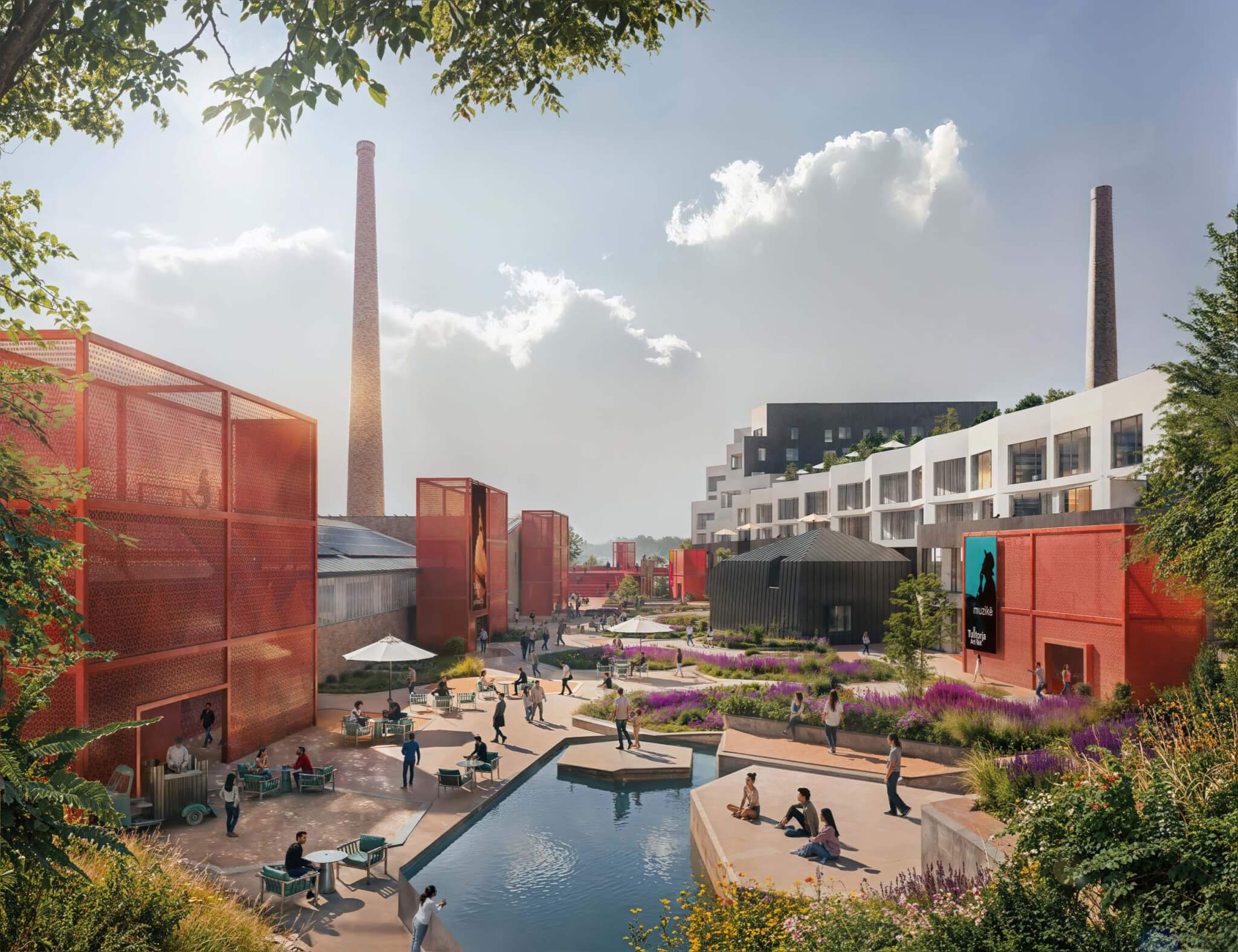
I heard the word “justice” exactly once, when environmental and human geographer Jola Ajibade in her presentation compared relocation models for the hundreds of millions of migrants predicted by the end of this century. With incredible understatement, she noted that “the techno-managerial model has no element of justice.” Discussing relocation forces participants to acknowledge, in passing, the systemic nature of problems as well as certain limitations that otherwise go unsaid. Researcher Thomas Taler quipped that designing for relocation, without housing or jobs, is nonsense.
Awarding the Prizes
I also heard the word “harm” only once, when a hefty trophy is lifted alarmingly high in the air during an awards ceremony: For the first time, the Forum’s schedule includes the presentation of its 2025 Holcim Foundation Awards. These commendations are unusual for recognizing projects midway through their realization. Executive director of the Foundation Laura Viscovich explained, “because the Awards recognize projects while they are still in the construction phase, they also help sustain momentum at a critical moment.”
A skeptic might ask how it is possible to judge whether a project is “transformative” or “replicable”–two of their key criteria–especially if it incorporates biological or social aspects that need time to take root? But, even flawed, it is a remarkable model for awards because it puts the award-giver in a position to help.
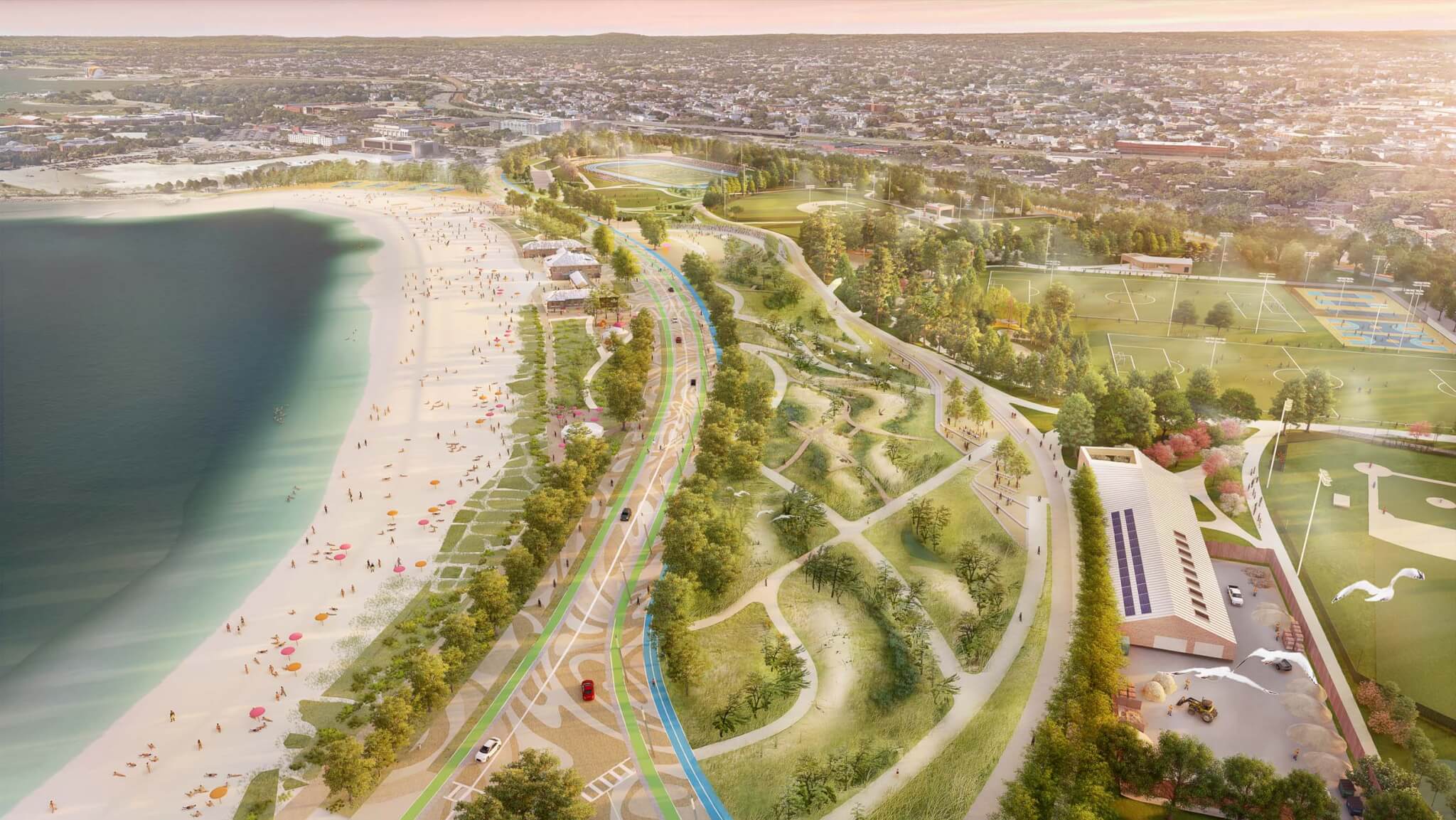
Firms like Mecanoo Architecten, ZGF, Dorte Mandrup, Rafi Segal A+U, and aldayjover architecture and landscape, among others, won prizes. MOS and Adamo Faiden win for their Barrio Chacarita Alta Housing in Asunción, Paraguay. MOS’s Michael Meredith told me that the project is at risk and this recognition “comes at exactly the right time.” North American jury chair Jeanne Gang shared a story about how, years ago, one of her Chicago projects won and then “started spinning its wheels,” so she reached out to Holcim for help. They sent experts to “unlock the bureaucracy” and connected her to sustainable manufacturers. This year STOSS even brought their clients to Venice to join in accepting the award for Moakley Park in Boston. Smart.
Of course, the risk of any award for unfinished work is that the project won’t live up to the plans, but Gang doesn’t think that awarded projects should be revisited after completion or awards rescinded because “too many things can go wrong.” The point is to encourage good work, especially when it’s unsupported by policy. Middle East and Africa jury chair Lina Ghotmeh understood the award as an opportunity to give visibility and voice to underrepresented places and regions, which are actually “historical sources of intelligent vernacular approaches.”
But after the highly interdisciplinary Forum, does it make sense to focus the awards on architects? The Foundation said it is “reviewing the Awards structure,” but Ghotmeh saw no problem. “As architects we hold the will to defend the project. That pain deserves commendation.”
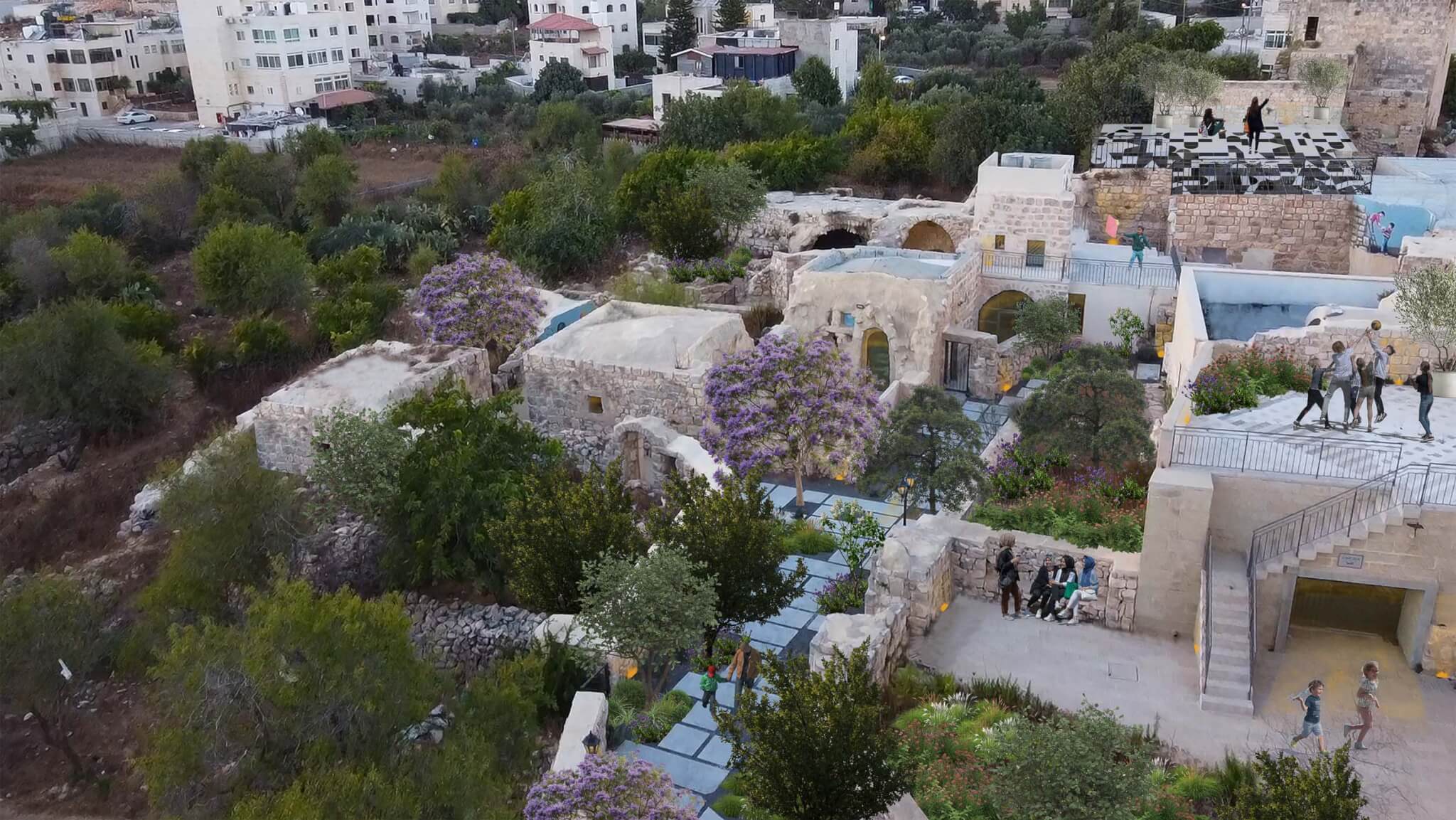
Typically, awards for unfinished work have a weakness for slick visuals so it was a pleasure to see winners with beautiful renders, such as Ted’A’s delicate rural school, as well as those which appear to privilege work on the actual project over its representation, like Riwaq’s historic restoration near Ramallah (a Grand Prize winner, though the Award citation cowardly refers to “the region’s complex political circumstances”).
Combining the Forum and Awards was a worthwhile risk, though I don’t know if the hosts were pleased with the disciplinary gaps it exposed. Almost all the architects I spoke to were alarmed about the scale and complexity of the problems of adaptation relative to architectural means for addressing them, while engineering types seemed content with a more limited sense of responsibility. The result was a Forum that was a safe space for solutionism, peppered by people there mostly for the Awards who would tell you privately that they thought the whole thing was a bit mad. (And yet they came.) How can we design adaptation while the political struggle over decarbonization rages on? Should designers participate in something if they don’t believe it’s good enough, even if it offers them a way to help?
Much of this concern comes down to speed, as Ramstorf pointed out. If Kim Stanley Robinson had written the script for the event, masked eco-warriors would have burst in and respectfully held everyone hostage until the group agreed to immediately stop using concrete and focus on figuring out how to deal with flooding and what to do with the concrete industry’s infrastructure. It’s entirely possible that we will have to explain to our children and grandchildren why this wasn’t what actually happened, in Venice or at COP.
As for the seriousness of the hosts, the judgements I heard ranged between praise that they are leading on better concrete technology—and, importantly, hosting the Forum and Awards, at no small cost—and rumor that Holcim’s North American corporate entity, now Amrize, was spun off because it couldn’t keep up with the parent multinational’s greening efforts.
Viscovich explained that one Holcim executive sits on each jury to bring “their expertise on material innovation, and to learn about emerging trends in sustainable design and construction that can foster new ideas for innovation at the company.” We can only hope that they do and that there is time for it to make a difference.
Venice, of course, is an obvious place to think about flooding and sea level rise since its past successes and current failures are inscribed into the city. Venice seems to breathe with the tide. Its history is rich in many ways. The main Forum venue was the Hilton Molino Stucky in Giudecca, a converted 19th-century flour mill that previously was the site of pre-1980 versions of the Venice Architecture Biennale. And, before that, more intrigue: In 1910, the mill’s original owner was killed by one of his workers.
Lev Bratishenko is Twister of Meaning at The Cosmic House, and a recovering curator.
→ Continue reading at The Architect's Newspaper

