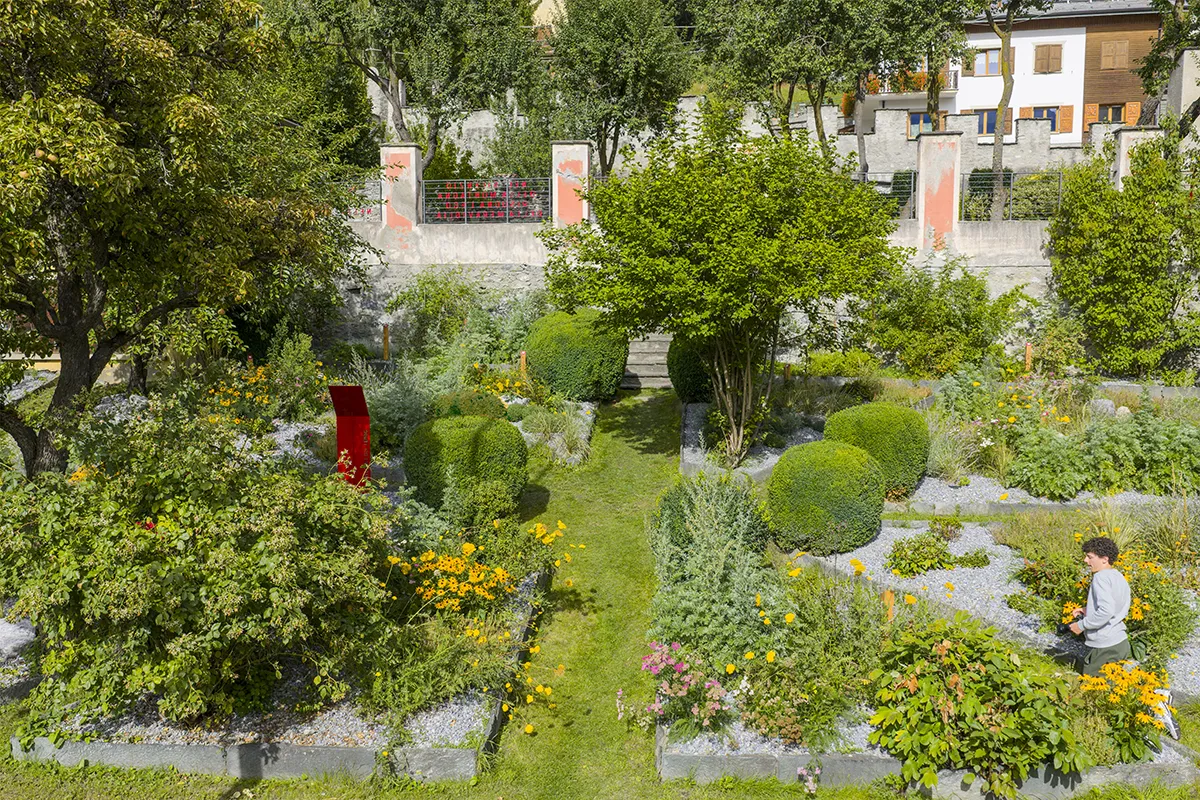
The “Giardino del Tempo” (garden of time) is the result of a renovation project carried out by Braulio, the Municipality of Bormio and the Stelvio National Park, within the Garden of the Civic Museum of Bormio.
A public-private partnership has led to a collaboration that, in dialogue with the Superintendency, has allowed a public space, in a protected landscape area, now increasingly used, to be returned to citizens.
From the very first site visit, the space’s intrinsic beauty was clear. Like a secret garden, hidden from view from the outside, it is nestled between the gray walls of local stone and the historic building used as the Civic Museum, allowing the gaze to sight out over the mountain panorama.
Project guidelines
Through the analysis of the current situation, the identification of the location’s potential, and the approach adopted by Braulio, linked to the specific characteristics of the area, it was possible to establish guidelines that guided the development of the project, which is strongly linked to the cross-cutting theme of TIME.
The design intent was to enhance the place’s contemplative potential, leading the visitor into a dimension where TIME returns to being marked by natural elements rather than the frenzy of daily commitments.
In particular, the work focuses on a series of main goals related to the following themes:
- combining the current state of art, the history of the site, and contemporary needs for its use;
- enhancing the possibilities for everyday use of the area;
- recovering the access from the stairway on Via Monte Braulio;
- enhancing the views of the landscape;
- creating attractive and functional rest areas;
- increasing the opportunities to hold public events and exhibitions.
The project
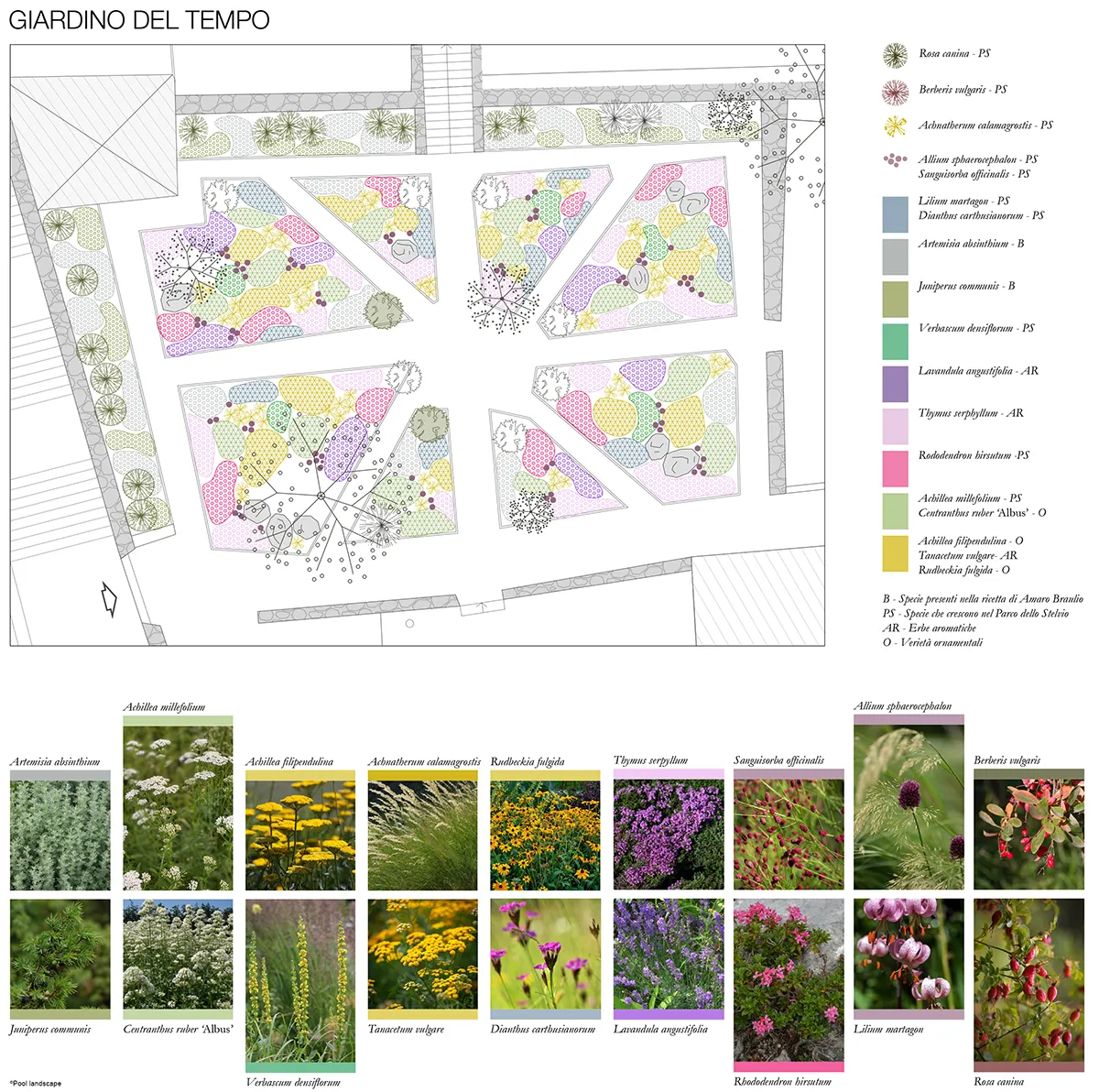
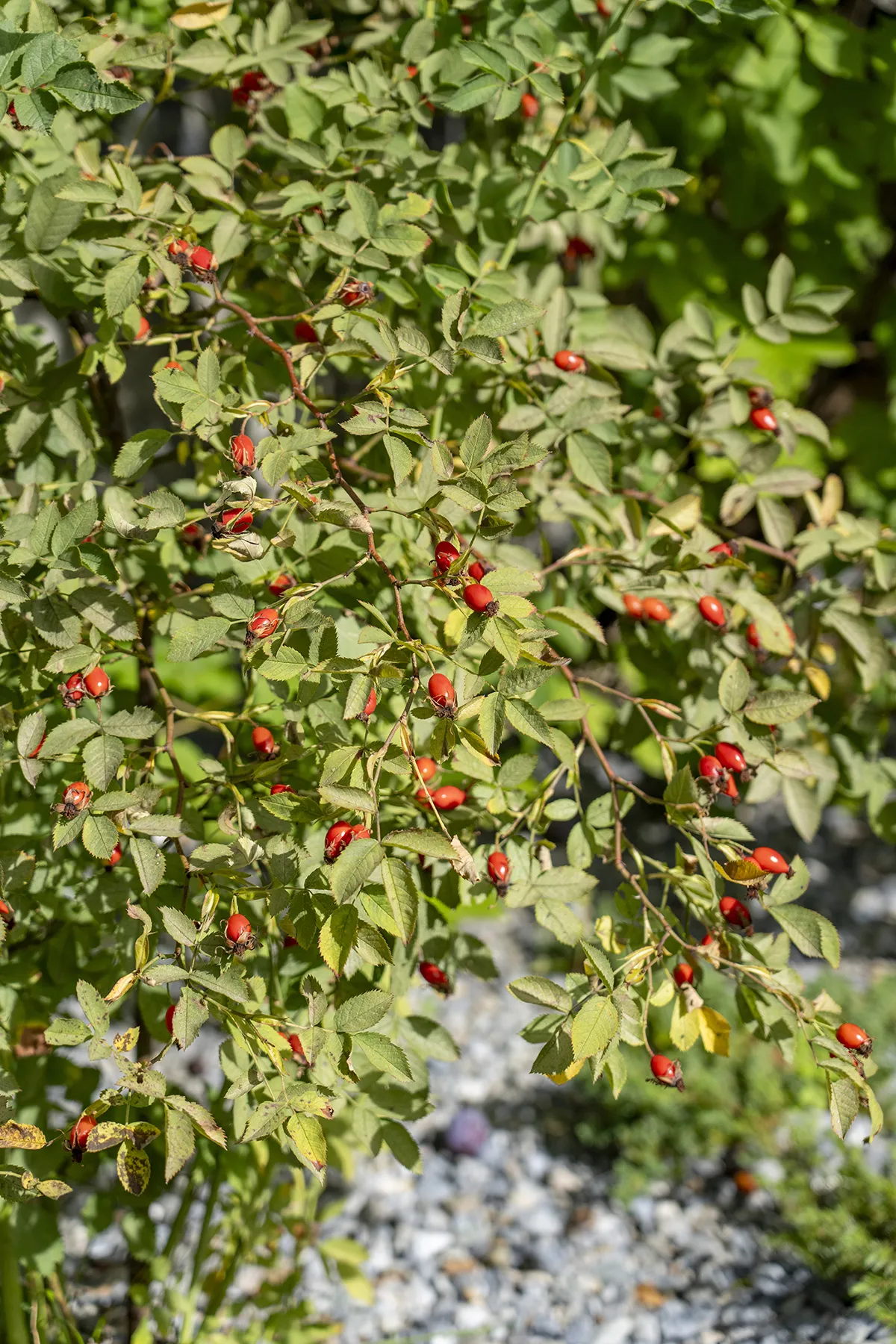
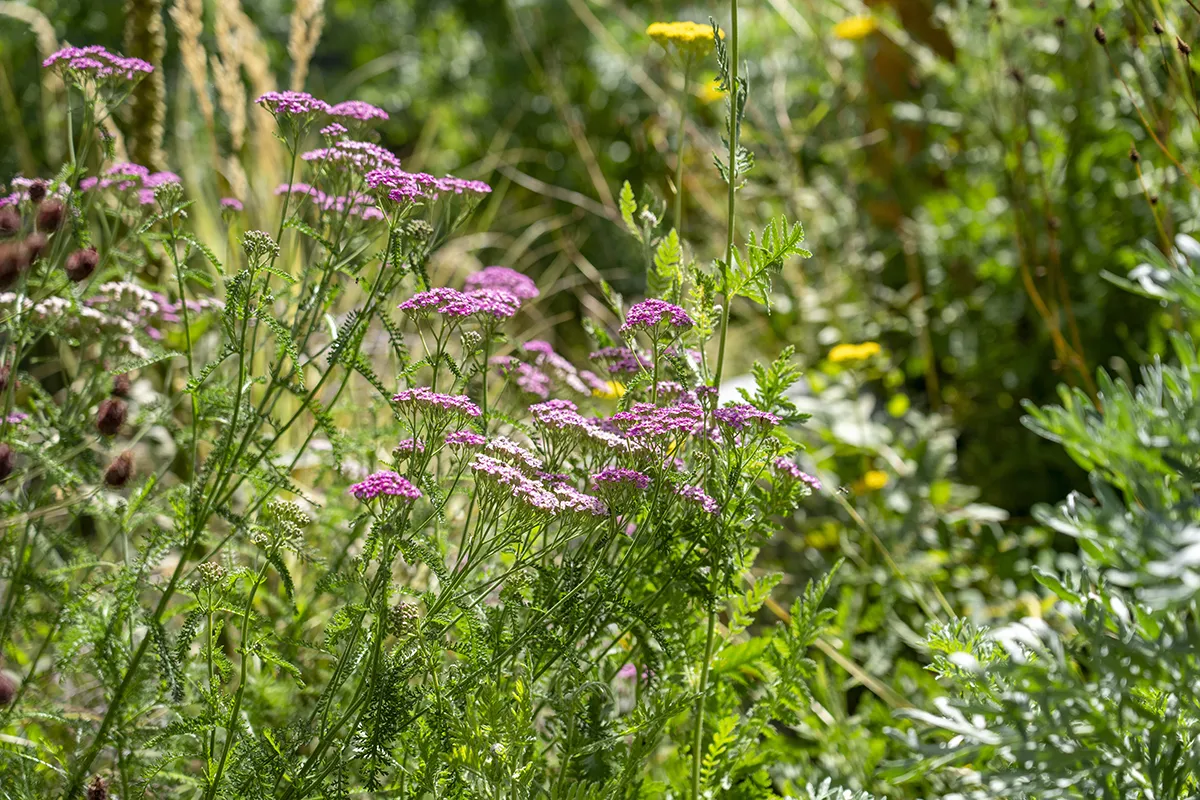
The project aims to improve the public space by redesigning the entrances, adding equipped areas and planting new greenery in the existing flowerbeds, inspired by the species found in the Stelvio National Park and the recipe for the digestive herbal liquor ‘Braulio’, reinterpreted by selecting some of the more ornamental varieties.
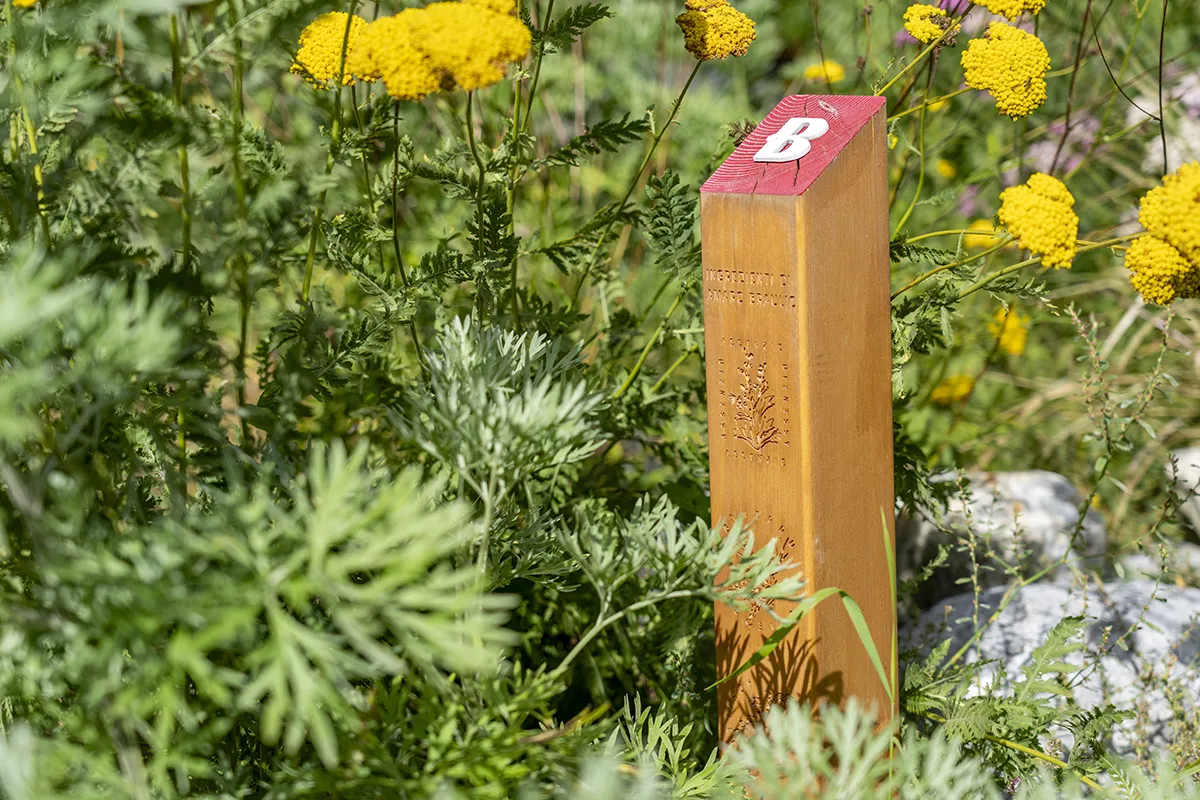
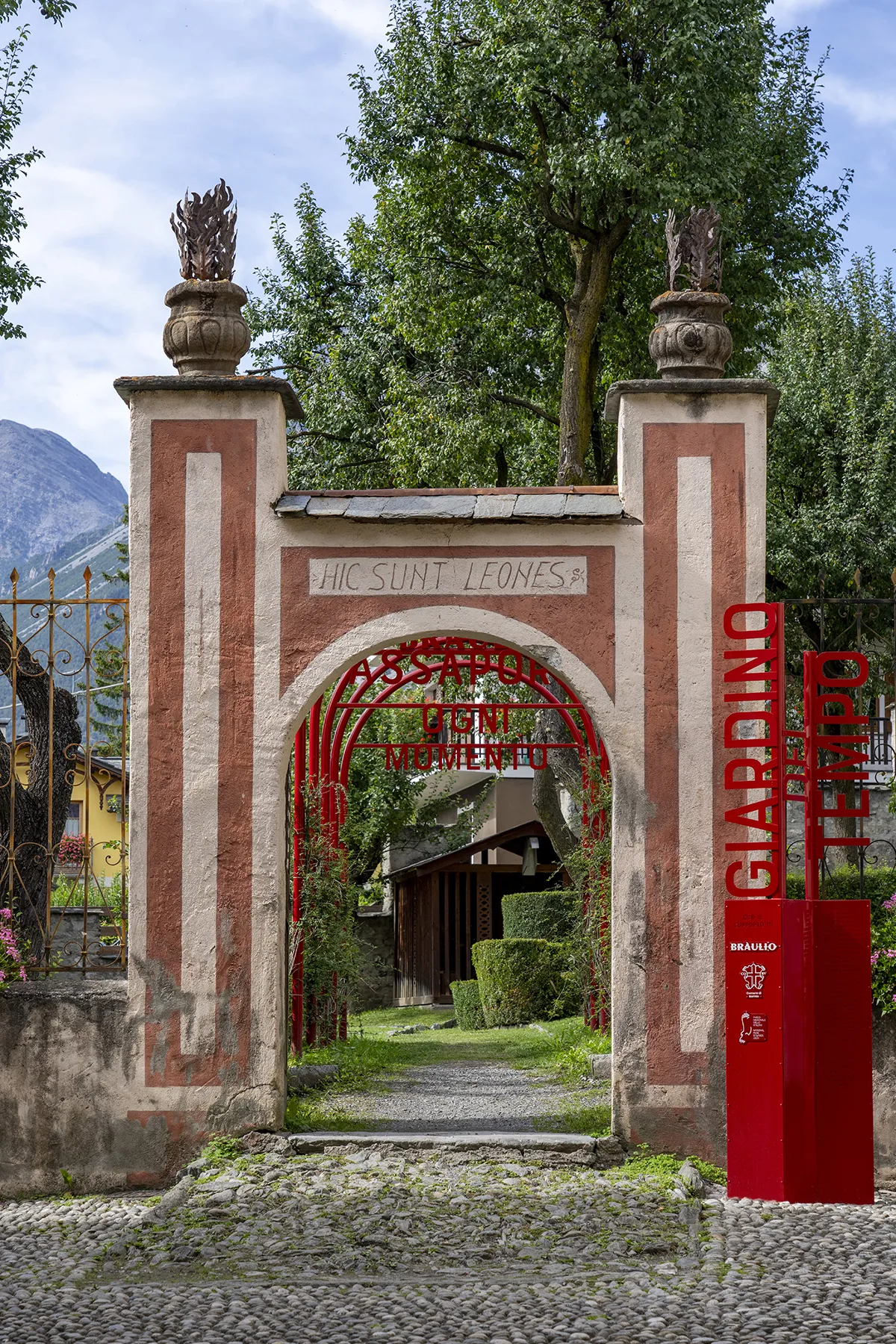
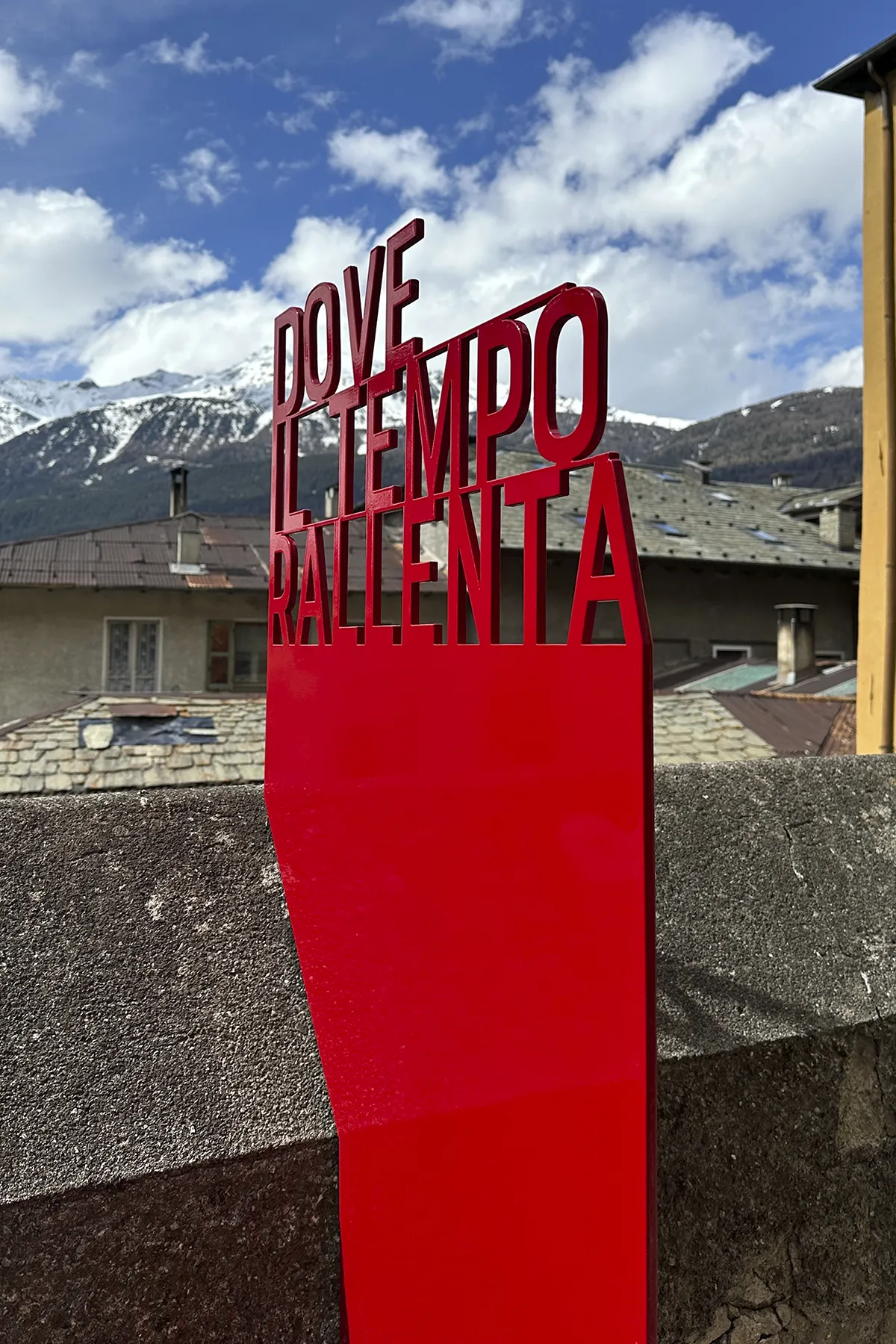
To the left of the Civic Museum’s entrance, on Via Buon Consiglio, a passageway leads to a portico that provides access to the building’s courtyard and garden. Here, an initial installation interacts with the existing parapet and captures the visitor’s attention, anticipating the garden’s central theme, with the caption “Dove il TEMPO rallenta” (“Where TIME slows down”).
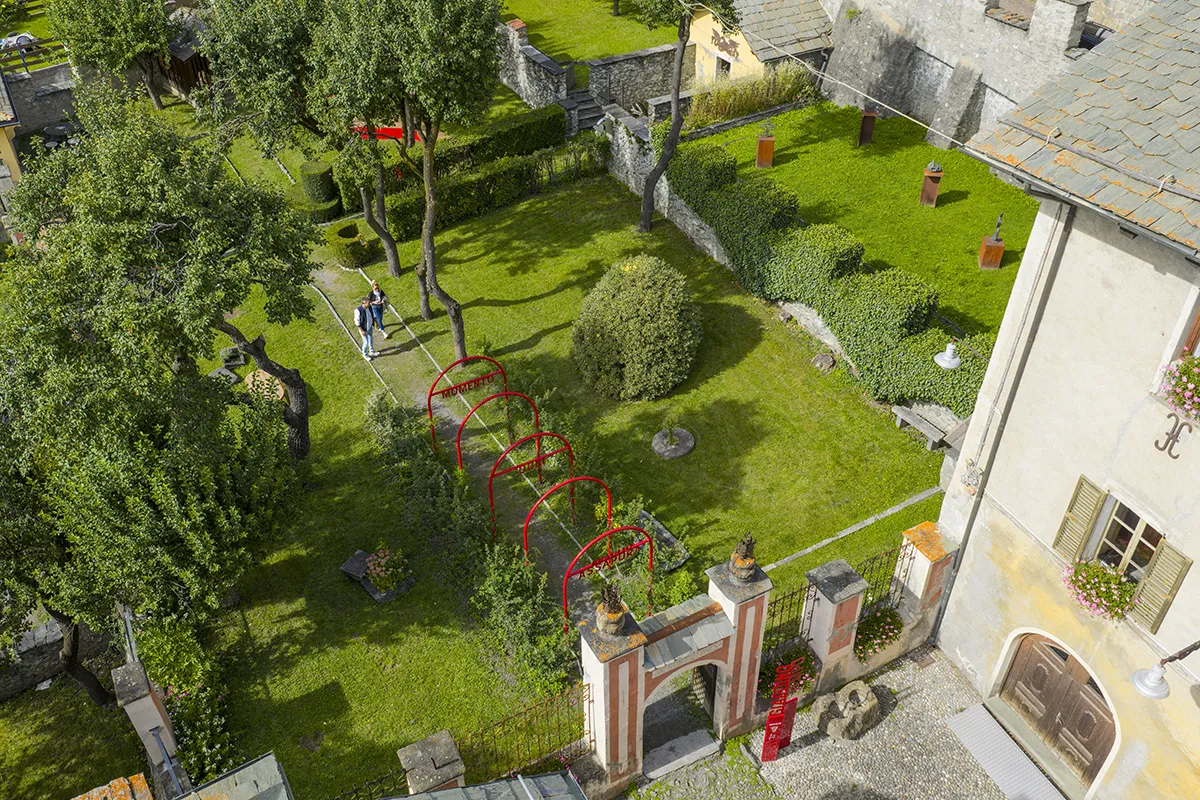
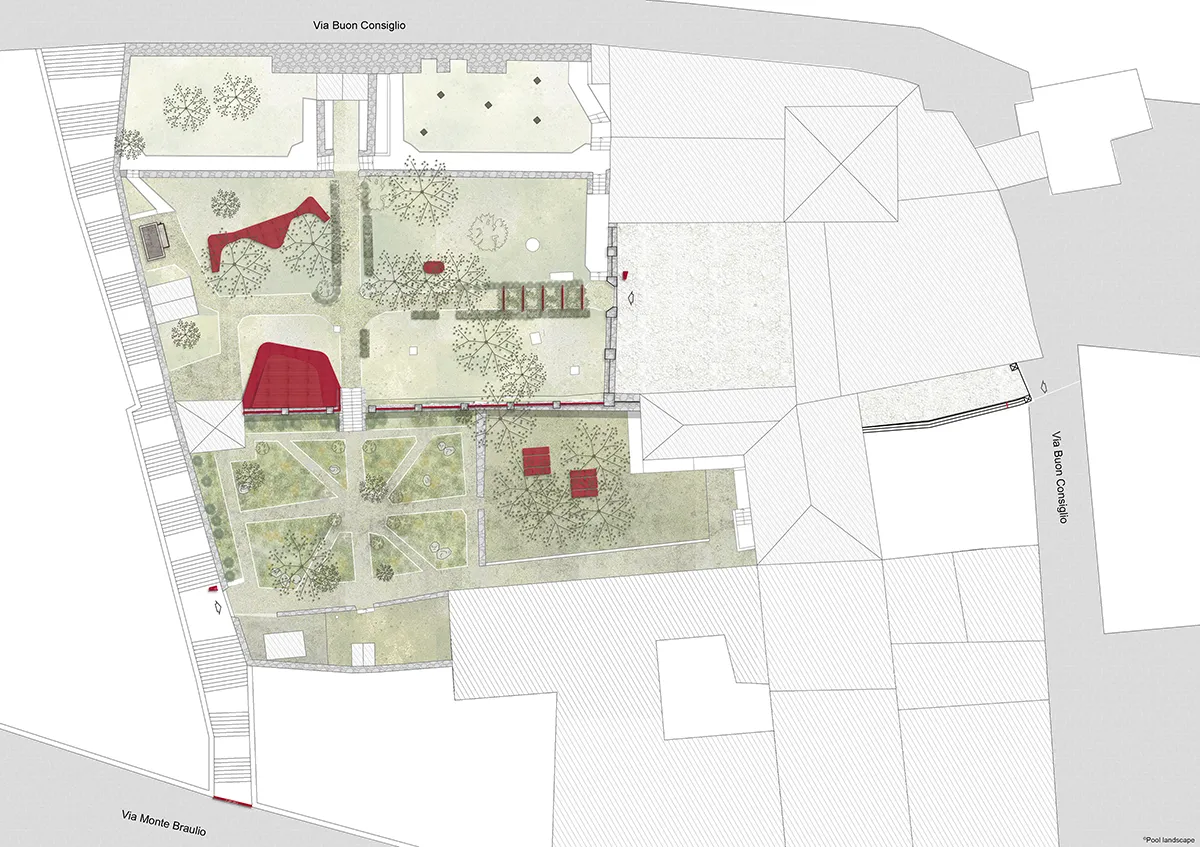
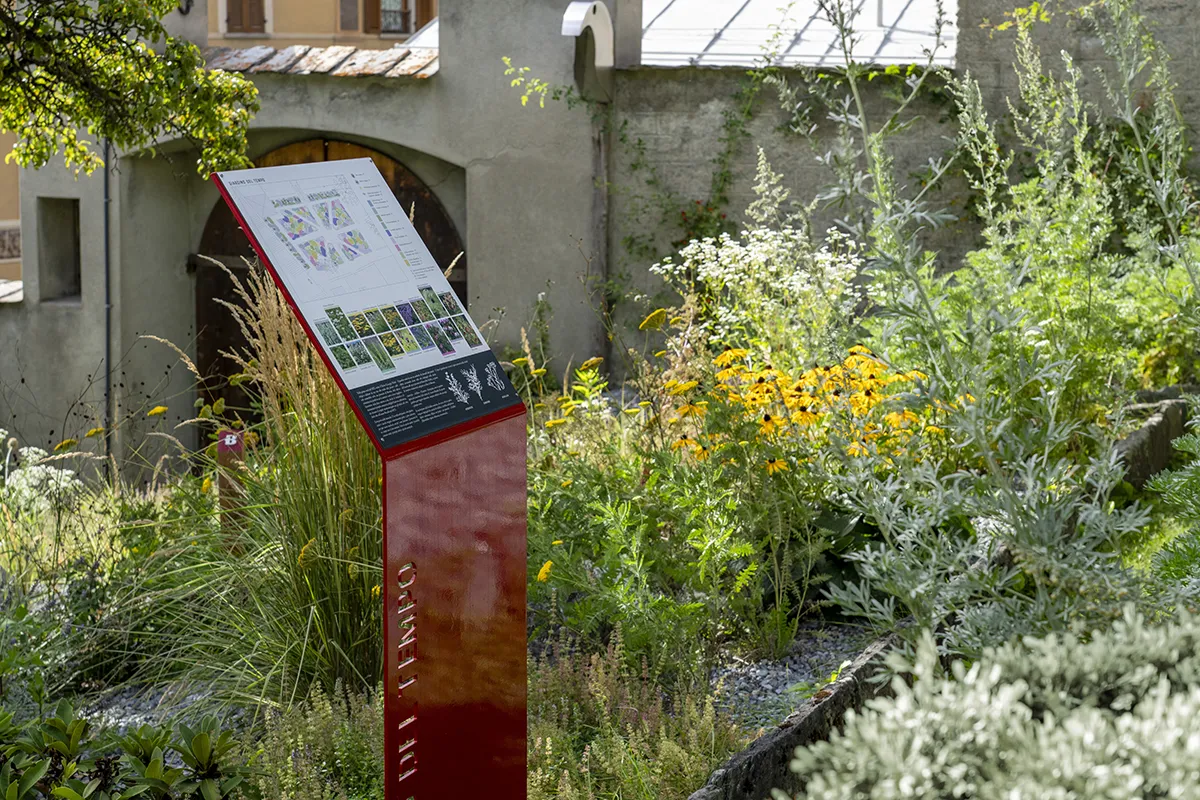
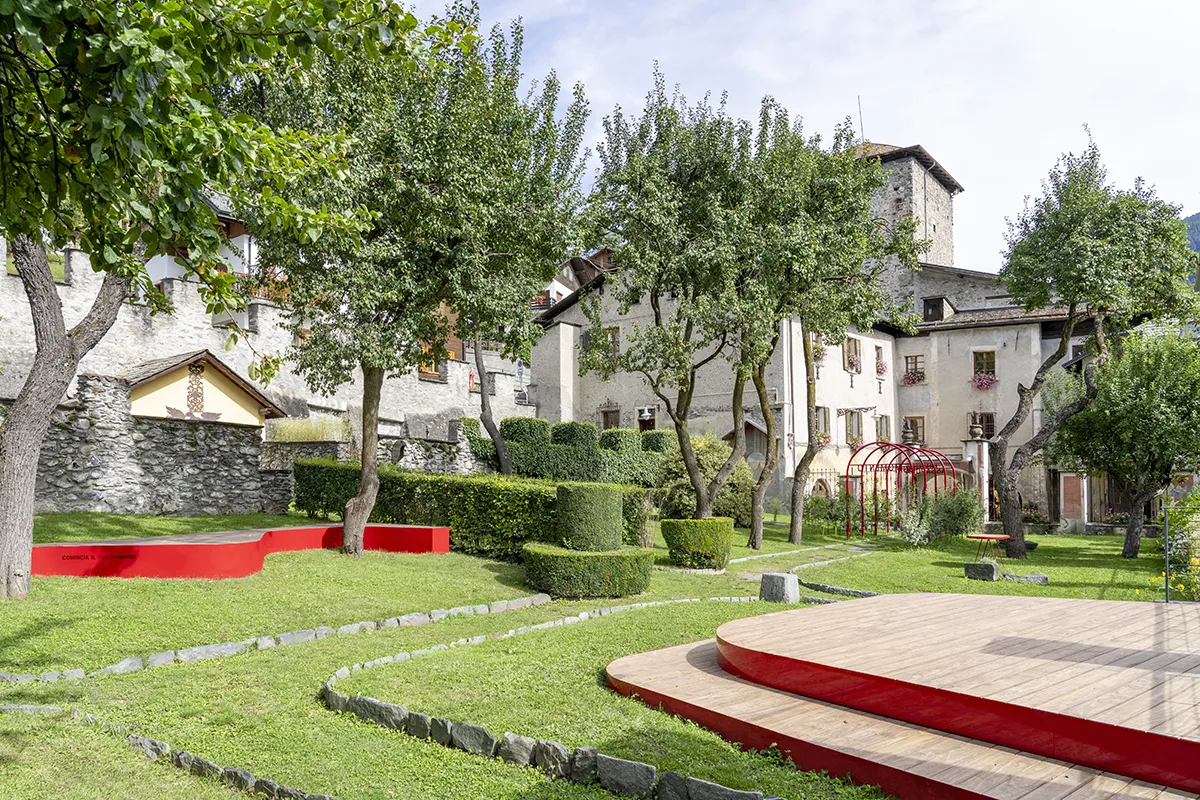
To identify the building’s courtyard entrances and the staircase on Via Monte Braulio, the project involves installing two red-painted steel totems that visually draw visitors towards the garden. Once through the main entrance, a portal consisting of five red arches, covered with climbing plants reminiscent of an Italian garden, bears the inscription “Assapora ogni momento” (“Savour every moment”).
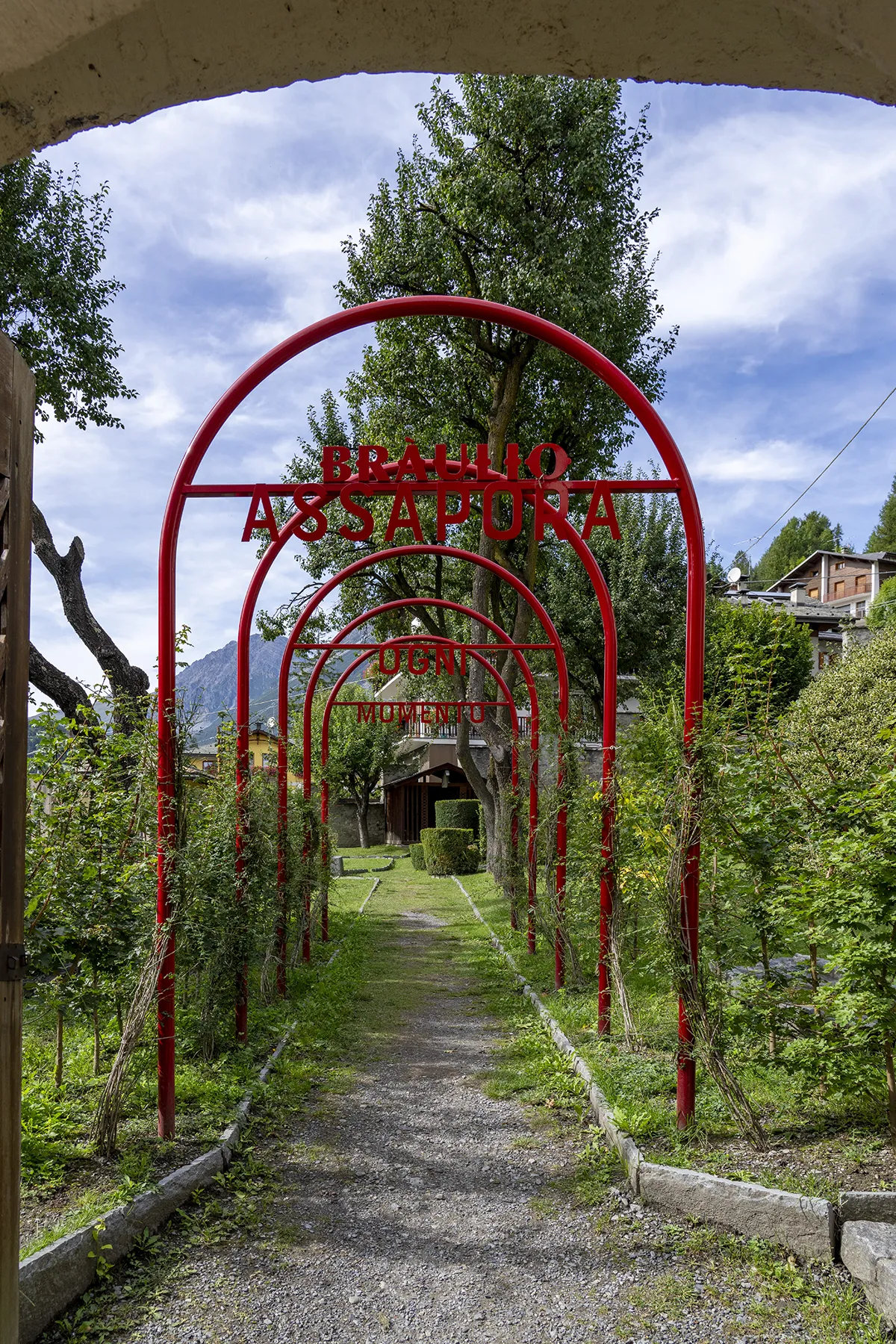
As they pass through, visitors are encouraged to enjoy the space as an experience, taking time to savour the place, the present moment and the surrounding nature.
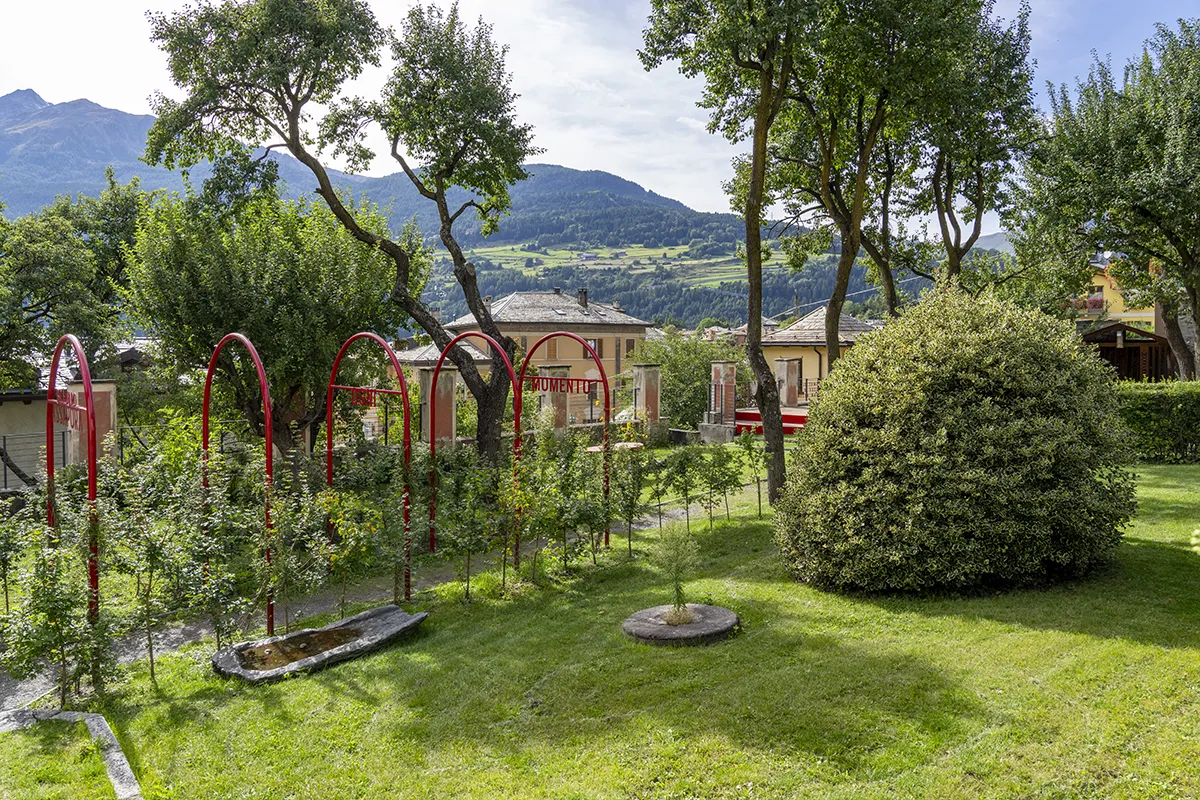
Once through the ‘tunnel,’ we reach the flat area used for events, reconfirming its current use.
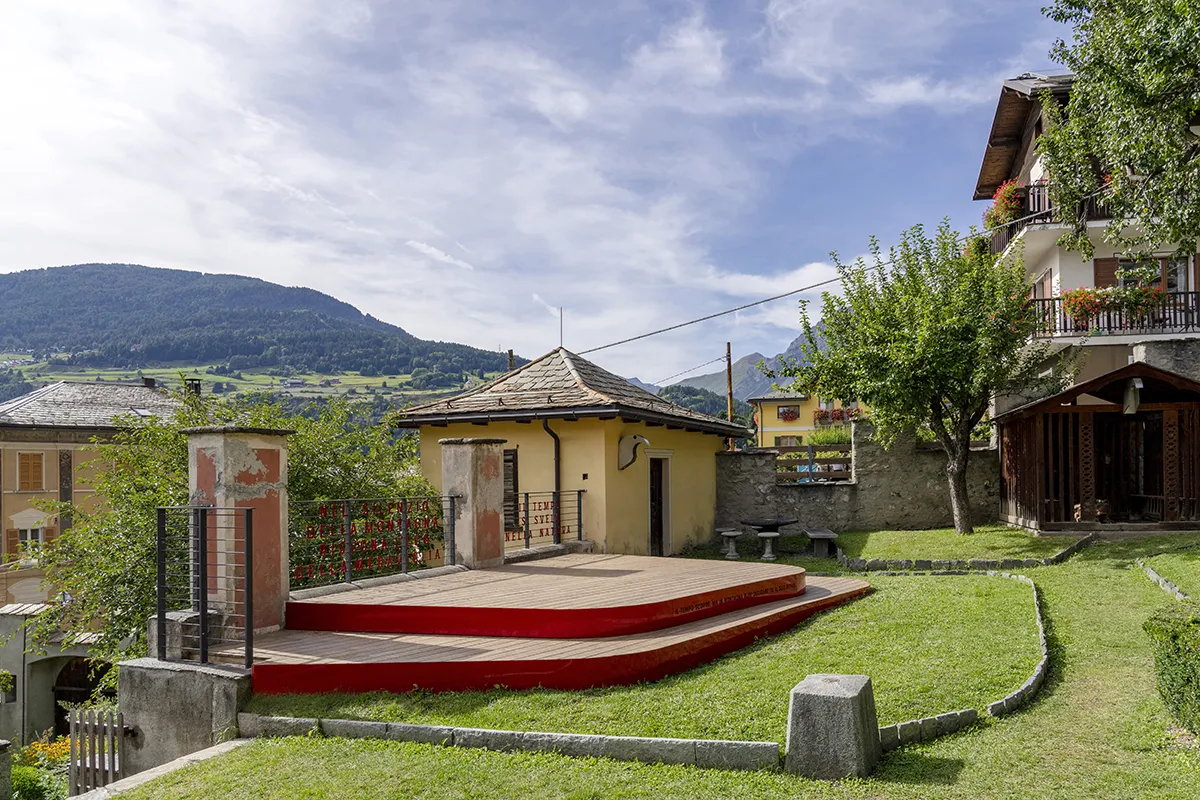
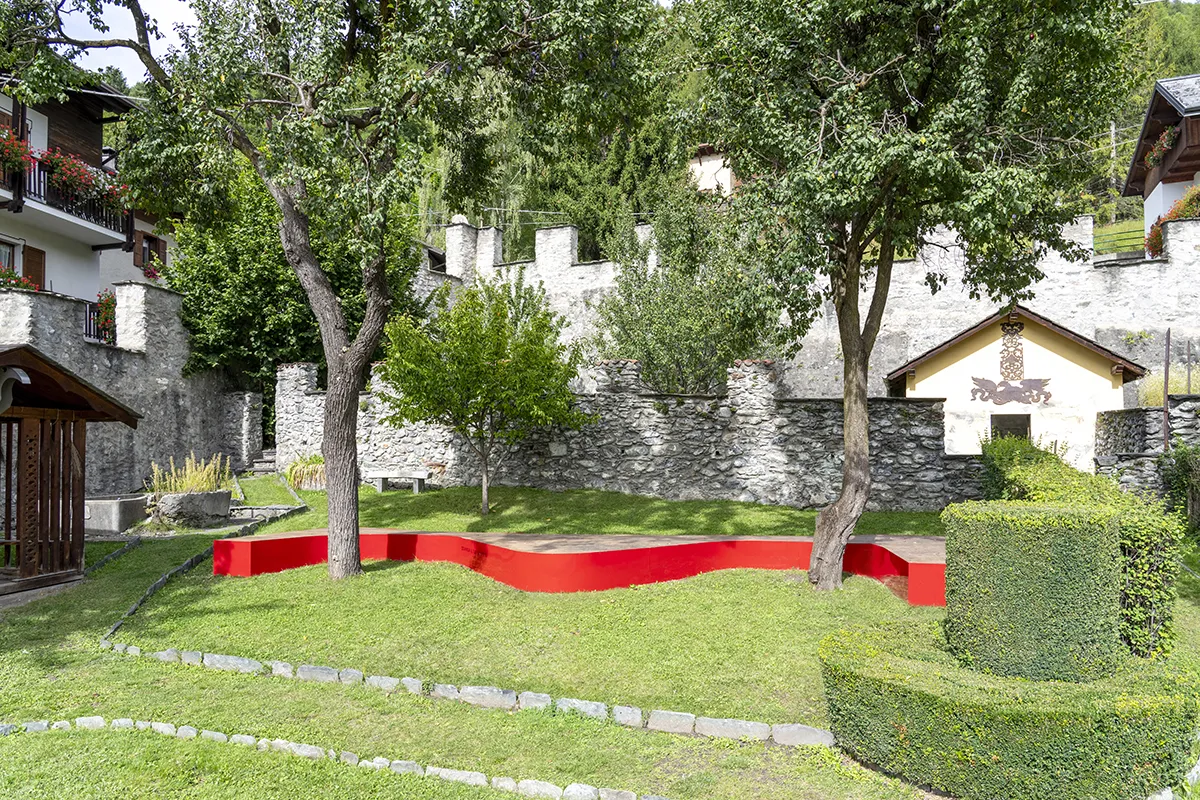
To accommodate the various needs and flexible uses of the space, the project provided for seating and a stage with organic shapes that blend with the existing vegetation and the contours of the land. In particular, the stage itself was designed to serve as seating when no events are taking place.
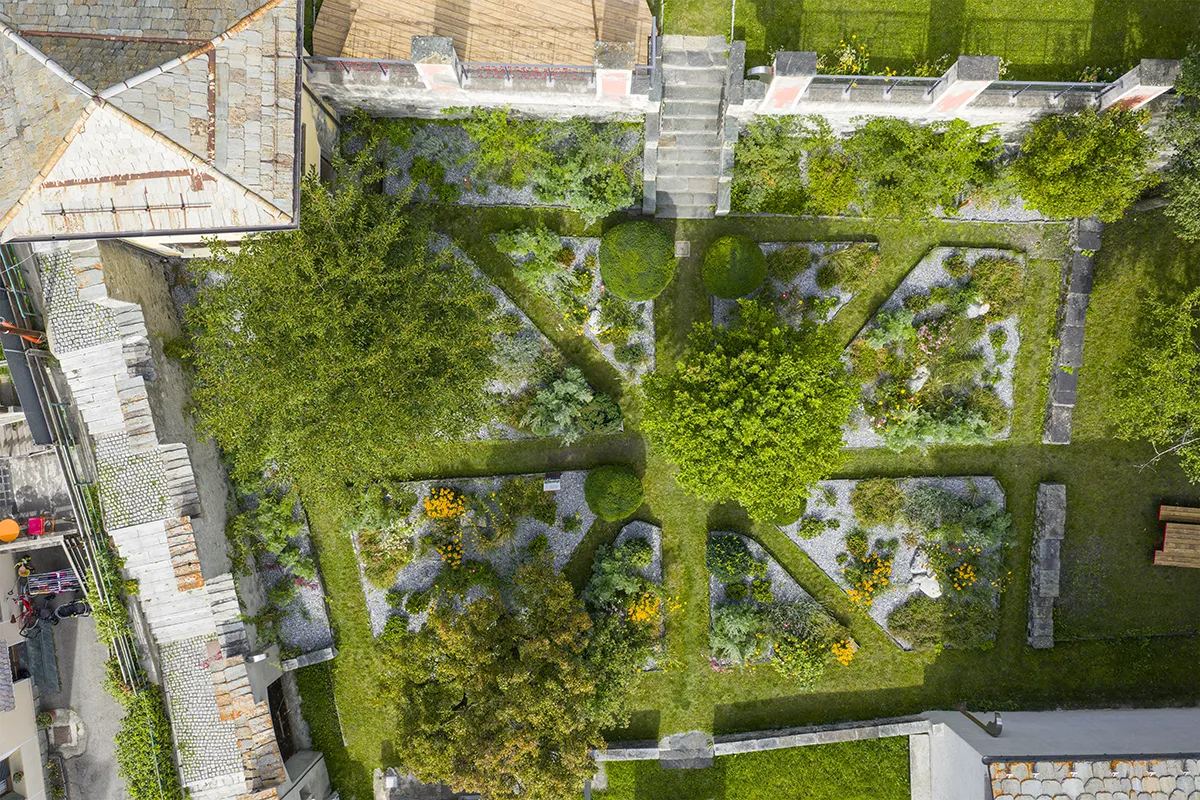
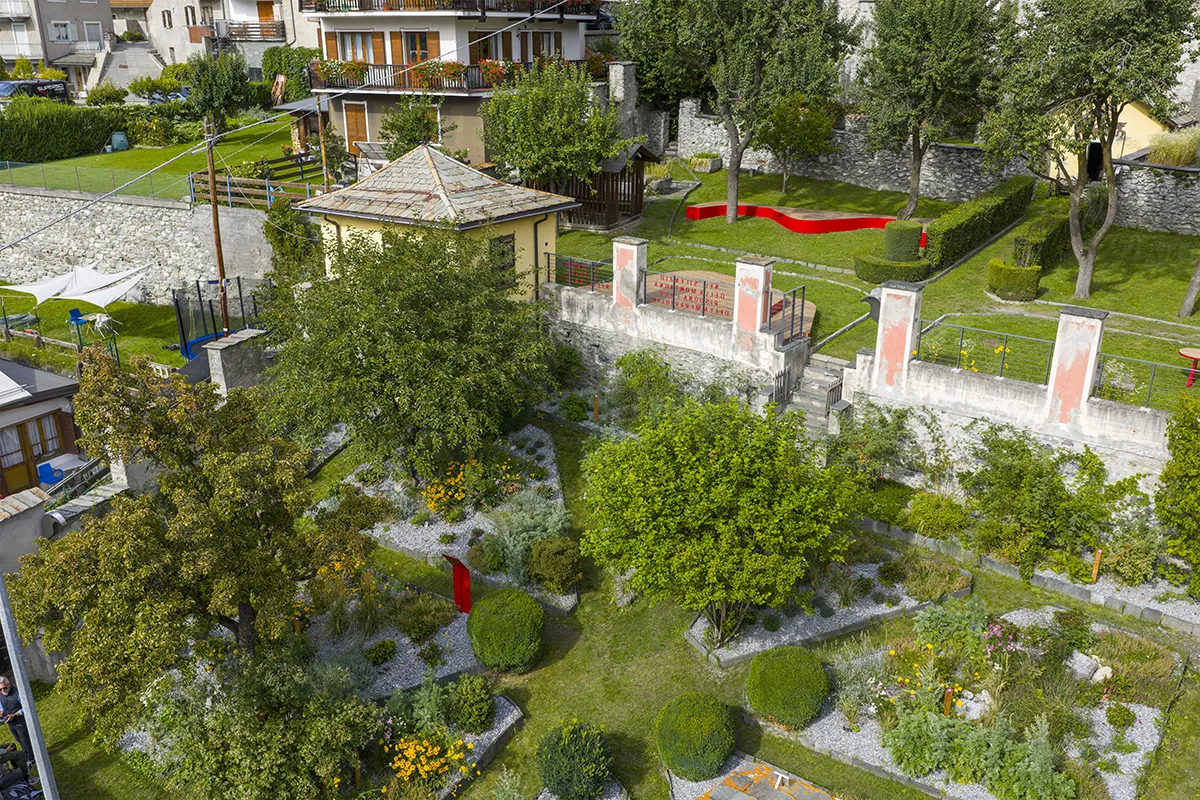
The wooden railings, which currently mark the perimeter of the first terrace, were added relatively recently and have no particular historical or architectural value. It was replaced with iron railings that, at the back of the stage, carry inscriptions relating to the theme of time and stand out against the spectacular mountain backdrop.
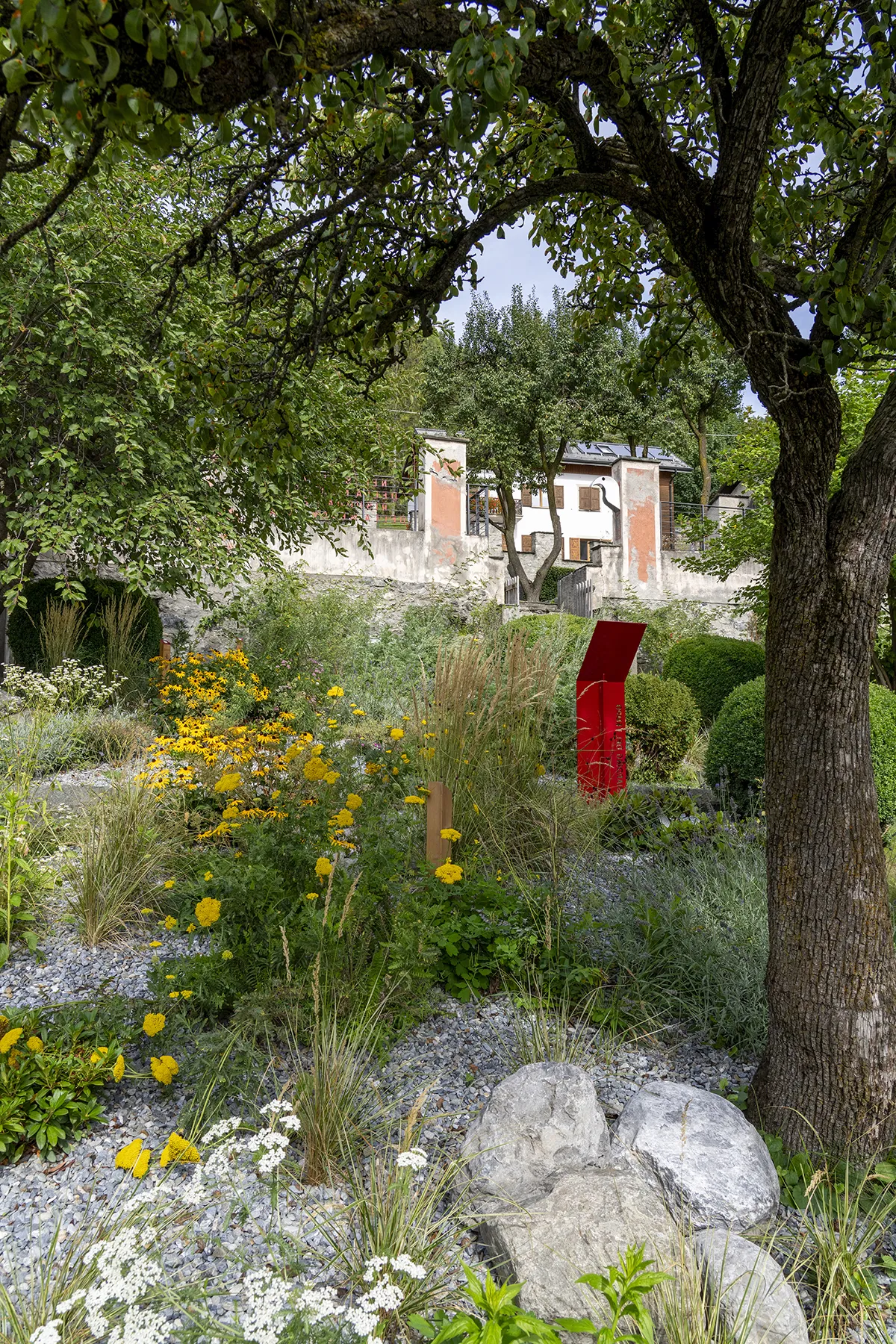
Moving towards the lower terrace, the project involved creating an ornamental garden in the lawn areas already bordered by stone kerbs, without altering their shape or morphology. The species introduced were inspired by local plants found in the Stelvio National Park and by the botanicals used to make Braulio liqueur. Those that could be cultivated at the altitude of the Garden were selected, along with the most ornamental varieties, to be combined with fruit trees and various existing shrubs in a mix that can be enjoyed in all seasons.
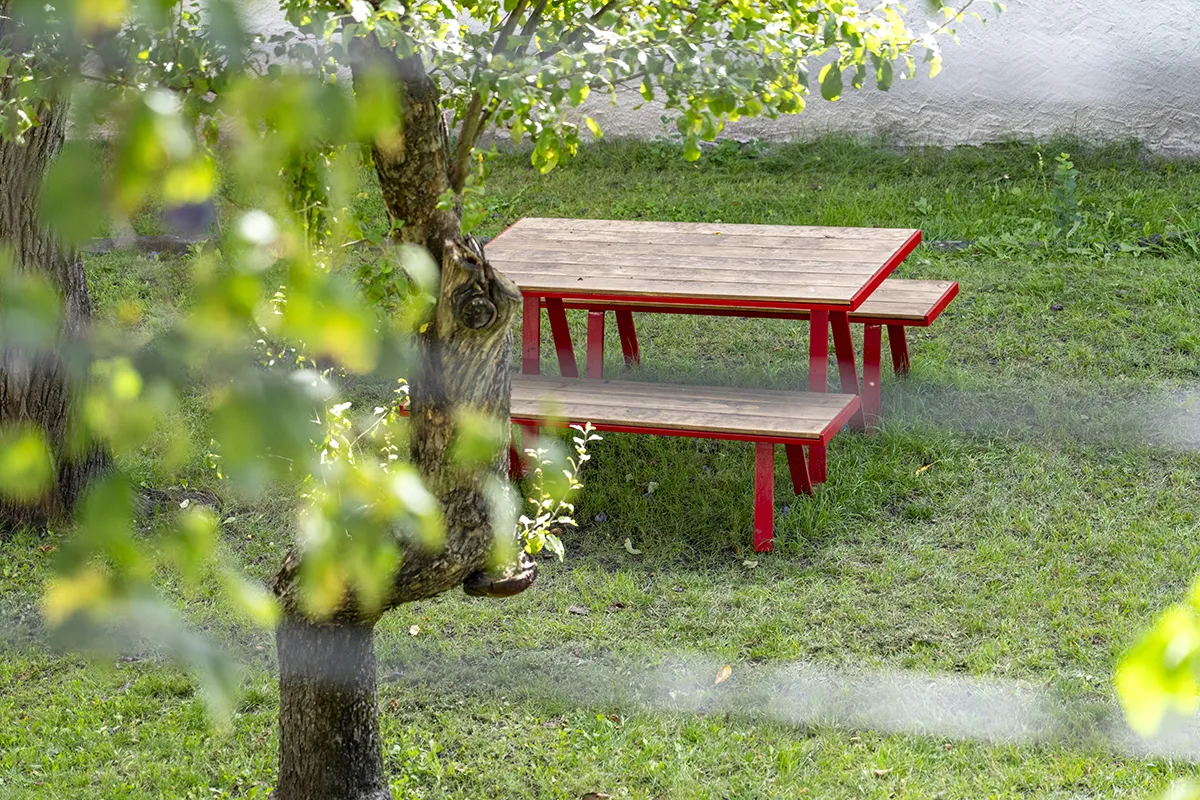
Next to the garden, there will be a relaxation area with wooden and metal tables, coordinated with the other planned furnishings, allowing visitors to enjoy the shade of the trees and the surrounding buildings during the warmer months.
All existing tree and shrub species have been incorporated into the garden redevelopment project, which immediately set itself the goal of enhancing existing features and using them as a source of inspiration for the design of custom furnishings that conform to the site’s topography, vegetation, and history.
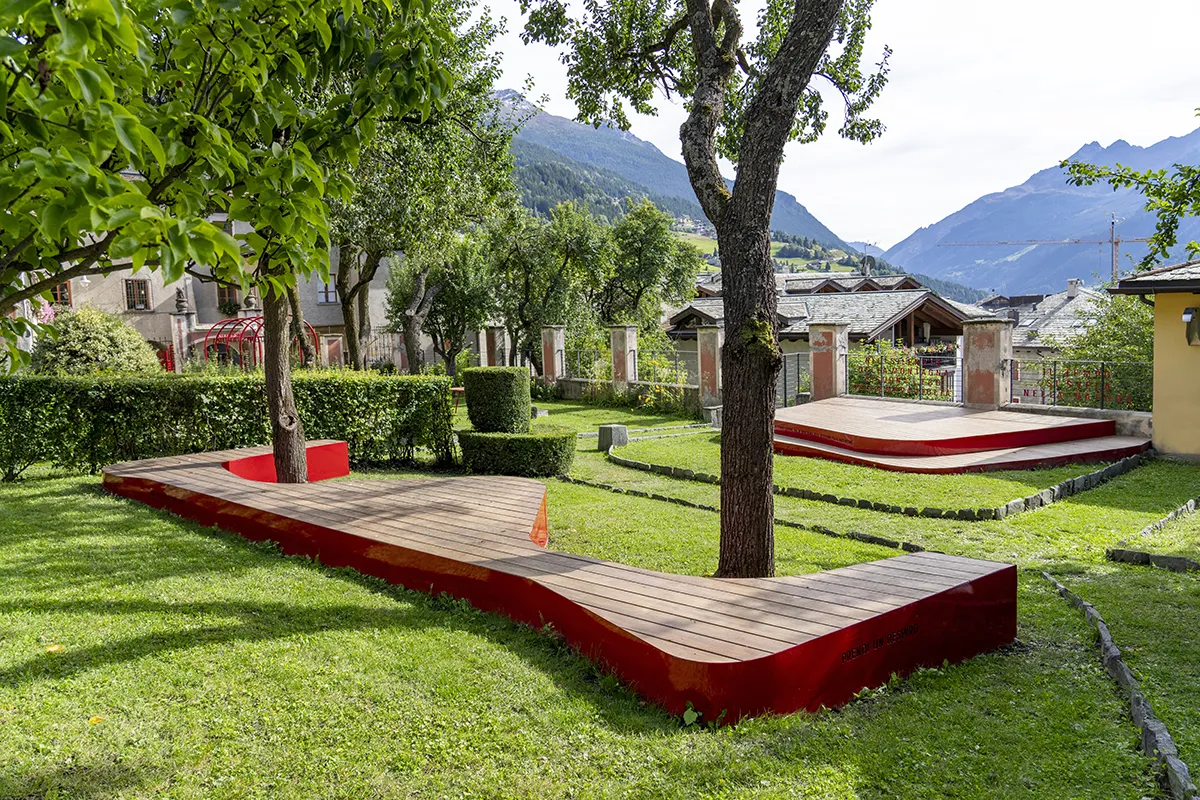
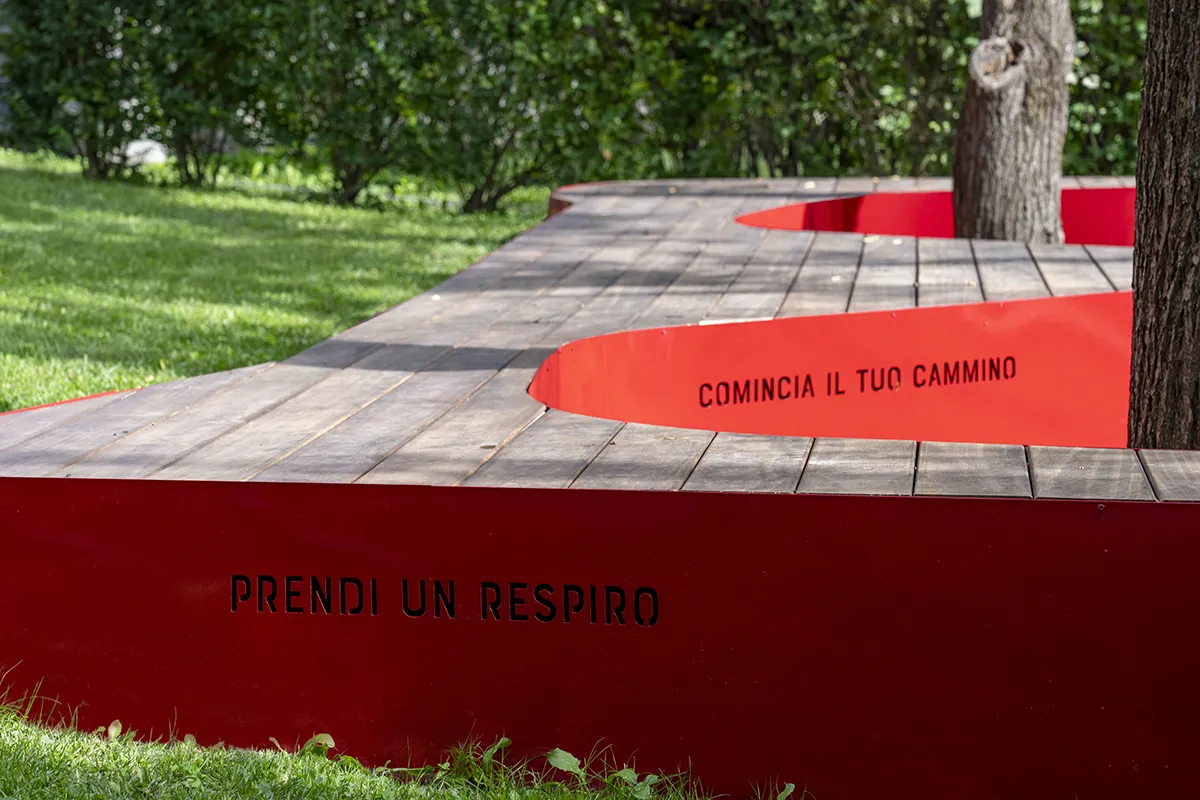
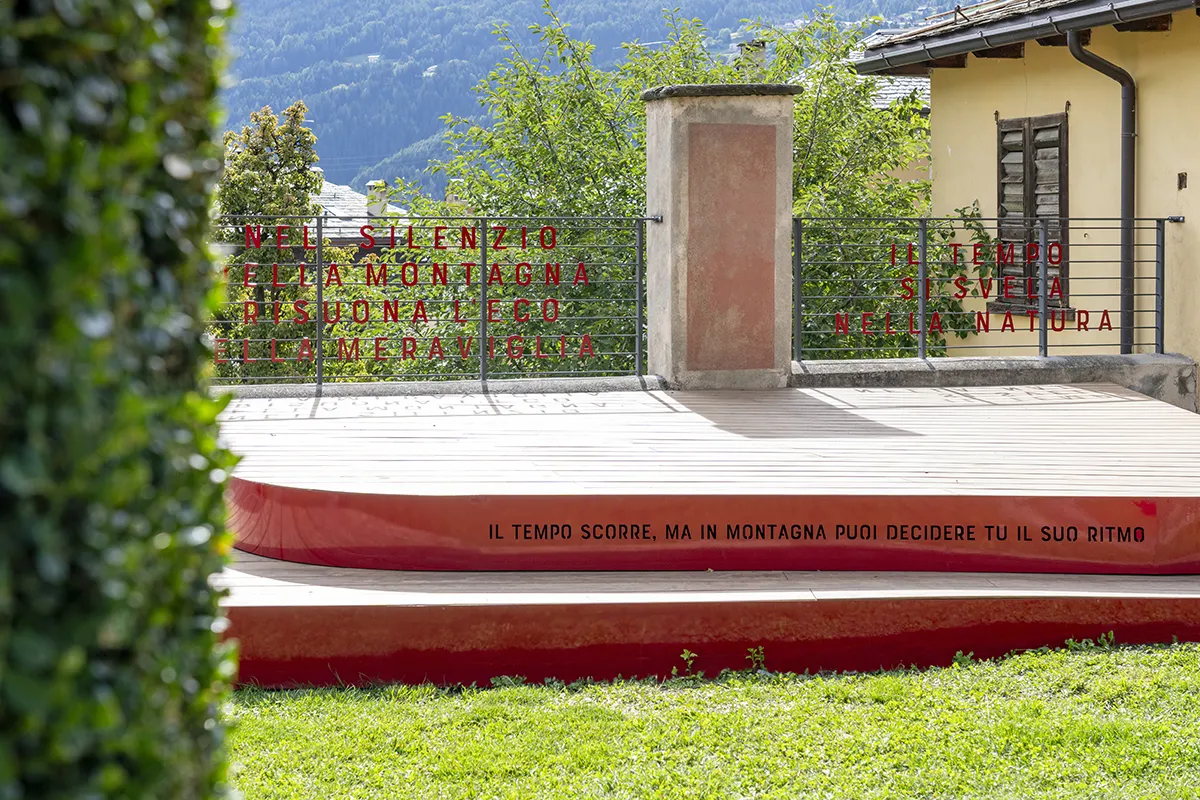
The choice of materials also reflects this intention through the use of wood, gravel and red-painted metal to highlight the new interventions in relation to the existing features. The colour red, the leitmotif of the project, serves as a visual cue to guide visitors into the space through an experiential journey in several stages, designed to foster a connection with the surrounding nature and the place’s history.
Giardino del Tempo
Designers: Pool Landscape srl: Landscape Arch. Ilaria Sangaletti, Arch. Caterina Gerolimetto, Doct. Agr. Elisa Frappi, Landscape Arch. Stella Gelmini.
Structural Engineer: ZAM Engineering
Client: Campari Group
Management: Spiagames Outdoor Agency
Photo credits: Enrico Pozzi “Bigno”
→ Continue reading at World Landscape Architecture