
When perusing this past year’s headlines, Trump’s name and policies seem to, well, trump just about everything. While it feels like a lot has changed in these last 12 months, a lot stayed the same or at least instilled a 2016–2020-era déjà vu: climate change remains a pressing issue, the Architecture Billings Index is steadily in decline, and inflation continues to rise amid a slew of new tariffs.
This year architects again scratched their heads at the name of the Pritzker Prize winner, the AIA fared okay after a tumultuous 2024, the Expo 2025 in Osaka and Biennale Architettura in Venice came and went. Looking ahead, it’s fair to say we should know to expect the unexpected.
Stay tuned over the next two weeks as we share the top controversies AN reported on this year, the preservation campaigns that got readers heated, the landscape projects that prompted us to touch grass, and so much more.
Hero Village, a pipe dream plan that reimagines Brooklyn’s Floyd Bennett Field
A trending story this year that had Reddit buzzing was a proposal to reimagine a former airfield in Marine Park, Brooklyn as a neighborhood for NYPD and FDNY officers, and EMTs. Dubbed Hero Village, the concept was thought up by Noah Martz, a Brooklyn Law School student that taught himself how to use Google SketchUp.
Martz clearly did his homework; his research pointed to the city’s increasing affordability crisis and the fact that many New York City first responders don’t reside here. Martz’s Hero Village has plans to address flooding in the flood-prone area. It also proposes a transit system that links up with existing subway lines, as well as 20,000 residential units in traditional looking masonry buildings.
Liu Jiakun awarded the 2025 Pritzker Architecture Prize
In early March the Pritzker Architecture Prize was awarded to Liu Jiakun, another laureate with a scant Wikipedia presence, but nevertheless an extensive portfolio of exceptional projects. The architect is based in Chengdu, China, where he runs his practice Jiakun Architects, founded in 1999.
Jiakun’s firm works across a range of typologies from small-scale exhibition designs, to vast institutional buildings and masterplans for cities. The jury lauded his approach that oscillates between “utopia versus everyday existence, history versus modernity, and collectivism versus individuality.”
Carol Wedge was named the next EVP/CEO of the AIA
In 2024, stories about troubles with AIA leadership topped AN’s controversies roundup. This year things cooled down at the HQ for the most part. In March, the professional organization announced its search for a new EVP/CEO, after Lakisha Woods stepped down from the role in February. It took a few months for Carol Wedge to be named the AIA EVP/CEO.
Wedge comes with a long CV of experience and leadership; for 17 years she has served as the CEO of architecture firm Shepley Bulfinch. AIA recognized her talent in 2020, awarding her the Edward C. Kemper Award. Wedge has previously worked with the AIA too; she played a pivotal role in founding the AIA Women’s Leadership Summit and has held roles in AIA’s Board of Directors.
Tariffs on building and furniture products increased costs nationally
Tariffs were top of mind for many manufacturers and builders this year. Before Trump was elected and later inaugurated the expectation that Americans and U.S. companies should expect to dig deeper in their pockets for purchases was pretty much a given. (ICYMI, AN spoke to building product manufacturers about what they expect and what they’ve observed regarding material sourcing and shipping.) Costs rose throughout the year with steel and aluminum tariffs rising to 50 percent in June. In September, the administration targeted imported kitchen cabinets and bathroom vanities and imported upholstered furniture.
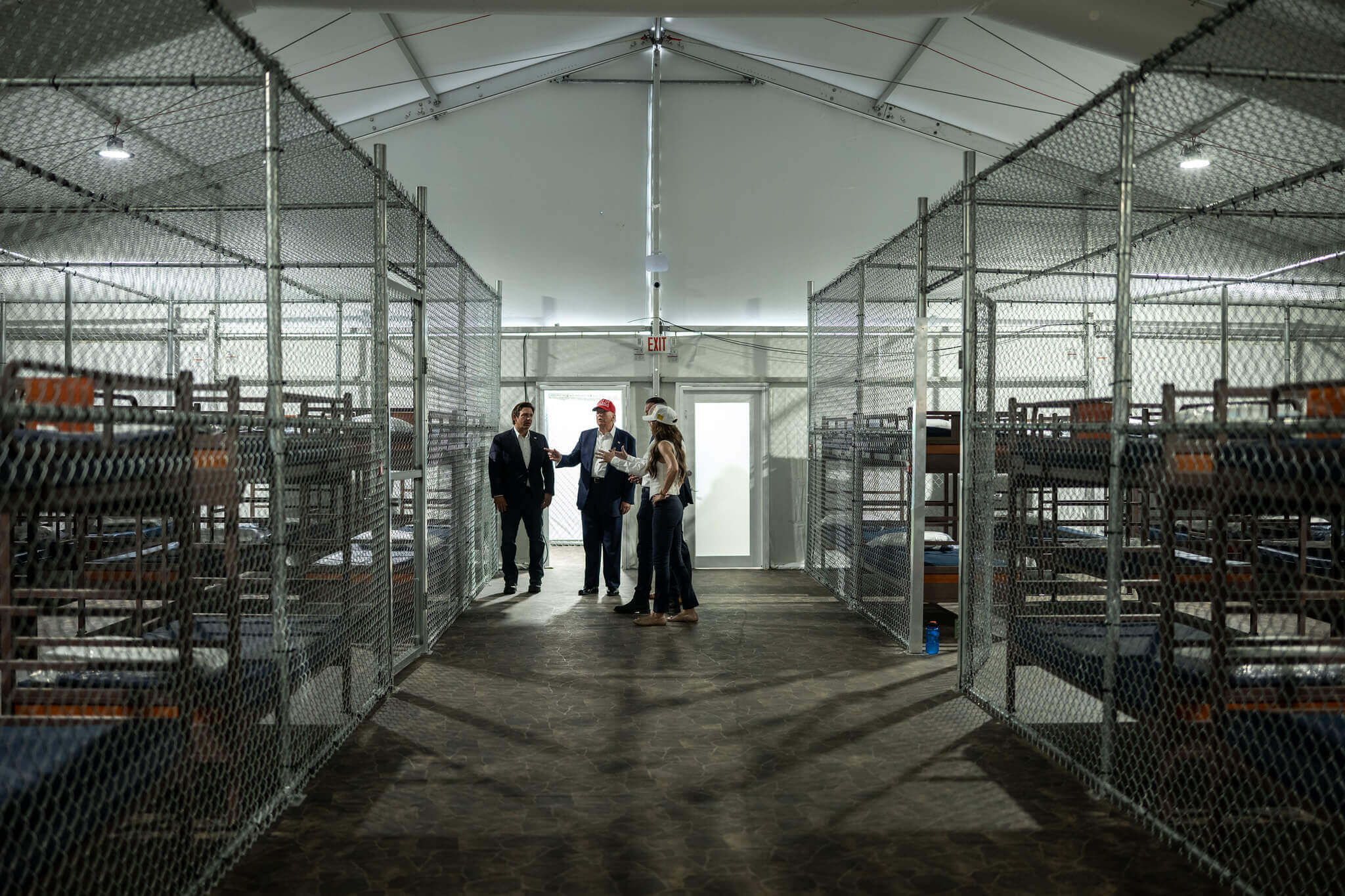
ICE raids made headlines and detention centers were built to imprison
Images of Immigration and Customs Enforcement (ICE) agents, the Department of Homeland Security (DHS), and National Guard occupying streets in Los Angeles, Chicago, Washington, D.C., and elsewhere are some of the most jarring of the year. Political views aside, President Trump’s immigration policies are among the strictest the country has ever seen. In 2025, heartbreaking stories of families separated over immigration status flooded news headlines and social media.
AN covered one in which the co-owner of New Frameworks, a cooperative focused on building sustainable homes, was detained. Stories such as this one prompted landscape architecture firm TERREMOTO to publish a list of guidelines for job sites on what to do should ICE raid. The Architectural League of New York and Worker’s Justice Project later launched an RFP seeking ideas for sharing information to keep workers safe on job sites. A detention center, quickly erected in Florida’s Everglades, dubbed Alligator Alcatraz, was among the facilities across the country designed to detain.
The White House issued an executive order mandating classical and traditional architectural design for federal buildings
A mandate that federal buildings all be designed according to principles of classical architecture circulated during Trump’s first administration. The developer-in-chief made this an inauguration day priority in January at the start of his second term. Amid a flurry of first-day executive orders was one that asked the GSA, and other authorities, to submit recommendations—an action he would later forgo on other building-related matters—on mandating a singular style to identify civic and federal buildings as such.
In August, an executive order, Making Federal Architecture Beautiful Again, dictated that “all federal courthouses and agency headquarters,” “all federal public buildings in the National Capital Region,” and “all other federal public buildings that cost or are expected to cost more than $50 million in 2025 dollars to design” are subject to the universal design preference.
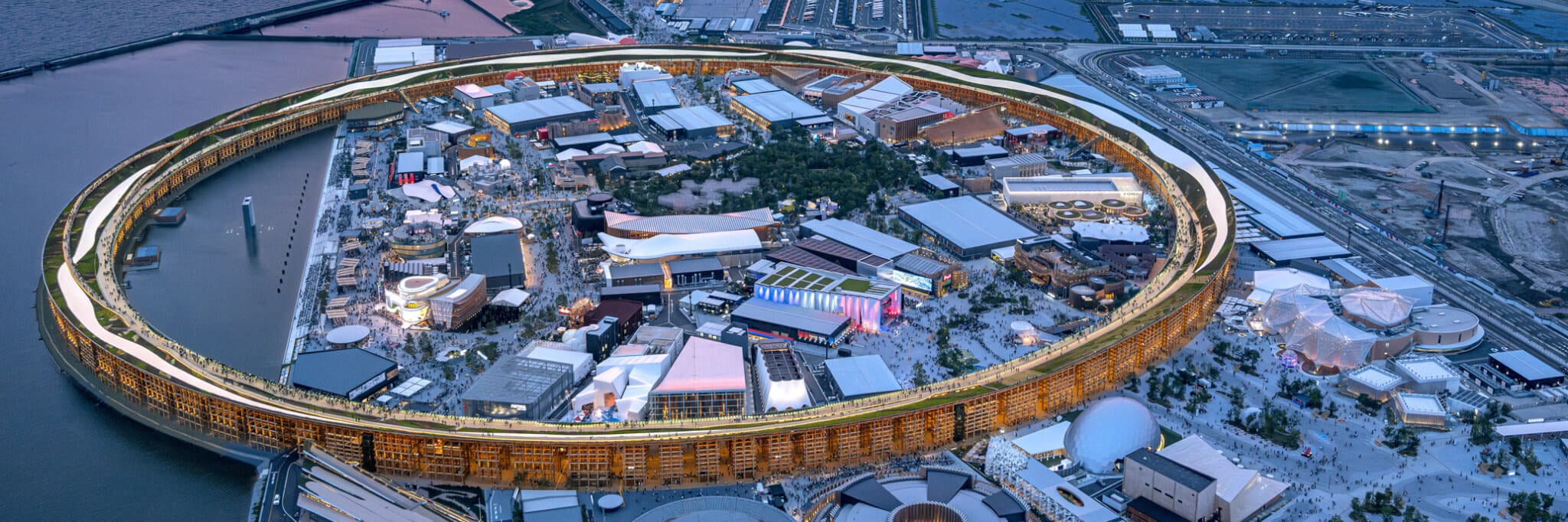
The Expo 2025 Osaka wowed with its pavilions and Sou Fujimoto–designed Grand Ring
Expo 2025 opened in Osaka, Japan, in April. The nearly year-long exhibition combined architecture with national pride and customs. Big-name architects were behind many of the pavilion designs realized at the exhibition. Trahan Architects represented the U.S., delivering a boxy, flag-forward design that recalls Robert Venturi and Denise Scott Brown’s unbuilt (ironic) proposal for the US Pavilion at Expo ’92 in Spain.
Big news out of the Expo was Sou Fujimoto’s big ring that encircled the entire affair. Edward Dimendberg visited the circular wood structure for AN and questioned its afterlife. In the following weeks reports from Japan said some Japanese cedar and cypress and Scots pine could be reused for a memorial park with more material repurposed to build housing in an earthquake-stricken region. Fujimoto recently told Dezeen, he heard 70 percent of his structure will be burned into chips.
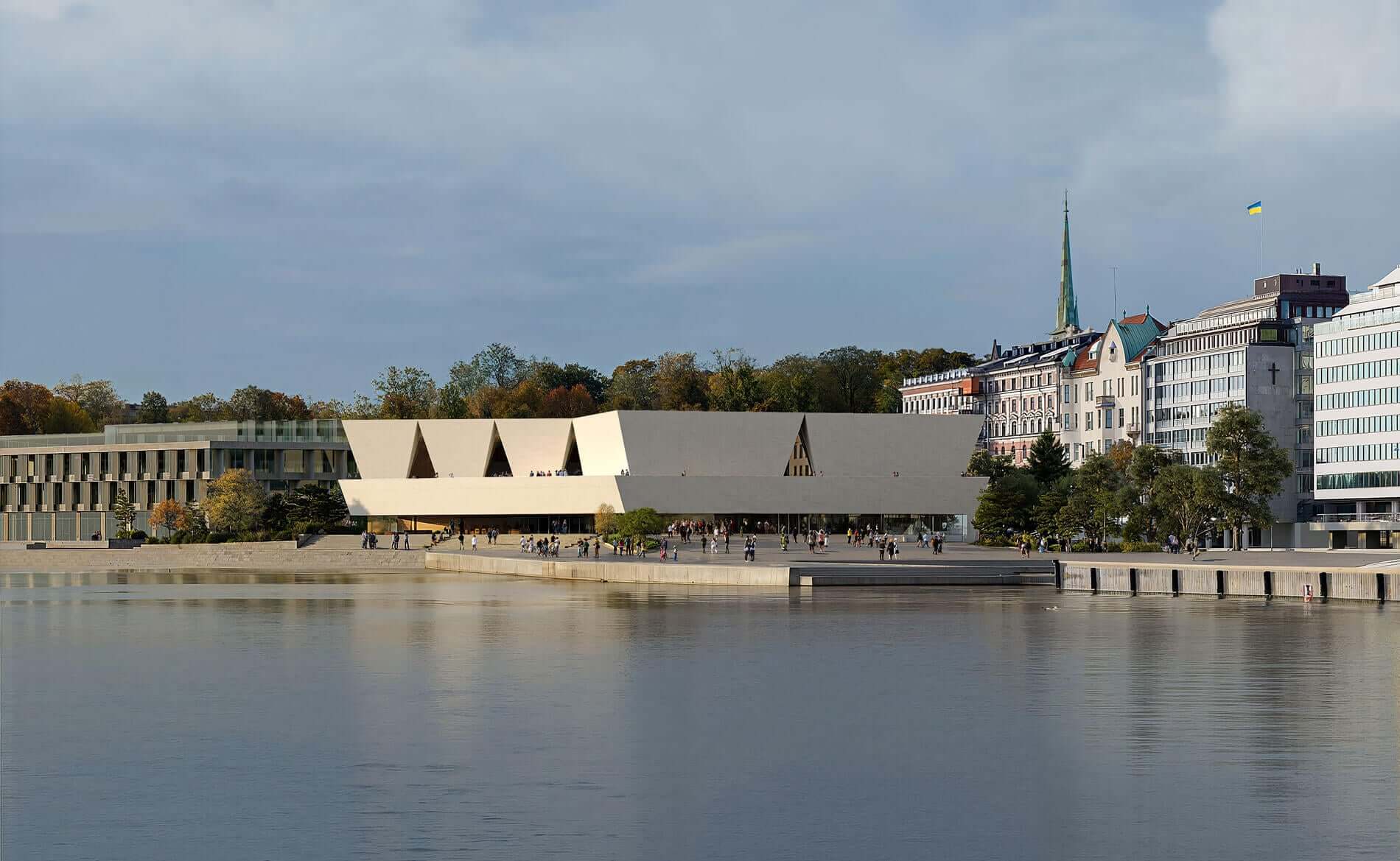
JKMM won the commission to design Helsinki’s New Museum of Architecture and Design and Carson Chan was appointed its Chief Curator and Director of Curatorial Affairs
A competition launched in 2024 to design Helsinki’s New Museum of Architecture and Design garnered international attention and talent. When submissions closed over 600 entries were judged and cut down to a shortlist of five, designers names were kept anonymous. In September, it was announced JKMM, a local practice, was awarded the commission. The firm’s proposal known as Kumma, proposes an inverted pyramid, with monumental triangle apertures that repeat throughout the facade. Even the layout of the gallery and exhibition spaces are triangular.
The museum won’t open to the public until 2030, but a curatorial vision is already underway thanks to a recent appointment that named Carson Chan the Chief Curator and Director of Curatorial Affairs at the new Museum of Architecture and Design.
Trump’s “Big Beautiful Bill” prioritized national defense and tax cuts over climate, housing, education, and social programs
If looking for something to blame for the funding cuts announced and felt this year—renewable energy programs, housing programs, and transportation projects , just to list a few—send grievances toward Trump’s “Big Beautiful Bill” which prioritizes national defense and tax cuts over climate, housing, education, and social programs. The bill, fittingly signed into law on July 4, 2025, slashed funding for education programs and clean energy credits as well as housing opportunities including those for low-income individuals and halted infrastructure projects in their tracks—all to save a pretty penny, or two.
(Oh, and farewell to the penny.)
→ Continue reading at The Architect's Newspaper

