
A dangerous fiction is being promoted in Texas and across the nation: a manufactured energy crisis designed to justify our reliance on polluting coal plants while scapegoating new technologies like AI and data centers. Simultaneously, communities in Texas are grappling with the immense costs and impacts of proposed massive new transmission lines and the construction of large, resource- and land-intensive data center campuses. Citing unsustainable energy and water consumption, more than 230 groups have now urged Congress to pause data center development in the U.S. But these narratives miss the real story. The problem isn’t our digital future; it’s our toxic past.
A Manufactured Crisis and a Convenient Scapegoat
First, let’s be clear: there is no systemic energy crisis in the United States. The facts tell a story of progress showing the U.S. produces more energy than it consumes and remains the world’s top oil and gas producer, with Texas as the nation’s leading net energy supplier.
The hype that new development is causing an energy crisis ignores a crucial fact: the data shows no corresponding increase in energy demand, even with massive growth. According to the U.S. Energy Information Administration (EIA), from 2005 to 2024, the American building sector cut its energy consumption by 8.2 percent and its electricity energy consumption by an impressive 10.7percent, while total U.S. electric power sector use fell 13.0 percent. These figures include America’s massive digital infrastructure—ten times the number in China—with major hubs in Texas. This trend holds in Texas: despite leading the nation in construction, the state’s building sector energy consumption fell 0.6 percent between 2013 and 2023 and the latest 2024 EIA data for Texas shows a 1.5 percent drop in building sector electricity consumption this past year.
While the energy and electricity demand from the data center boom has not materialized, the financial risk to Texans is very real: acting on this false narrative and building out infrastructure would cost consumers billions.
What is the real motive behind the energy-crisis narrative? It serves as a pretext to prop up fossil fuels and gut federal and local rules that protect our health and well-being. This fiction has been used to weaken clean air and water regulations, limit federal tracking of extreme rainfall and pollution data, and promote so-called “clean” coal-generated electricity in the U.S. and Texas. Promoting these aging, polluting coal plants to power the AI revolution is like trying to run the newest iPhone on a steam engine.
The Real Cost of Clinging to Coal
This isn’t a distant policy debate; it directly harms communities, throughout Texas and the U.S. Heartland. Aging coal plants release PM2.5—identified by the World Health Organization as the deadliest air pollutant—and other carcinogens, leading to higher rates of asthma, child developmental problems, heart disease, and cancer.
While some cities progress, many Texans live near massive polluters like Luminant’s Martin Lake and NRG’s W.A. Parish plants. Consistently ranked among the nation’s top emitters of mercury and sulfur dioxide, these aging facilities have also been cited for leaking toxic pollutants into local groundwater.
Texans are also on the front lines of climate volatility. The pattern of devastation includes the July 2025 Central Texas floods, Hurricane Harvey in 2017, the deadly 2021 grid failure during Winter Storm Uri, and relentless, record-shattering summer heat domes. NOAA data confirms Texas has endured more multi-billion-dollar weather and climate disasters than any other state, with costs averaging $20 to $30 billion annually over the past decade.
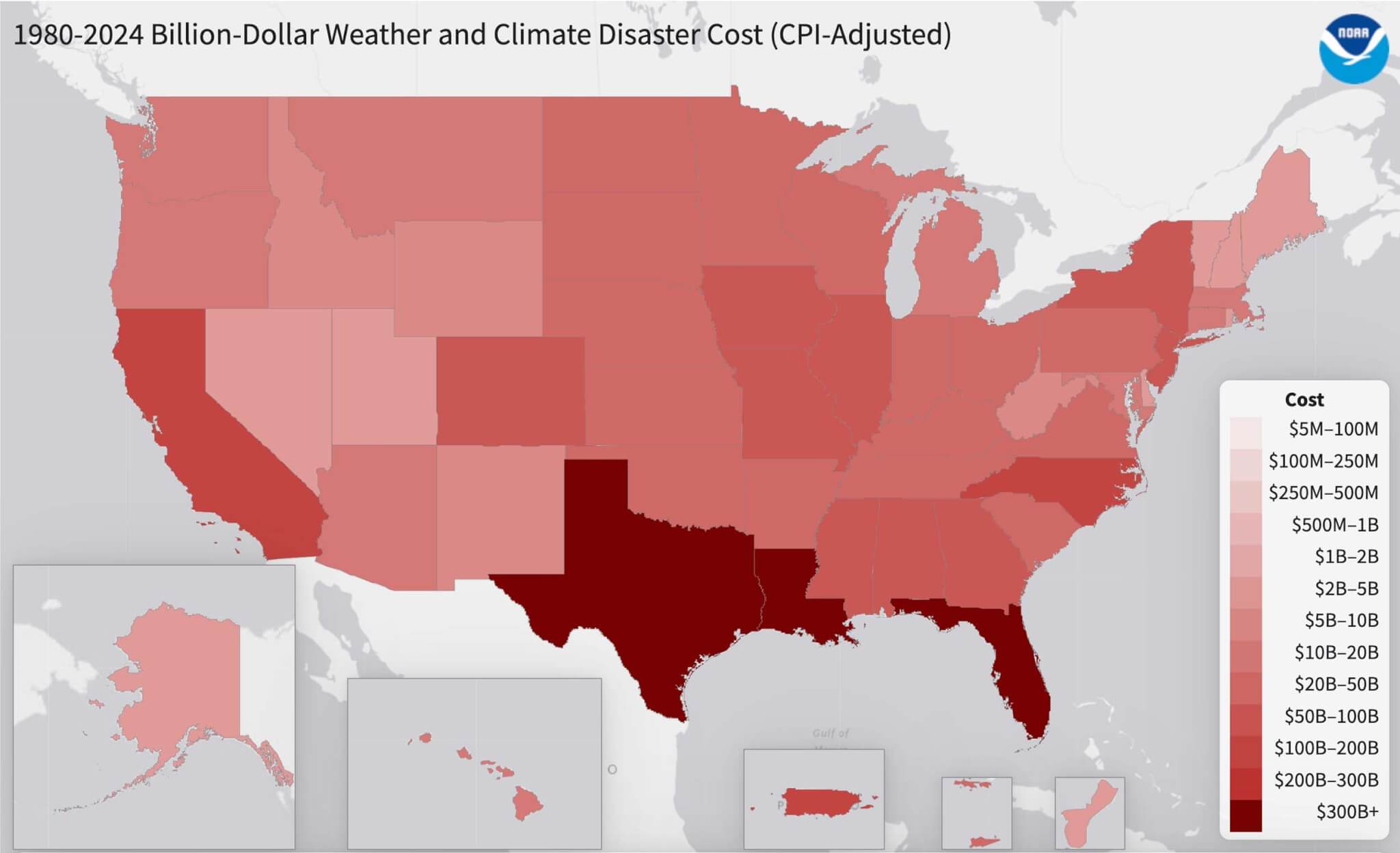
This problem is compounded as federal disaster recovery costs are shifted onto states, while home insurance rates in Texas are skyrocketing. As private insurers reassess escalating risks, they are dramatically raising premiums or pulling out of markets altogether, leaving property owners facing financial ruin. According to a recent analysis, Texas home insurance is now among the most expensive in the country, trailing only Florida and Louisiana.
Repurpose Pollution into Progress
Texas confronts a pivotal choice. It can allow massive data centers to sprawl across untouched rural landscapes—a path that requires paving over hundreds of acres with impermeable surfaces, potentially disrupting natural aquifers and wildlife, threatening local drinking water supplies, drastically increasing the risk of flash flooding for nearby communities, and spewing exhaust containing nitrogen oxides and particulate matter into the air from banks of massive diesel backup generators.
Or it can transform its outdated, expensive, and polluting coal plants into clean energy engines for the digital age. Instead of sinking billions into yesterday’s technology or destroying virgin land, Texas can locate new data centers and other high-tech industries at retiring coal plant sites, turning a liability into a multi-billion-dollar asset.
These sites already possess the most critical components: immense land, transportation networks, and most importantly, vital infrastructure and high-voltage grid connections. Repurposing this existing infrastructure can save a new data center project hundreds of millions of dollars and years of permitting, transforming its economic model. Crucially, this strategy also avoids the immense cost and risk of building new infrastructure, transmission lines, and substations for a speculative data center boom that may not materialize.
While data centers are power- and water-intensive, this strategy directly addresses those concerns as well. The massive capital savings from reusing infrastructure can be reinvested into state-of-the-art, hyper-efficient cooling technologies like adiabatic or direct immersion cooling. In an arid climate like Texas, these advanced systems consume as little as 10–20 percent of the water used by traditional cooling towers and dramatically less than the coal plants they replace. Additionally, these savings allow developers to invest in ecological restoration. By replacing the compacted soil of old industrial yards with modern green infrastructure and absorbent landscaping, these projects can repair local drainage systems and lower flood risks, rather than exacerbating them.
The constant noise from cooling fans can also be eliminated by immersion cooling or addressed with modern acoustic damping—a vast improvement over the industrial churn of a coal facility. Furthermore, these huge coal plant sites are perfectly suited for co-locating large-scale renewable energy systems. A data center powered by on-site solar or wind with battery storage creates a truly integrated clean energy hub, offsetting its own consumption.
This transition is already underway in the U.S., driven by the poor economics of coal against cheap renewables, with regulations and water scarcity adding pressure. By proactively embracing this shift, Texas can serve as a model for retiring hundreds of coal plants across the nation. This approach delivers a triple victory for the state:
- Economic Dominance and Consumer Savings: Attracts critical industries like data centers and semiconductor manufacturing, turning polluted zones into magnets for investment and creating high-wage jobs in technology and renewable energy. It also lowers energy bills for families and businesses by replacing expensive, subsidized fossil fuels with low-cost, reliable renewable power.
- Rural Preservation: Protects small towns and agricultural heritage by directing massive industrial development toward existing brownfield sites, ensuring that rural communities are not overwhelmed by traffic, noise, pollution, and the permanent loss of open space.
- Ecological Restoration and Healthier Legacy: Delivers cleaner air and water by eliminating major sources of toxic pollution and restoring damaged land, securing a healthier environment and better quality of life for all Texans, now and for future generations.
This triple-win strategy secures the state’s economy, saves families money, and builds a healthier Texas. The choice is simple: cling to an expensive, toxic, and outdated past, or embrace a future built on innovation, economic strength, and environmental stewardship.
Edward Mazria is founder of the nonprofit Architecture 2030 and an internationally recognized architect, author, researcher, and educator. Over the past five decades, his seminal research into the sustainability, resilience, energy consumption, and greenhouse gas emissions of the built environment has redefined the role of architecture, planning, design, and building in reshaping our world. He was awarded the 2021 AIA Gold Medal for his “unwavering voice and leadership” in the fight against climate change.
→ Continue reading at The Architect's Newspaper

