
In 2025, The Architect’s Newspaper’s coverage spanned the country, revealing how regional priorities shaped the built environment in markedly different ways. On the East Coast, cultural institutions reclaimed momentum, with museums reopening, expanding, or redefining their civic roles after years of delay and debate. In the Southeast, stewardship of land, legacy, and philanthropy emerged as a dominant force, particularly in Arkansas and Florida, where health, culture, and landscape became tightly interwoven civic tools.
Across the Midwest, institutions turned inward and forward at once, using competitions, campus reinventions, and preservation projects to recalibrate long-standing cultural anchors. In Texas and the broader Southwest, architecture leaned into symbolism and identity, whether through overt monumentality or the careful translation of religious and cultural traditions into building form.
And on the West Coast, consumption remained a throughline, from heritage properties entering the real-estate marketplace to spectacle-driven commercial architecture, our coverage raised familiar questions about access, authorship, and architectural afterlives.
The year’s projects trace a national portrait of architecture honoring what endures, experimenting with new civic models, and, sometimes, doubling down on spectacle.
Cultural Projects Rounded Out the East
Frick, Sotheby’s, Studio Museum
Along Fifth Avenue, the Frick Museum opened with a bang after a renovation from Selldorf Architects that seemed to take its sweet time. It was worth the wait though, as the renovation honored Henry Clay Frick’s 1914 mansion’s historic idiosyncrasies while expanding its capacity. Nearby, the Marcel Breuer–designed building at 75th and Madison reemerged as Sotheby’s global headquarters following a deliberately light-touch intervention by Herzog & de Meuron with PBDW Architects, its Brutalist bulk newly landmarked and stubbornly intact. Uptown, the Studio Museum in Harlem finally returned after a seven-year closure with its first purpose-built home, a stacked concrete-frame building by Adjaye Associates with Cooper Robertson as executive architect that anchors the institution firmly on 125th Street while expanding its civic and curatorial reach. These openings suggest a year that museums in New York City found their footing and honed their individual identities. These openings are setting the stage for whatever bolder gestures might come next, just in time for downtown to once again steal the spotlight in 2026.
Jacob’s Pillow
Over the summer, a new, mass timber Doris Duke Theatre at Jacob’s Pillow was completed by Mecanoo, to replace the black-box venue destroyed by fire in 2020. The theater was designed as a flexible, highly automated performance space, built to support experimental dance indoors and the landscaped rooftop stage. The sustainably built “magic wooden box,” is wrapped in Lunawood siding, and acts as a beacon of dance and movement in the rural Berkshires.

Calder Gardens
Calder Gardens is “more of a tribute than a museum,” landscape architect Piet Oudolf told AN. Philadelphia’s new cultural landmark pairs a deliberately understated pavilion by Herzog & de Meuron with 250 varieties of plants. The design creates a landscape-forward institution that frames rotating displays of Alexander Calder’s work largely underground rather than as monumental objects.
Stewardship Reigned in the Southeast
Building Boom in Bentonville
The Walton’s, well-known for starting a large supermarket chain containing the first three letters of their last name, have redrawn Northwest Arkansas’s cultural, educational, and medical landscape. The Crystal Bridges’s forthcoming expansions, the bikeable Ledger, and Walmart’s Gensler-designed headquarters have collectively turned Bentonville into something like a pseudo-philanthropic city-state with each new project slotting into a tightly coordinated ecosystem. The latest addition, the Bentonville Health Care Campus, is set to extend that network into specialty clinical care. Together with the Heartland Whole Health Institute by Marlon Blackwell Architects, which opened earlier this year, and the Alice L. Walton School of Medicine, which welcomed its first class in July.
Fountainhead by Frank Lloyd Wright
Frank Lloyd Wright’s angular, all-cypress Fountainhead in Jackson, Mississippi, is officially entering public life, as the Mississippi Museum of Art acquires the late-career Usonian masterpiece, furniture and all, after decades of painstaking private stewardship. The move protects the house from renovations that might alter Wright’s design and turns the house into a public asset, making Jackson a small modernist enclave.
Florida’s Cultural Projects
Across Florida this year, cultural and civic projects opened and shared new plans. Many treat landscape as the primary medium through through which architecture earns its public mandate. From Sarasota to the Panhandle to Jacksonville, new work by OLIN, Sweet Sparkman, Kimley-Horn, William Rawn Associates, OLI Architecture, and Civitas is positioning gardens, parks, and cultural campuses as resilient civic infrastructure.
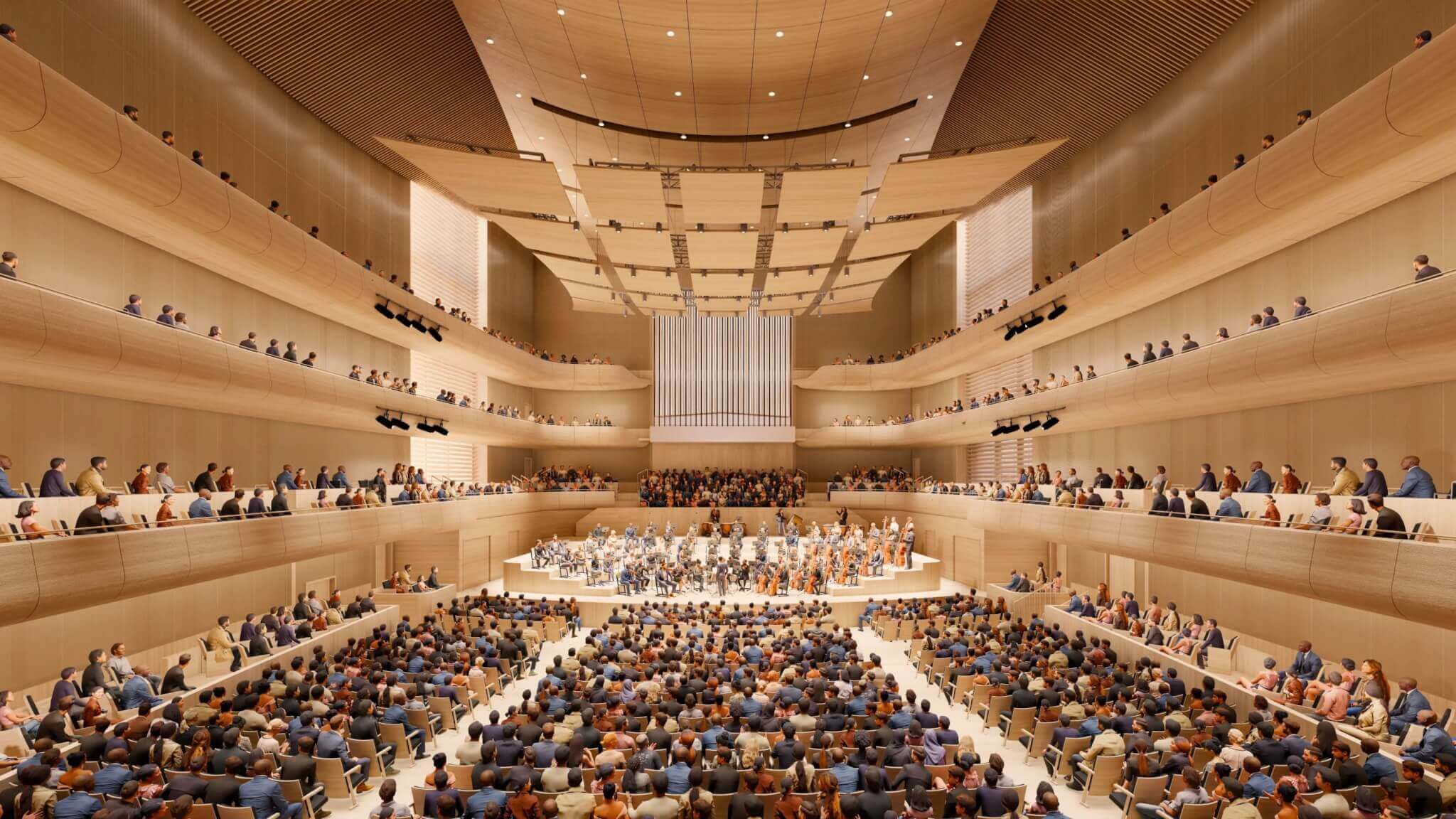
At Marie Selby Botanical Gardens, Phase Two of the campus master plan advances a model of botanical architecture explicitly shaped by storm resilience, net-positive energy systems, and public accessibility, folding research and exhibition into a hardened yet porous landscape. Nearby, Sarasota Orchestra’s future Music Center similarly leans on landscape as connective tissue, embedding its concert hall and education spaces within wetlands, meadows, and outdoor rooms.
That impulse stretches north and east. In Walton County, OLI Architecture’s Longleaf Art Park will frame a single Richard Serra sculpture within a carefully preserved pine flatwoods ecosystem. In Jacksonville, Civitas’s proposal for Metropolitan Park sets out to reimagine a legacy event space as a living river edge.
Underscored by the state’s move to permanently protect Florida’s parks from development, these projects point to a broader recalibration, where landscape stewardship is a civic obligation shaping Florida’s next public works.
The Midwest was a Place of Institutional Reinvention
Nelson Atkins Museum of Art
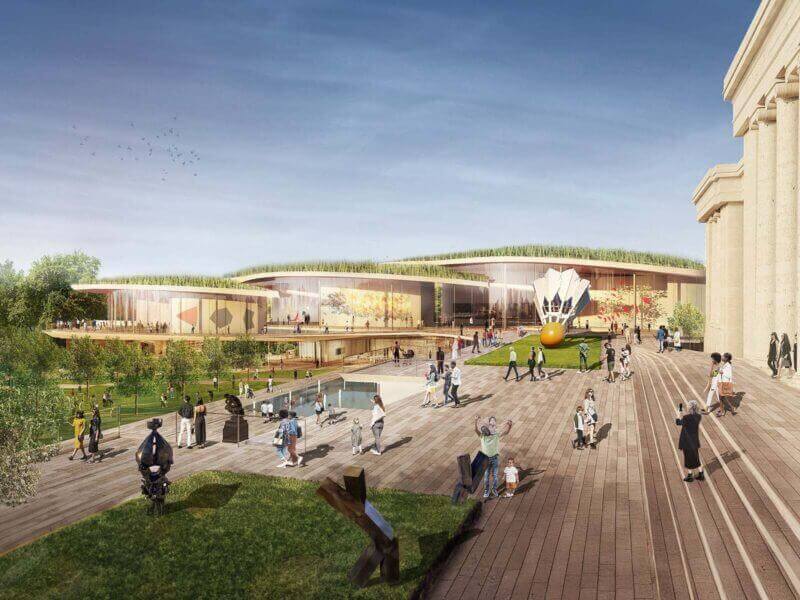
Weiss/Manfredi, working with SCAPE and a large consultant team, won the international competition to design a new addition to Kansas City’s Nelson-Atkins Museum of Art, beating finalists including Kengo Kuma, Renzo Piano, Selldorf Architects, Studio Gang, and WHY. The competition was first reported by AN in April 2024, with an open call later drawing 182 submissions before six teams were shortlisted. The unanimously selected scheme proposes a “connected tapestry” of additions.
Ford Motor Company Central Campus Building
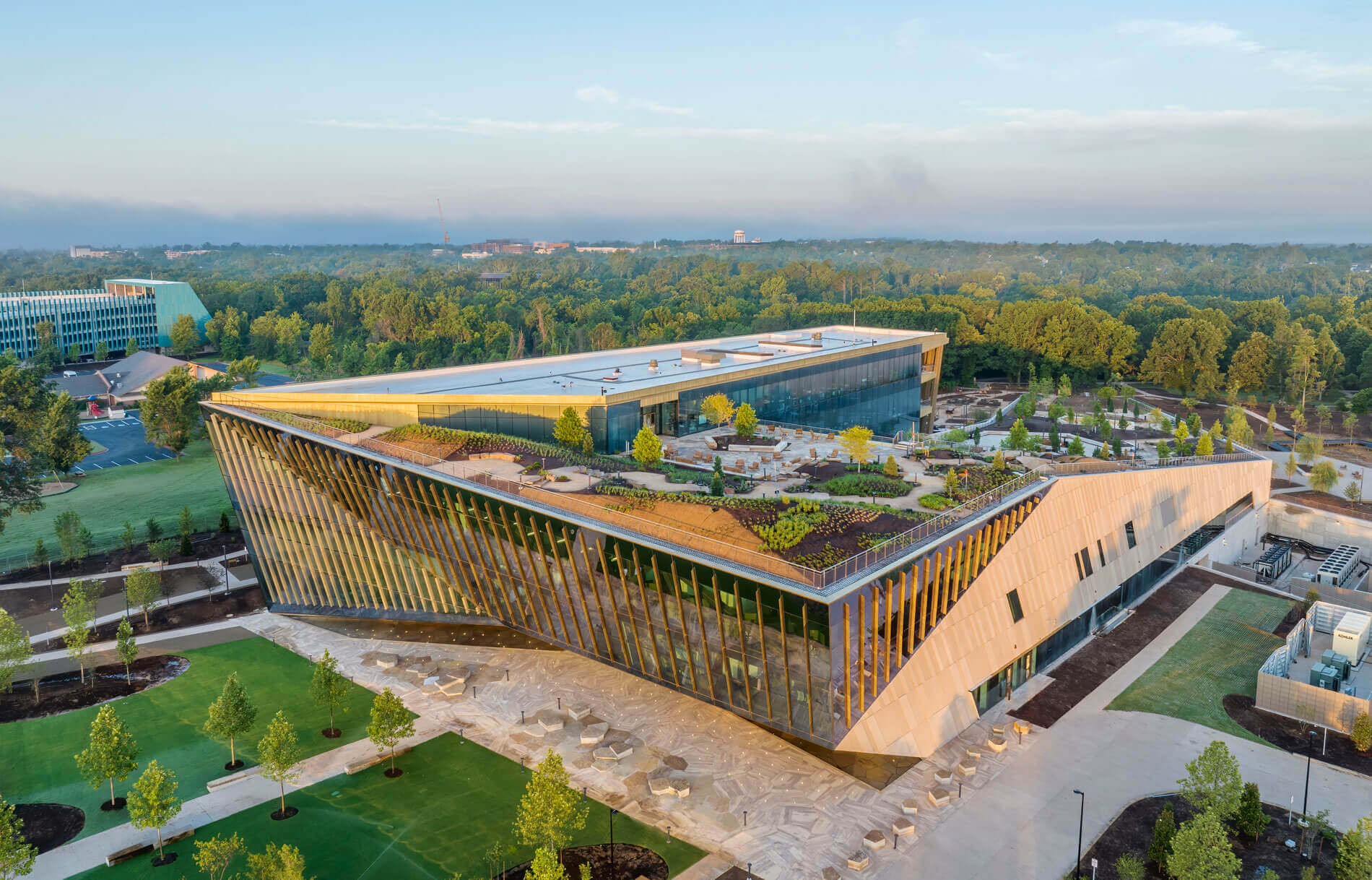
Ford’s new 2.1-million-square-foot Central Campus Building recently opened in Dearborn, Michigan. It’s a hulking new home base designed by Snøhetta, now acting as the centerpiece of Ford’s reworked Research & Engineering campus. The move marks the company’s official shift away from the midcentury Glass House, its longtime 1956 headquarters a few miles east, which will be decommissioned and demolished as Ford Motor Company ushers its workforce into a shinier era.
Preservation Took a Bow
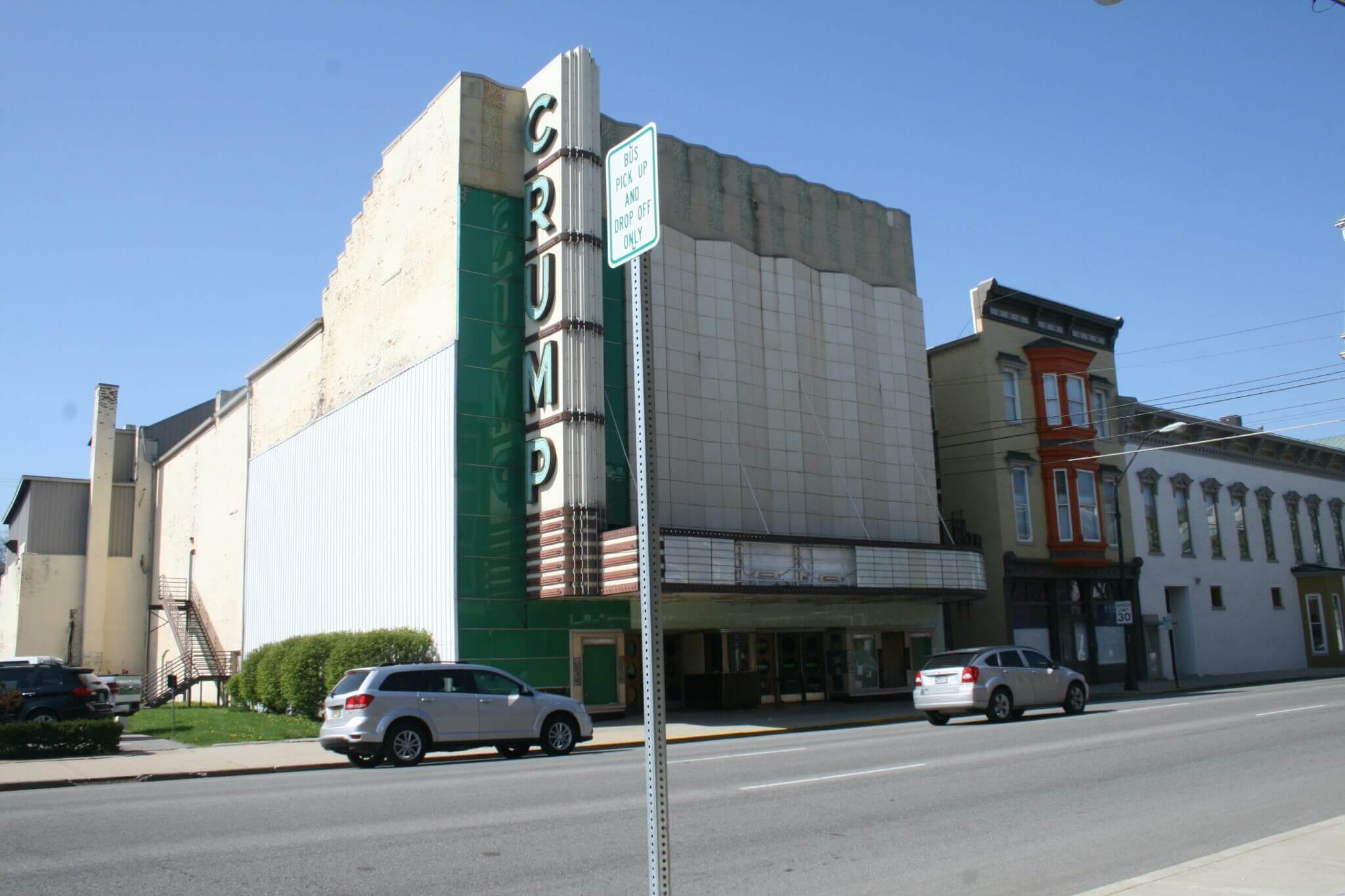
In Columbus, Indiana, the long-mothballed Crump Theatre inched toward its next act with the selection of DKGR architects to lead its renovation. The 1889 theater has spent the last decade stuck in time. The renovated venue will have a 750-seat performing arts and community venue positioned as a catalyst within Columbus’s Downtown 2030 Plan. The project underscores a broader Midwestern pattern this year, in which local governments and community groups are betting that cultural reuse can do the work of economic development.
That same principle is already in place in Milwaukee, where EUA’s $80.1 million transformation of the Milwaukee Repertory Theater’s home inside a former power plant reached completion. The new Associated Bank Theater Center threads contemporary performance infrastructure through the shell of the 1898 Oneida Street Power Plant.
Monumentality and Symbolism was Discussed in the Southwest
National Medal of Honor Museum
The National Medal of Honor Museum arrived in Arlington this June. The 102,000-square-foot exhibition box by Rafael Viñoly Architects hovers 40 feet above the ground on five megacolumns, one for each military branch. Backed by Jerry Jones and other private donors, the museum leans hard into monumentality with spiraling stairs, a cosmic oculus for the Space Force, and acres of metal cladding. Its message of heroism is loud and clear.
Ismaili Center
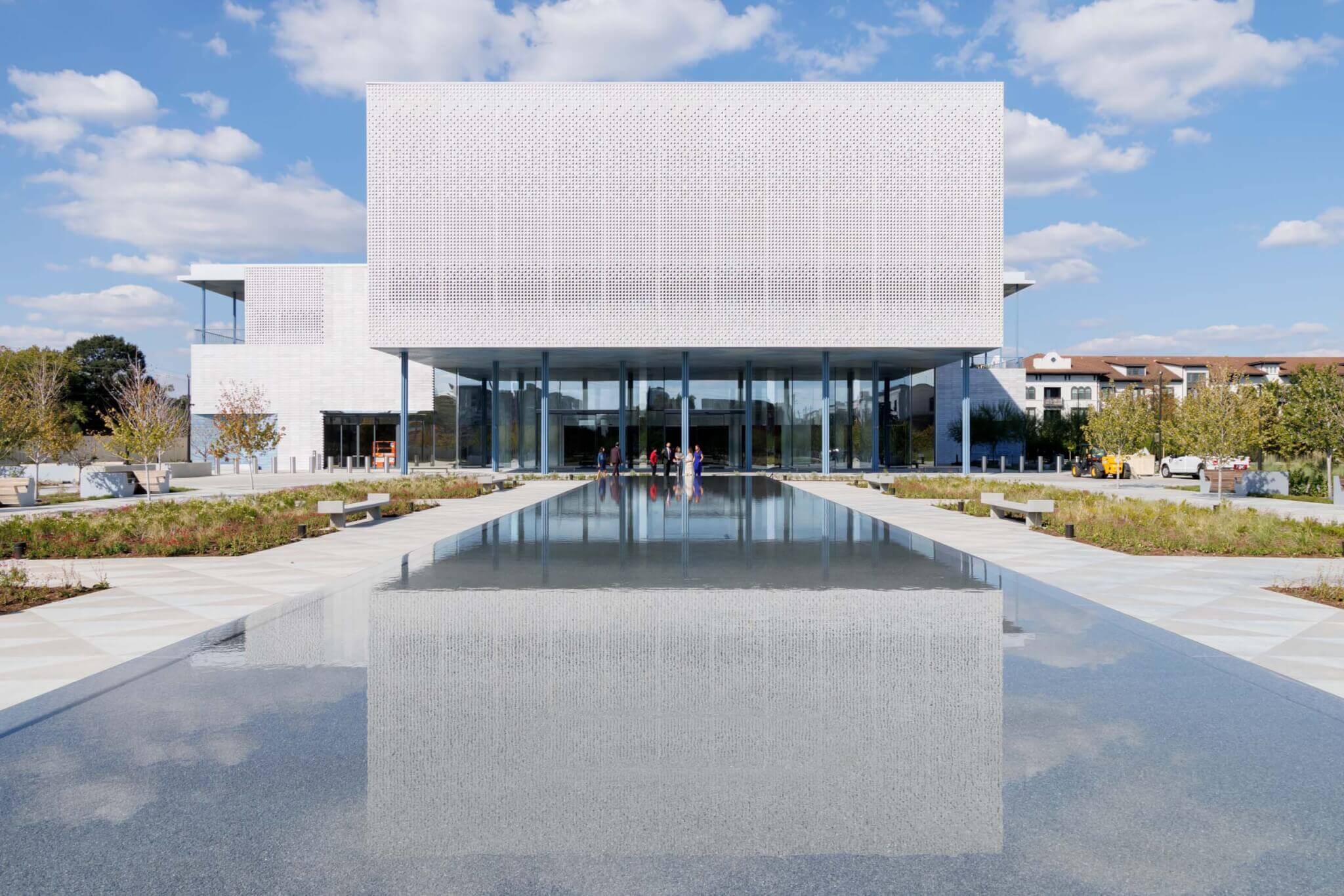
After nearly 20 years of planning, the first Ismaili Center in the U.S. opened in the fall. Designed by Farshid Moussavi Architecture, the stone-clad, light-filled cultural campus is equal parts mosque, civic center, and serene garden escape from Allen Parkway traffic. Wrapped in a mashrabiya-style “tapestry of stone,” packed with symbolic triangles, and floating safely above Houston’s floodplain, the design uses Persian architectural traditions to meet the Texas ecology, with monarch butterflies showing up uninvited.

Frank Lloyd Wright Foundation News
First came the open letter. Last year, Aaron Betsky publicly begged the Frank Lloyd Wright Foundation to stop turning Frank Lloyd Wright’s name into a licensing free-for-all. He warned of merch-y afterlives that had little to do with living architecture.
Then came the reset. After years of internal strife, public criticism, and bruising battles over the future of Taliesin and its school, longtime president Stuart Graff announced his departure in 2024, clearing the way for a new chapter and a new leader. In March, the Foundation named Joseph Specter as its new president and CEO, arriving from the Arizona Opera with promises to “strengthen the mission,” “expand influence,” and restore a sense of gravitas to Wright’s legacy.
And then, the Foundation unveiled a $184,900 limited-edition Airstream camper designed in the “Usonian spirit,” lovingly wrapped in Wrightian patterns and officially bearing Frank Lloyd Wright’s name. Compact! Organic! On wheels! Wright wanted architecture to move with life, and apparently life now comes with a hitch, a waiting list, and financing options.
Consumption Was King in the West
Tesla Diner
The Tesla Diner served supercharged nostalgia this summer. Designed by Stantec, it indulges the whims of its fanbase through a retro-futuristic mix of diner, drive-in theater, and supercharging station, complete with 66-foot LED screens, Cybertruck commercials, and a parade of customized Teslas. The architecture vacillates between the fastidious minimalism of an Apple store and the cartoonish detailing of a theme park restaurant sending visitors both back in time about 70 years and toward a techno-utopian future that clashes with its urban surroundings.
Provenance Hit the Los Angeles Real Estate Market
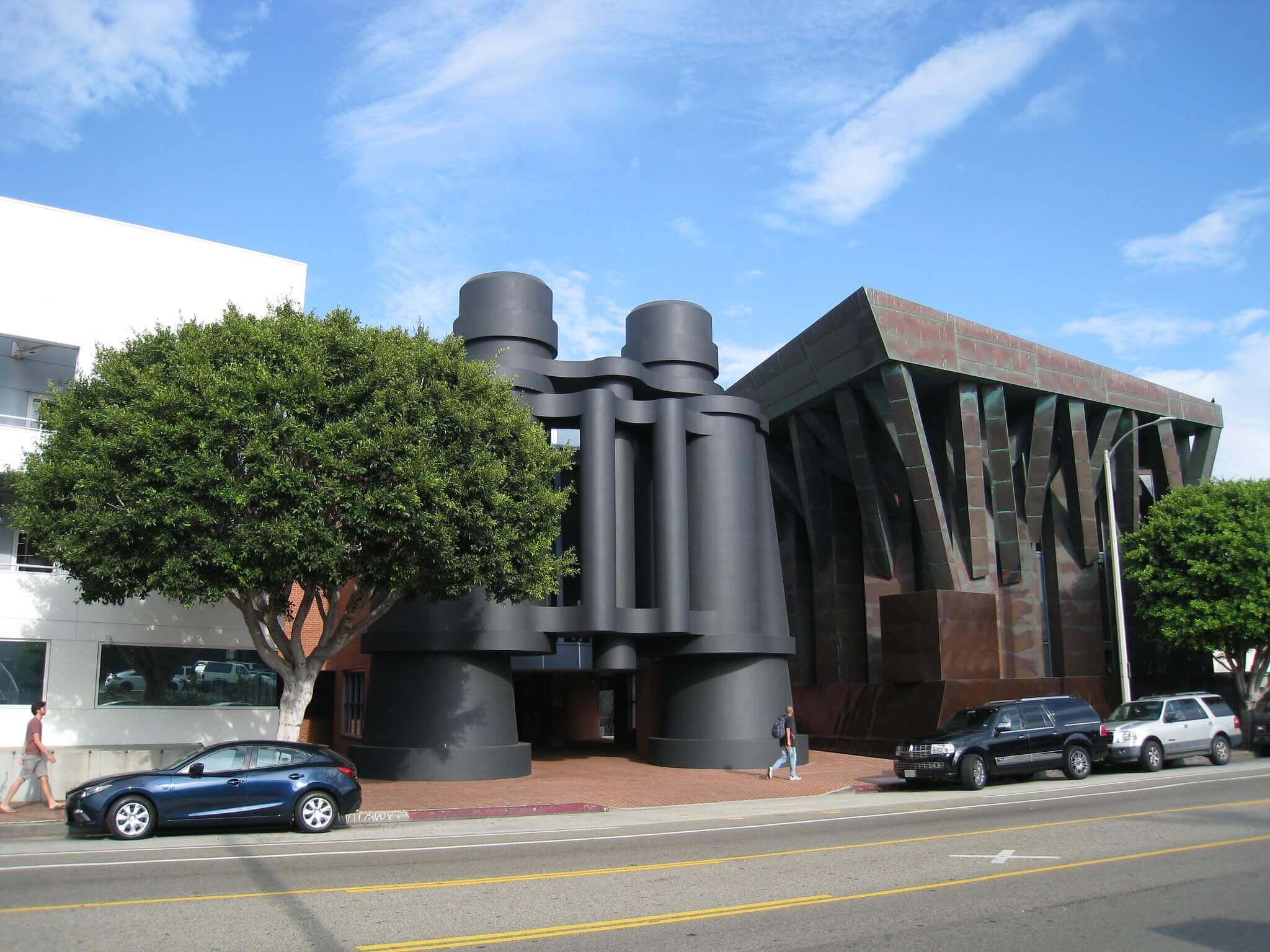
At the beginning of this year, the fires in Los Angeles were all anyone could think about and they dominated AN’s coverage of the city. But as the smoke cleared, the city’s wider real estate market seemed undeterred. In March, Frank Gehry’s Binoculars Building in Venice quietly hit the market after nearly 15 years as a Google office. Showing that a pair of 45-foot binoculars wasn’t immune to the logic of “price upon request.”
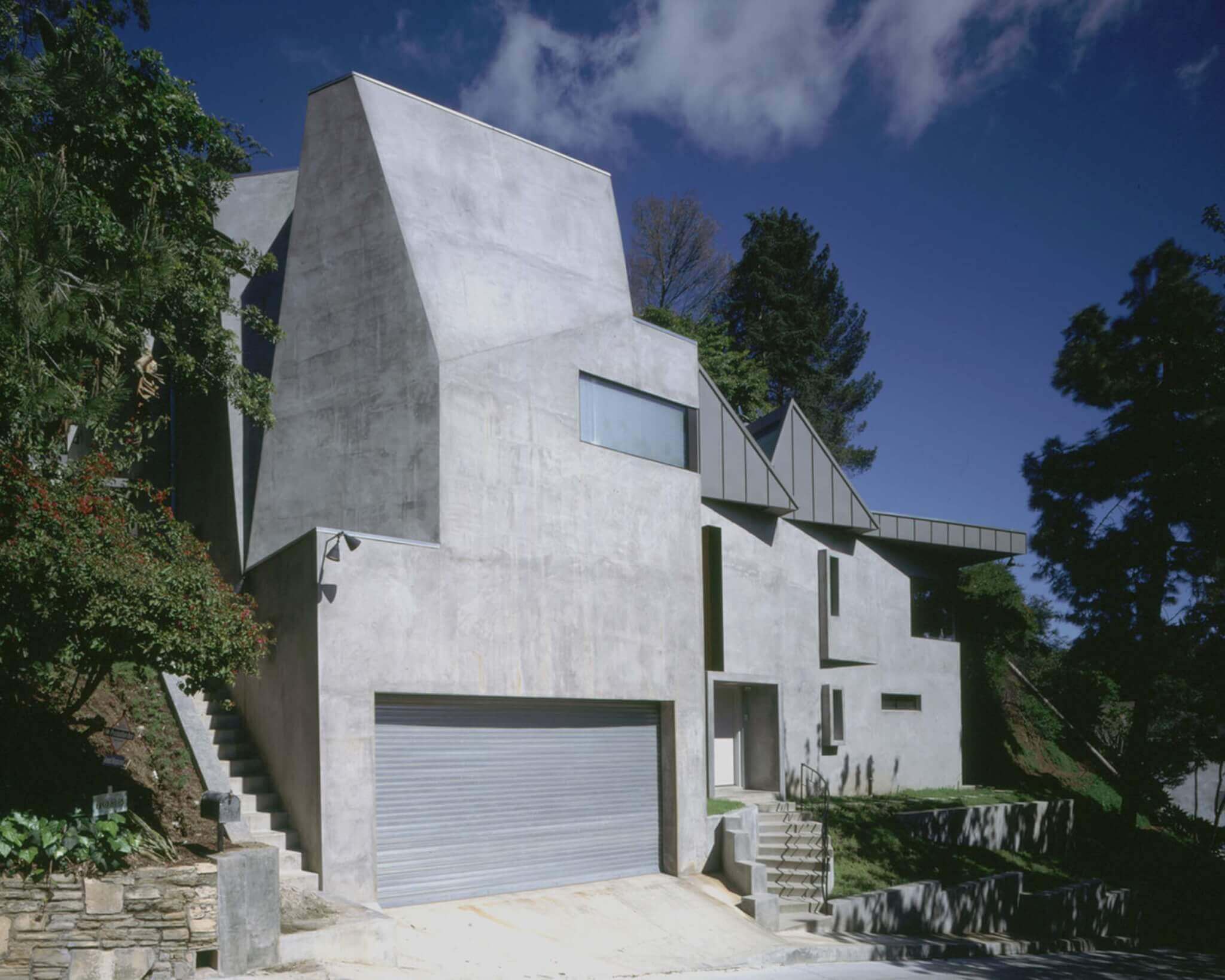
In September, David Lynch’s Hollywood Hills compound went up for sale, after the famed director’s death. The filmmaker purchased the primary residence on the lot, designed by Frank Lloyd Wright’s son Lloyd Wright, in 1987, paying $560,000 for the 3-bedroom house faced with pink concrete and chevron detailing.
Then in November, the Stahl House, Case Study House No. 22, designed by Pierre Koenig and canonized by Julius Shulman, was listed for the first time ever. Cantilevered, glassy, and permanently poised above Los Angeles, the house entered the market, prompting questions like: how much will someone pay to own a piece of architectural history and will they let anyone else see it once they do?
The Portland Art Museum
The Portland Art Museum’s new Mark Rothko Pavilion, a 21,881-square-foot glass addition by Vinci Hamp Architects and Hennebery Eddy, filled the long-standing gap between the museum’s original Pietro Belluschi building and the former Masonic Temple beside it. It was a shotgun wedding of two elderly spouses. The expansion uses transparency to create visibility at street level to invite the city in and offer a clear contrast to Belluschi’s masonry and address issues of circulation and accessibility within the museum.
→ Continue reading at The Architect's Newspaper


