
With each passing year technology holds users more and more captive. Talks of artificial intelligence and its proliferation of “slop” are nothing novel, but seem to be only more pervasive as time drudges on. In 2025, the rise of ChatGPT grasped internet users and image-rendering generators kept doomscrollers tapping away.
It’s hard to predict what the future holds in terms of technology, while some indicators predict worthwhile advancements—for example, innovative building methods—others indicate a recoiling of creativity and genuinity.
Here are the technology stories and headlines of 2025 that had architects and designers thinking about what’s to come.
Across the U.S., the demand for data centers will only grow
The rise in artificial intelligence is further propelling the already demanding need for data centers. A report from McKinsey forecasts a $5.2 trillion investment in AI infrastructure by 2030, with 15 percent of that flowing to builders for land, materials, and site development. Architects and developers delivering data centers are forced to reckon with the building typology’s significant environmental toll.
Internet outages affected architects and web users
While we may view the infrastructure that supports the internet as invincible, it has bad days too. On October 20, an Amazon Web Services outage temporarily shut down many internet-reliant services. For architects using Autodesk, work came to an abrupt stop. The outage affected hundreds of Autodesk products, including Autodesk Construction Cloud, the global building information management and coordination platform.
Additionally, this year Cloudflare, a Content Delivery Network (CDN), went dark a few times too, leaving many websites and internet-based services shuttered and unusable, among these ChatGPT and digital services of New Jersey Transit.
In Detroit, drones were used to evaluate building efficiency
Artificial intelligence is capable of much more than just answering prompts. For building inspectors in Detroit, it’s the mechanics behind a pilot program that is uncovering thermal deficiencies in buildings.
Via drone, the technology developed by Lamarr.AI scans rooftops, facades, and building envelopes with thermal imaging and high-resolution cameras able to detect heat loss, insulation gaps, structural vulnerabilities that often go undetected. Talk about efficiency!
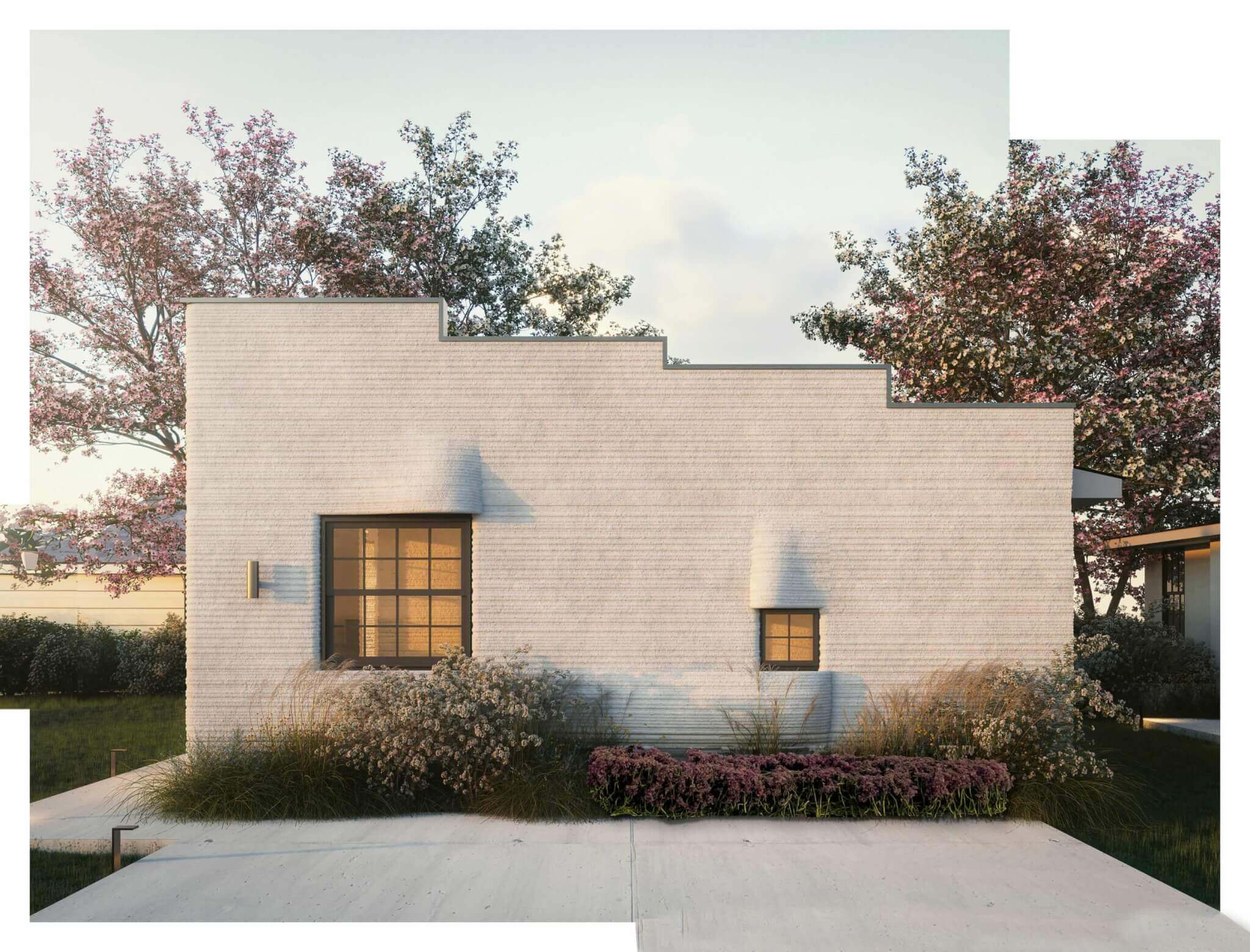
3D printing remains a viable and cost-effective way to build
Conversations around 3D printing continue to be top of mind, especially in terms of delivering affordable housing, quickly and cheaply. This year, AN spoke with Ronald Rael, an architect who has been experimenting with the method for years. Rael talked about his rig set-up and how his practice is grappling with AI-image generators to convey building designs and ideas.
Other 3D-printed projects AN covered this year include a row of affordable houses in rural California and a fully 3D-printed, multi-story home in Singapore.

The biotech building boom has tamed, provoking uncertainty for those designing the facilities
The building boom the biotech industry saw in recent years is fizzling out. The pandemic brought an onslaught of life sciences investment in 2021 and 2022. This is worsened by recent cuts from the federal government to subsidies that supported the research underway in these laboratory spaces.
While it appears to be most bleak for academic institutions, there remains a need for space to develop and manufacture medical devices and conduct pharmaceutical research. For those designing laboratory and biotech facilities, as with many building types, flexibility is key.
→ Continue reading at The Architect's Newspaper

