
Cost of living was center stage at ballot boxes around the U.S. this year. AN covered elections nationwide, from New York to California, where housing affordability was a make-or-break issue for candidates like Seattle’s incoming mayor Katie Wilson. (And ICYMI, AN interviewed Zohran Mamdani about his housing plans, well before his winning campaign took off.) Now, libraries on city land in New York and Boston are being crowned with new residential towers by Bernheimer Architects and MASS Design Group respectively to combat the housing crisis.
AN editors studiously read the FY2026 budget proposal by the Trump administration, which slashed away at housing subsidies. And we are grateful to Richard Plunz and Viren Brahmbhatt for publishing a housing manifesto with us—Brahmbhatt followed up with another important op-ed about the proposed demolition of NYCHA’s Fulton and Elliott-Chelsea Houses.
Here are other housing-related stories AN published in 2025:
Office-to-residential building conversions took hold nationwide
Gensler has asserted itself at the forefront of the office-to-residential conversion movement gaining traction in cities around the U.S. It is now transforming the old Pfizer headquarters in Midtown into housing, as well as the old Ernst & Young headquarters in Times Square. Wall Street just earmarked $779 million in loans to flip 111 Wall Street into housing, another Gensler project.
Not to be outdone, the largest office-to-residential conversion in the country was completed in 2025 by CetraRuddy at 25 Water Street. And now, Boston officials are weighing residential uses for Paul Rudolph’s Boston Government Services Center. The city of Boston has also launched a new pilot program to extradite office-to-residential conversions. In Washington, D.C., too, programs are underway to convert workspaces into places to live.

Canada invested in co-ops and affordable housing initiatives
Vancouver’s average home price today has ballooned to over $1 million, and rental prices in Toronto are equally astronomical. To buck this trend, Canada’s Co-operative Housing Development Program unlocked $1.5 billion in federal financing to support new cooperative housing. The Canadian National Housing Strategy’s longterm goal is to build 156,000 affordable units and repair over 298,000 existing ones.
The largest co-op underway in Canada today is 2444 Eglinton Avenue by Henriquez Partners and Claude Cormier + Associés. The Toronto development will yield 918 homes, including 612 affordable, rent-geared-to-income units. Toronto is amid a residential building boom, AN ventured north of the border to Toronto this year to check some of the projects underway.
Canadian officials also rolled out a new Housing Design Catalogue for architects to spur construction. It arrived alongside Build Canada Homes (BCH), a new federal agency tasked with building and financing affordable housing.

In Los Angeles, legislation and housing competitions addressed the need for housing
The City of Los Angeles, LA4LA, and cityLAB-UCLA launched the Small Lots, Big Impact competition in March to address the need for housing in Southern California, a crisis heightened by ravenous wildfires. Small Lots, Big Impact is steered by Dana Cuff, cityLAB director and professor of architecture at UCLA.
There were a total 356 submissions, spread across four distinct sites, and the jury awarded 41 of them. Some of the winners were Only If, Shin Shin, and others. (The full list can be accessed here.) Now, phase two of the competition is underway. Phase two winners will be shared in September 2026.
New housing construction will hopefully be spurred by revisions state officials made this year to the California Environmental Quality Act. This year the Los Angeles Housing Department also released its first “mansion tax” funds to jumpstart affordable housing construction.
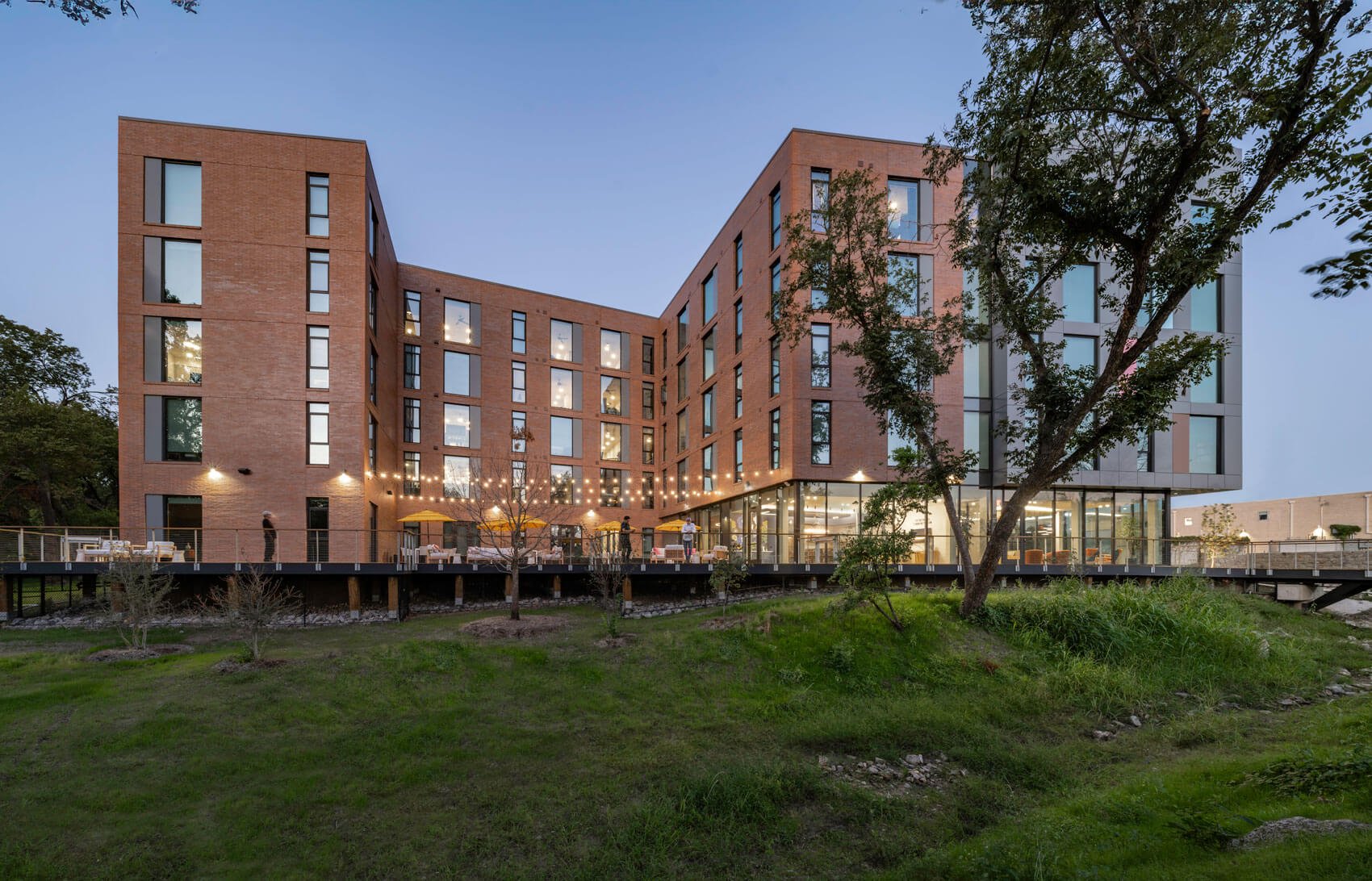
Perkins&Will completed north Texas’s first LGBTQIA+ affordable senior housing development
In Texas, state law doesn’t protect individuals from housing discrimination based on their sexual orientation, although LGBTQIA+ individuals are still protected under the federal Fair Housing Act. This exacerbates the problem and puts even more people at risk of poverty and social isolation.
Perkins&Will’s Dallas studio completed an affordable housing project to help combat this public health crisis. Oak Lawn Place in Dallas is north Texas’s first affordable housing development of its kind, providing 100 percent affordable housing for LGBTQIA+ seniors, 55 years of age and older.
Michael Hsu Office of Architecture, in 2024, completed a comparable supportive housing project for people living with HIV and AIDS in Austin.
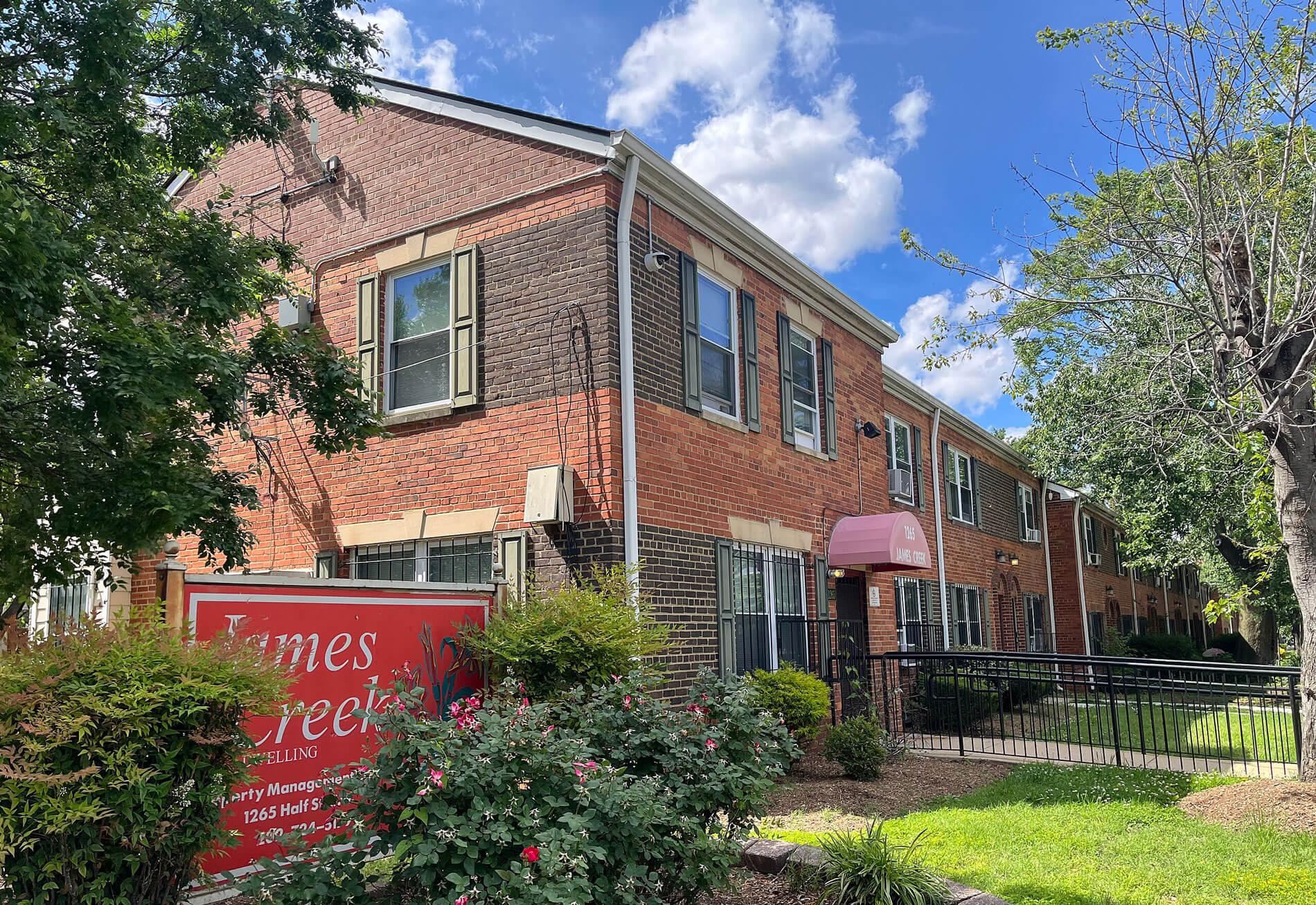
D.C. Housing Authority launched revitalization program for public housing campuses
The District of Columbia Housing Authority announced this year its plans to improve 3,500 of its approximate 8,000 units, in tandem with Sustainable DC, an equity and resiliency campaign led by Washington, D.C. Mayor Muriel Bowser.
Residents at select campuses are now anticipating improvements to floors and appliances, better water filtration and heating and cooling systems, repaired roofs and shared spaces, more security, and in some instances facade upgrades. Many of these campuses were built during the New Deal by the Works Progress Administration, Federal Works Agency, and Alley Dwelling Authority.
In its Moving to Work Annual Plan, DCHA said it “anticipates” converting up to 7,937 units from the agency’s public housing portfolio to project based housing—ostensibly privatization.
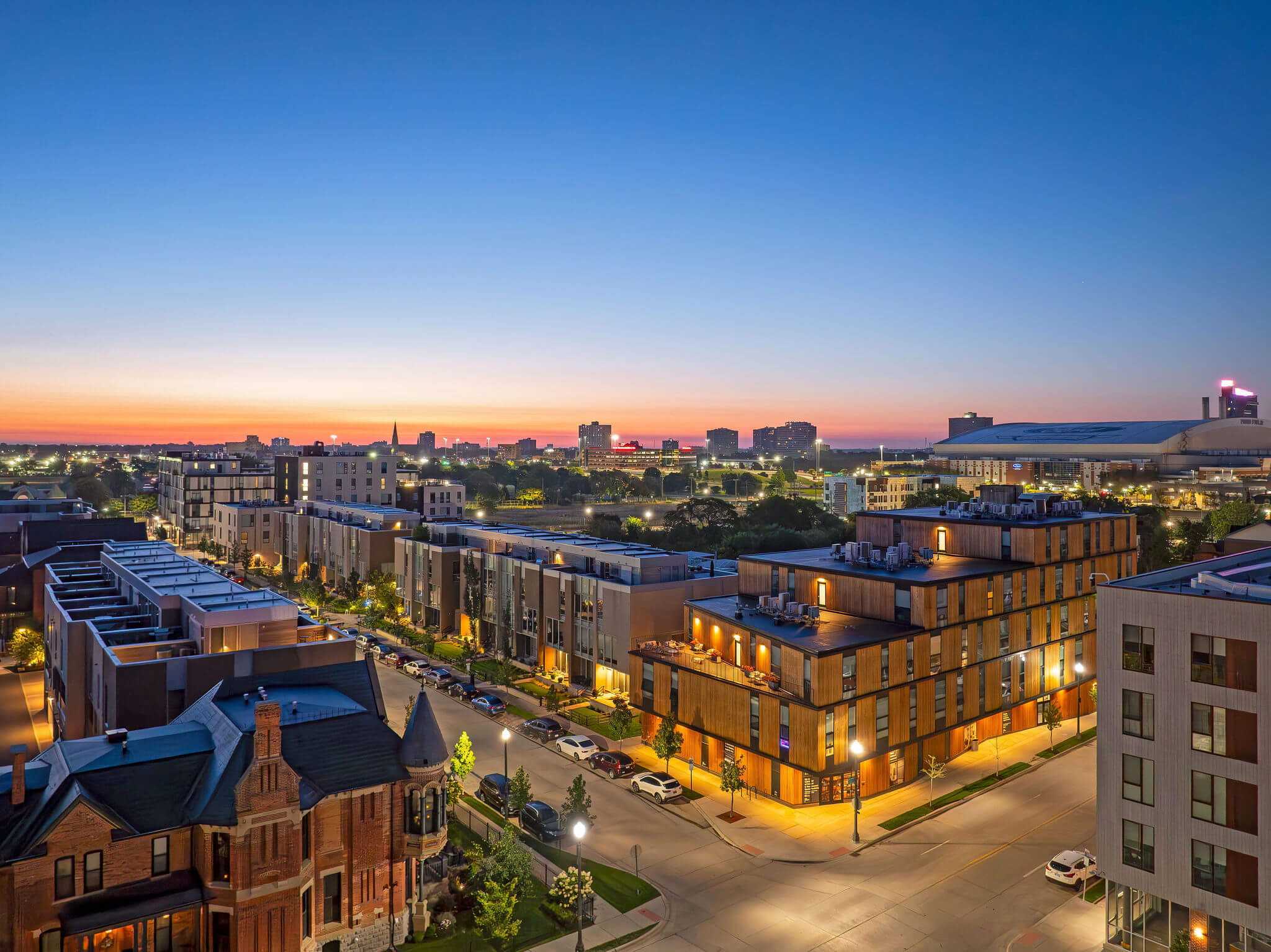
A mixed use development in Detroit completed
City Modern, a major new development that added 450 new residences spread across 20 new buildings in Detroit’s Brush Park neighborhood, debuted this year. A past development of this scale in Detroit was Mies van der Rohe’s Lafayette Park, which opened in 1956.
Bedrock, a Detroit- and Cleveland-based real estate development group, and six architecture firms—Hamilton Anderson Associates, Merge Architects, Lorcan O’Herlihy Architects (LOHA), Studio Dwell, McIntosh Poris Architects (MPA), and Christian Hurttienne—were behind the design.
Single-stair reform energized North American architects
Single-stair reform was top of mind again this year, as more cities seek creative strategies for grappling with housing shortages. Toward that end, Austin was among the cities that approved a code change this year that allows buildings up to 5 stories tall to be built with a single staircase.
The city of Austin joins other U.S. cities—including Seattle, New York, and Honolulu—in amending its local building code to allow for this housing typology. Canada has embraced the reform too.
A map from Pew Charitable Trusts lists the states that have enacted or introduced single-stair reform legislation.
→ Continue reading at The Architect's Newspaper


