
Every year, AN’s Best of Design Awards jury selects entries for their distinction in design. The 2025 Best of Design Awards featured 49 winners. Out of all of these, a jury chose one winner that rose above the rest. This winner is the Project of the Year.
As Best of Design combs through projects of all scales—museums, schools, master plans, affordable housing, civic buildings, and so forth—the decision was not easy. Still, the jury landed on one project that truly considered its site at all angles as well as the ways it can inspire architects and designers going forward. Meet 2025’s Project of the Year and the two distinguished finalists who were in the running.
Jury
Project of the Year
The cascading roof, with its large canoe-like gutters, responds to the heavy rain of the local climate, while also referring to the wonderful tradition of Ozark Barns. The undulating roof lifts up to ensure that the upper spaces of the auditorium and the studios are visually connected to the large ground-based fabrication shop below, reinforcing the important educational relationship between imagining and making.
The request at the competition stage was that the new building be a showcase for both design and construction innovation. The timber construction achieved in this newly completed building is a combination of traditional techniques and new technologies, encouraging invention and the craft of wooden buildings.”
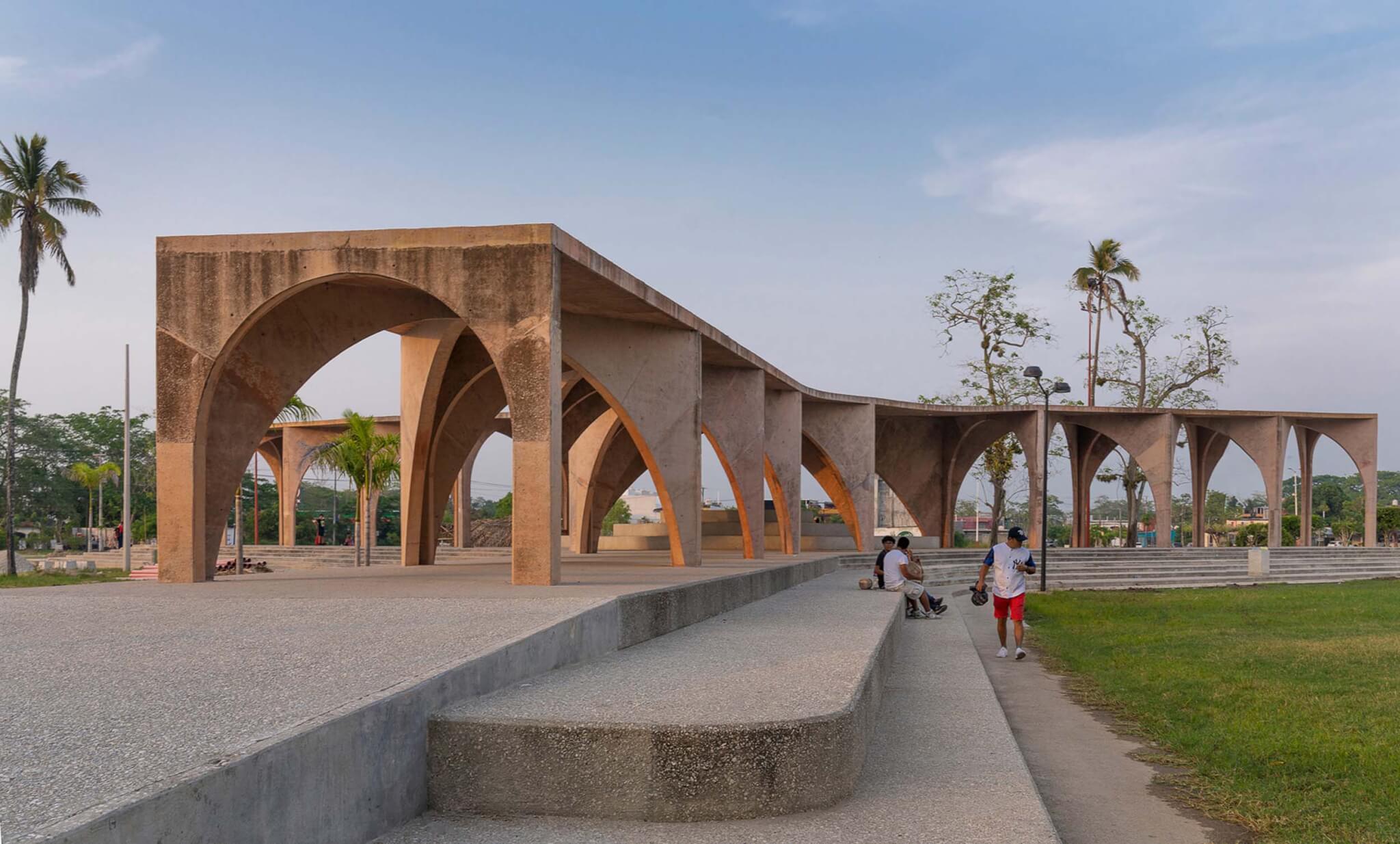
At the heart of the park, a pavilion with crossed arches serves as a sculptural yet functional venue for community events. It anchors the park’s sports program—baseball, soccer, and more—serving as the main point of convergence. It also provides shade and shelter in Tabasco’s tropical climate. Its stepped concrete base doubles as seating for both large gatherings and everyday use.
The adjoining Community Development Center is an educational hub promoting development opportunities for the local community with workshops, a library, and an auditorium. Built with local workers through artisanal processes, it fosters pride, identity, and a strong sense of belonging for the community.”
→ Continue reading at The Architect's Newspaper

