
The MTA sued the owner of 2049 Second Ave. to access his building, which the agency says is necessary to complete its extension of the Q line into East Harlem. Wednesday, April 8, 2026.
Photo by Isabella Gallo
A landlord is fighting to keep the MTA from accessing his apartment building as part of a project to complete the transit agency’s Second Avenue Subway extension for fear that an inspection would expose deficiencies that will be costly to repair.
The MTA took the landlord to court this week, arguing that if a judge doesn’t grant it emergency access to the building to assess its structural integrity and carry out reinforcement work, it can’t move forward with the nearly $7 billion public works project that’s nearly a century in the making.
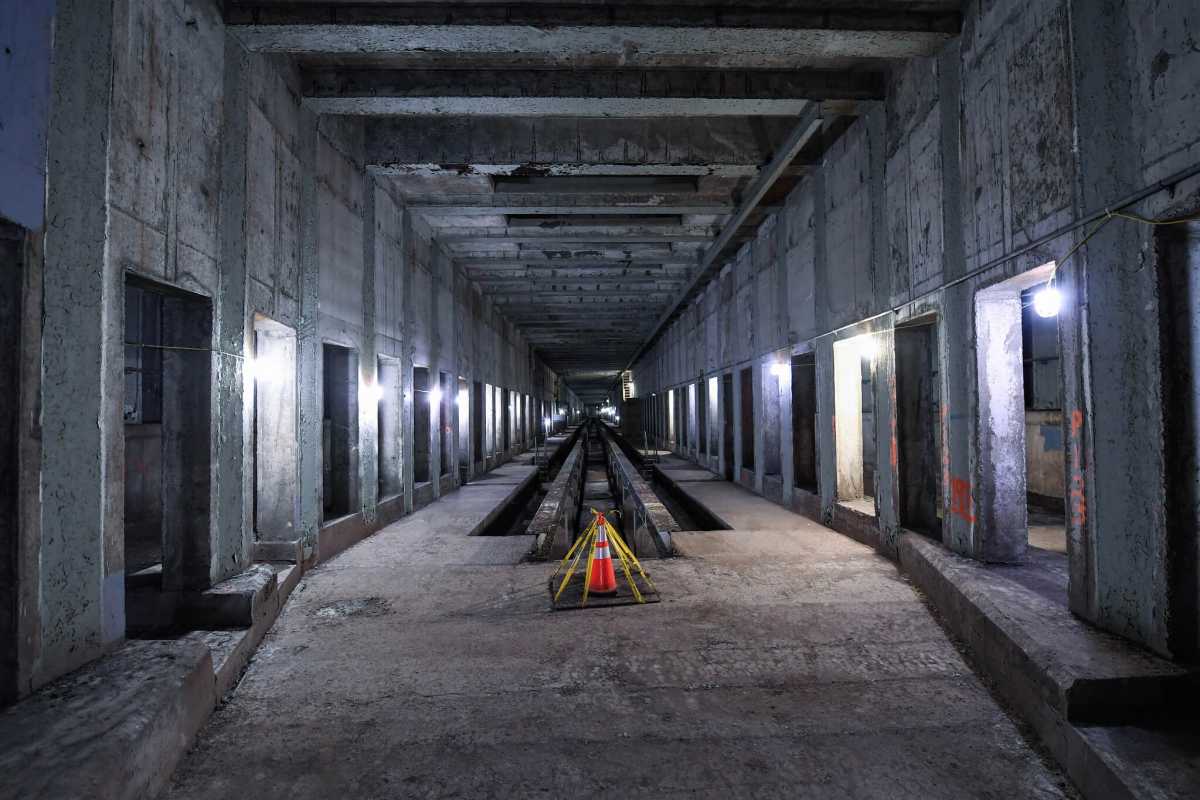
The latest phase of the planned extension for the Second Avenue subway line will bring it into East Harlem and over to Lexington Avenue — adding three new stations at 106th, 116th and 125th Streets. Once complete, some 110,000 daily riders in East Harlem, who currently have few transit options, will have better access to the Q train.
But the MTA says that the structural shells for the planned new station at 106th Street Station and tunnels to its north and south can’t be built until it can repair foundational walls and reinforce the foundation of the building at 2049 Second Ave., which is owned by East Harlem landlord Edgardo Kramer.
“Failure to grant access to the [MTA] would result in costly delays to the project, which would deprive the public of this much-needed addition to the MTA Second Avenue Subway line and divert funds from other important MTA public improvement projects,” the MTA’s suit in Manhattan Supreme Court says. “The project is delayed because the probing [and protection] work must be performed first, in order to ensure the safety of the building, its occupants and the public.”
Why landlord keeps the door closed on MTA
Kramer initially agreed to allow the MTA to enter his building and carry out the necessary work in 2023, according to a signed contract between him and the MTA.
However, a few months ago, Kramer backtracked on the agreement; emails between the parties show the landlord told the agency that, while he doesn’t oppose the MTA carrying out its work, he wouldn’t agree to let it onto his property unless it committed to pay for any and all repairs its structural integrity assessments revealed were necessary.
The MTA said in court papers that it considers Kramer’s terms unreasonable.
“Kramer demanded that [the MTA] first agree to bear all costs to remedy any defects that may be disclosed by the probing work before he allowed [the MTA] access,” the MTA’s suit says. “[Those] demands were unreasonable as [the MTA] could not agree to expend public funds on an unknown scope of work.”
It is unclear exactly what work the MTA discovers is necessary and would be paid for by the transit agency and what repairs would fall to Kramer to fund.
The agency argues the 2023 signed contract grants it the ability to carry out the probing work it needs to conduct, as does the Public Authorities Law, which grants state agencies authority to enter private property to conduct activities related to public infrastructure projects.
MTA spokesperson Kayla Shults told amNewYork that litigation against Kramer’s Kamela Properties Corp was a “last resort to ensure timely cooperation as construction moves forward.”
The MTA did not respond to questions on how many other buildings it may have to similarly access, or whether it had been granted access to other properties it needs. It also did not respond to questions seeking more detailed information about its construction, access needs or timeline.
Attorneys for Kramer did not respond to requests for comment.
The five-story building is home to Mexican joint Lupita’s Restaurant and about a dozen apartments occupied by renters. The MTA is seeking access to “each and every part” of the building, including “all” apartments and the restaurant, though plans show it will likely only need to actually enter a limited number of units.
Court filings show the MTA is looking to “probe”, or open up parts of the ceiling and walls of certain apartment units to search in the building’s walls and to assess its structural integrity. The agency also seeks to complete reinforcement work around the building’s base and “remove, store and reinstall all encroachments on the façade of the building,” which include Lupita’s Restaurant’s awning, security gate and security cameras.
Construction documents show plans to temporarily move some tenants into other units within the building while their units are probed.
The MTA’s preconstruction assessment of Kramer’s building had shown “significant movement” since 2020, which its team said underscored the need for remediation and probing the building to determine what reinforcement work would be required.
The agency is bringing the suit against Kramer’s company as it continues to fight another legal battle with the Trump administration over funding for the Second Avenue subway project.
The MTA sued the U.S. Department of Transportation (USDOT) last month for allegedly breaching the contract they inked under former President Joe Biden’s administration to fund a piece of the project to the tune of $3.4 billion. The agency’s attorneys are requesting the Federal Court of Claims intervene to unlock nearly $60 million in reimbursements that the feds have withheld from the project since October.
If the feds continue to withhold the funding, the MTA’s attorneys said it could cause a “‘domino effect’ of cascading delays and inflated costs” for the entire project.
Despite the funding freeze, the transit agency says it is ready to complete the work around Kramer’s building this month, but needs the court to grant it access to do so.
Storefronts up and down the block are hidden behind construction fencing as the MTA excavates the new station and tunnels down Second Avenue and have placed signs on the construction fencing indicating they are on the other side of it.
→ Continue reading at amNY

