
WHY Architecture, the New York City office founded by Kulapat Yantrasast, is on a roll when it comes to major art museum commissions. Last May, the firm upgraded a wing at the Metropolitan Museum of Art and WHY and is currently designing two major projects at the Louvre.
More recently, WHY completed Dib Bangkok, the first international contemporary art museum in Thailand’s capital city. Dib Bangkok was founded by the Osathanugrah family, a prominent Thai business dynasty.
Dib Bangkok is sited within a 3-story converted warehouse. It contains 11 gallery spaces that cumulatively measure 75,000 square feet, a generous central courtyard, an outdoor sculpture garden, and a penthouse for special events. Architects 49, a local office, designed the museum in tandem with WHY.
At Dib Bangkok, the 15,000-square-foot courtyard conjures past works by Spanish architect Alberto Campo Baeza, where thin pilotis uphold sweeping roof planes made of concrete and sculptural stairs puncture expansive apertures filled with light.
A freestanding tower shaped like a silo designed by James Turrell features prominently at Dib Bangkok. The artwork, titled Straight Up, is evocative of similar installations in Turrell’s Skyspace series, like the one at Friends Seminary in New York. Patrons climb a staircase before passing through a doorway to enter the immersive artwork.
“With Dib Bangkok, WHY Architecture’s intent was to reflect the city’s evolving role as an international art destination, crafting a space that fosters dialogue among artists, curators, and the public, while supporting both community engagement and creative exchange,” Yantrasast, who was born in Thailand, said in a statement.
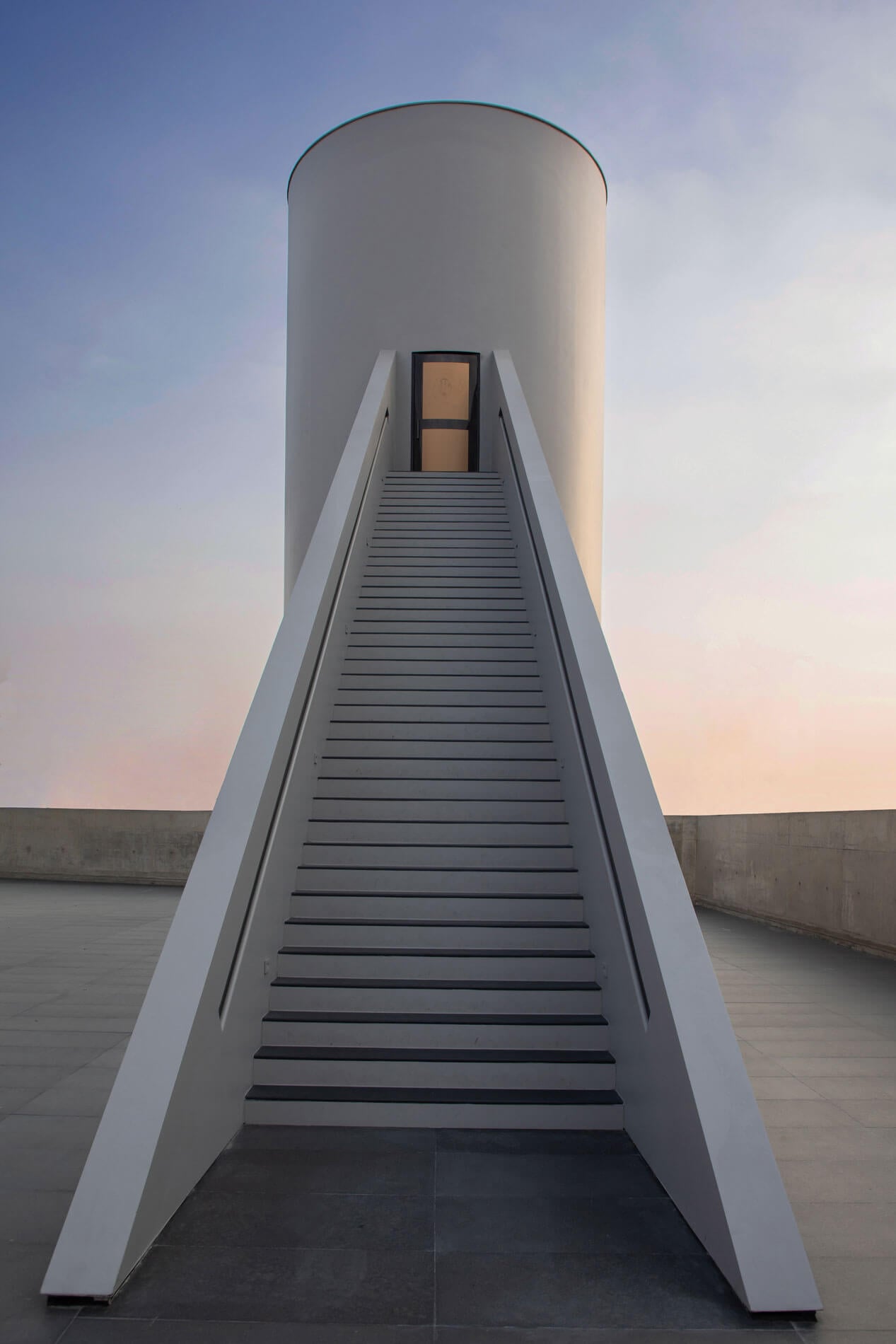
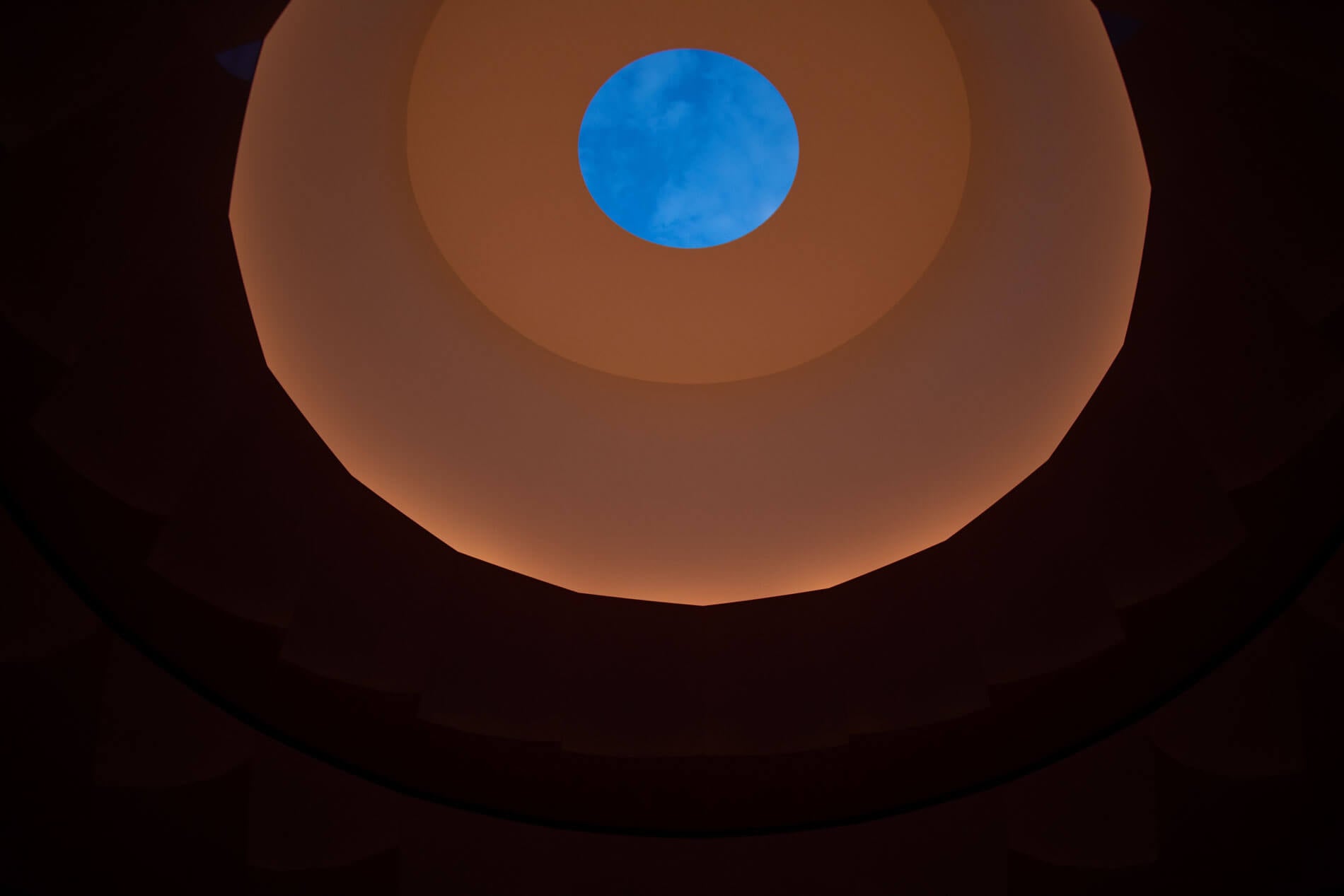
Ascension is a recurring motif at the museum, which takes cues from the Buddhist concept of “enlightenment.” The three-level sequence is a thoughtful narrative. The ground floor’s concrete, minimal aesthetic pays homage to the warehouse’s industrial past, while the second is meant to be more intimate and contemplative—a nostalgic Thai-Chinse window grille from the original structure is on view.
The third floor was given over to white-cube gallery spaces, dotted with skylights, and crowned by the warehouse’s iconic sawtooth roof at the northern end. A cone-shaped gallery called the Chapel was clad in porcelain mosaic tile, typical in traditional Thai temple ornamentation.
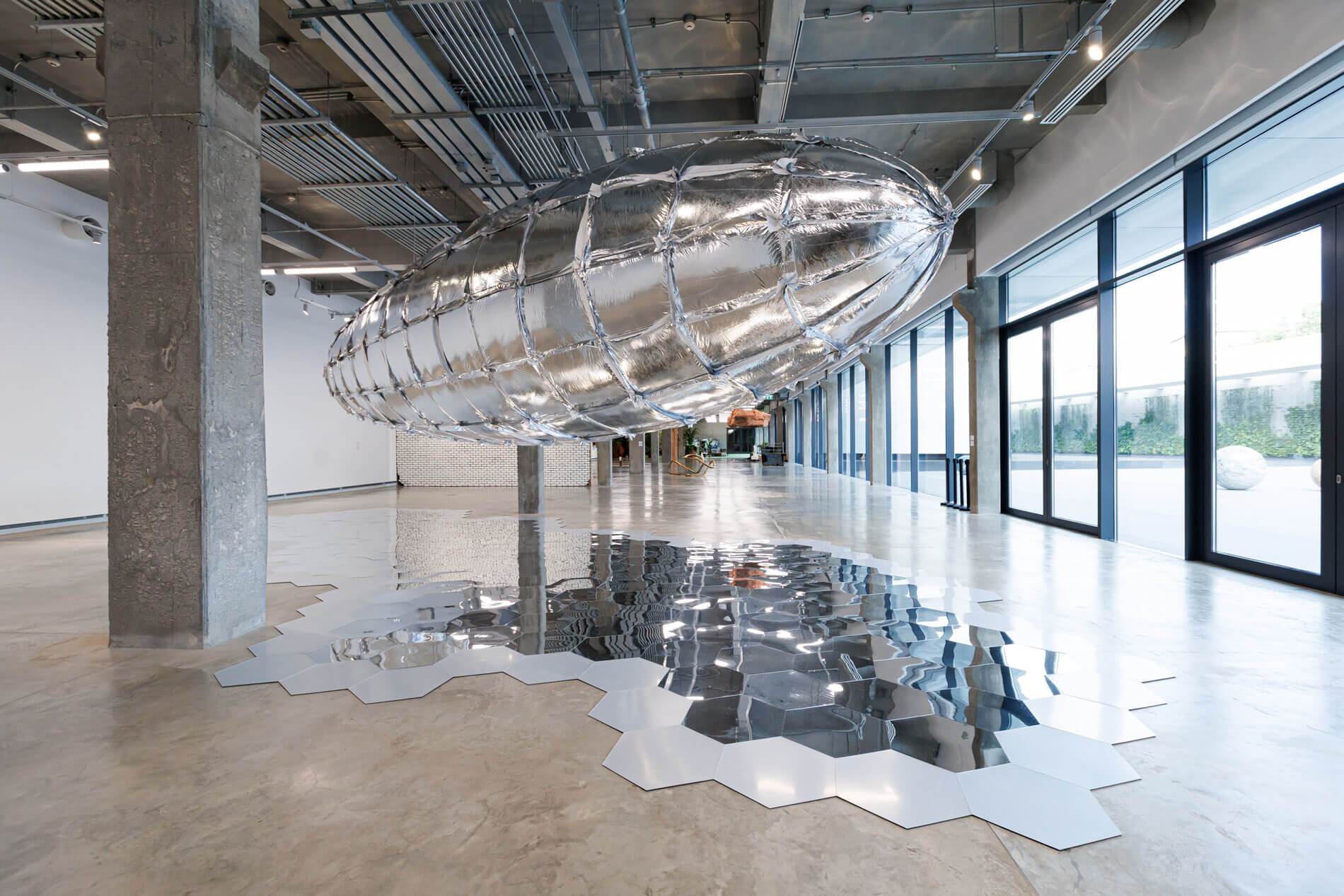
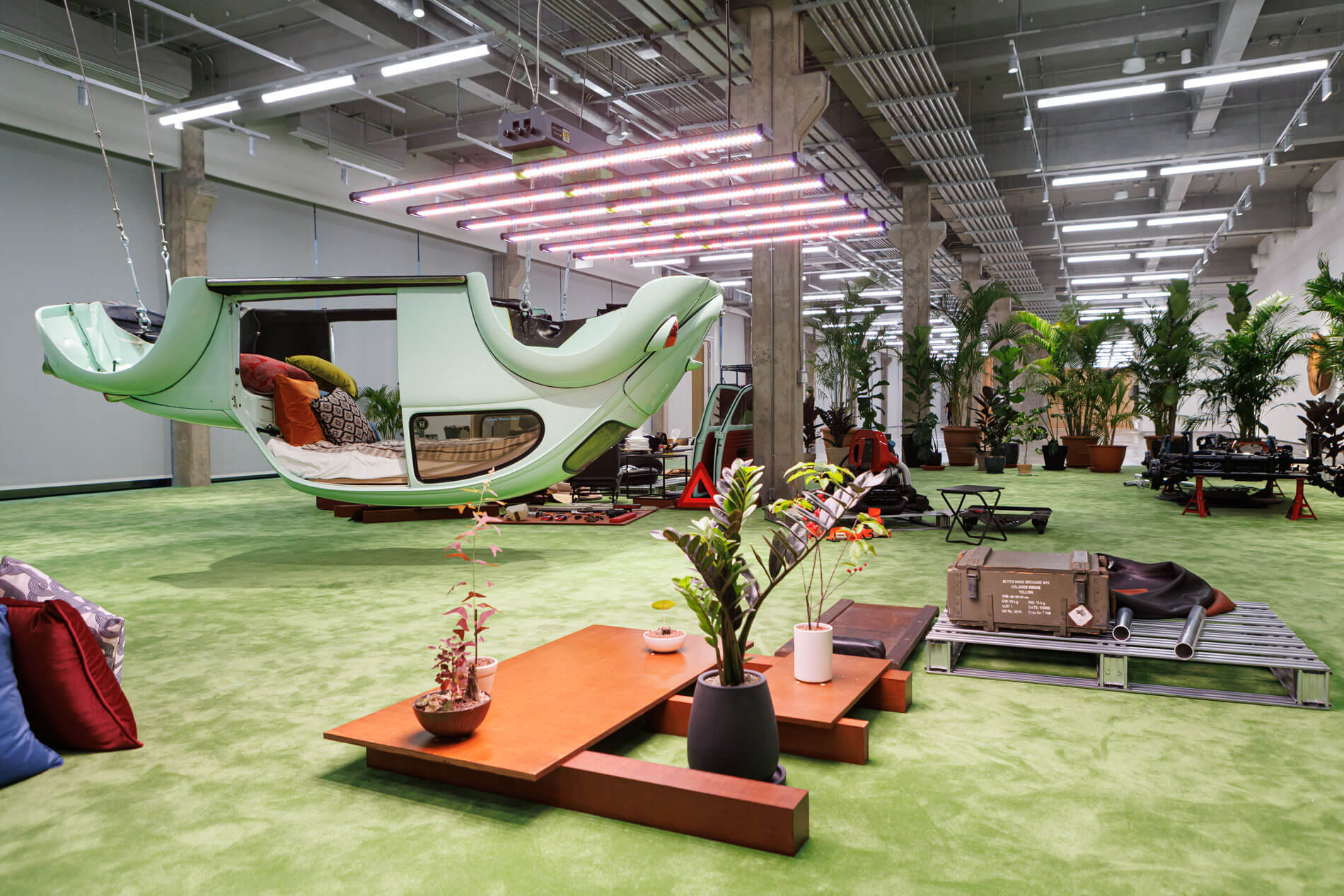
The permanent collection has over 1,000 mixed media pieces—paintings, sculptures, photographs, large-scale installations, and new media—by over 200 artists from around the world, dating from the 1960s through the present. Artworks by Pinaree Sanpitak, Alicja Kwade, and others populate the exterior.
(In)visible Presence, Dib Bangkok’s inaugural exhibition, features 81 works by 40 artists including Sho Shibuya, Finnegan Shannon, and Hugh Hayden. Installations by Montien Boonma, Somboon Hormtientong, Lee Bul, Anselm Kiefer, Alex Katz, Yuree Kensaku, and Jessie Homer French emerge.
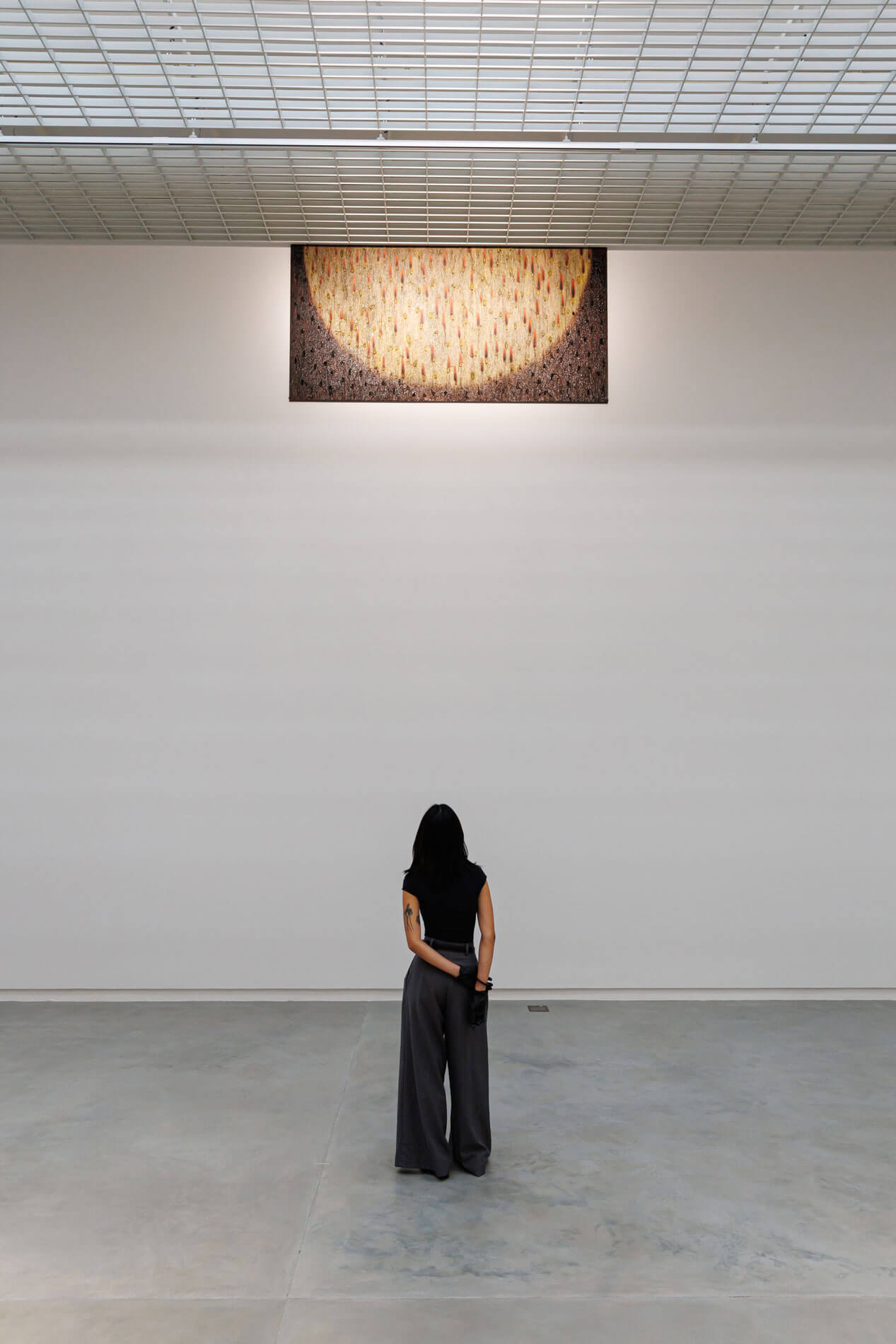
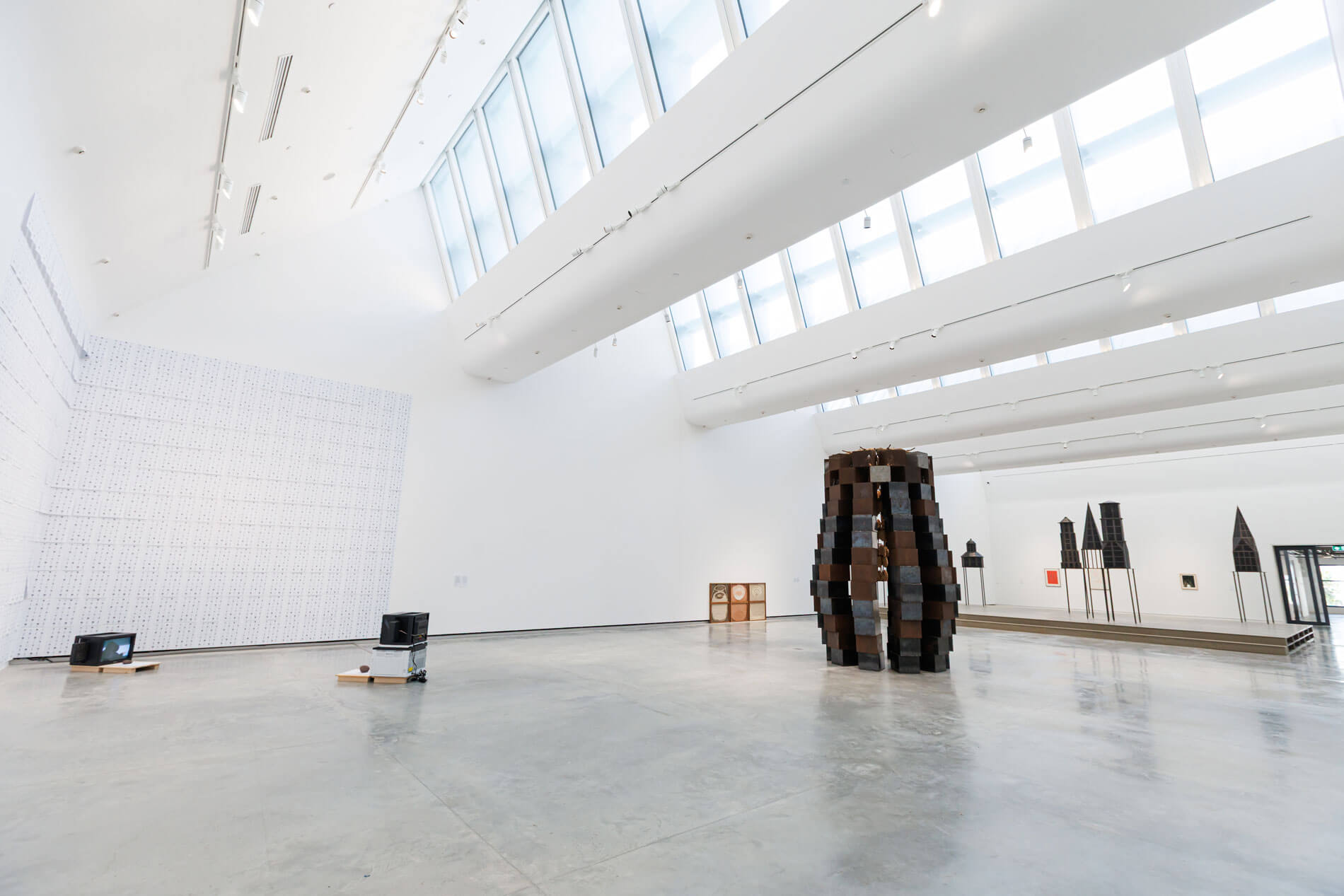
Dr. Miwako Tezuka, Dib Bangkok director, said the inaugural show is thematic and related across the three floors of exhibition space. “With (In)visible Presence, we wanted the opening exhibition to unfold through the body as much as the eye,” curator Ariana Chaivaranon said in a statement.
Chaivaranon continued: “Many works here activate multiple senses such as sound, scent, light, and challenge our expectations of scale, weight, and everyday materials. In doing so, they reveal natural resonances across diverse practices, including affinities with postwar movements such as arte povera, where ordinary materials carry profound human presence and memory.”
→ Continue reading at The Architect's Newspaper

