
The ribbon-cutting for the first phase of Alafia, a 27-acre, 2,400-unit affordable housing complex in East New York, took place last December. But residents of the newly completed buildings designed by Dattner Architects are already settled in. The complex, nearly 390,000 square feet in size and comprising 576 units, was built at a cost of $387 million.
Together with their clients, Dattner Architects and SCAPE were awarded the project in 2018. Phase one’s three buildings consist of two tall structures that share a lobby and form a large C in plan, plus a shorter building that caps the open side of the C. The latter building’s ground floor features maisonette units that open to what will eventually be Alafia’s central green space.
The interior of the C is an elevated terrace that is accessible from all three buildings and opens to the south for maximum sun. SCAPE’s landscape planting and outdoor furniture selection creates comfortable places for gathering. Interior amenities like laundry rooms and meeting suites look out onto the fenced courtyard, allowing parents to complete tasks while keeping an eye on kids playing outside.
As explained on-site by Dattner partner Daniel Heuberger, this C shape is repeated across the project’s six phases. While the outer taller buildings vary more in their architecture, the inner shorter ones create a consistent armature that frames the six acres of open space, which are designed to range from thickly planted to more open, agricultural scenes, Gena Wirth, a design principal and partner with SCAPE, told AN.
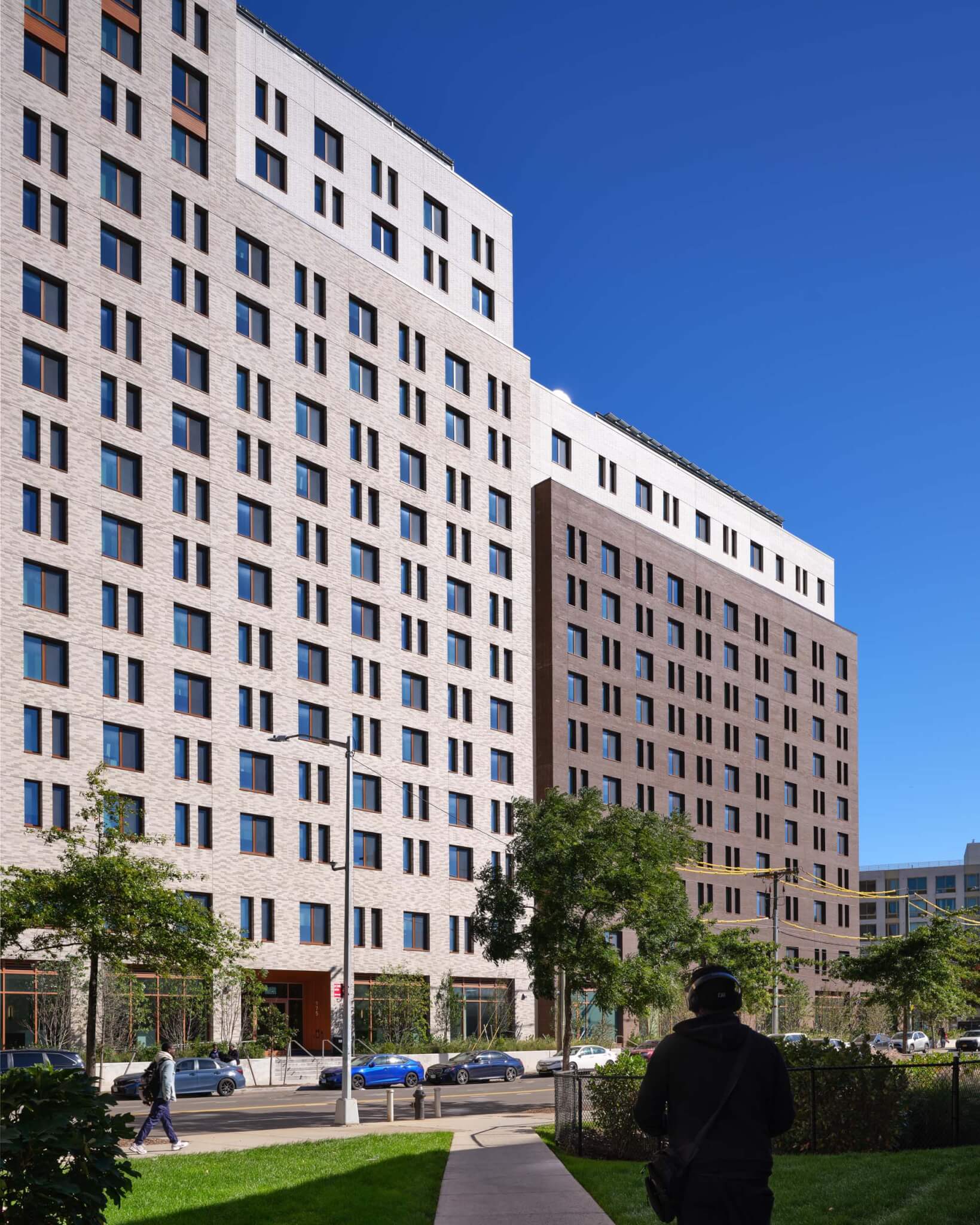
The outer facades of the buildings are clad in a variable brick mix, while the interior ones are lined in with solid cream-colored brick. The window patterns vary between a single punched opening and two separated vertical apertures. The courtyard-facing windows are ganged together into 2-story bands, which reinforces the terrace as a shared space.
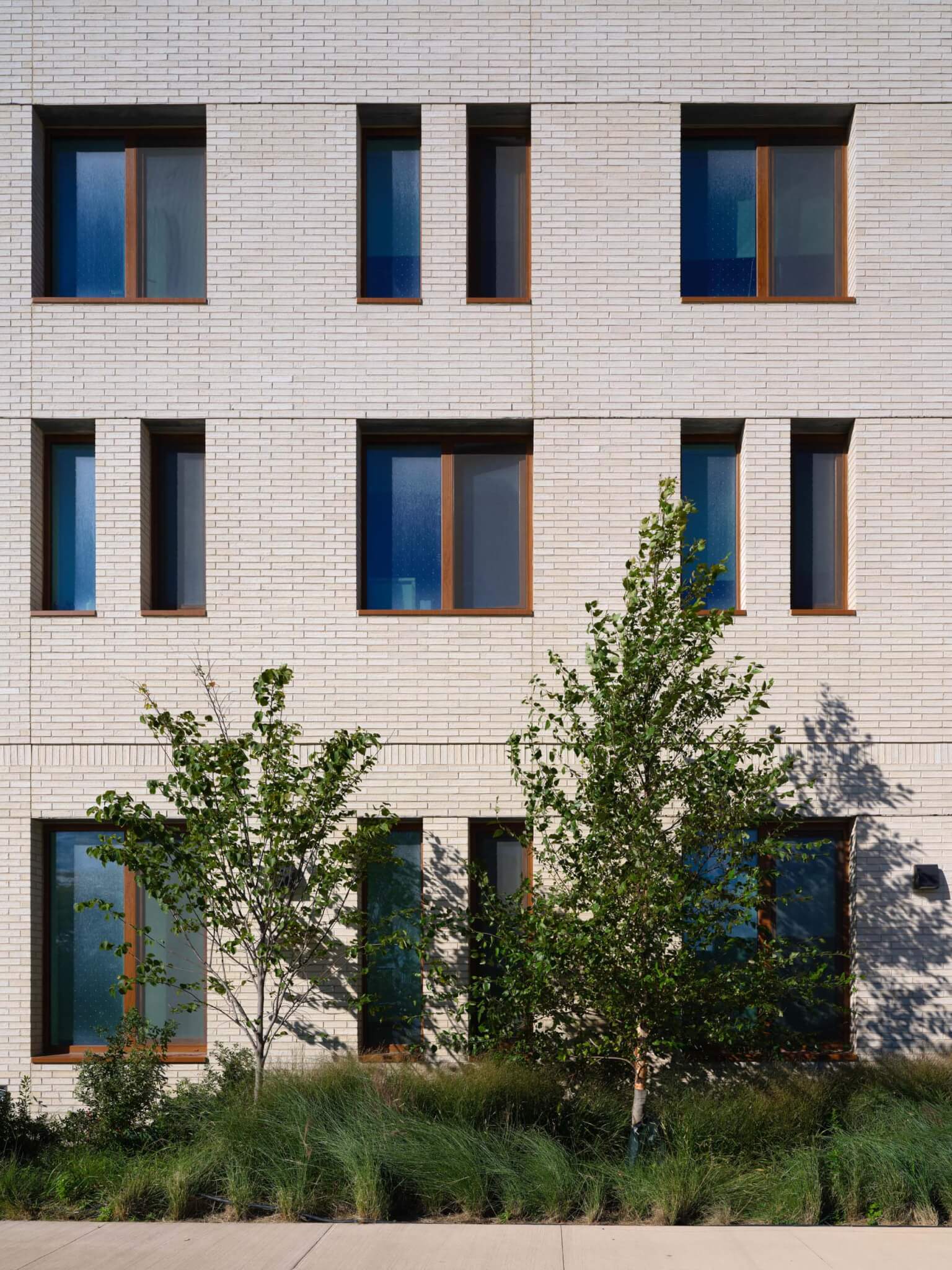
Heuberger said Alafia has three scales of identification: that of the building, through which residents can identify their individual apartments by the window patterns; that of the complex, where the courtyard constitutes a haven; and that of the overall development, in which complexes ring the main open area.
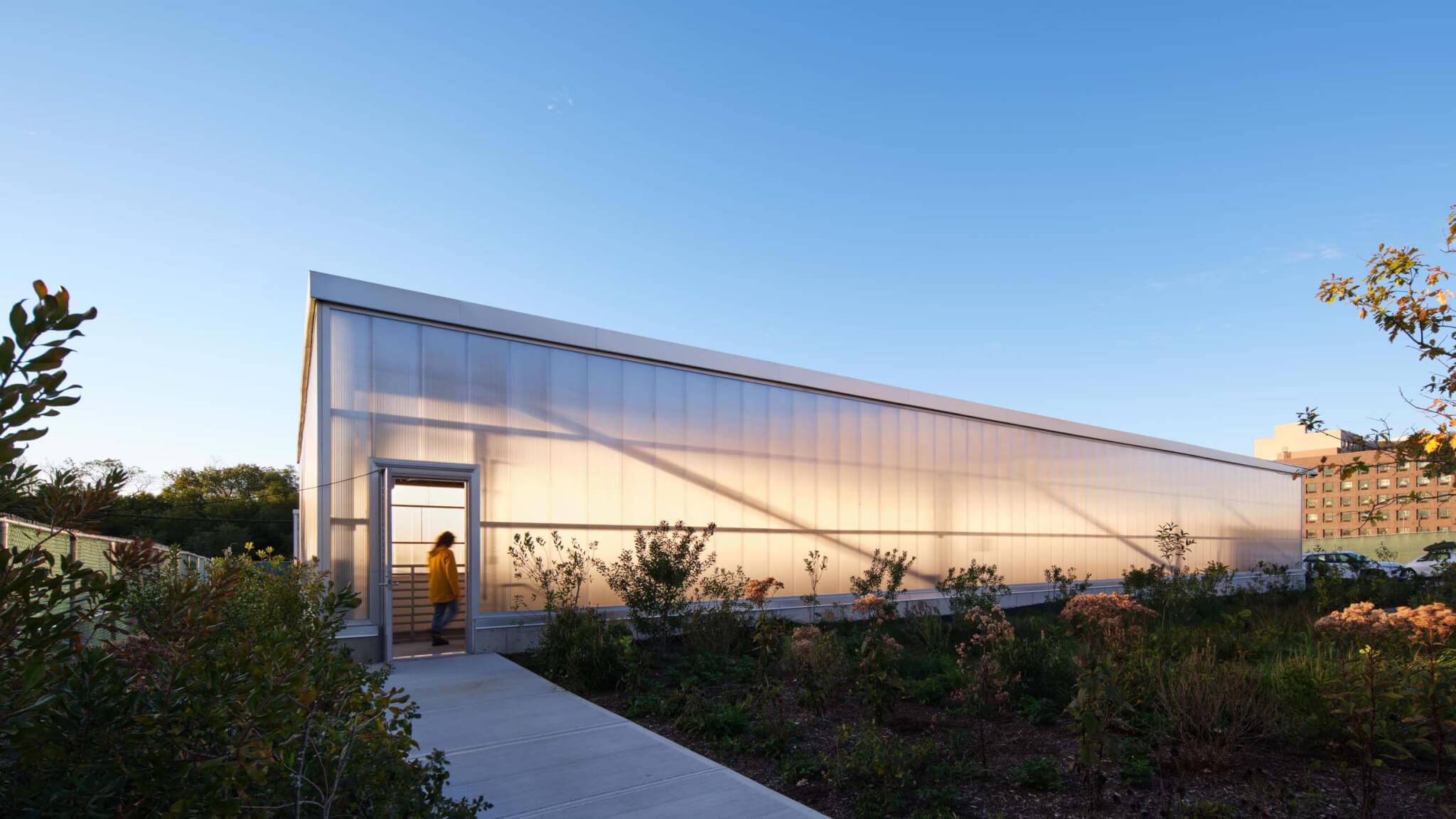
The first phase also included the campus’s maintenance hub, two translucent infrastructural buildings where trash, recycling, and compost are collected. As additional zones are built, the compost will be put to work on adjacent plots. A nearby corner parcel is slated to have a school.
Because Alafia is near Jamaica Bay, it is susceptible to climate change–induced flooding, so the buildings are elevated by almost 3 feet. SCAPE’s native plantings are also specified to handle the salt spray and coastal winds. The developers constructed new streets that will be turned over to the city; one, Vital Avenue, is lined with tree-pit bioswales that slow runoff. The project complies with the EPA’s Strengthening Water Infrastructure for Tomorrow initiative, known as SWIFT, and the buildings’ runoff irrigates the courtyard planting. Dattner associate Deniz Secilmis shared that the complex has geothermal loops, wastewater heat recovery, and rooftop solar.
The buildings are open to residents who make 80 percent of AMI or lower, and 132 units are reserved for people with mental illness or developmental disabilities. Beyond the lobby and mail room, the ground floor includes to-be-leased retail spaces and a forthcoming 15,000-square-foot One Brooklyn Health outpatient clinic, designed by Dattner Architects. The building’s units are accessed from double-loaded corridors. Inside, the apartments are quiet thanks to the Passive House standard, which includes triple-glazed windows and ample insulation. The latter is felt in the deeply recessed windows, whose returns are faced in brick.
The project is funded by a mix of state financing, federal Low-Income Housing Tax Credits, and New York State Homes and Community Renewal’s New Construction Program and Community Investment Fund. Phase two, with a building designed by Marvel, is under construction, and other parts are moving along: Dattner Architects will design Phase four. L+M aims to complete the entire project by 2031.
If progress continues in the same way as its impressive first phase, Alafia will soon be an important example of how to design housing that stands ready to handle the challenges of the 21st century.
Project Specifications
-
- Architect: Dattner Architects
- Landscape Architect: SCAPE Landscape Architecture
- Interior Design: Dattner Architects
- Client: L+M Development Partners, Services for the UnderServed, Apex Building Group, RiseBoro
- Structural Engineer: GACE
- Electrical Engineer: Cosentini
- Civil Engineering: VHB
- Lighting Design: Dattner Architects, SCAPE
- AV/Acoustics: Longman Lindsey
- Facade Consultant: SOCOTEC
- General Contractor: L&M, Apex Building Group
- Glazing Contractor: Adler
- Environmental Engineer: Langan
- Passive House Consultant: Steven Winter Associates
- Facade System: Belden
- Cladding: Longboard
- Glass: Guardian, Walker, Viracon
- Windows: Intus
- Doors: Kawneer, LIF
- Roofing: Siplast, Hydrotech
- Insulation: Hunter, Rockwool
- Vertical Circulation: Otis
- Interior Finishes: Garrison, Shaw, Ecore, Genrose, Resilience Quartz, Tiger, Cuisine Ideale
- Paint: Sherwin-Williams
- Fixtures: Peerless, American Standard
- Appliances: Frigidaire, Broan
- Lighting: DMF, Modern Forms, Kuzco, RAB
- Landscape: Structura, Landscape Forms, Kettler International, Tournesol, Wausau Tile, SynLawn, Sempergreen, Vestre, Landscape Structures, mmcité, Champlain Stone, Playsites + Surfaces
→ Continue reading at The Architect's Newspaper

