
The implicit question that hangs over every design and art fair is always more or less “How are we doing?” As a barometer for both the economic and creative vitality of the American cultural scene, nothing quite compares to the annual festivities in South Florida timed to the twin Art Basel Miami Beach and Design Miami shows. Marking the twentieth anniversary of the latter, this year’s iteration afforded at best a muddled picture of the current state of affairs, with some quality work and reports of reasonable sales countered by a few disappointing bits and a generally subdued atmosphere. “Things aren’t great,” the week seemed to suggest. “But we’re trying.” Here’s a quick look at a few notable efforts.
The Fab
The general prospect, as seen from the Design Miami tent, was remarkably good. In his second year as fair director, Glenn Adamson took a stronger hand, drawing in a brace of first-time exhibitors and expanding the purview of the show with a new “Design Miami 2.0” section, a special showcase of experimental work like Jack Craig’s molded-carpet sculptures and Mehdi Dakli’s spindly-spooky Muravey chair. “All design needs to have a strong basis in skill and craft,” Adamson said at a mid-week brunch, “But also fantasy… We’re trying to conceive of a true design avant-garde.”
Leaving aside the vexed question of what exactly avant-garde furniture entails, the newcomers certainly did inject a welcome dose of novelty. Rome-based Achille Salvagni Atelier made its premier appearance with striking historic as well as contemporary pieces. “It’s a warmup for our new store in Palm Beach,” said the eponymous designer. Another first-timer, hailing from France, Galerie Signé arrived for the first time with ultra-chic work like Martin Szekely’s sleek Noir mirror. And from Lebanon, Hicham Ghandour, showed his own Mediterranean-inspired lighting, mirrors, and tables, with glittering metal and patterned stone paired to dreamy, subtropical effect.
Likewise, the fair’s talk series boasted a few highlights, including one that featured B. Alex Miller of New York–based lighting studio TM Light, who recently partnered with architects Diller Scofidio + Renfro and interior designer Laura Gonzalez on Miami Design District’s newly opened and extremely impressive Cartier store. In a conversation with Adamson, Miller discussed everybody’s favorite cinematic source of illumination inspiration. “What I’d really like to do,” he said, “is teach a seminar on Stanley Kubrick.”
The Interesting
In line with previous years, Milanese design fair Salone del Mobile made a point of dispatching its big administrative guns to Miami, with both director Maria Porro and Salone Satellite founder Marva Griffin present for a pair of events during the week. While primarily there to promote the upcoming collectible section of their show, as well as its new annual outpost in Saudi Arabia (“We’ve met so many interesting people there,” Porro said), their presence in South Florida also seemed implicitly aimed at rekindling the interest of the American market in Salone’s main fair. Located in Rho, Italy, a suburb of Milan, it has faced increasing competition from exhibitors in Milan’s city center in recent years.
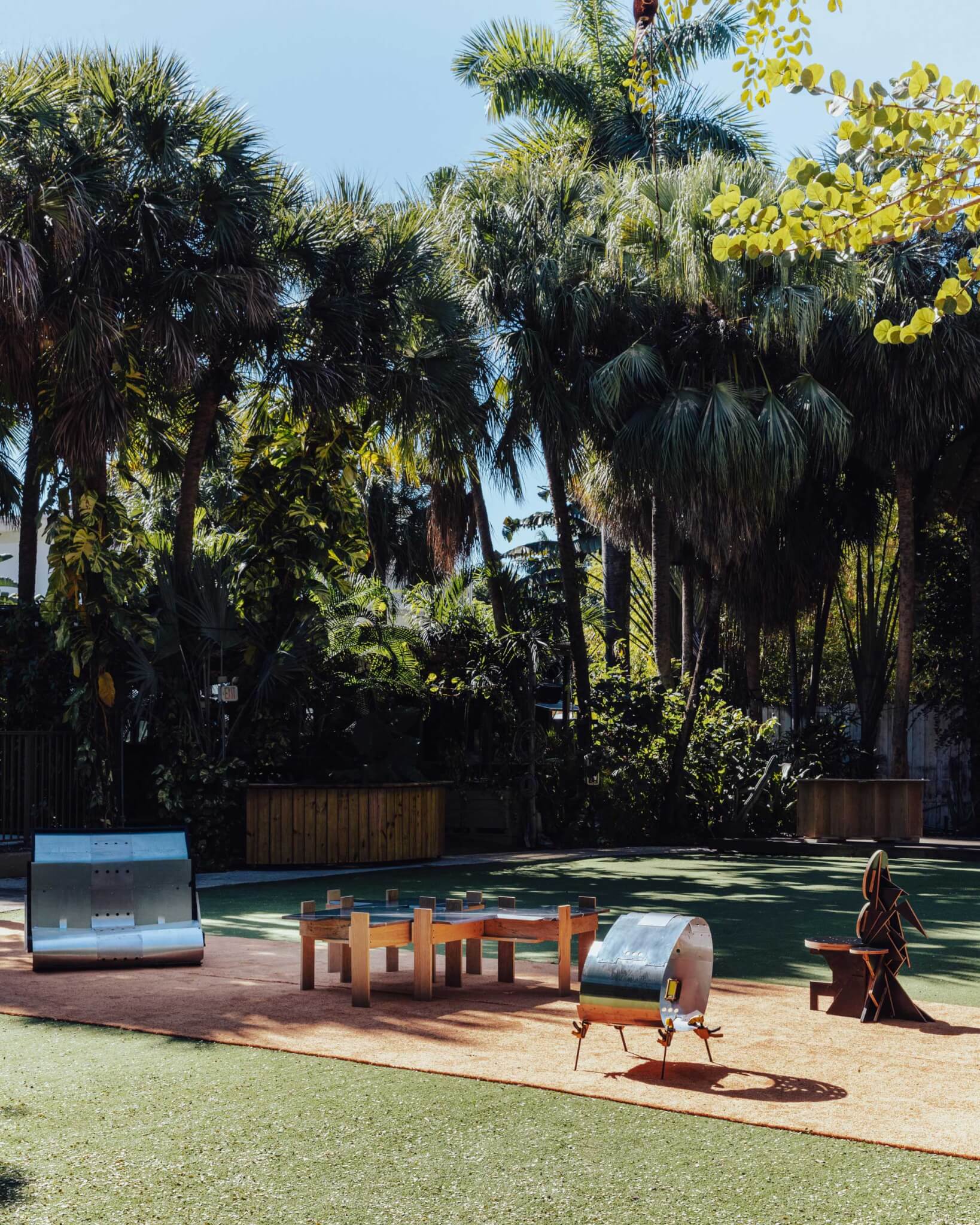
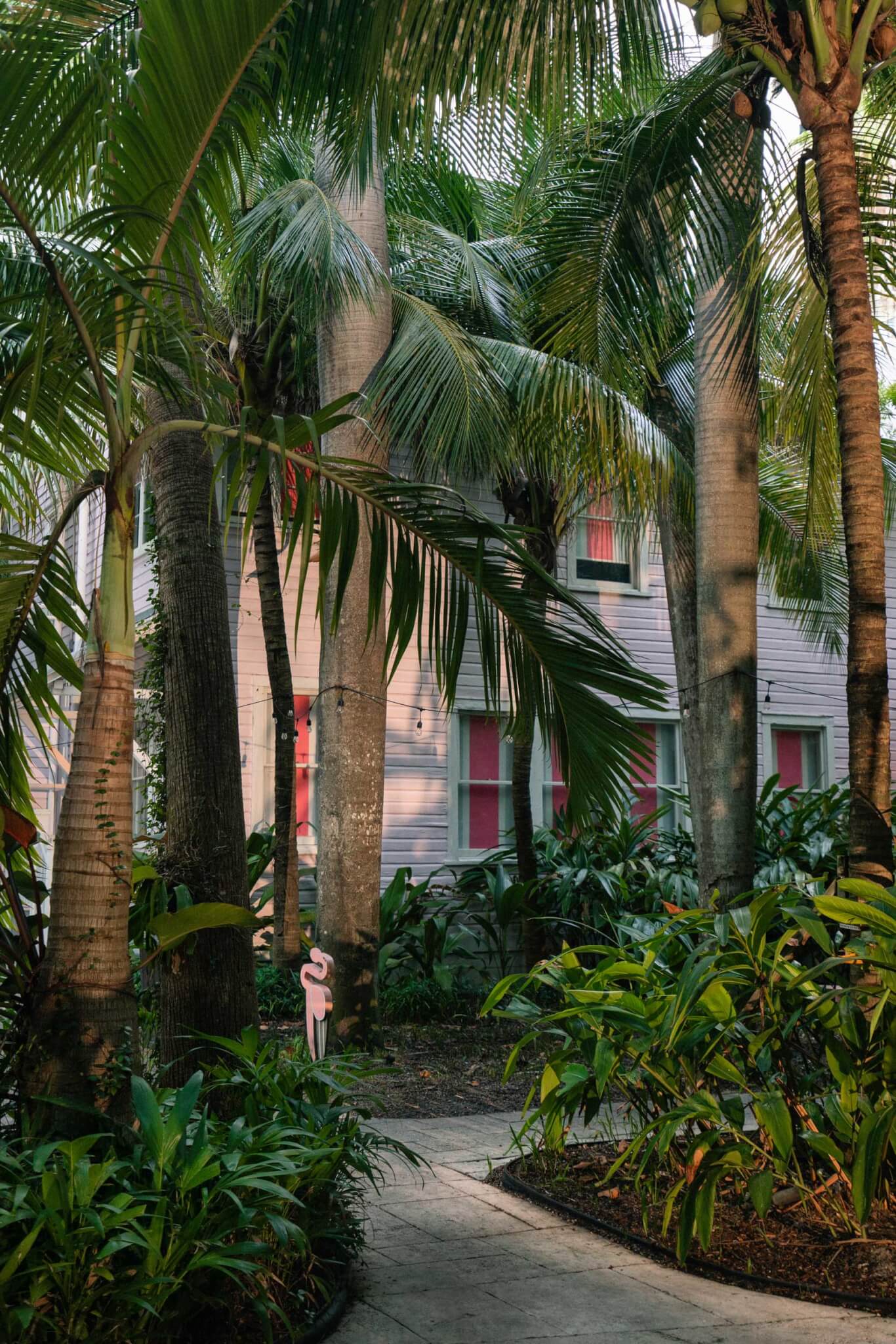
Design showcase Alcova, another Italian import, returned this year to the Miami River Inn, stuffing the charming old motel in downtown Miami with younger designers proffering wares that—although somewhat less adventurous than in previous years—were nonetheless pretty groovy. Jensin Okunishi presented a series of textiles inspired by the “solidity and movement of marble.” More engaging was the new Miami outpost from New York– and L.A.-based gallery Future Perfect, who brought remarkable metal-and-glass lighting fixtures from Lindsey Adelman, gleaming tables from Chris Wolston, and other far-out fare to a delightfully decrepit mini-mansion in Little Haiti. Dubbed the Villa Paula, the house’s titular former owner is rumored to remain on the premises a full-time occupant. “It’s totally haunted,” said the company’s David Alhadeff. “We got a picture of something in the bathroom.”
The Accidentally Hilarious
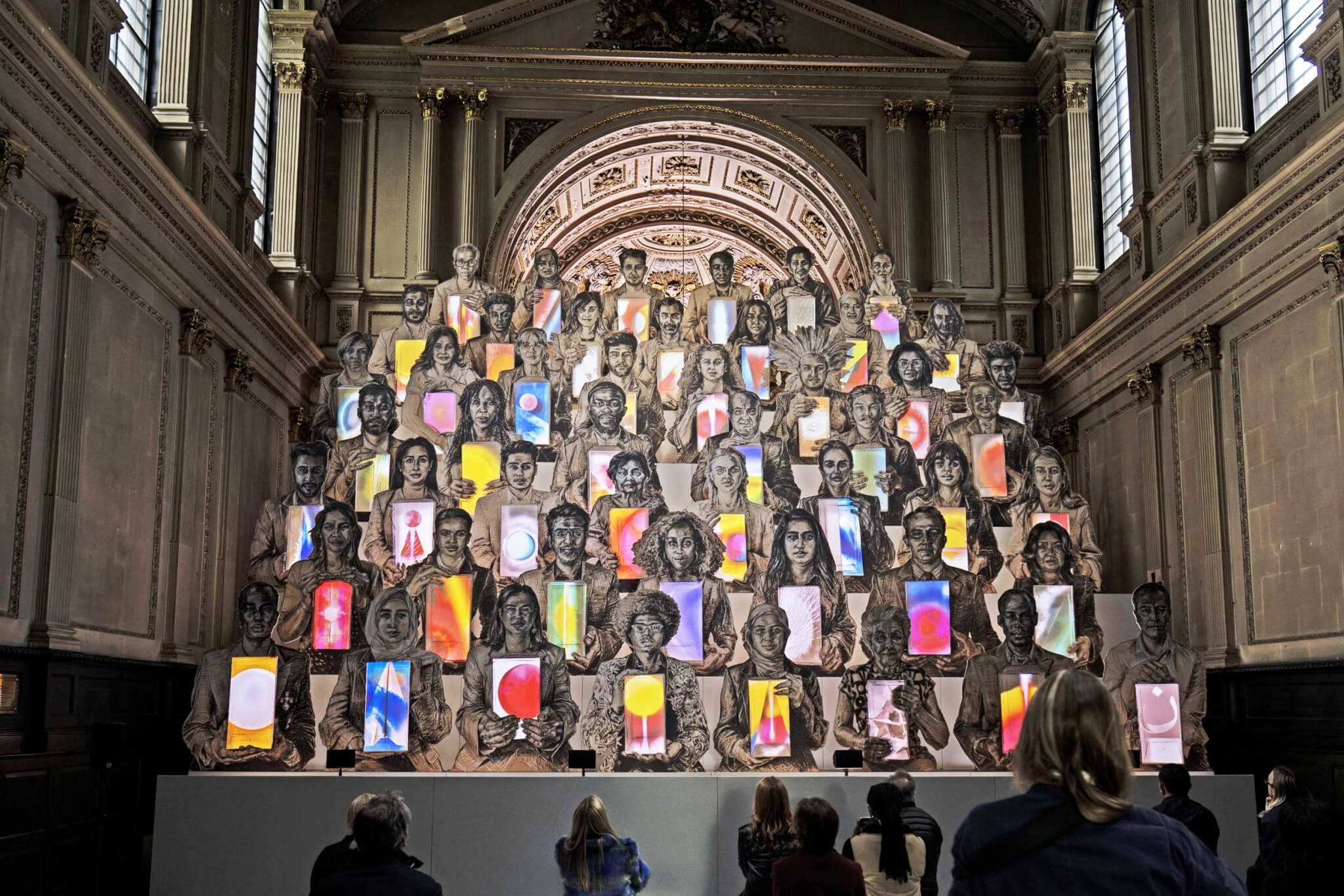
At the Faena Hotel, perennial panel person Hans Ulrich Obrist sat for a one-on-one with artist Es Devlin, discussing her sprawling portrait and narrative project “Face to Face.” While the conversation itself was more than a little discursive, the primary frustration came later, when Obrist and panel attendees were refused access to the beach where the artist’s Basel-week installation Library of Us—a rotating, brightly-lit, fin-like library shelf—was closed off due to a corporate dinner on the premises. Even Obrist’s perennial Swiss composure seemed to fracture somewhat at this obstacle. Luckily, Devlin finally arrived and saved the day.
The piece was arguably more striking—a glimmering mirage on the horizon—seen from a couple miles down the beach the following evening, during a performance hosted by artist Cynthia Daignault, who for the second time in a decade (the previous occasion also being during Basel) burned a valuable artwork of her own making in front of a live audience. An incisive reflection on time, mortality, and the nature of the art market, the piece was somewhat marred by Daignault’s apparent struggles to get the piece alight in the evening breeze, as well as by the selected reading: a poem by Mark Strand at his soupy New Yorker–iest. “I am the same boy my mother used to kiss,” etc.
The Not So Easily Described
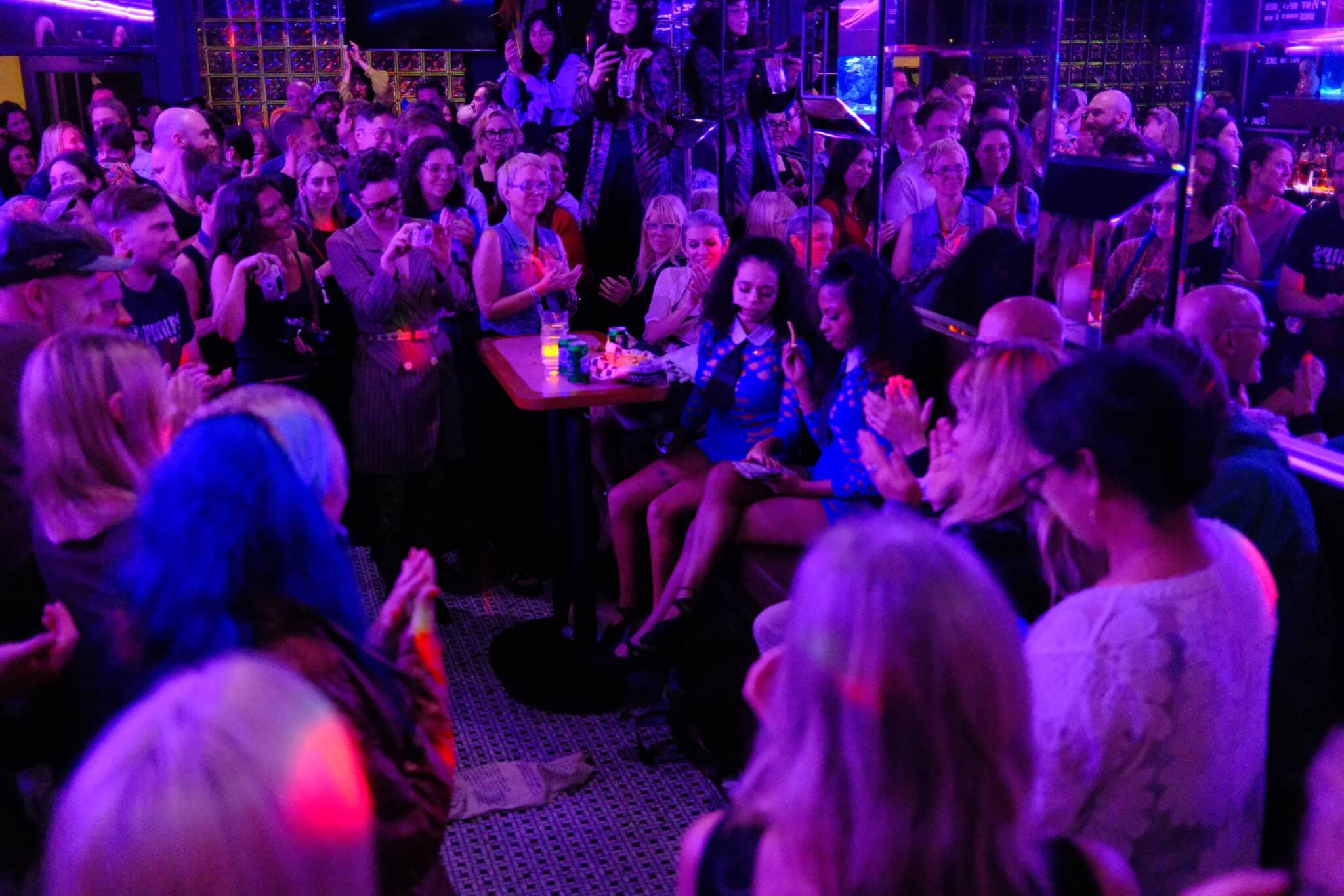
Inarguably the social highlight of the week was a party held at the supremely divey Brother’s Keeper bar in Miami Beach, celebrating the new issue of New York–based magazine The Whitney Review as well as the debut of Acid Bash, an exhibition at Miami’s own Nina Johnson Gallery. Along with drinks and a heckuva line at the door, the evening featured a performance from experimental poet-satirists Maya Martinez and Mani Mekala, who crept around the banquettes in mock-provocative poses declaiming lines that parroted an entertaining send-up of Miami art-speak: “What have you learned?” “What’s in your pocket?” “Don’t sue me!” “I would never sue you!” Take that, Mark Strand.
Ian Volner has contributed articles on architecture and design to The New York Times, The Wall Street Journal, and Architectural Record, among other publications. He is the author of numerous books and monographs, most recently Droese Raney X Design.
→ Continue reading at The Architect's Newspaper

