
Over the past three decades, Larry Scarpa and Angela Brooks have established themselves as pioneers in affordable-housing design. Brooks + Scarpa, their Los Angeles–based firm, has worked on projects that span urban planning, high-density housing projects, and single-family homes. Their practice has also evolved to include projects in the landscape and public art worlds. “We’ll gladly do a doghouse if you’ll let us do it well,” said Scarpa about their prolific output in a recent interview with AN.
From their first affordable-housing project, housing has remained a critical pillar of their firm, “bringing design to a population sec- tor that really needs it and deserves it.” They believe good design can combat NIMBY-ism and have a positive impact on getting their projects approved. Scarpa maintained that good design is not only for the wealthy: “You can provide it for those [who are] in need too.” The firm has previously worked with the Marciano Art Foundation to include a rotating art exhibit in an affordable-housing project in Los Angeles’s MacArthur Park neighborhood. With the NEST Toolkit, the affordable-housing system it is developing, Brooks + Scarpa will provide the tools for faster, cheaper, higher-quality construction, “We’re working with a church in Santa Monica to do affordable housing on their parking lot for homeless students attending Santa Monica College,” he added.
With its core mission of providing affordable housing, Brooks + Scarpa continues to innovate, whether it is finding zoning work- arounds or creating a prefab system that meets the demands of the current housing crisis. It is not about finding places where the city will let you build affordable housing; it’s about finding places that need affordable housing and then finding ways to build it there.
Mirarmar, 2025
Luna Vista, 2025
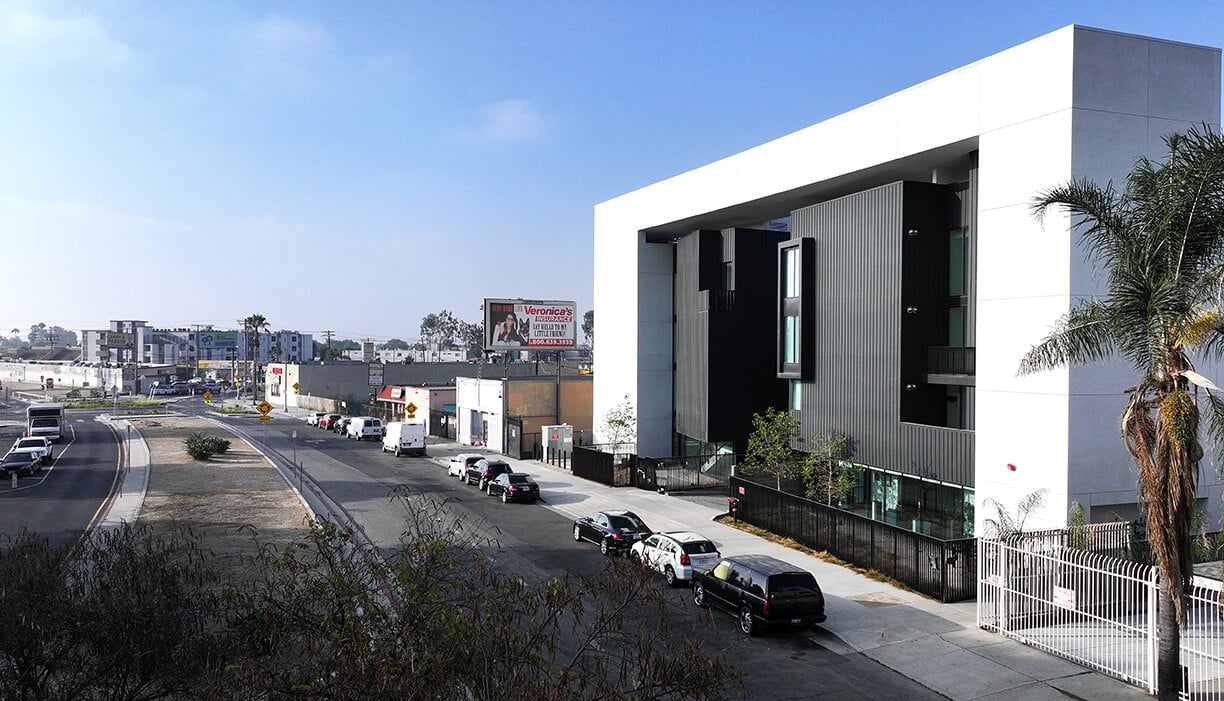
For this 100-percent affordable-housing building, the architects crafted their design from the inside out. Centered around a community room and courtyard, the design fans out in a vertically stacked composition that plays with angles, adding interest to the material plane. With 4 stories and 74 units, the building focuses on creating a quiet oasis for the target demographic, which includes recently homeless people and low-income individuals. Located in North Hills, California, Luna Vista is marked by a welcoming archway that wraps around a central opening, connecting the building to the surrounding community and making it an extension of the existing urban fabric.
Northview, 2025
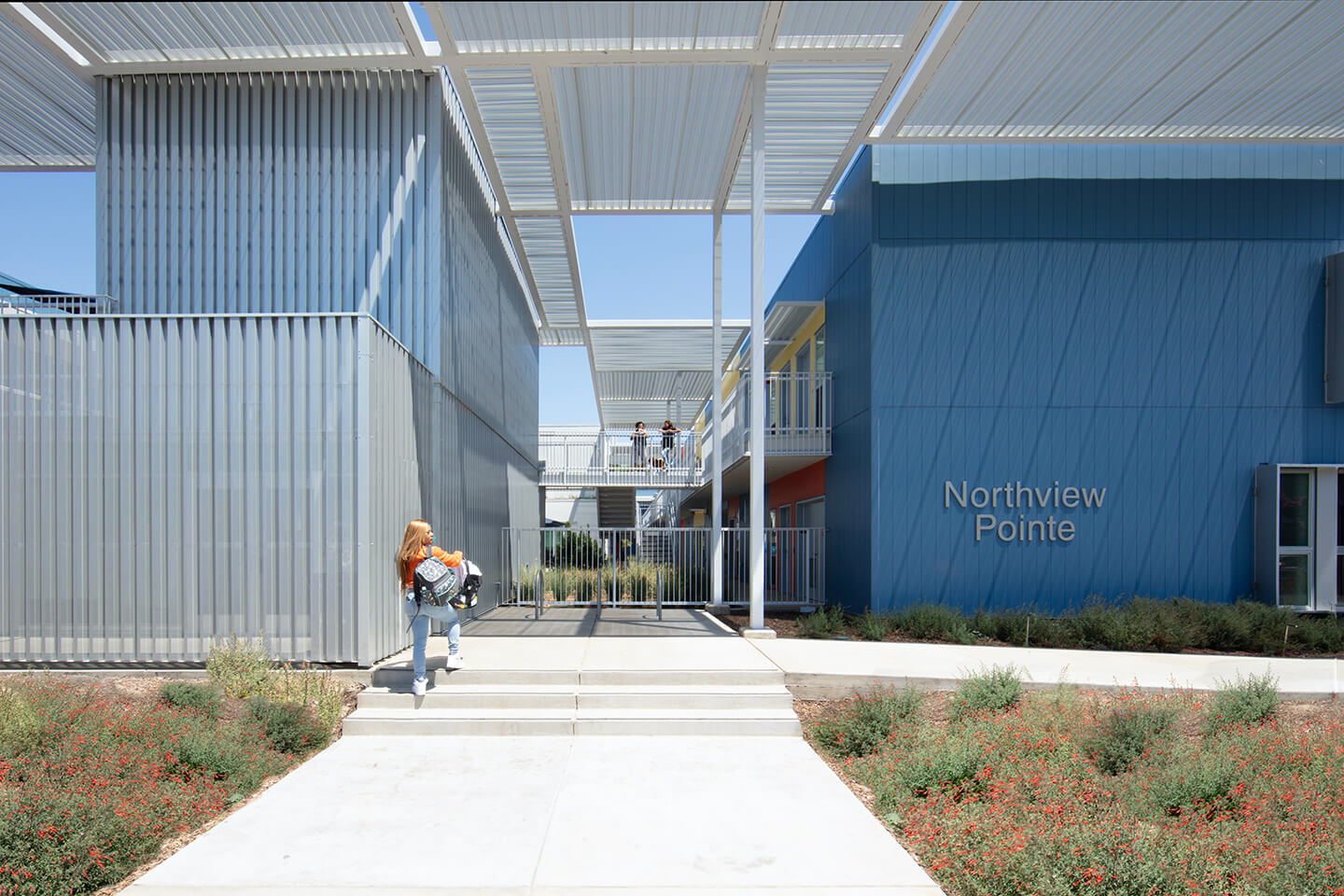
This building was designed to extend like a porch toward the surrounding streetscape. The architects invite the outdoors in with a white trellis, two outdoor plazas, and a glass-encased community space. The outdoor spaces can remain separate or connect into one larger space. The low-density, 2-story building consists of 67 low-income units and emphasizes visually accessible circulation through its inclusion of breezeways and upper-story decks as well as perforated materials and fencing. The open-air nature of the project works in contrast to the more fortified, closed-off narrative of the existing stucco apartment buildings in its Sacramento suburban neighborhood.
Berkeley Station, Under Construction
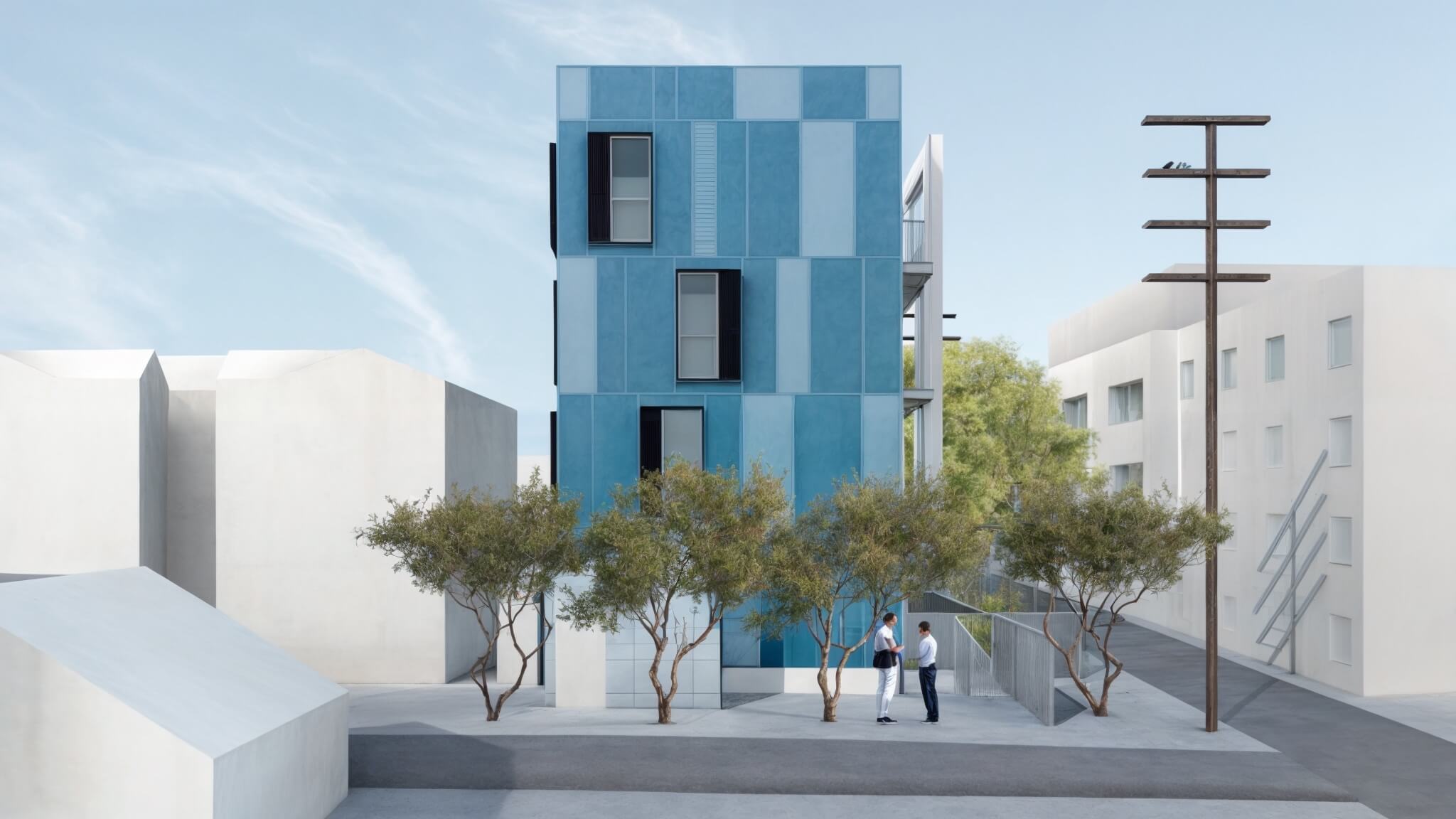
This is the first project to be built using the NEST Toolkit, a scalable housing concept designed in collaboration with PlantPrefab to provide quality housing for at-risk populations on lots 80 percent of the size of an average lot in the greater Los Angeles area. Located on a roughly 8,000-square-foot lot in the heart of Santa Monica, the project uses a modular design system to construct an ultradense, single-loaded apartment building. The design for the 13-unit building brings together housing, landscaping, and even an open-air deck on the long, narrow plot. With the completion of this project and a couple of others underway, Brooks + Scarpa hopes to expand the Toolkit so that, eventually, developers will be able to order customized buildings through an online order form.
Andrew Ghusn is a Beirut-born writer based in Los Angeles.
→ Continue reading at The Architect's Newspaper

