
A new memorial at the University of Richmond by Baskervill and Waterstreet Studio commemorates enslaved individuals bound to the land’s pre-Civil War owners.
The Burying Ground Memorial was built in response to a report from 2019 documenting the history of University of Richmond’s campus land, namely those who built it, and were displaced by it.
Conceptually, the project is similar to the Memorial to Enslaved Laborers designed by Höweler + Yoon Architecture in collaboration with Mabel Wilson, and others, at University of Virginia.
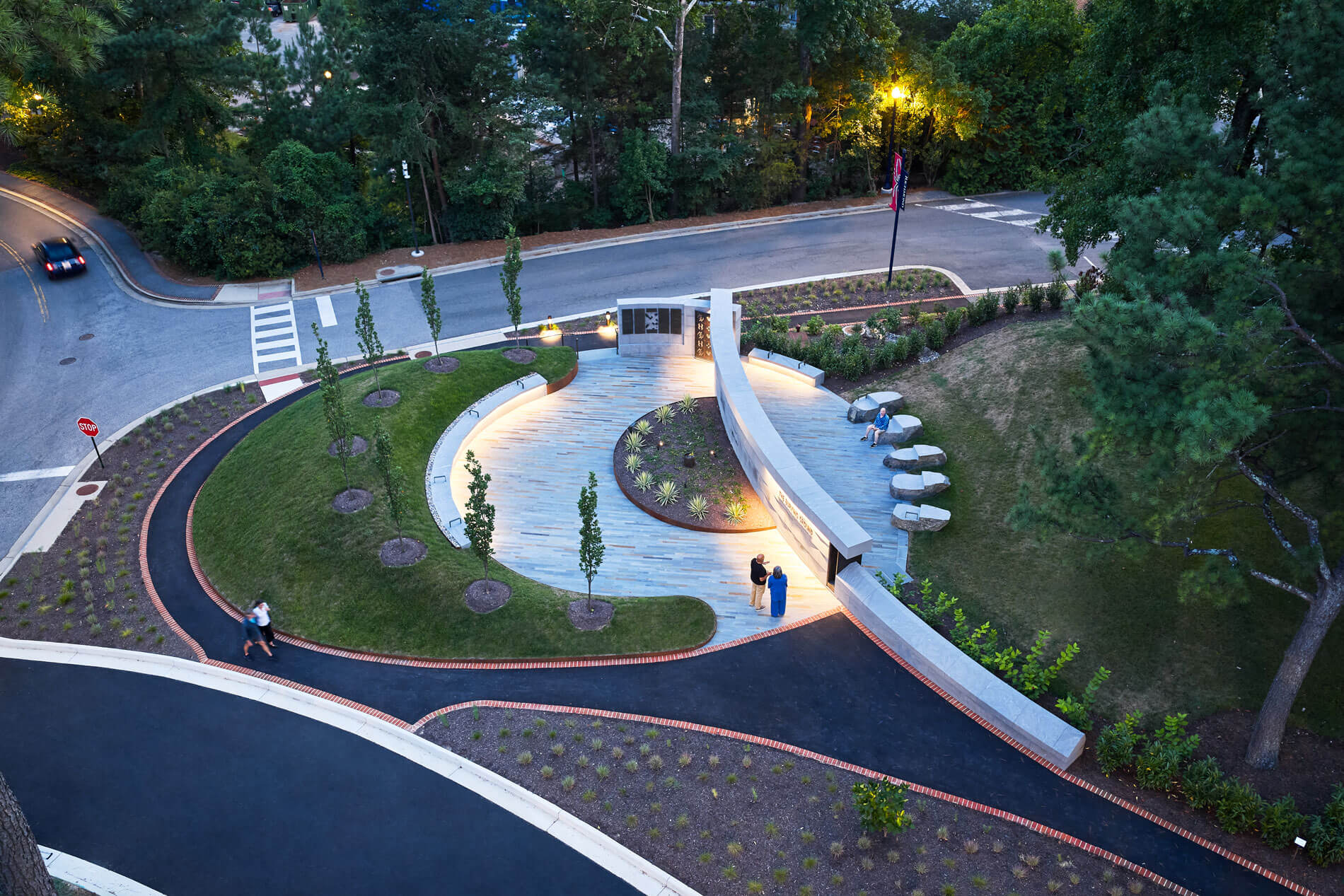
At University of Richmond, the Burying Ground Memorial’s defining feature is a thick story wall made of granite that curves. Visitors perambulate the wall lined with texts and images which speak to the history the memorial conveys.
“At the University of Richmond Burying Ground Memorial, the most consequential work happened before we ever put pen to paper,” Baskervill principal Burt Pinnock told AN.
“Long before form took shape, conversations with descendants, students, faculty, and community advocates about what acknowledgment should feel like were just as important as conversations about what it should look like,” Pinnock said. “We heard stories of past frustrations, but we also explored hopes for the future. These moments clarified our responsibility.”
“The task was not to author a narrative,” Pinnock affirmed, “it was to create a place where collective memory could stand on its own.”
The man, woman, and child engraved into the wall were derived from descendant family photographs that designers encountered during the community engagement process.
Water runs at the base of the wall, eliciting a subtle trickling noise. In plan, the memorial occupies a prominent corner site and is defined by sinuous curves.
Five large stones provide seating that faces the wall, offering a contemplative space for memory, mourning, reflection, sanctuary, solace, healing, ceremony, and collective action, Baskervill shared.
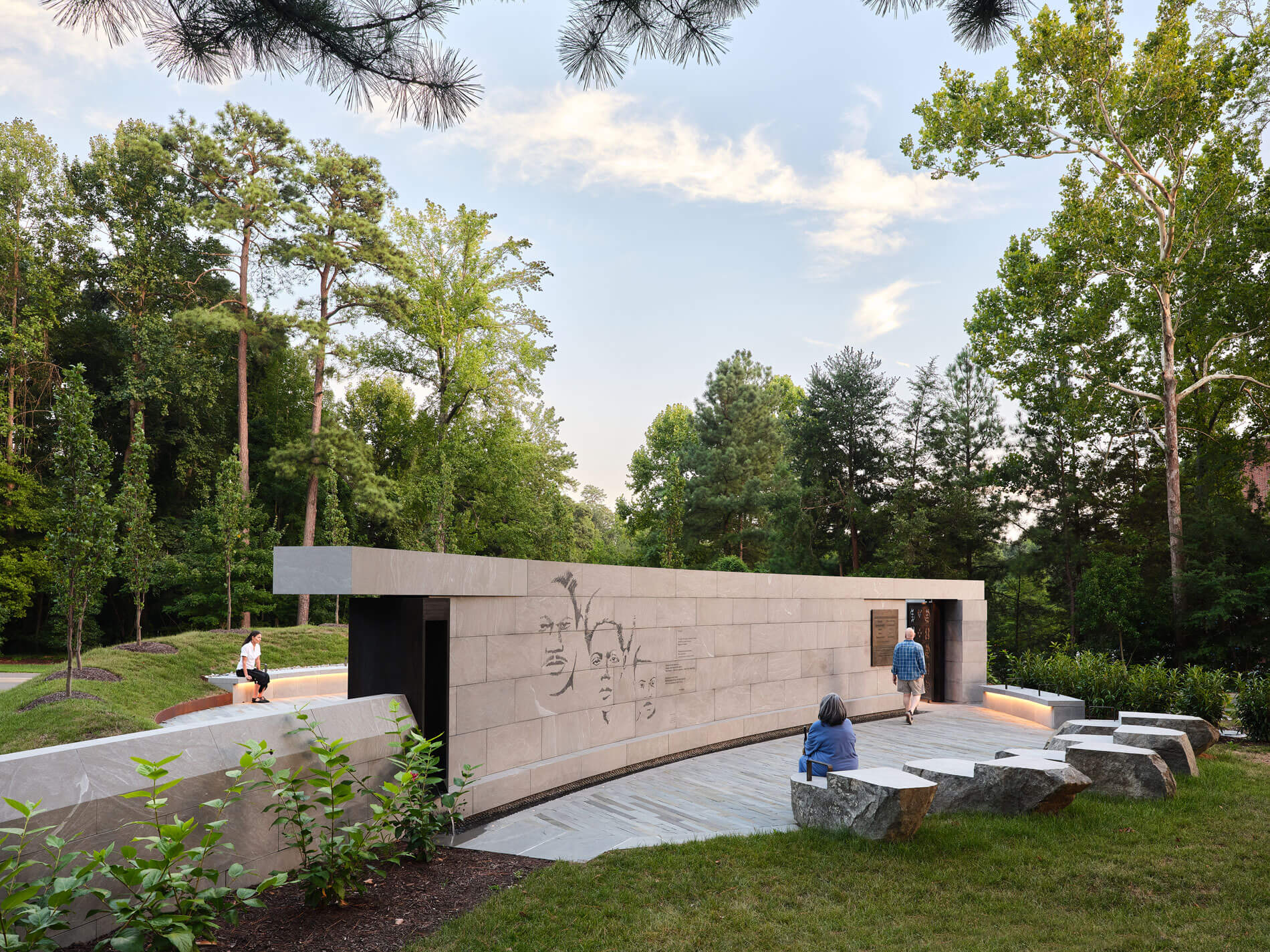
Adinkra symbols made of bronze from Akan tradition are etched into the entry and overlook.
A 200-year-old “witness tree” anchors the memorial. The white oak tree offers a temporal connection between past, present, and future. Seedlings from the oak tree, which is in decline, were planted on site to emphasize a sense of continuity.
The landscape architecture by Waterstreet Studio incorporates traditional burial practices. Plants such as yucca and periwinkle symbolize memory and a laurel hedgerow creates a “living boundary of protection.”
For Pinnock, the design “seeks clarity. It asks all of us to see what was once deliberately unseen,” he said. “In that sense, the project reflects what we believe cultural design can do at its best: translate lived experience into built form, and shape spaces that connect people to place, to history, and to one another.”
→ Continue reading at The Architect's Newspaper

