
The first quarter of the 21st century comes to a close in less than two weeks. And 2025 went down punching. Academic freedom festered. A lawsuit against the city of New York over a Steven Holl–designed library was settled. Washington, D.C. contractors got lots of calls from the White House. And casinos are coming to Queens and the Bronx.
What follows are some of the biggest controversies AN covered in 2025 that had architects, preservationists, developers, and readers up in arms. And in case you missed it, here are the top news stories AN reported on in 2025.
The Ballroom…
It all started in July when Washington, D.C. architect James McCrery and President Trump were spotted gallivanting on the White House roof. Journalists flocked down below, asking the pair what they were doing up there. Gaudy renderings of a 90,000-square-foot, $300 million gilded ballroom followed. Then, the wrecking ball came, and the East Wing was gone just like that.
The architect’s peers said he may be in violation of the AIA’s Code of Ethics & Professional Conduct. McCrery was unceremoniously let go from the commission in October, and then another Washington, D.C. architect Shalom Baranes Associates was tapped for the job. Now, that office may also be in violation of the AIA’s Code of Ethics & Professional Conduct, AIA members say.
On December 12, the National Trust for Historic Preservation filed a lawsuit against Trump and his administration over the ballroom. The suit is ongoing but a Washington, D.C. judge has ruled in favor of the ballroom project if the Trump administration can actually finalize its plans and submit them to the National Capital Planning Commission and U.S. Commission of Fines Arts (CFA) before the new year. It may be tricky pinning down the latter: Trump terminated all members of the CFA last summer.
Teardowns, Paintjobs, and Relocations
In 2025 the Trump administration has said it may tear down the following Washington, D.C. buildings: the Robert C. Weaver Federal Building designed by Marcel Breuer, where HUD has historically been headquartered; the Wilbur J. Cohen Federal Building by Charles Z. Klauder, known for its Ben Shahn mural; the General Services Administration (GSA) Regional Office Building by Charles Butler; and the Liberty Loan Building by Cass Gilbert.
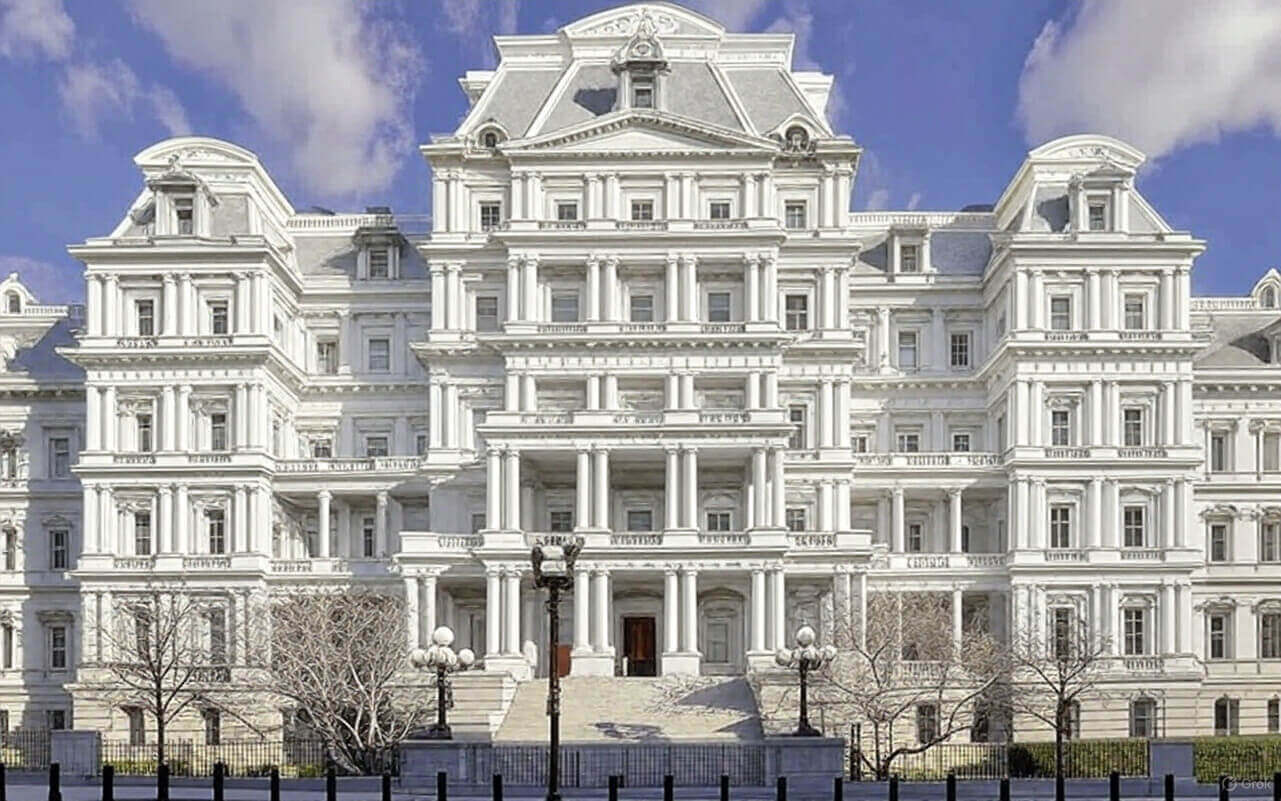
The Eisenhower Executive Office Building which flanks the White House may be painted white, which granite experts advise against. U.S. Transportation Secretary Sean Duffy announced an initiative that looks to revitalize the Washington Dulles International Airport, where the main hall and control tower were designed by Eero Saarinen. The initiative may “replace or build on the existing main terminal and satellite concourses” at the airport. Saarinen called the main terminal at Dulles International Airport “the best thing I have ever done.”
The GSA was ordered to terminate leases at 7,500 properties—including Mies van der Rohe, Paul Rudolph, and Victor Lundy buildings—as part of the government’s new “accelerated disposals” process. After, the FBI announced it is vacating its Brutalist headquarters, the J. Edgar Hoover Building designed by Charles F. Murphy. It will move into the nearby Ronald Reagan Building, designed by James Ingo Freed of Pei Cobb Freed & Partners. Many FBI employees will be siphoned off to suburban office spaces outside Washington, D.C.
Preservationists and former employees of the International Cultural and Trade Center Commission wrote an op-ed for AN making the case for why the Reagan Building should retain its original function, and not serve as a headquarters for the FBI. Judith Levine, of the Today in Fascism Substack, was prompted by this fusillade to publish a recent op-ed in The Guardian about how Trump is “offloading historic gems” to remake Washington, D.C. align with his administration’s “values.”

ACSA cancels JAE Palestine issue
In February, the Association of Collegiate Schools of Architecture (ACSA) canceled a Journal of Architectural Education (JAE) edition about Palestine, to be published by Taylor & Francis. McLain Clutter, former JAE interim executive editor, was fired by ACSA the same day the issue cancellation was announced.
According to ACSA executive director Michael Monti, on behalf of the ACSA board, “the decision followed an extended series of difficult discussions within the organization about the potential risks from publishing the issue.”
AN broke the news story, which was subsequently reported on all over the world by Arab News, Literary Hub, Inside Higher Ed, The Arabic Reporter, Publishers for Palestine, Middle East Studies Association, Canadian Association of University Teachers, India Academic Freedom, and other outlets.
Jackpot?
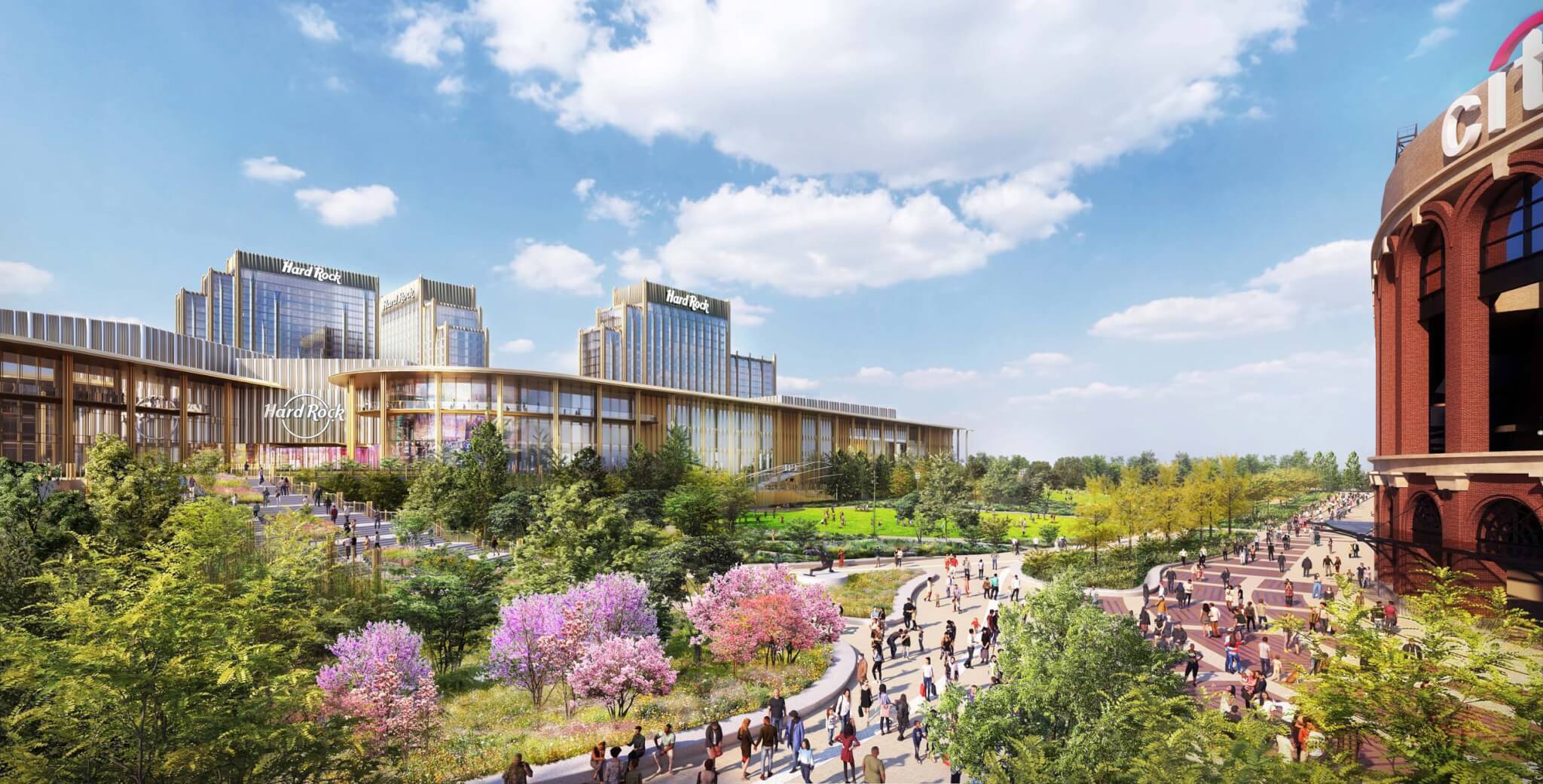
Before the year’s end, all three casino proposals designed by Gensler and HKS (Bally’s Bronx), SHoP Architects and Field Operations (Metropolitan Park), and Perkins Eastman (Resorts World) were approved by the New York State Gaming Commission for licenses. The approvals come less than a month after the Gaming Facility Location Board recommended the three casino projects to the New York State Gaming Commission for licensure consideration, as reported by AN.
New York Governor Kathy Hochul said in a statement the “three approved casinos will generate billions of dollars for the MTA and education, create tens of thousands of jobs and deliver real benefits to their surrounding communities.” Queens state senator Jessica Ramos, whose district will include the Hard Rock casino at Metropolitan Park, was less enthusiastic: Ramos said “projects like this risk accelerating illicit economies and exploitation rather than stabilizing our streets.”
Save the Sound, a conservation group, likewise has environmental and social concerns about both Metropolitan Park and Bally’s Bronx. Queens residents in opposition to the casino near Citi Field called the proposal “racist,” saying it preys upon local community members with gambling addictions, and will exacerbate gentrification in the immigrant enclave.
Logo Loco
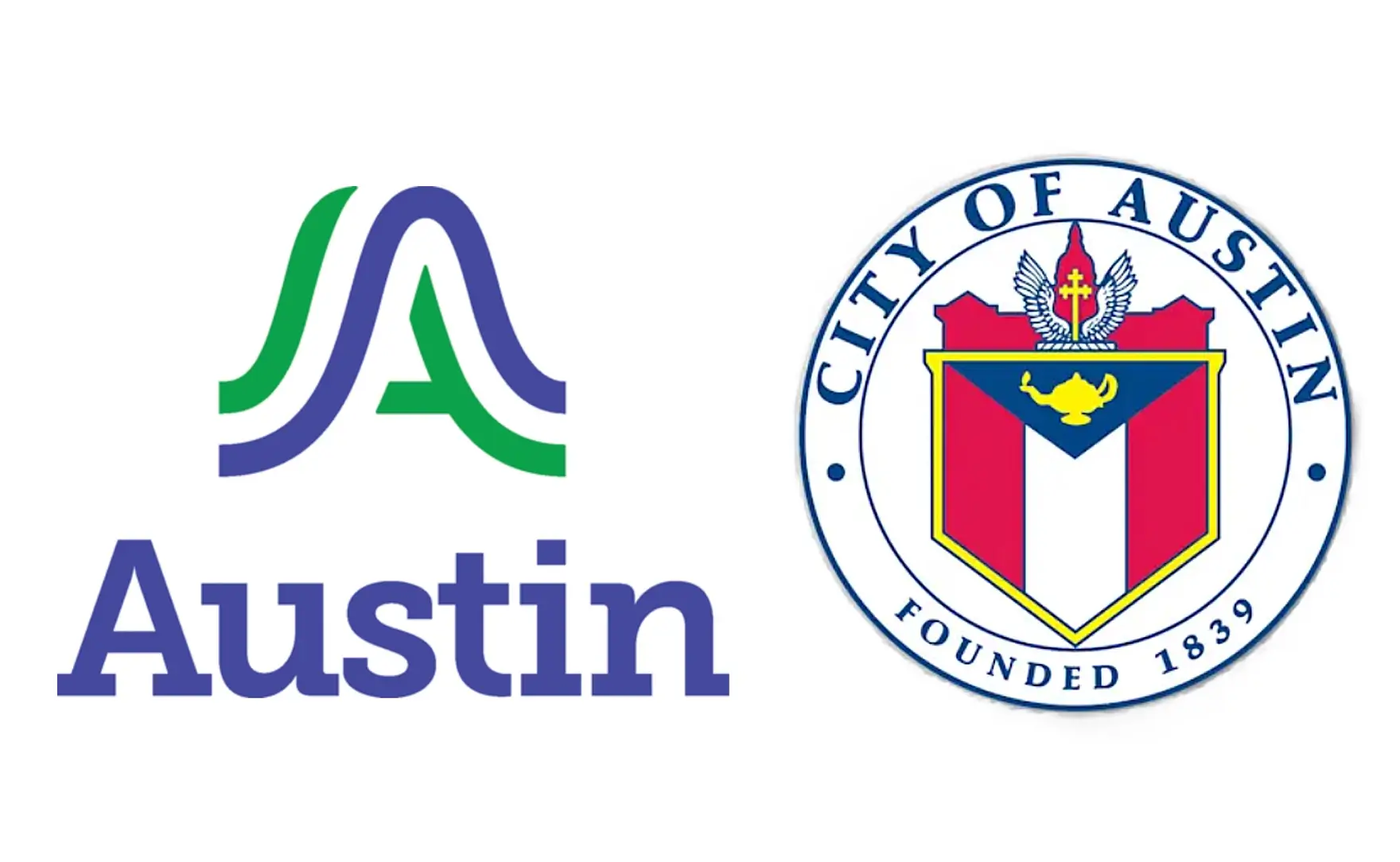
To wind things down on a more jovial note, gripes over graphic design even made headlines this year. Around the same time Cracker Barrel’s rebrand backfired, the city of Austin rolled out a new municipal logo that raised eyebrows.
Austin officials spent $1.1 million to swap out its 1919 crest—topped with a medieval-style crown, filled with symbols like a cross, wings, and the Lone Star of Texas—for a new city logo: a stylized “A” with a blue wave and two green lines meant to represent springs, hills, and the city’s tree canopy, designed by Pentagram.
In collaboration with local agency TKO, the design was intended as a love letter to the city’s natural landscape and a symbol of civic unity. The city’s announcement post drew hundreds of negative comments, many with hundreds of likes in agreement. One commenter said, “Were you trying for *outdated grocery store* as your theme??”
This month, the logo entered the news cycle again when a political action committee Save Austin Now used the logo, as parody in a recent campaign, a move that upset the city, which called the use “inappropriate, confusing to the public, and a violation of our established trademark for an identity we established to make it easier for the public to connect with City services.”
→ Continue reading at The Architect's Newspaper

