
Opponents of the Metropolitan Park casino, slated to be built on 78 acres of land next to Citi Field in Flushing, filed a lawsuit in the NYS Supreme Court against the NYS Gaming Commission on March 20 for its Dec. 15 decision to grant gaming licenses to the casino team, among two other casino bidders — Bally and Resorts World.
The suit charges that the gaming commission unlawfully issued the license to Metropolitan Park, alleging that the gaming commission board knew the public hearings were not conducted fairly and according to the law, as well as failing to consider the moral character of the applicants — Hard Rock International and Mets owner and billionaire Steve Cohen.
According to court documentation, the suit was dismissed by Hon. Nicholas Moyne on March 27, claiming New York County is not the proper venue in which to bring forward the proceeding.
Petitioners, who are representing themselves in the case, said they filed a Motion to Reargue the judge’s decision the following day, March 28, arguing that it was the proper venue.
If their motion is dismissed again, petitioners said they would continue the fight and seek alternative courses of legal action in other courts — potentially filing a formal appeal in the state’s appellate court.
“We’re not going to be denied our day in court to pursue justice due to a technicality,” said Jack Hu, an anti-casino organizer. “I think the judge is mistaken here.”
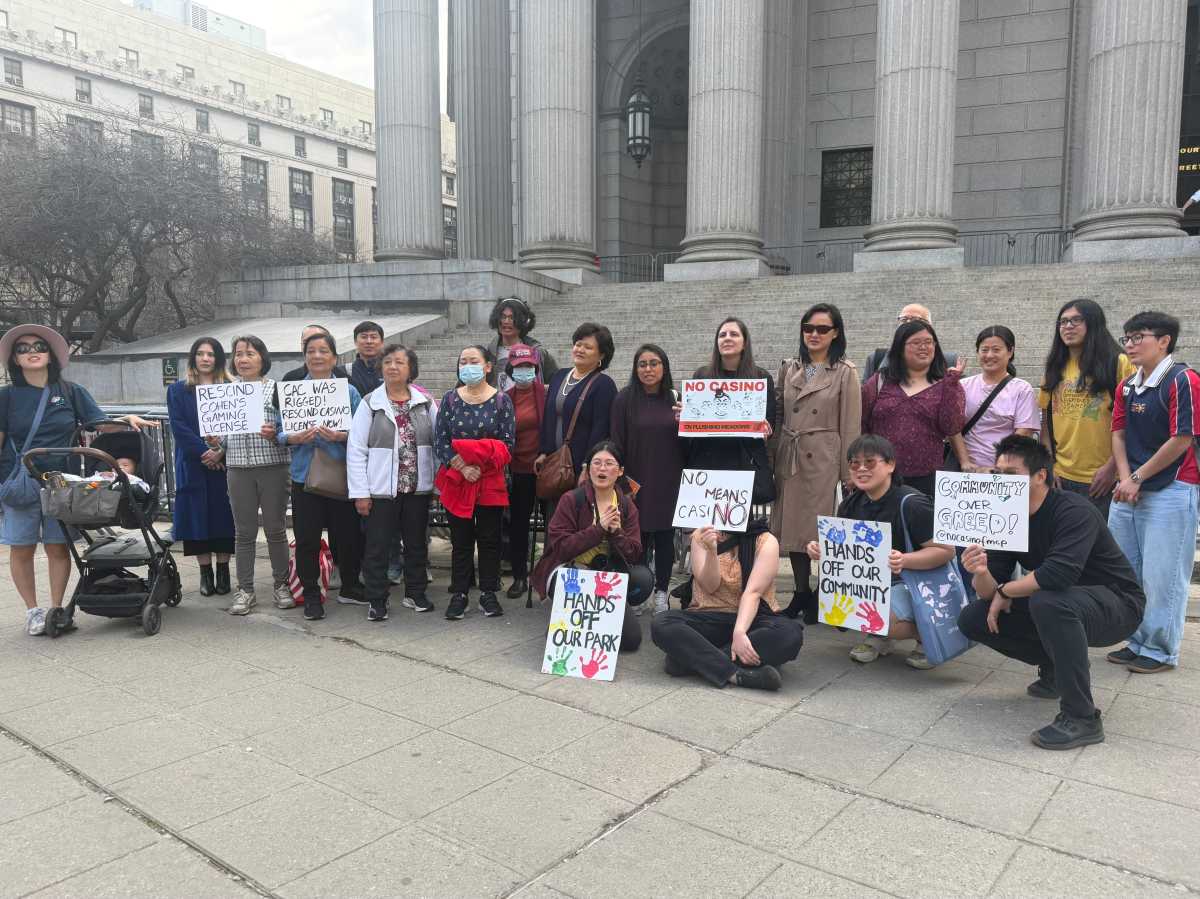
During a press conference earlier Wednesday, petitioners said the goal of the lawsuit is to overturn the license through an Article 78 proceeding, and they are seeking a temporary restraining order to block any work on the development.
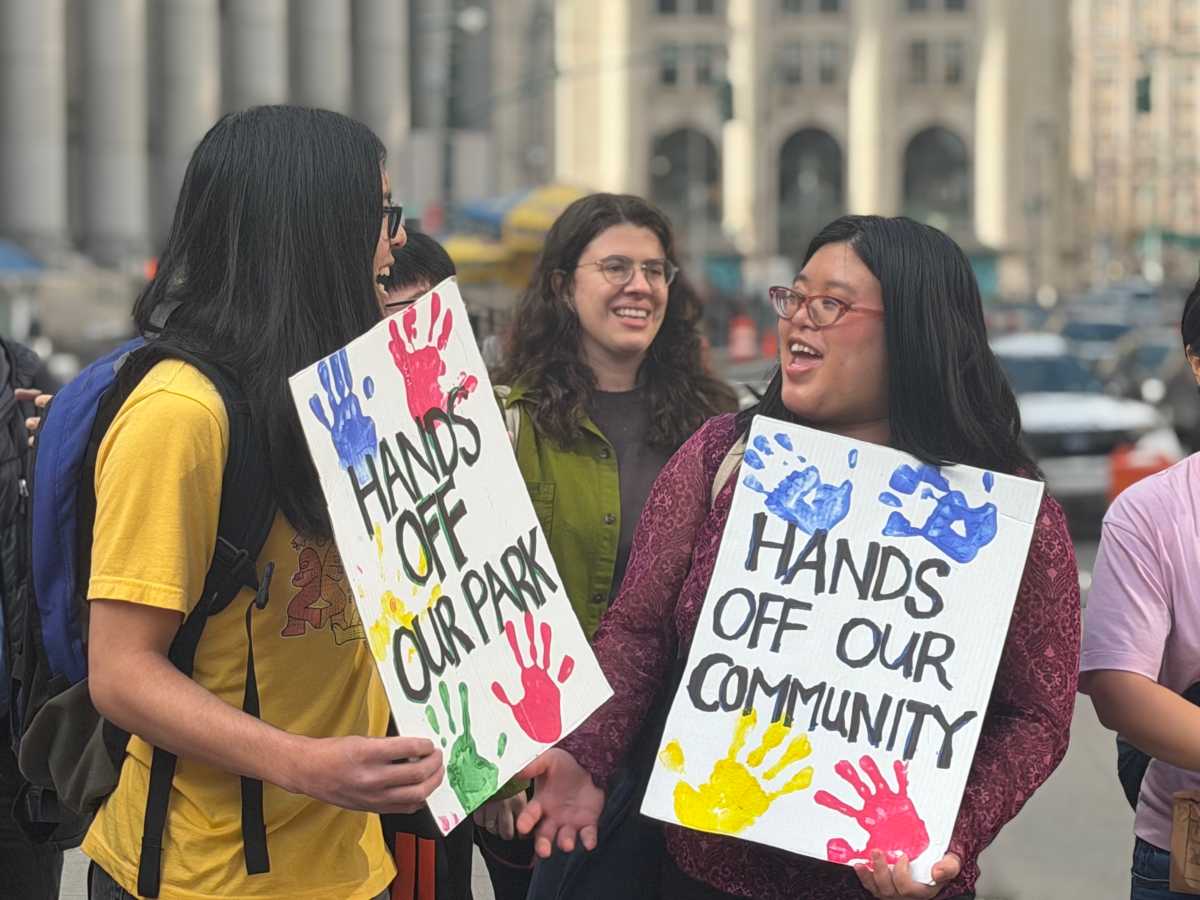
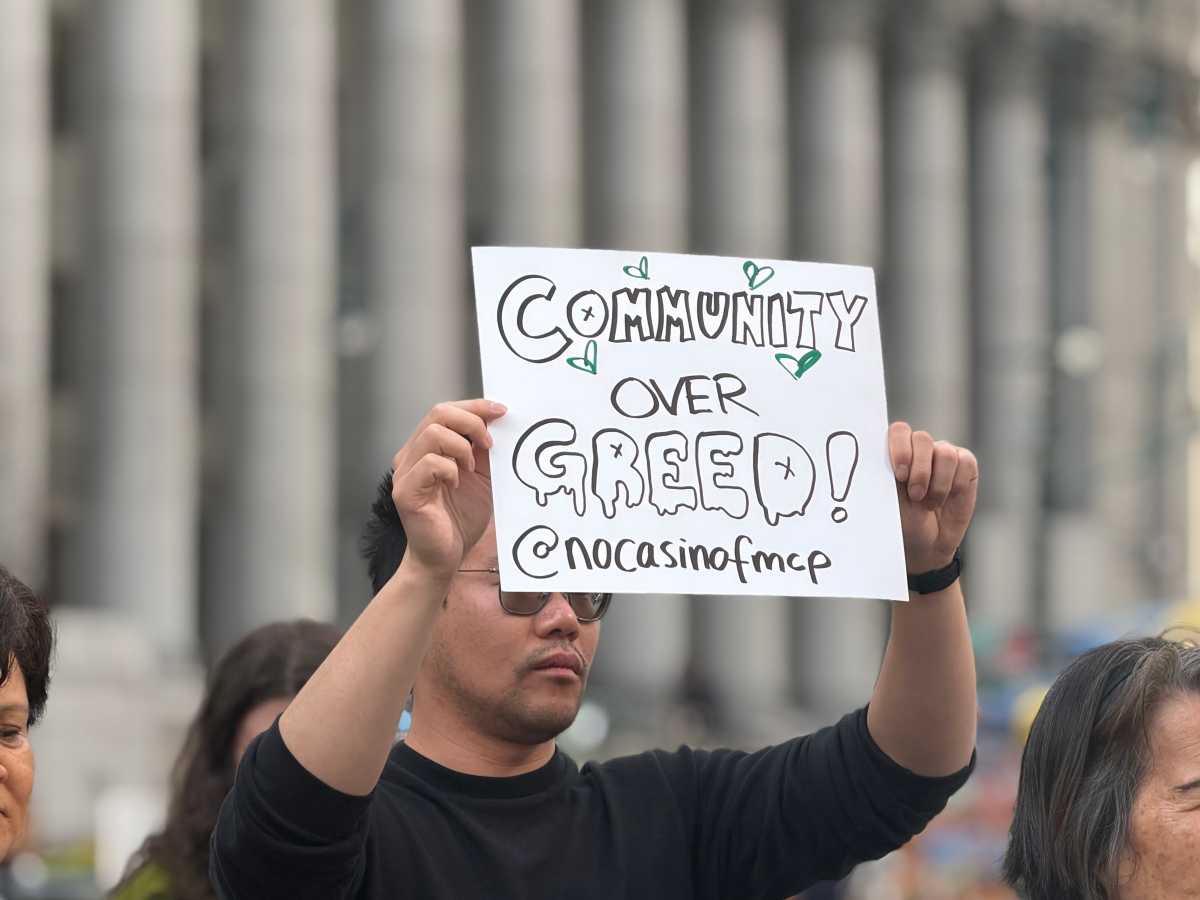
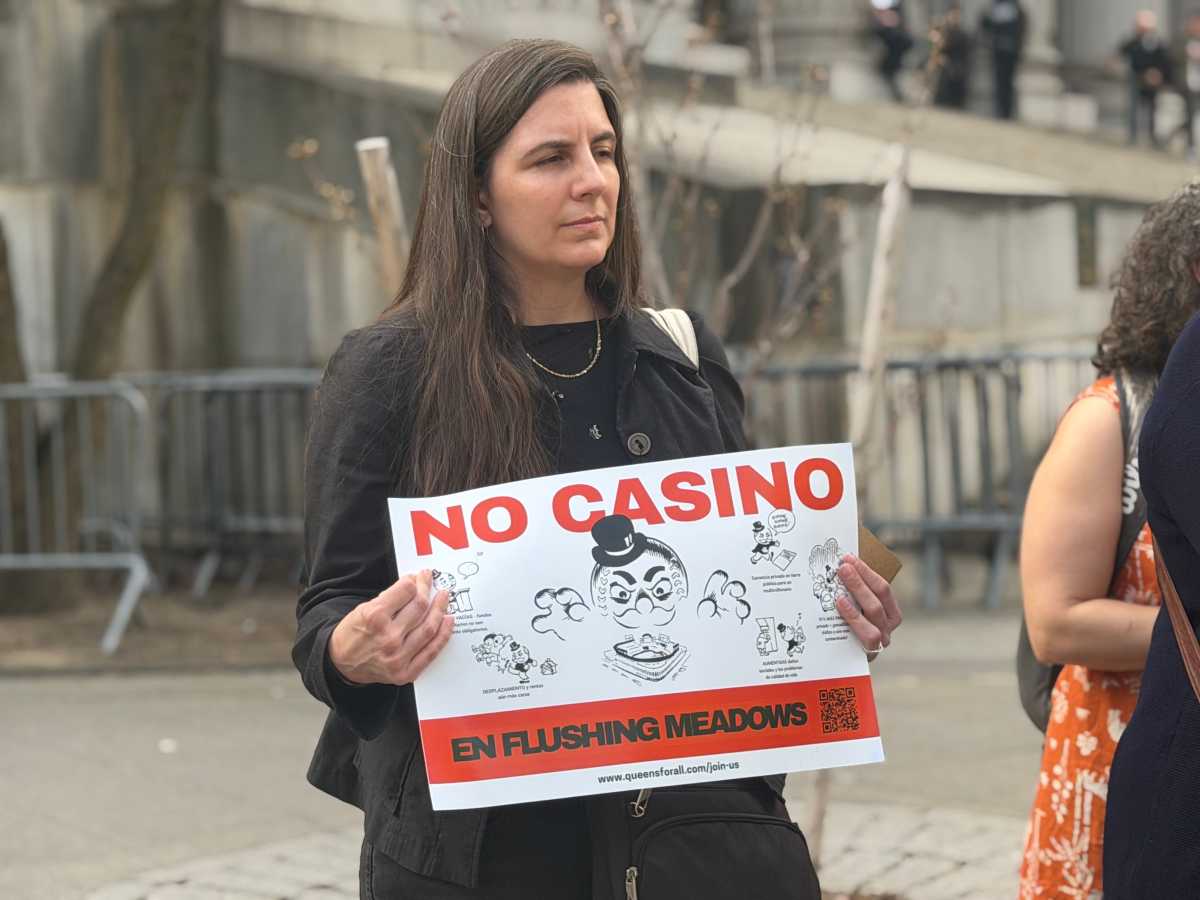
Petitioners, members of the Queens Anti-Casino Coalition and local residents spoke out against the project citing concerns over gambling addiction, alienation of public land, Cohen’s moral character, and what they claimed was an unjust hearing process.
“Right now, we are taking the opportunity to give voice to the opposition that was intentionally overlooked,” said petitioner Bernadette McCrann. “With this lawsuit, and with statements from my fellow petitioners, we urge the court to do the job the gaming commission had failed. Listen to the people and reverse the casino license.”
A spokesperson for the gaming commission said it had no comment on the matter.
The Metropolitan Park team has already begun preparing for construction of the casino, which it estimates will be completed by 2030.
The land it is being built on was originally designated as public parkland at Flushing Meadows-Corona Park, but was later discontinued through the parkland alienation bill introduced and sponsored by state Sen. John Liu last year.
The project would cover 18 acres — the same amount of land as Manhattan’s Javits Convention Center — and include hotel towers of up to 16- and 25-stories.
Opponents of the casino have been protesting against Metropolitan Park since it was first proposed in 2023, organizing events in Queens and Manhattan alongside residents, labor organizations and faith leaders to voice their concerns.
They argue that Flushing’s population, 70% of which identifies as Asian, are more susceptible to problem gambling — an addiction that destroys families and communities.
According to a 2009 Columbia University study, 2.3 percent of Native/Asian Americans are disordered gamblers, which is almost twice the rate of White Americans, at 1.2 percent.
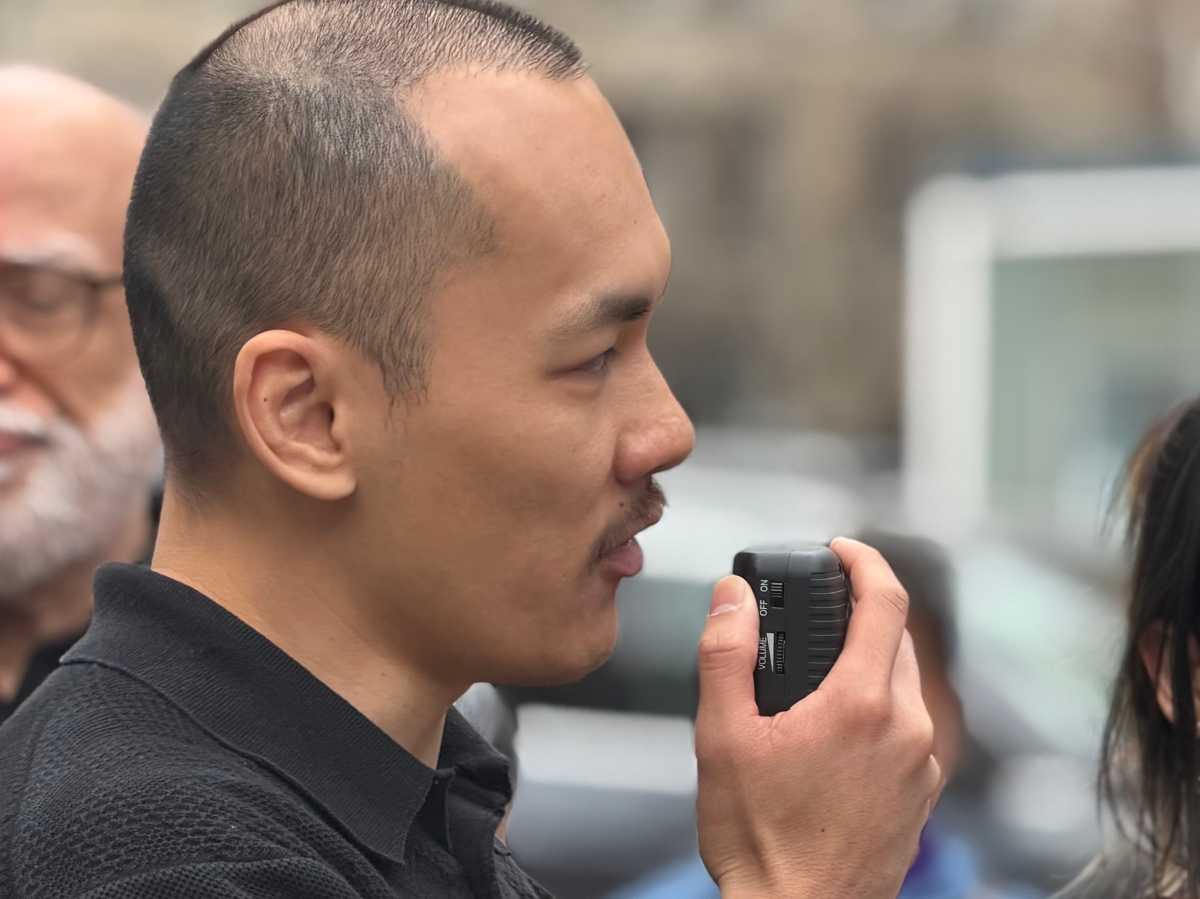
Hu, a lifelong Flushing resident, shared personal testimony during today’s press conference, describing his experience as the child of a gambling addict.
As a child, Hu recalled his father taking him and his mother to casinos, where his father gambled away all his money.
“I grew up in a childhood that was very chaotic,” Hu said. “ He would leave me in the arcade room with $10 as he went off to gamble. I would play through all of my money and then I would wander around the casino for hours.”
According to Hu, gambling addiction is one of the main reasons why the Flushing community is against the casino. “We know it will completely destroy it,” he said.
The casino team, on the other hand, argued that the community was overwhelmingly in support of the casino.
The team noted that Metropolitan Park’s Community Advisory committee heard from 127 speakers over its two hearings — which was the most of any of the three casinos approved in December — amounting to over 240 minutes of testimony. It added that 85% of those speakers were in favor of the casino.
“With nearly four years of community engagement, over 30 public meetings, and approvals from six community boards, the City Council, the State Legislature, the CAC and the Gaming Commission, Metropolitan Park has undergone one of the most rigorous and transparent public reviews of any project,” a spokesperson for the Metropolitan Park team wrote to QNS on April 1. “The community has been heard, and their message is clear: they want Metropolitan Park.”
However, opponents argued that the public hearing process was tilted in favor of the casino team, leaving most of the other attendees unable to testify against the casino before the CAC.
While there were many speakers, petitioners said the hearings themselves were significantly shorter than hearings held for other casino proposals in general.
According to evidence submitted by the petitioners, many hearings for casino proposals across the city — approved or not — were scheduled for at least four hours, with one CAC hearing in Times Square for a Caesars Palace casino lasting from 10 a.m. to 5 p.m.
The Sept. 16 hearing at Queens Borough Hall was shortened from three hours to two, opponents pointed out, claiming there were conflicting notices on the hearing’s time.
They said the committee’s chair, Assemblymember Larinda Hooks, who supports the casino, was responsible for shortening the hearing.
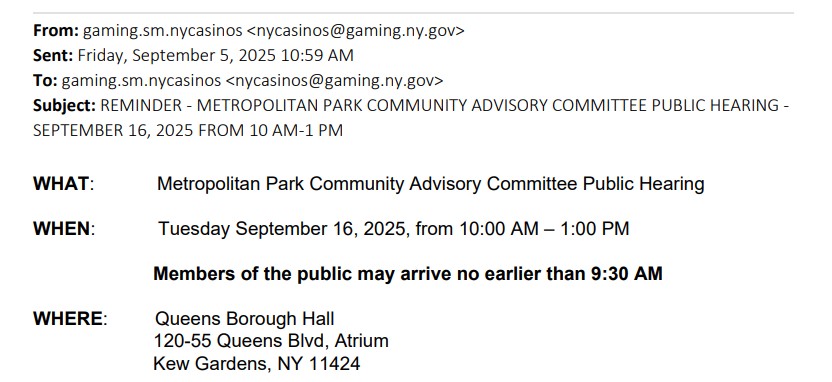
Leonard Maniace, a petitioner who attended Wednesday’s press conference, said he showed up to the Sept. 16 hearing around 9:10 a.m. — well before the hearing was scheduled to begin at 10 a.m. — a line of about 50 speakers had already formed outside the hearing room.
Maniace said he was surprised he and others were let in so early because a notice sent out via email by the gaming commission instructed attendees not to arrive before 9:30 a.m.
“This was apparently a ruse to stack the speaker’s list with casino supporters,” Maniace alleged.
The meeting was initially scheduled to run for three hours, from 10 a.m. to 1 p.m., he said, but was cut short at 12 p.m. after just two hours, as corroborated by the updated notice on the Gaming Facility Location Board’s website.
At that point, 54 speakers had testified, 43 of which were in support of the casino. Only four of the first 35 speakers were against the casino.
Everyone else after the speaker 54, Maniace said, was sent home without time to testify.
“Rather than attempting to elicit a range of views, they turned the public hearing process into a sham,” he said. “I was not permitted to detail how this mammoth casino complex would diminish the lives of the people of Queens — both current residents and future generations.”
Casino opponents said Hooks should not have chaired the CAC’s two hearings, claiming a conflict of interest.
In 2024, Cohen provided an influx of $250,000 to the Laborers Building a Better New York, a super PAC that supported Hooks’ campaign in the Democratic primary for Assembly District 35, which she won against casino opponent Hiram Monserrate.
Opponents also said the gaming license granted to Cohen and the Hard Rock team poses serious ethical issues due to previous financial scandals.
In 2014, Cohen’s hedge fund, SAC Capital Advisors, pleaded guilty in the nation’s biggest insider-trading scandal and was fined $1.8 billion.
While the Metropolitan Park team has emphasized that Cohen himself was not charged with any wrongdoing, a separate civil action barred Cohen from managing clients’ finances for two years.
Last August, Hard Rock fired Alex Pariente, its senior vice president for Hotel and Casino Operations, following an internal investigation of charges that included money-laundering practices.
“The committee failed to consider the lack of integrity, honesty, character and reputation of its applicants,” McCrann said. “Not only does this signal a breach of law and the flawed casino licensing process, but it exposes the commission’s disregard for the livelihood of the public it’s meant to serve.”
For now, petitioners said they are looking forward to being heard by the court, whether their Motion to Reargue is dismissed or not.
“You do not need to be a genius to know how dangerous this reckless development is for our public land and our livelihoods,” said casino opponent Kara Fan. “Today, individuals from Queens neighborhoods that will be most impacted are courageously standing up to this entrenched system — even without a lawyer — to make their voices heard.”
→ Continue reading at amNY

