
The Lajee Center was founded in Bethlehem, Palestine, in 2000 to serve members of the Aida Refugee Camp, established in 1950 by the United Nations Relief and Works Agency for Palestine Refugees in the Near East (UNRWA).
Over 7,000 Palestinians currently live in the Aida Refugee Camp, which measures less than half a square mile. Water, food, and building materials are scarce, and overcrowding and unemployment persists.
Lajee is the Arabic word for refugee. The Lajee Center’s goal is providing West Bank youth and women with cultural, educational, social, and developmental opportunities, its mission statement affirms.
Cambridge, Massachusetts–based Neighbor Architects completed a playground for a kindergarten inside Aida operated by the Lajee Center in collaboration with 1for3, a Boston-based nonprofit founded in 2011 that promotes Palestinian health, education, water, and food sovereignty. The playground won an honorable mention in the AN 2025 Best of Design Awards, in the social impact category.
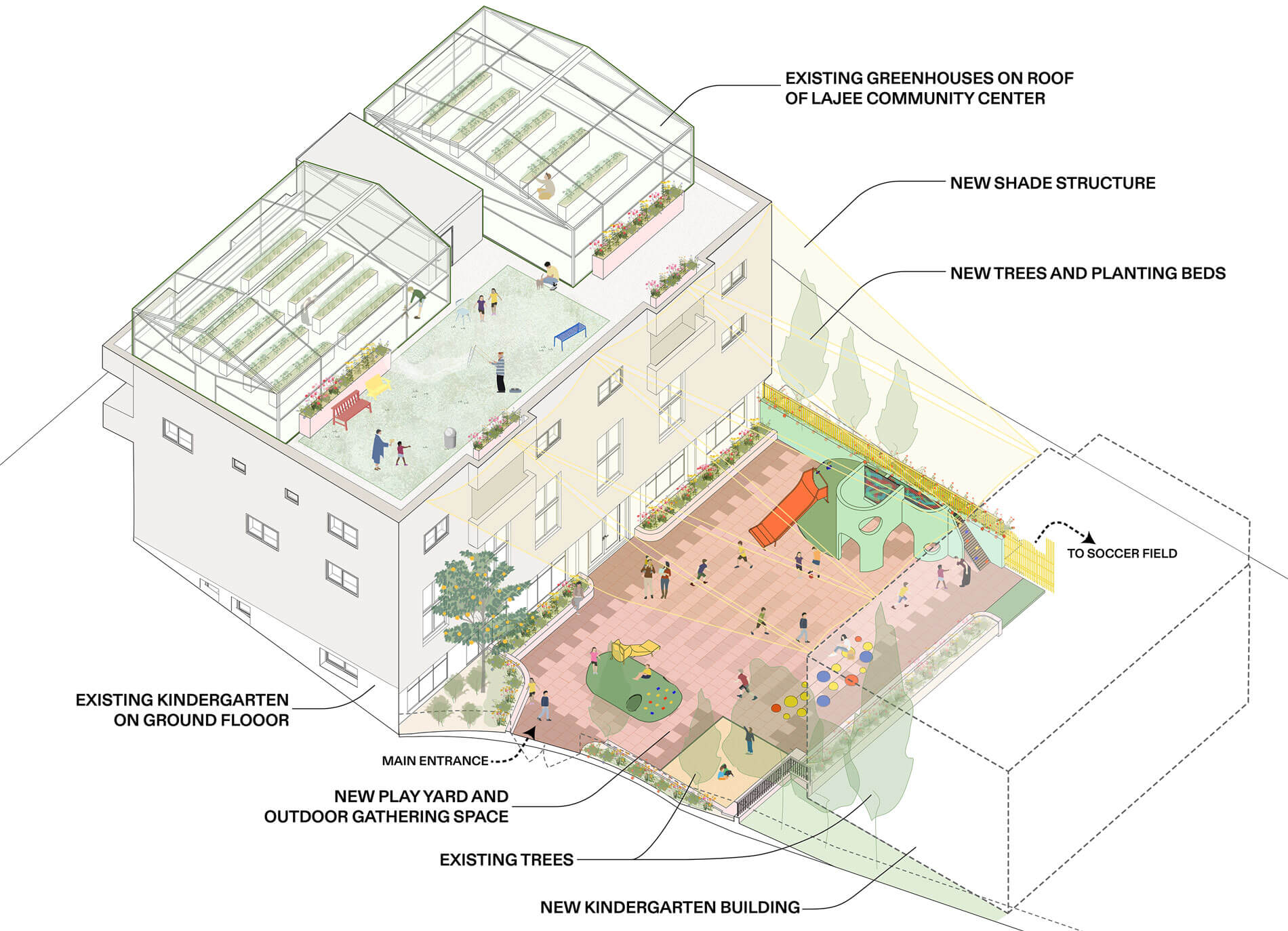
The 3,000-square-foot playground was built to support the Zahrat Al-Yasmeen Kindergarten, a school Lajee Center opened in 2021 that was designed in part by Hubert Murray, another Cambridge architect; and Katie Flynn of Hisel Flynn Architects. It’s for children of the Aida Refugee Camp as well as the Azza (or Beit Jibrin) Refugee Camp.
Today, the playground is enjoyed by about 80 little ones, their teachers, and the community more broadly. It is sandwiched between two buildings the Lajee Center operates to the north and south. A gate opens to a nearby soccer field.
Parents drop their kids off at the Zahrat Al-Yasmeen Kindergarten in the early morning, and then students scurry into the playground where they start their day. Rubber tiles make forgiving surfaces for bumps and bruises. A concrete, sculptural element kids can climb is lacquered in powder green, touched up with a painting of panda bears.
The site is about 12 miles north of Hebron, and just 150 yards from the crossing to Jerusalem. It’s within walking distance from Rachel’s Tomb, an ancient pilgrimage site. A separation wall and watch towers run by the Israeli military are also close by. An illegal Israeli settlement, Har Gilo, is on the other side of the separation wall.
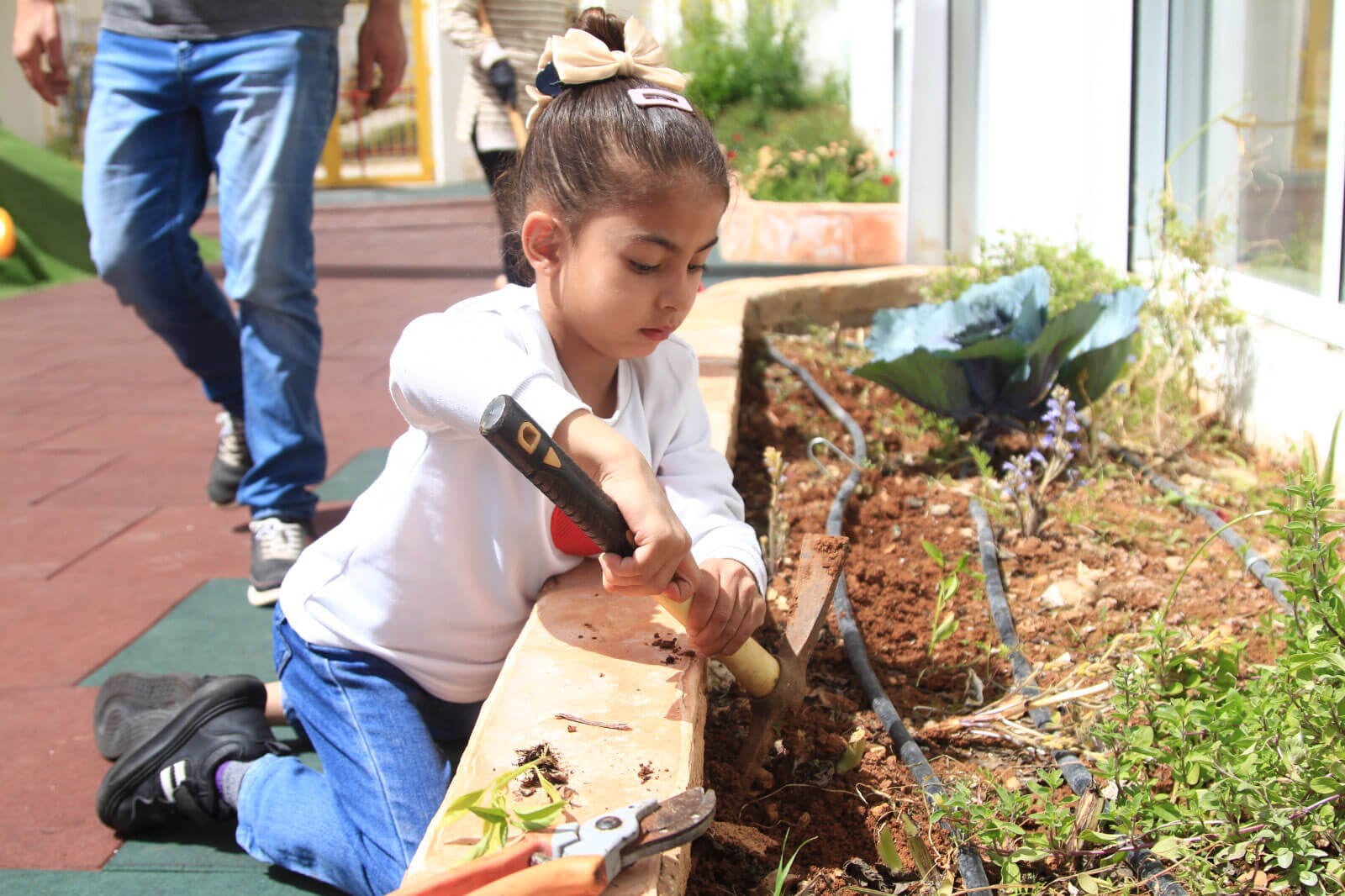
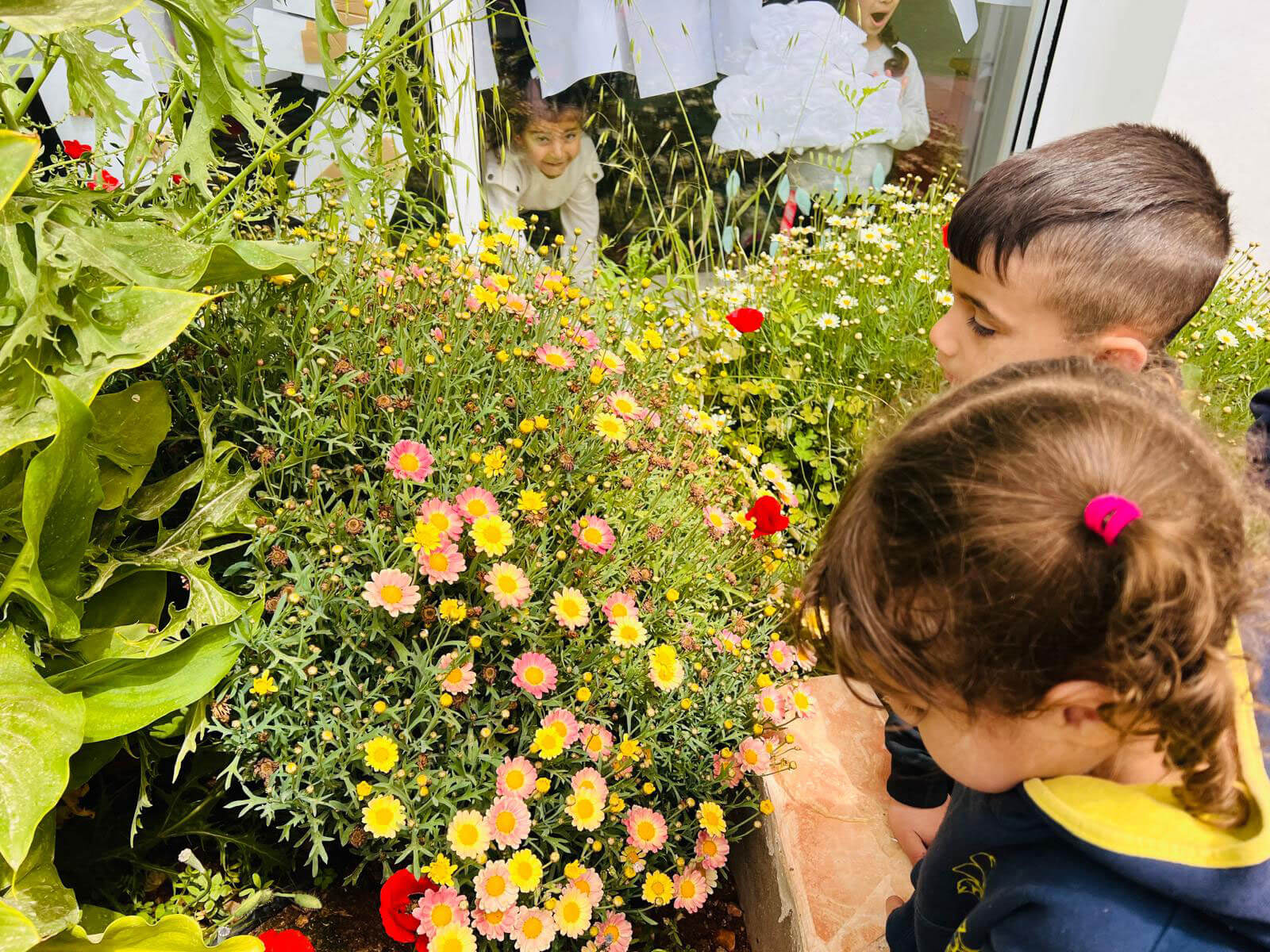
About 20 percent of the playground is given over to plantings while the rest of the surface area is covered by rubber tiles over a permeable drainage course. There’s also a shade canopy, and structures for climbing, sliding, imaginative play, and sensory engagement. Artificial green hills abound.
Majd Salsa is Zahrat Al-Yasmeen Kindergarten’s environmental instructor. Plant beds inside the playground grow cauliflower, broccoli, beans, strawberries, cucumbers, tomatoes, and other crops depending on the season. Students are introduced to agricultural practices at an early age, as part of the Lajee Center’s mission.
“This was a community project.”
Sarah Dunbar, Neighbor Architects cofounder, collaborated with Mejd Azzeh, director in Palestine for 1for3, on the playground project. Rowayd Alazzeh served as structural engineer and site super, and Lajee Center director Mohammad Alazza was a design advisor. AIRLIT Studio was the sustainability consultant.
Dunbar got involved in 2024, when a friend told her she was planning to travel to Bethlehem for a project with the Lajee Center. “I just offered to go with her. It was very sudden,” Dunbar told AN. “It was never in my mind.” In Bethlehem, Dunbar subsequently met Alazza, who is also a photo journalist and documentarian.
“[Mohammad] wanted us to look at the play yard, which at the time was just a paved space with a few pieces of equipment. It wasn’t in good shape,” Dunbar said. “When I came out of the trip, I was working on the play yard. We worked really fast. The trip happened in May and the play yard was done by the start of the school year. It was the fastest project I’ve ever done.”
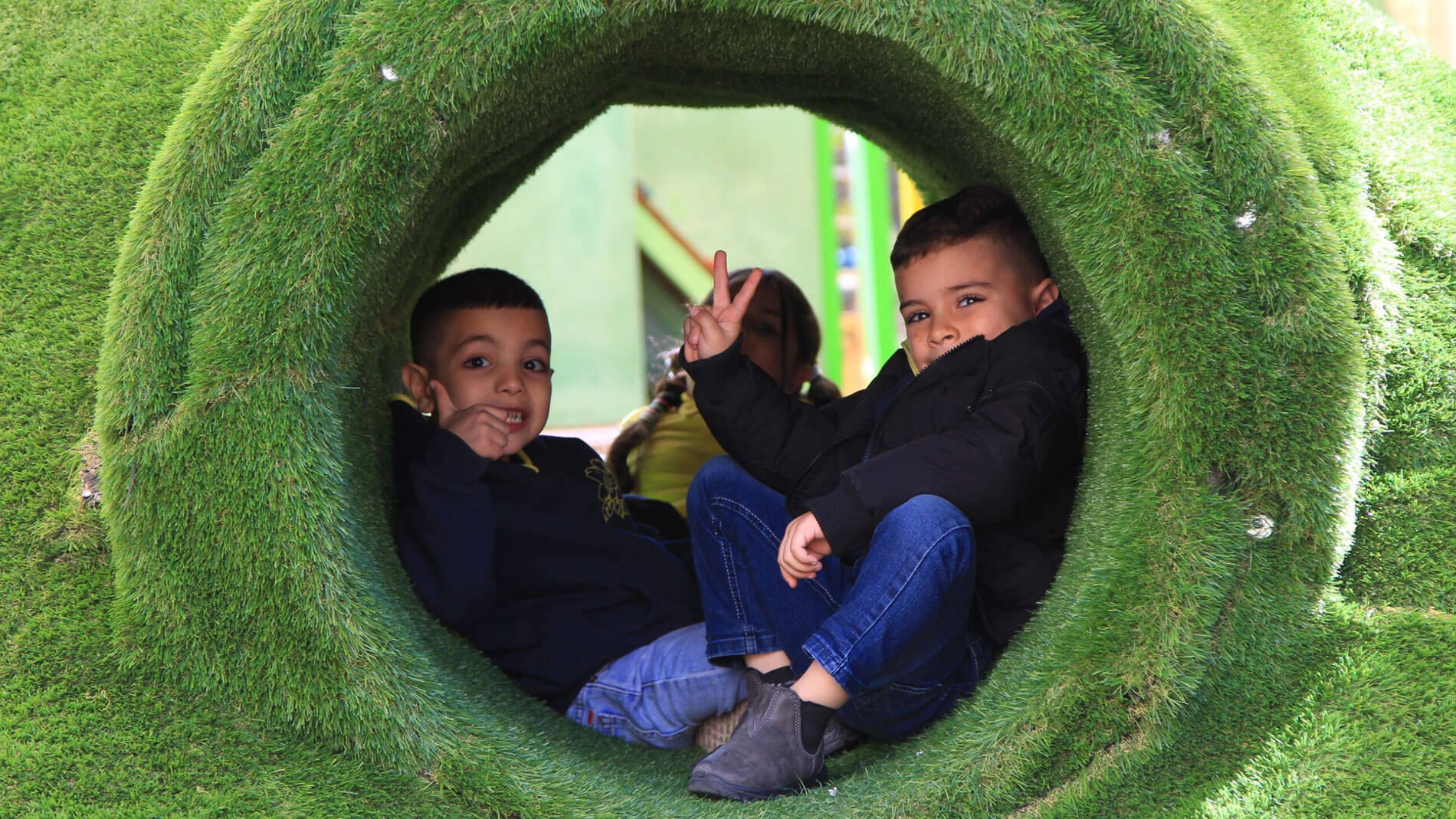
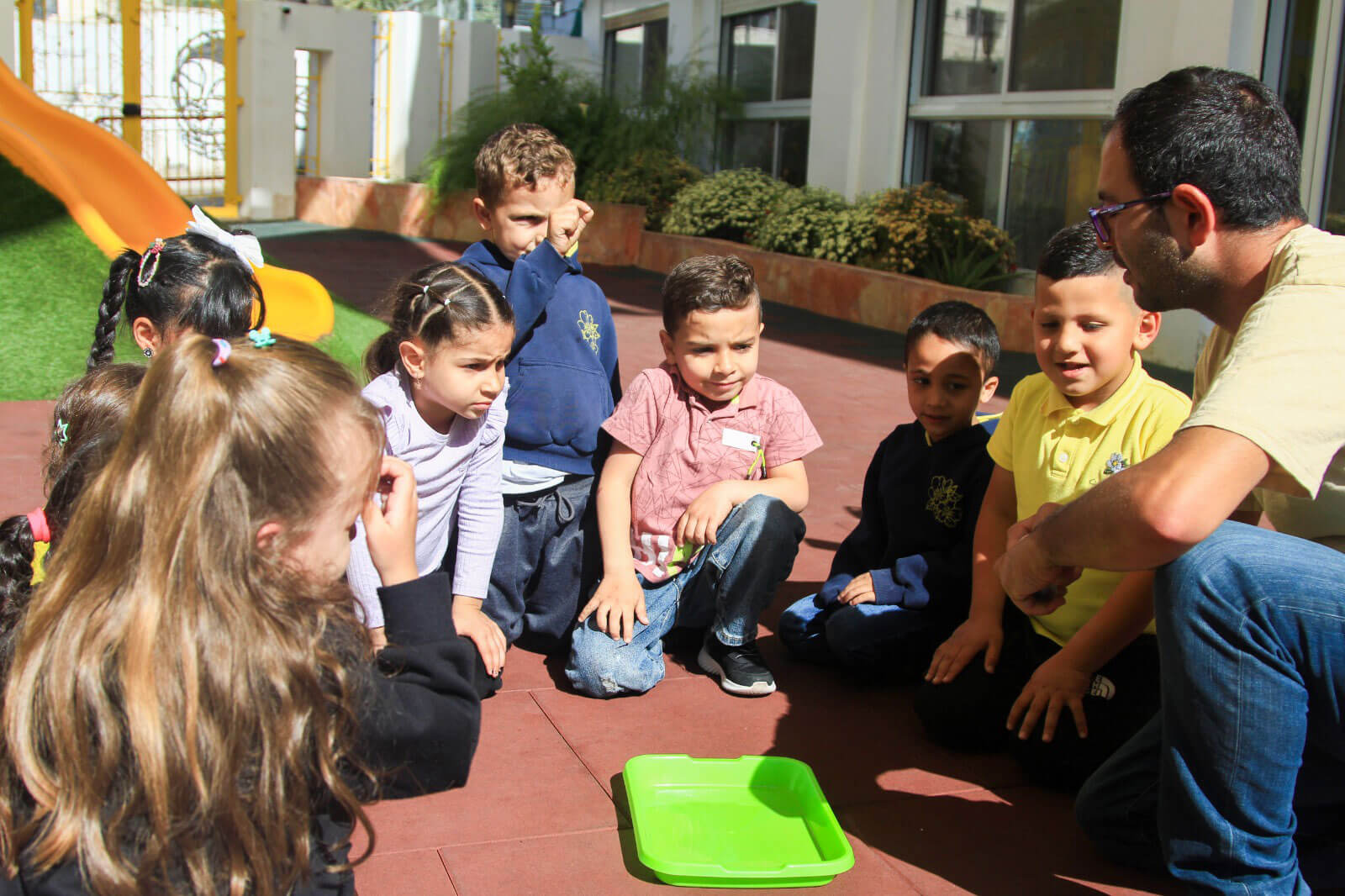
Teachers and parents met with Dunbar virtually to discuss the design. All of the rubber tiles and playground equipment were manufactured in Hebron. Due to material restrictions imposed by the blockade, Neighbor Architects had to get creative. “We needed to figure how to make concrete fun,” Dunbar said. “That was number one.”
Rayan Company is behind the bridge and slides, and Mohammad Lutfi was the contractor for the play structures. Ibrahim Al Bandak and Beit el Sejad produced the tiles, and Ahmad Abu Rmaileh ideated the shade sails.
Azzeh was born in the U.S. and has family and friends in the Aida Refugee Camp, so she often visited during the summers. After going to work at 1for3, she relocated from the U.S. to Bethlehem. “Open space and land is non-existent here in the refugee camp,” Azzeh told AN.
“We used to have a beautiful olive grove on the other side of the [separation] wall, before it was built between 2002 and 2004,” Azzeh continued. “That’s where people used to have picnics and play. Growing up, I remember playing there. But once the wall was built, it took all of that green, open space away from the camp. Now, when families want to take their children to a park, they have to go by car, pay for entry, things like that.”
The playground is “a new design that you don’t really find here in Palestine,” Azzeh elaborated.
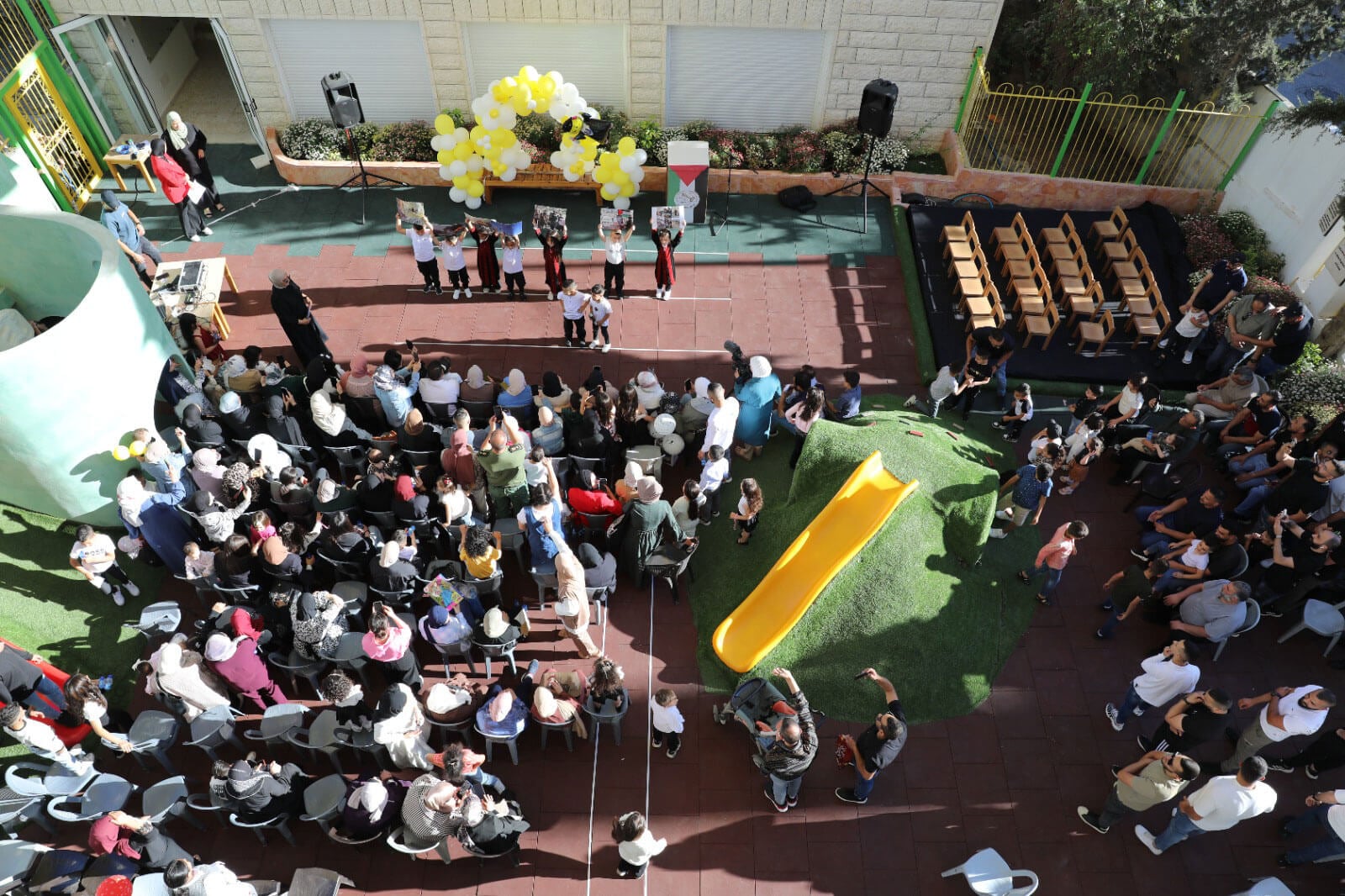
“It has typical playground equipment and toys, things that are in parks around Palestine, but also new, innovative design that integrates creative playing. It is used by teachers and the community as a whole,” she continued. “For events we set up chairs, a stage. We’ve held kindergarten graduations there. So it’s more than a playground. It’s a community hub, where people can gather, socialize.”
Since 2023, unemployment rates inside the Aida Refugee Camp have hovered around 90 percent, so putting local trades professionals to work was paramount for the project, Azzeh told AN. Moreover, chokeholds in the supply chain make it difficult to import materials, further necessitating the need to source products locally.
“This was a community project,” Azzeh affirmed. “All of the construction workers, plumbers, electricians, everyone that worked on this project was from the Aida Refugee Camp. It happened when a war was going on, when people lost their jobs. We were able to create job opportunities locally, along with all the materials that were procured. It provided a sense of autonomy for the community who ultimately decided what went into the playground.”
→ Continue reading at The Architect's Newspaper

