
At Hope Plaza, an outpatient facility part of the City of Hope Comprehensive Cancer Center in Duarte, California, CO Architects maximized patient comfort to promote wellness through biophilic design. Each face of the building was uniquely tuned to reflect this goal. A void that cuts through the massing of the building recalls the meandering shape of a river snaking through a canyon wall. Similarly, anodized metal panels give the illusion of a sunset amid the mountainous landscape. The references to nature are fitting, given the health campus’s location at the base of the San Gabriel Mountains.
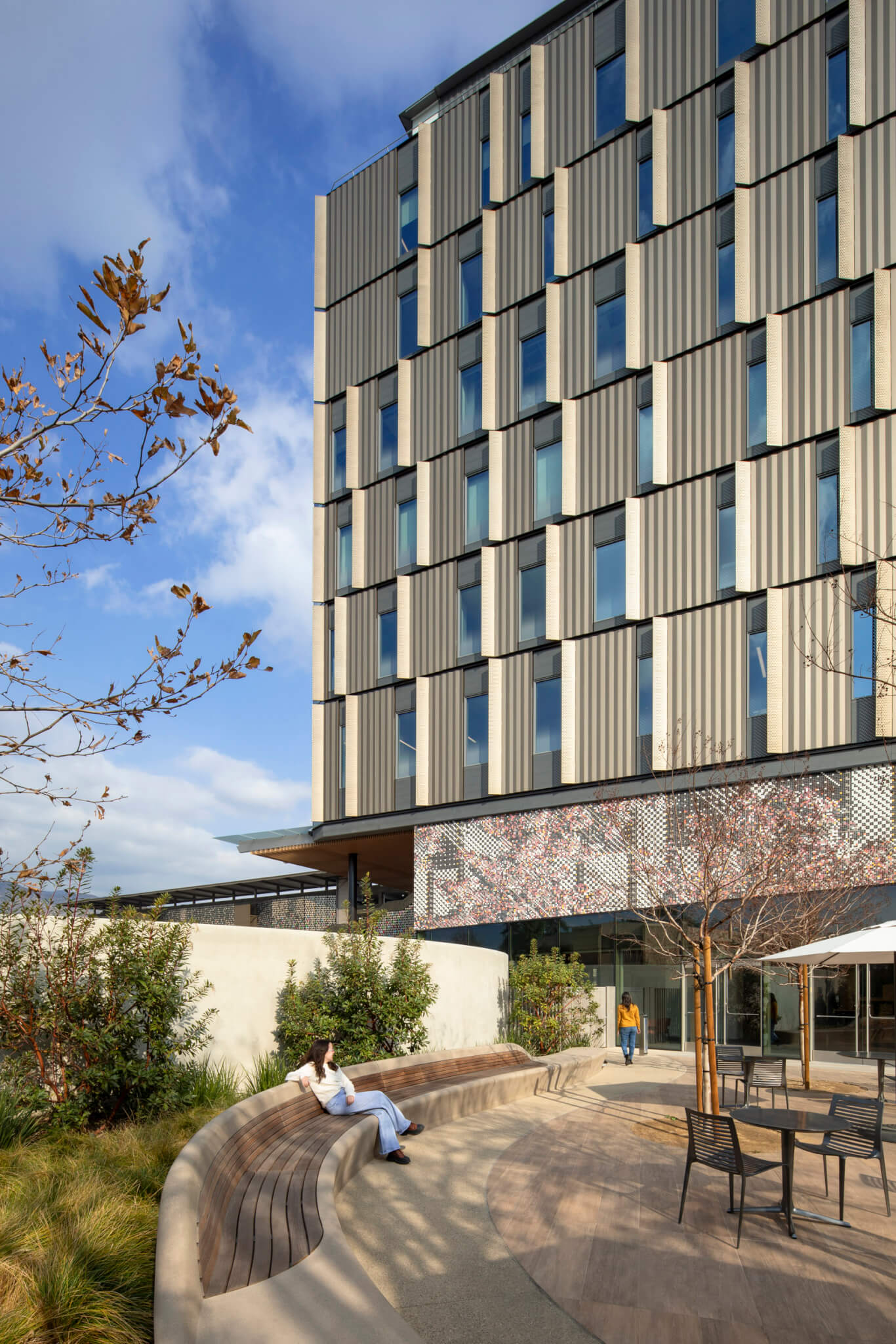
Adjacent to the new 352,000-square-foot outpatient facility is a new parking garage and the 1.65-acre Ted Schwartz Family Hope and Healing Park.
The east, west, and south facades of Hope Plaza were clad in chevron-shaped, anodized metal panels. The champagne-colored panels shimmer in the daylight and fade into the backdrop of the mountainous landscape, especially at sunset.
On the south facade, additional shades are located above high-performance windows for increased solar control. The north facade differs in its material application, here, an all-glass curtain wall features prominently. The large spans of glazing offer expansive views of the San Gabriel mountain range.
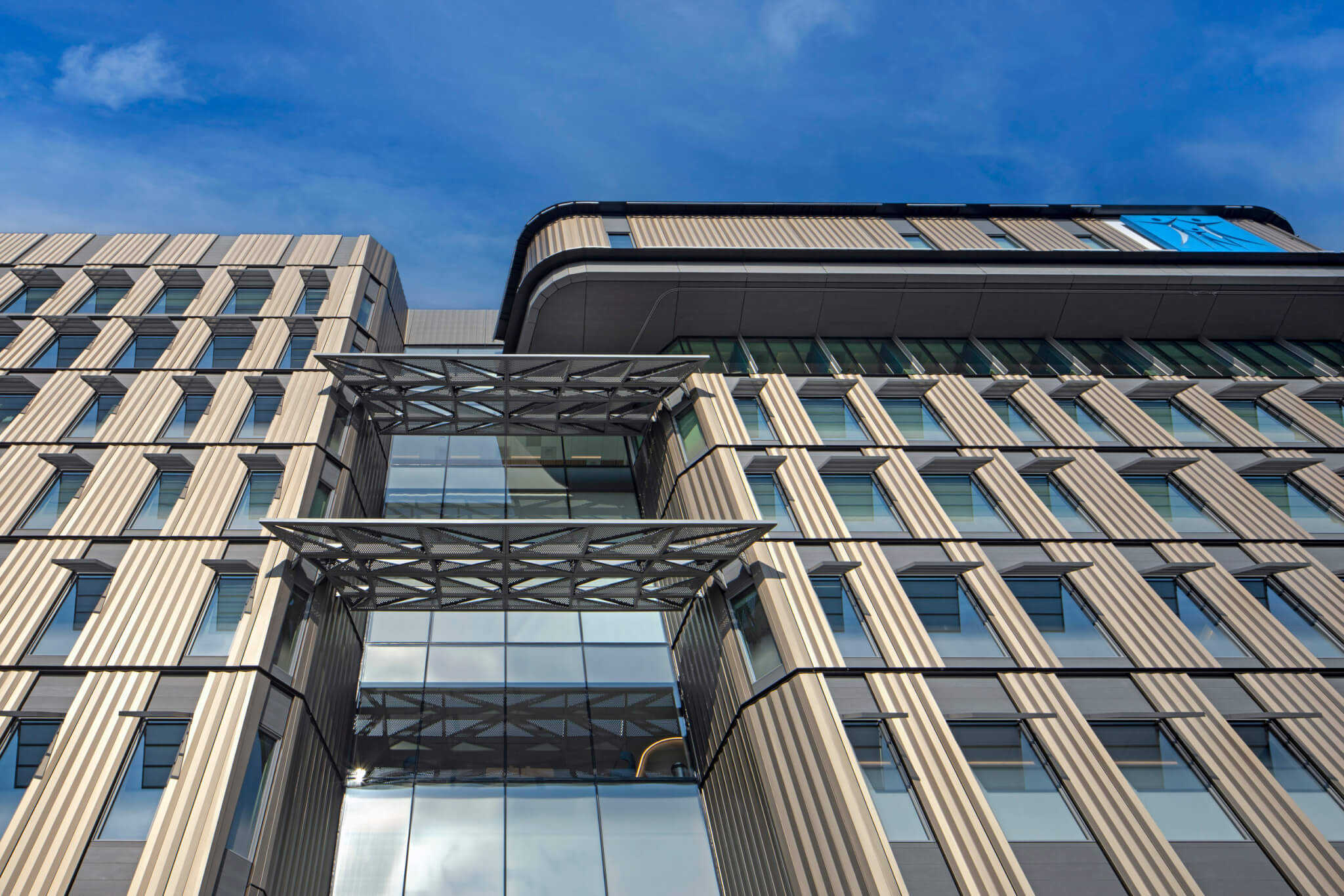
To achieve Hope Plaza’s characteristic paneling, CO Architects worked early on with curtain wall and prefabricated wall panel subcontractors to align ideas for a successful execution. “Having weekly ‘skin cluster’ meetings,” Arnold Swanborn and Ash Gharib, principal and associate respectively, at CO Architects told AN, “allowed the design team to provide and receive feedback on a real-time basis regarding fabrication, constructability, cost, and schedule.”
“Biophilic design comes down to the merging of big ideas and nuances, which requires attention and sensitivity,” continued CO Architects. “Getting the buy-in from construction partners was paramount to success.”
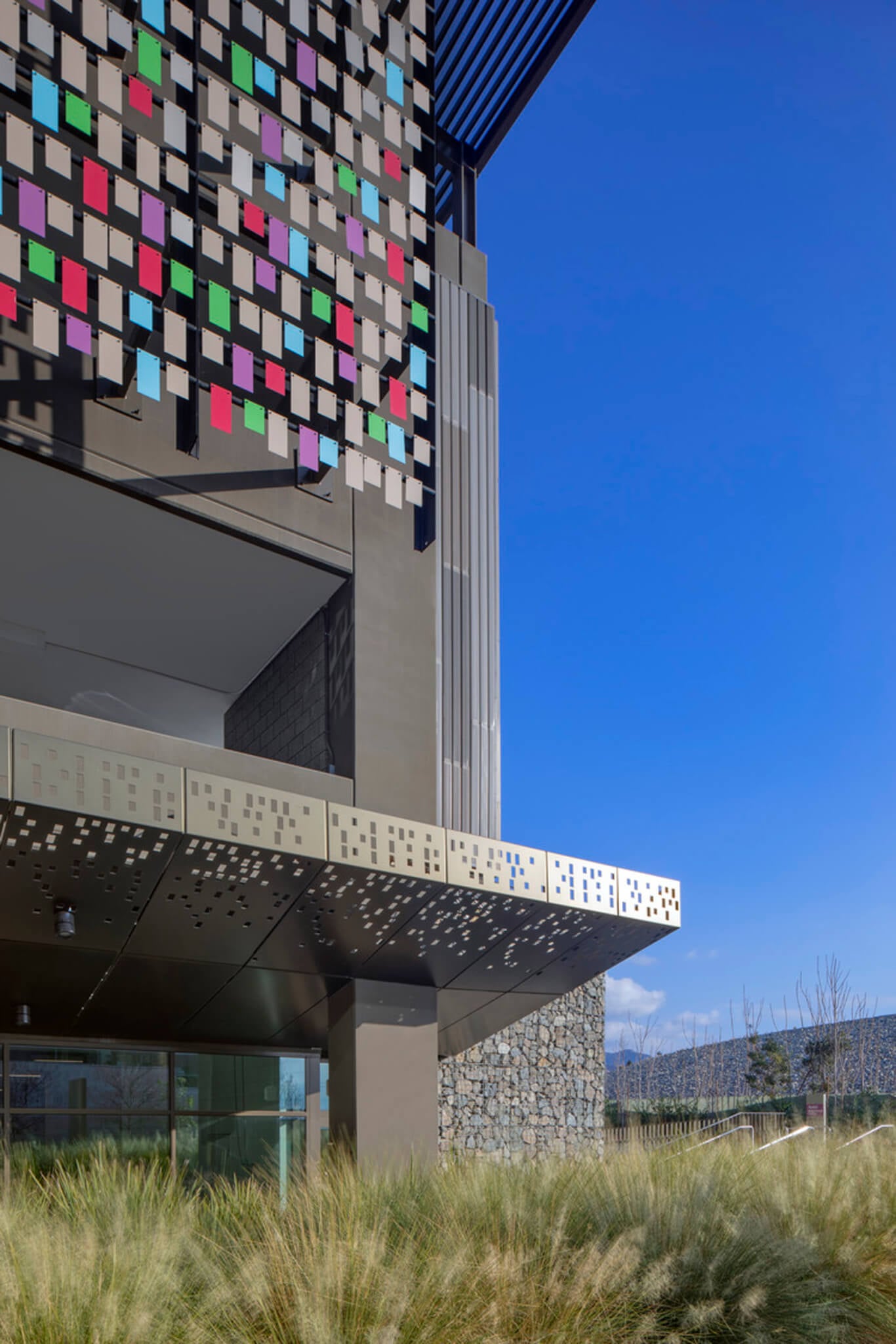
Natural phenomena such as wind, erosion, and reflection of light were all incorporated in the design of Hope Plaza. The parking structure facade was clad with over 19,000 colorful Extech aluminum tags that shift and glimmer in the wind. The design evokes the spirit of City of Hope’s wishing tree tradition, in which people write well-wishes for loved ones on ribbons hung from trees.
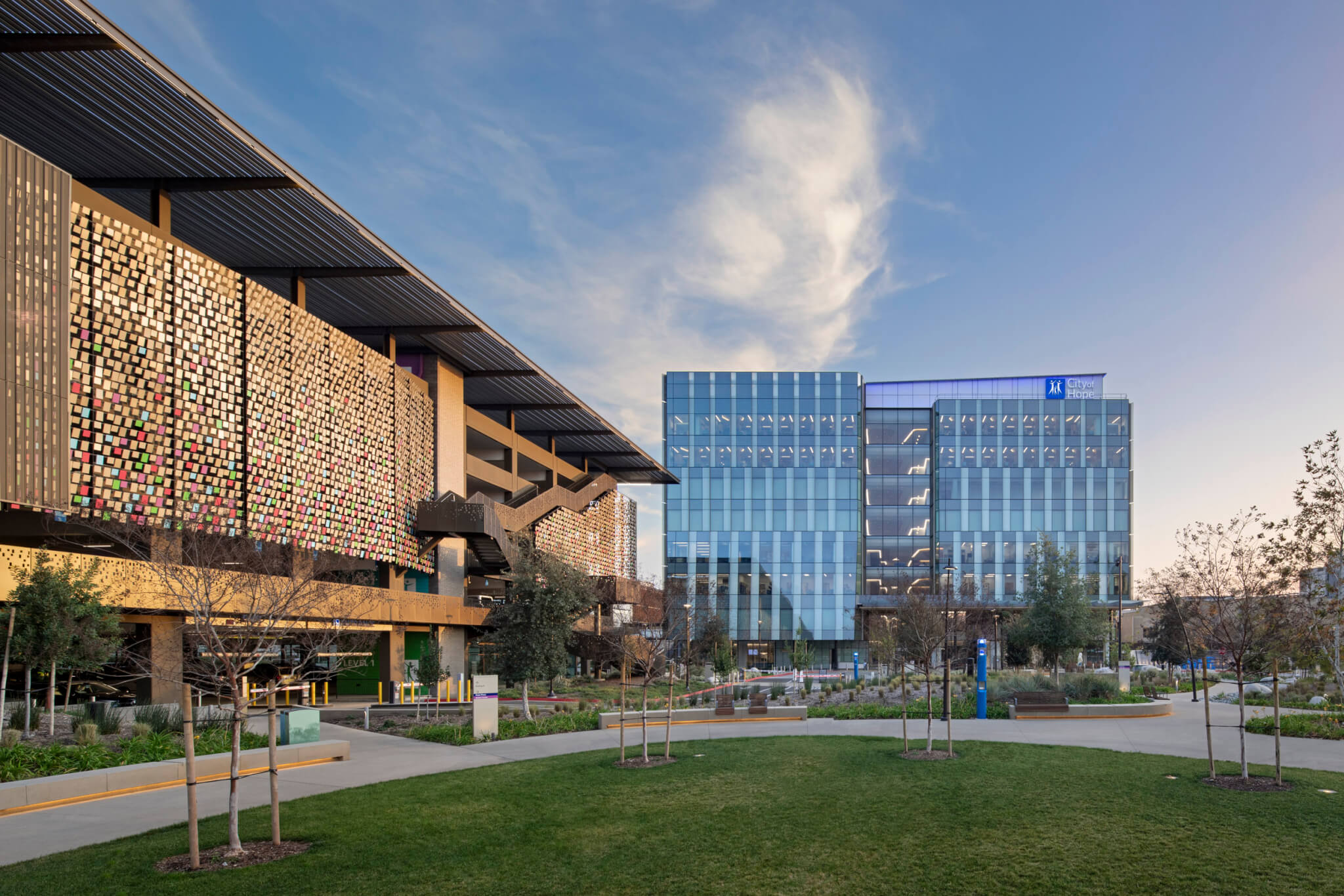
In conforming to its landscape and adapting principles of biophilic design, Hope Plaza appears as autogenous as any natural flourish of beauty—an artfully balanced rock, a gently sloping mountain, a quiet stream through a canyon.
Project Specifications
→ Continue reading at The Architect's Newspaper

