
During the pandemic, consumer demand for hotel rooms plummeted. In New York, politicians quickly brainstormed other uses the shuttered commercial properties could serve, resulting in projects like Baisley Pond Park Residences—a former Hilton Hotel in Queens that was recently repurposed into affordable housing for low-income and formerly homeless residents.
Comparable projects are underway on the west coast, too.
Lehrer Architects LA has transformed a Motel 6 in Los Angeles into Hacienda Heights—fully electric, supportive housing for individuals experiencing or at risk of homelessness. The client W.O.R.K.S. is a mission-driven developer. Studio MLA was the landscape architect.
The adaptive reuse initiative happened thanks to Project Homekey, a California initiative aimed at flipping hotel properties into long-term housing options.
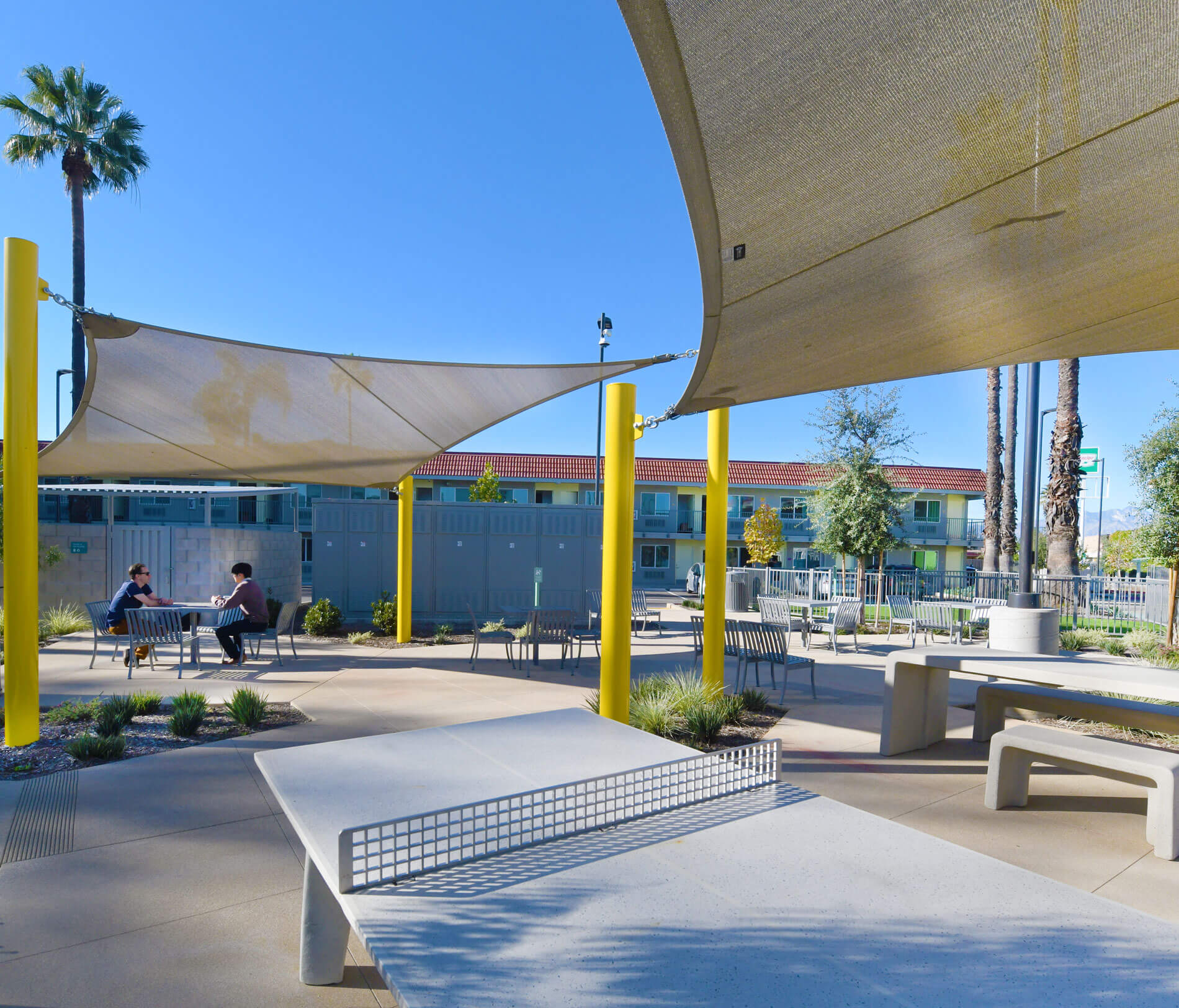
Hacienda Heights in eastern L.A. County comprises 144 units of permanent, self-contained housing for individuals to live full time. The former Motel 6 had its walls lacquered in vibrant colors, and the architects also ideated a garden, play and gathering spaces, bike racks, a dog park, a community room, and an outdoor exercise area.
The original Motel 6 had 150 rooms. Its close proximity to a freeway posed a significant quality of life challenge for the architects. Moreover, the original building stucco contained asbestos which had to be removed.
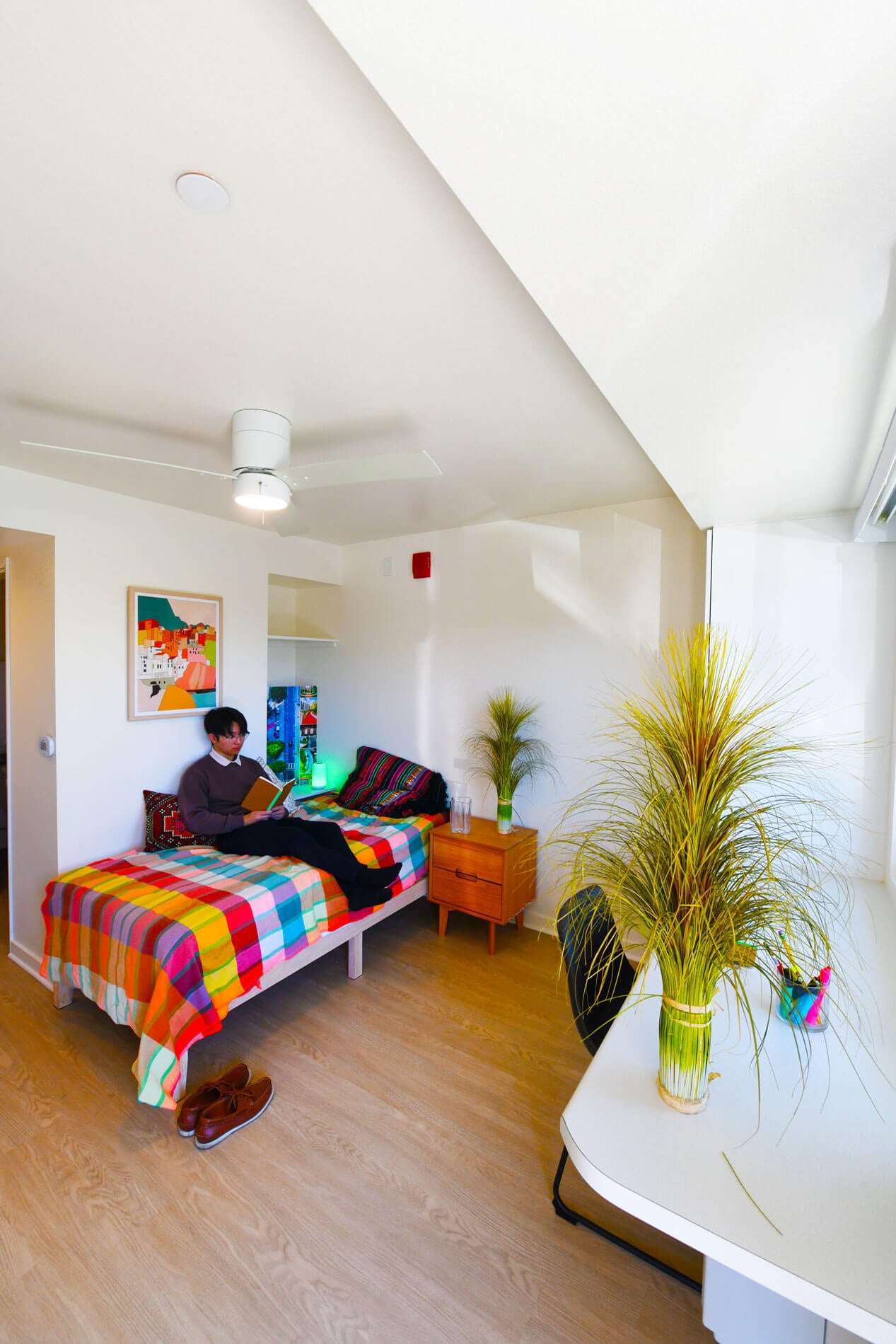
Part of the challenge for the architects was converting the motel rooms into self-contained studios equipped with essentials for independent living. Lehrer Architects ultimately designed 13 unique unit types for the rooms that range in size from 200 to 475 square feet.
Each of the units has a bed, closet, extended desk, and remodeled bathroom, as well as a kitchenette with a sink, oven, range, microwave, and storage.
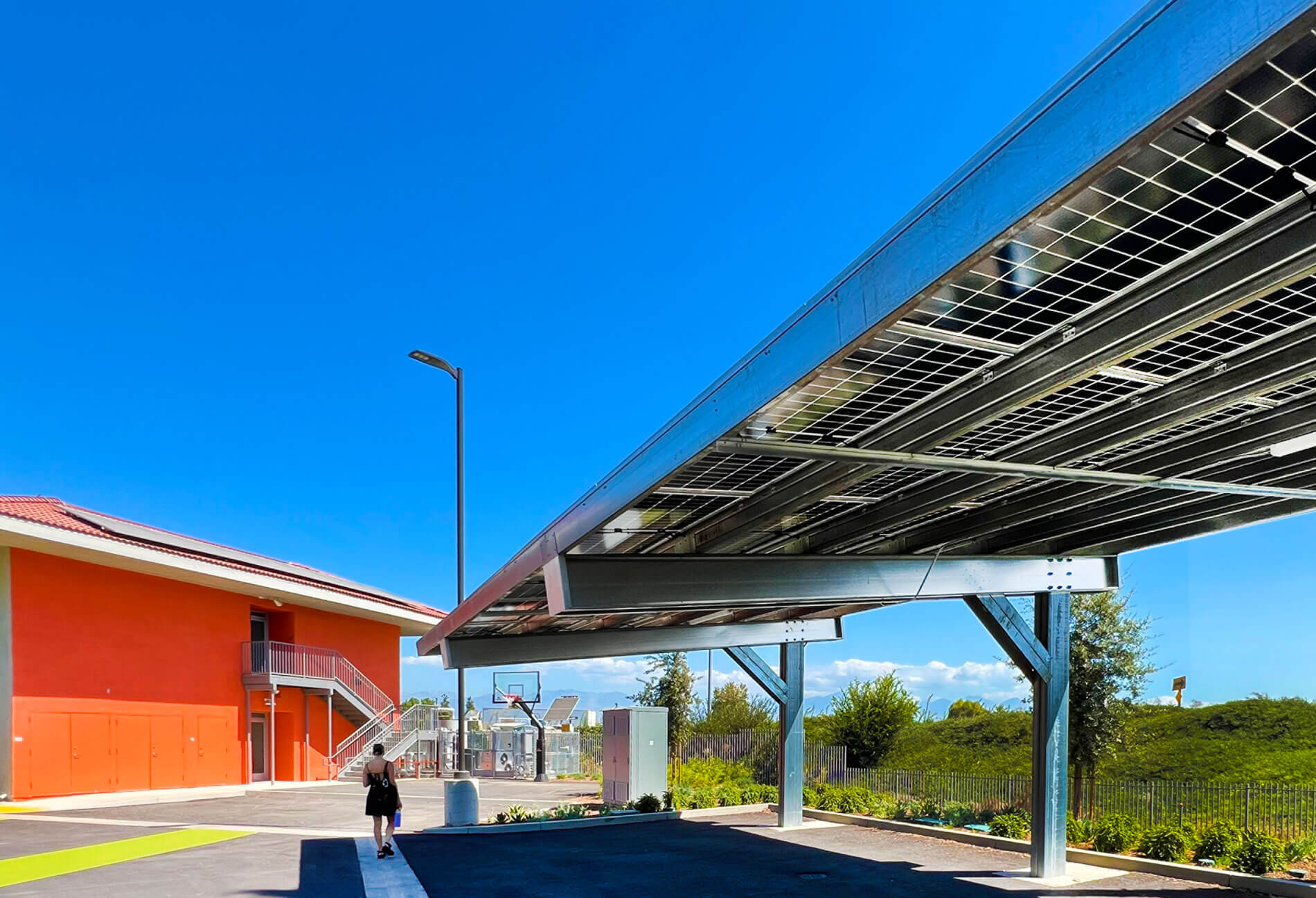
Windows were installed that exceeded acoustic code minimums in order to combat noise from the freeway. An additional roof structure was employed to support the weight of solar panels, and solar canopies cover much of the parking area. These systems help reduce building energy consumption by 75 percent in comparison to the old hotel.
“The simple and profound problem was to take a blighted place—originally designed as a motel that was to be actively seen by the myriad folks always on the freeway—and transform it into a welcoming, joyous, wholesome site, honoring and celebrating the full range of people who are the community of Hacienda Heights, Lehrer Architects LA founder and principal Michael B. Lehrer said in a statement.
Lehrer Architects LA has a long track record of completing projects for the disadvantaged: It previously worked on a supportive housing complex for veterans as well as several transitional housing projects in California.
Another unifying feature of the firm’s work is its signature use of vibrant colors, as was the case with Hacienda Heights.
→ Continue reading at The Architect's Newspaper

