
The tony University Section of New Orleans is home to two educational institutions, Loyola University and Tulane University. They are directly adjacent to each other, but bigger, richer Tulane casts a shadow on Loyola’s 24-acre main campus, which is hemmed in by Tulane on one side and high-end residential on the other. “Loyola’s campus is like the little brother,” John P. Klingman, professor emeritus of architecture at Tulane’s School of Architecture, told AN. “The two universities should have more interaction with each other, but they don’t.”
Now, a new building by Trahan Architects promises to put Loyola on the map architecturally. The recently completed Chapel of St. Ignatius and Tom and Gayle Benson Jesuit Center is steeped in Jesuit symbolism: Firm founder Victor F. “Trey” Trahan III began with a “series of circles” that intersect and create interstitial forms like the fish, a representation of Christ.
“We embraced the elements of Jesuit references, like chance and unpredictability,” Trahan said. “We like design that is imbued with mystery.” Brad McWhirter, partner at Trahan Architects, added, “We studied the Gothic vernacular of the campus and decided we didn’t want to replicate it. We wanted a sacred space, an architecture of chance that is a beautiful thing.”
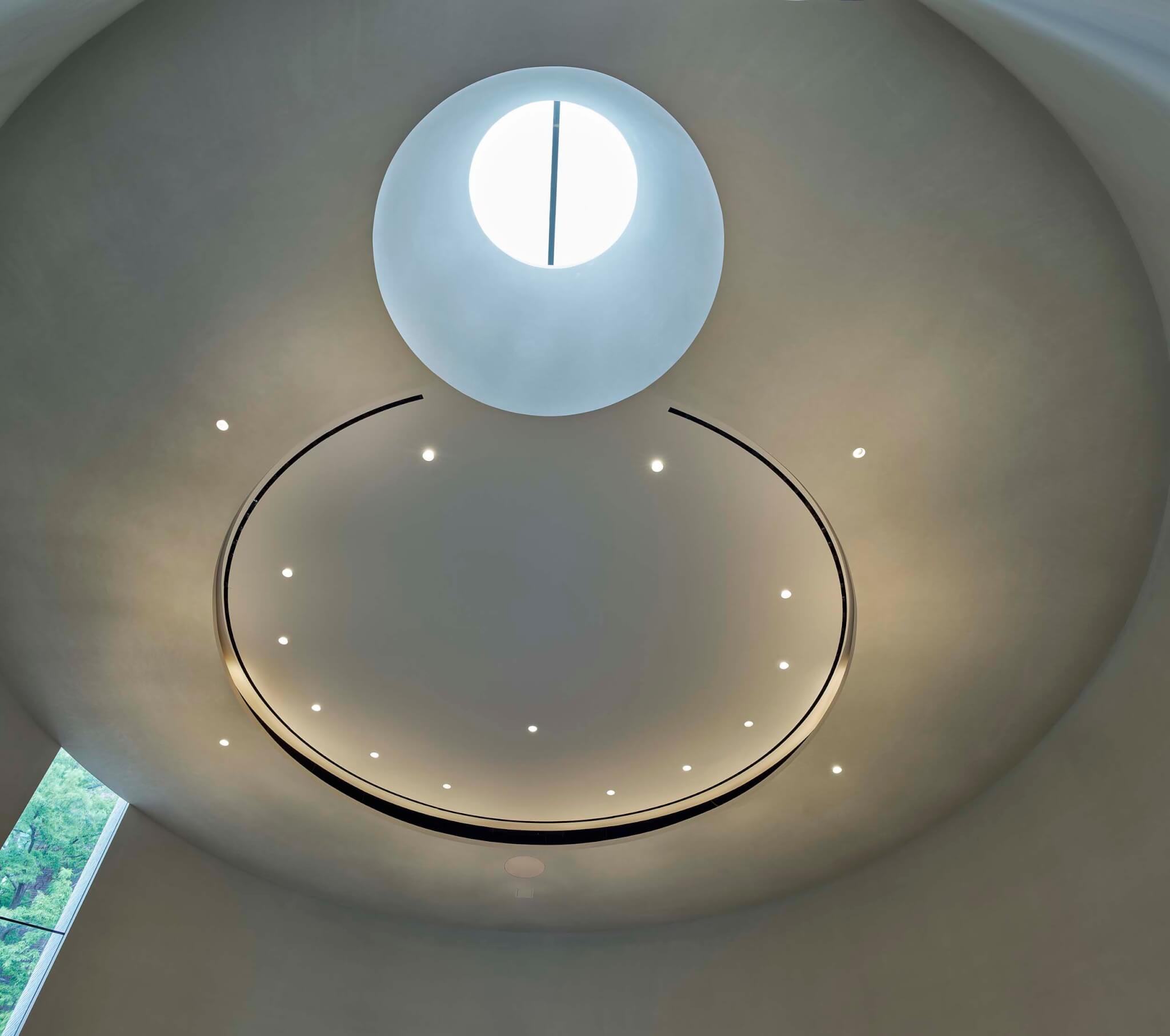
Trahan admits to a strong Japanese influence; the country was a historic site of Jesuit proselytization, as dramatized in Martin Scorsese’s Silence. “The Japanese know about humility in design,” Trahan said. One particularly important text was Jun’ichir’ō Tanisaki’s In Praise of Shadows, which states that “artificial light erodes our souls.” To deliver the necessary natural light, the architects included five vertical windows around the perimeter of the facade, plus a central skylight.
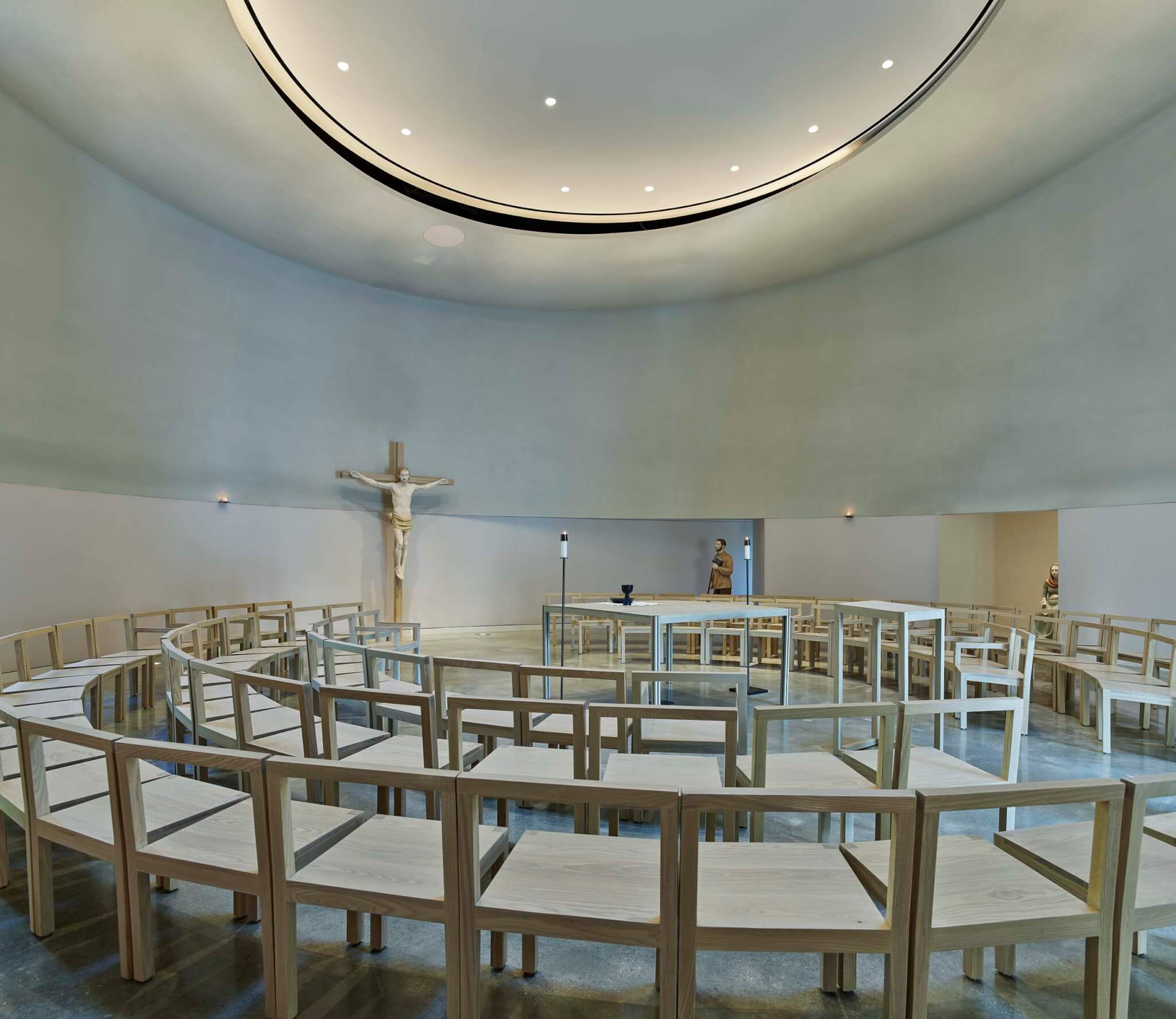
Located on the site of the former library at Loyola, the round, 4,620-square-foot chapel at first seems out of place, even jarring. Trahan said the geometry removed linear hierarchies and enabled a circular seating layout. Axes are used in conjunction with the circles to reinforce connections to the adjacent campus quad, a circular landscape feature that utilizes palm trees, and the chapel altar. Trahan Architects, with the assistance of Paris-based design studio Goons, designed the movable, stackable white ash chairs for the interior. The various liturgical vessels, including chalices, stands, crosses, and the baptismal font, were realized by Trahan Architects working alongside artisans.
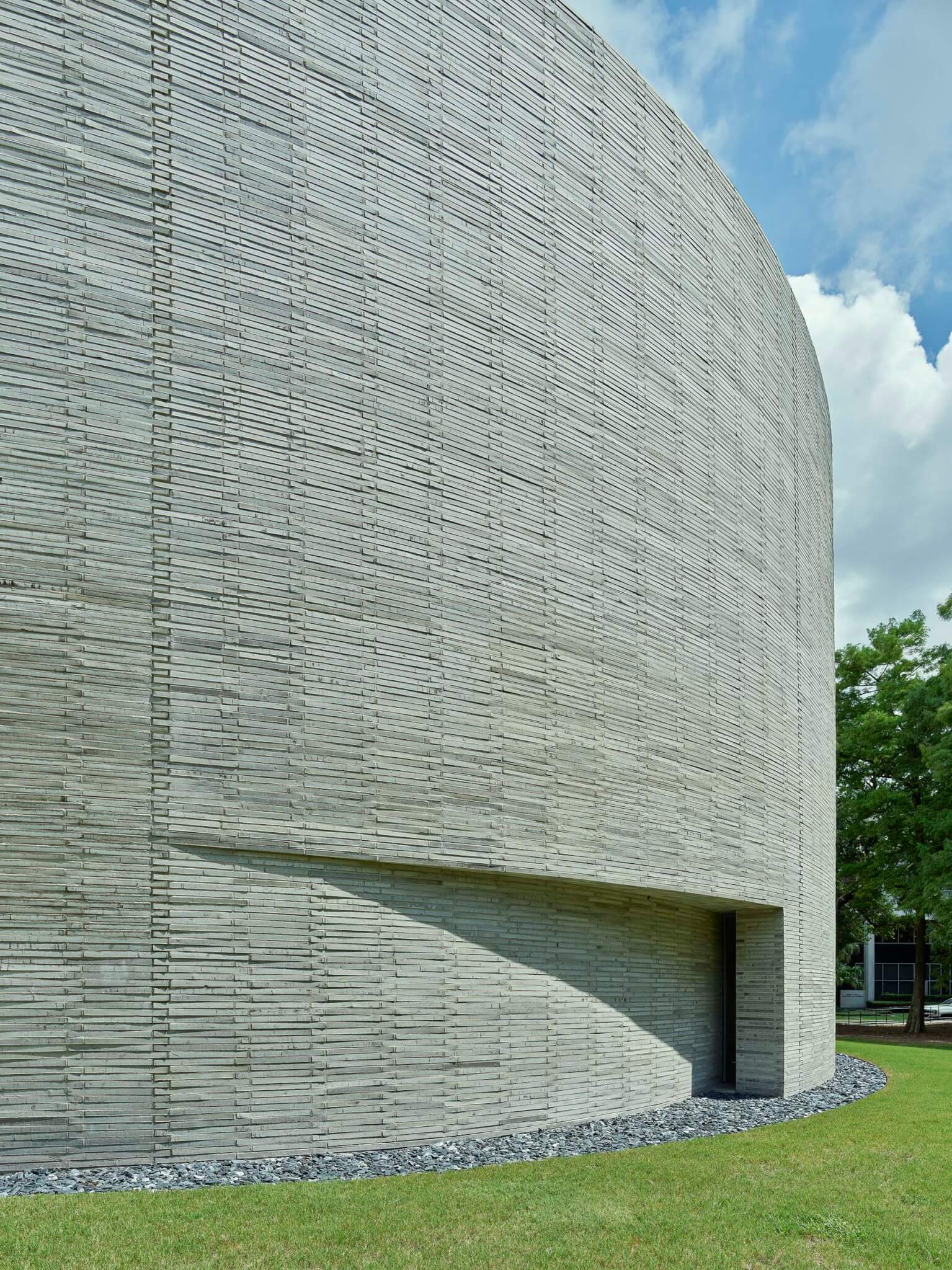
The exterior brickwork, too, has deep roots. According to McWhirter, “The introspective solitude of St. Ignatius found kinship in the Japanese artistry with tea bowls, which are made with clay and hand formed. These early conceptual ideas for the chapel led us to embrace the original brick buildings of the Loyola campus. We arrived at a design in which the bricks are hand-made terra-cotta produced in Italy. They are thin with a translucent with a white glaze that hints at the underlying red clay body.”
Due to its roundness and brickwork, the Loyola chapel first calls to mind Eero Saarinen’s chapel at MIT. But retired Tulane professor Klingman, while stating that the Loyola chapel is “serene and elegant,” noted definite distinctions between the two works. “Saarinen was so capable of creating a procession,” Klingman said. “You enter into a transitional space and then into the cylinder. At Loyola, you just enter the narthex and you’re right there, with no transitional space whatsoever.”
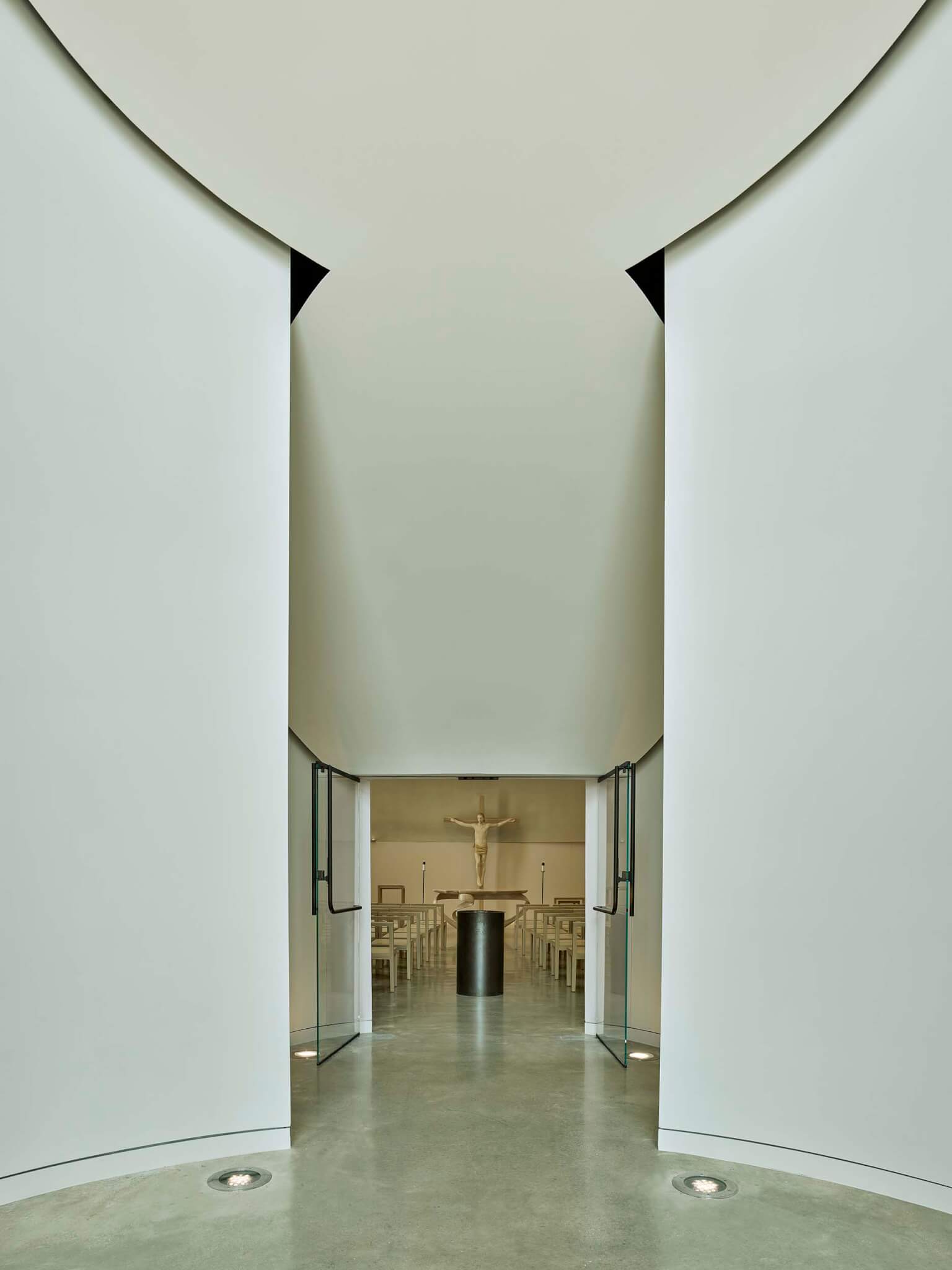
Upon entering on either side of a sharp, cross-shaped metal form set in front of the glass, the brick-faced facade conceals a structural surprise: The chapel is supported by cross-laminated timber, which marks the first use of this system in Louisiana. Unlike in other mass timber buildings, this aspect is aesthetically suppressed: No timber is visible, inside or outside.
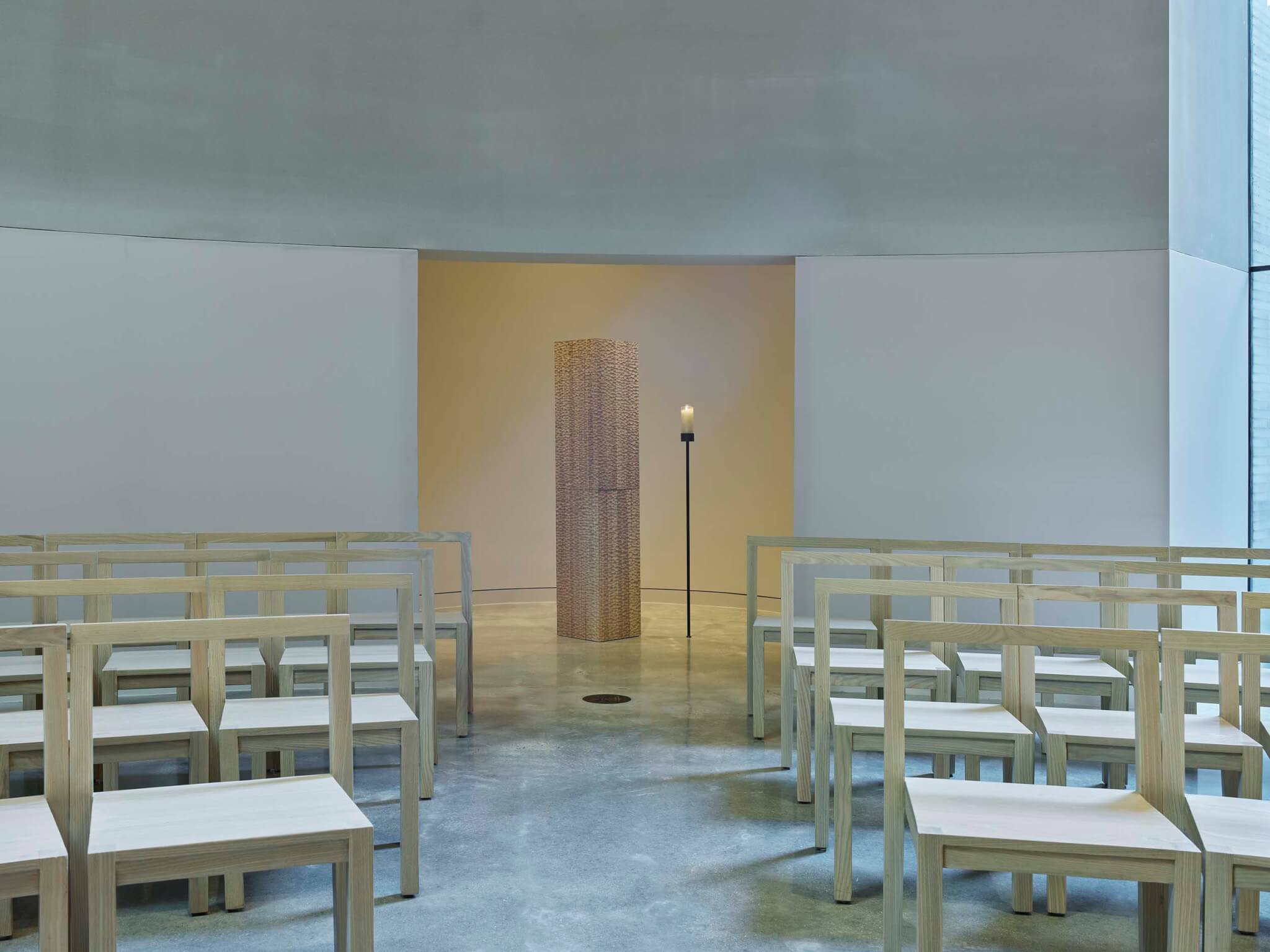
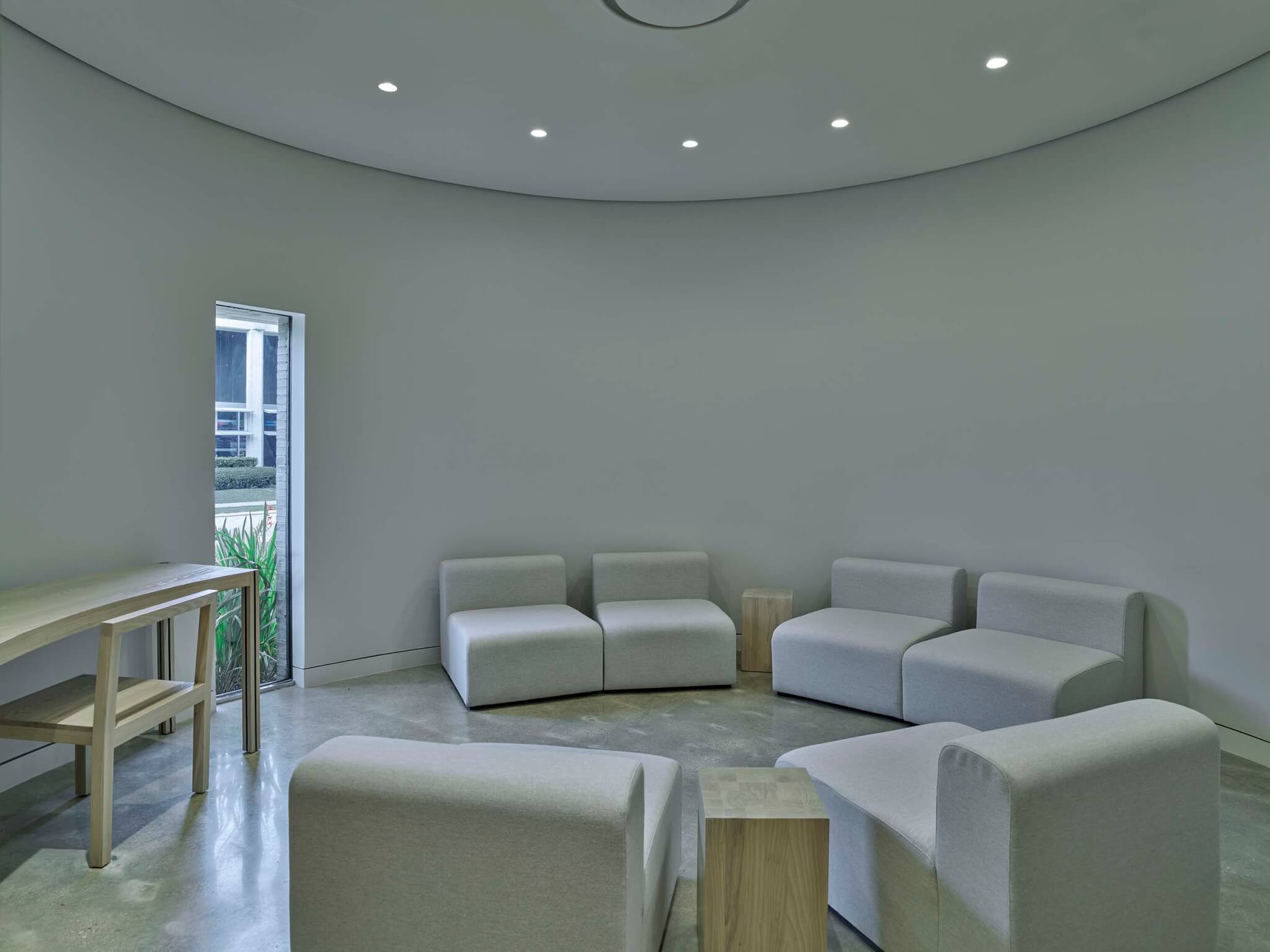
Inside, a slicing ceiling directs your view into the chapel and the frontal altar. The main sanctuary is a complete circle, while an arcing community space is trimmed by the perimeter wall. Additional circular rooms make up the rest of the interior, with the interstitial space between the rooms given over to storage, services, and the sacristy. Two Marian chapels branch off the main space, and other areas include a vestibule, a multi-purpose room, a eucharistic chapel, and a restroom.
The circular theme continues with the bricks, McWhirter said: “They are imperfect, and by arraying them on the circular plan of the chapel they produce a different effect from the campus architecture while simultaneously referencing the brick details of the campus. Every corner on the chapel is executed with a full lapped brick, which creates the signature ‘zipper’ coursing pattern you see on the facade.”
Beyond the brickwork, the Loyola chapel was the fruit of many talents. A Brooklyn ceramicist crafted the liturgical accoutrements like chalices, and Bruno Walpoth, an Italian sculptor, executed statues of St. Ignatius and the Virgin Mary. “The St. Ignatius statue depicts him exiting from a cave,” McWhirter said, referring to the Spanish cave where the saint formulated his spiritual exercises. (The story was also inspirational for a 1997 chapel dedicated to the saint on the campus of Seattle University, designed by Steven Holl Architects.)
For his part, Trahan sees the chapel as an exercise in openness and progressive ideas. “It was how to create a place that was about equity,” he said. “For Catholics, when you cross the threshold, you are announcing your faith.”
McWhirter added, “The chapel is an exercise in openness. All are welcome here.”
James McCown was an architectural journalist and the author of The Home Office Reimagined: Spaces to Think, Reflect, Work, Dream, and Wonder (Rizzoli, 2024).
Editor’s Note: James McCown filed this text in 2025 prior to his death on December 14, 2025. Read his AN obituary here.
→ Continue reading at The Architect's Newspaper

