
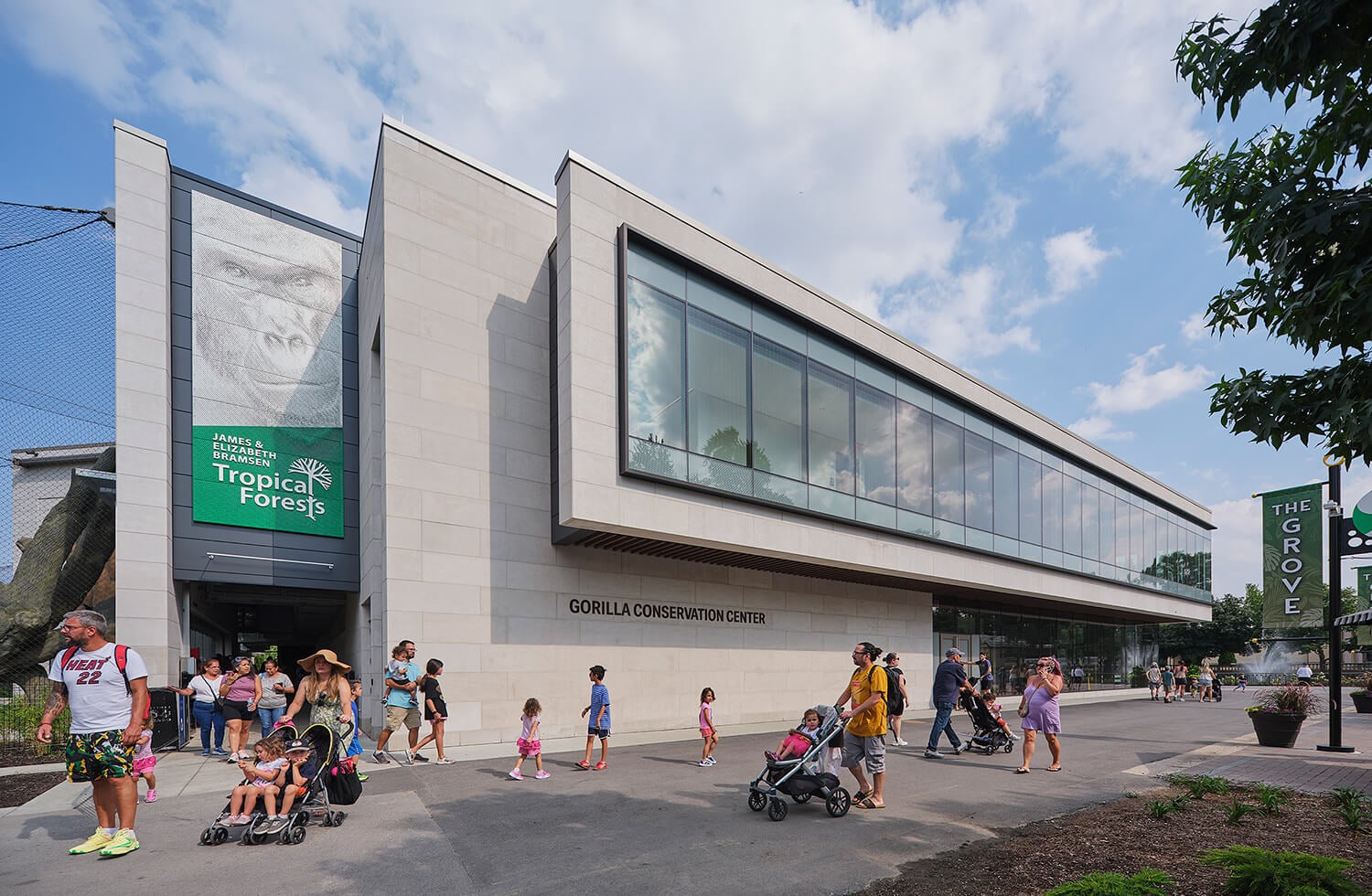
Chicago-based Goettsch Partners, working with exhibition designer Stantec, completed the James & Elizabeth Bramsen Tropical Forests, a $66 million, three-acre primate habitat at Brookfield Zoo Chicago. The zoo’s largest project since its opening adds four outdoor habitats, a 2-story 30,000-square-foot building addition with a Gorilla Conservation Center, and behind-the-scenes care facilities to the west side of Tropic World—one of the largest indoor habitats in the world when it opened in 1984. The habitat opened to the public this past summer.
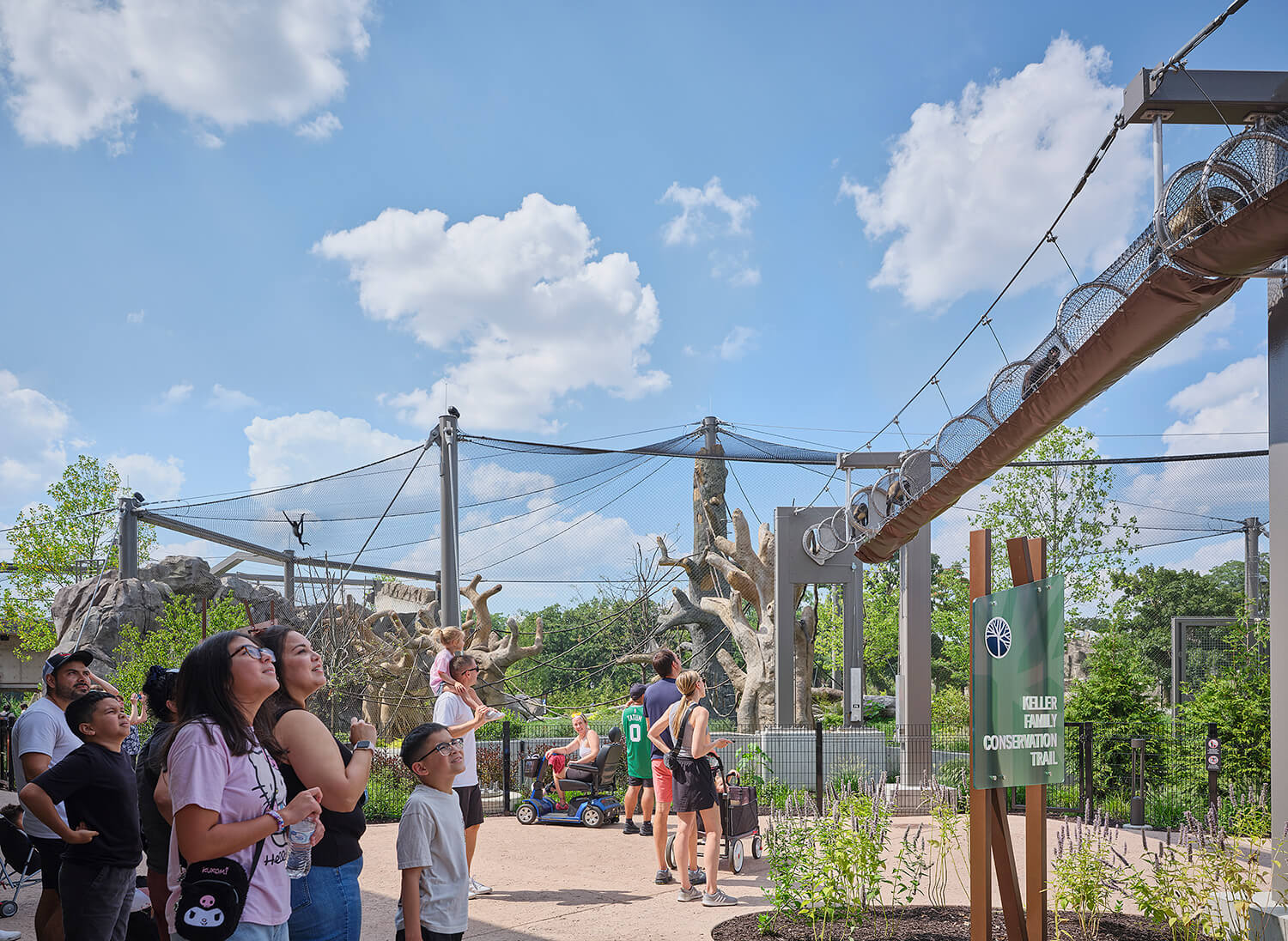
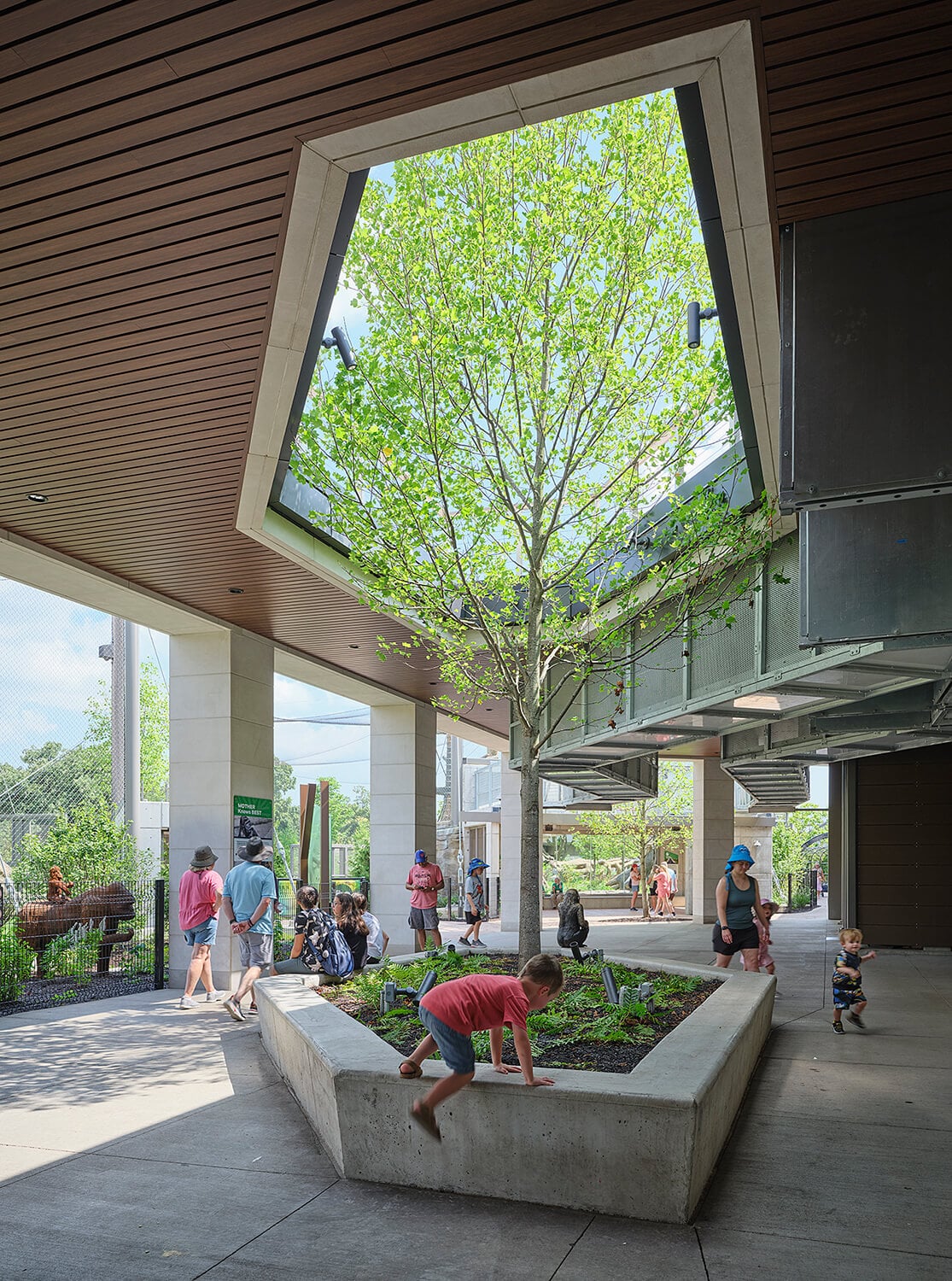
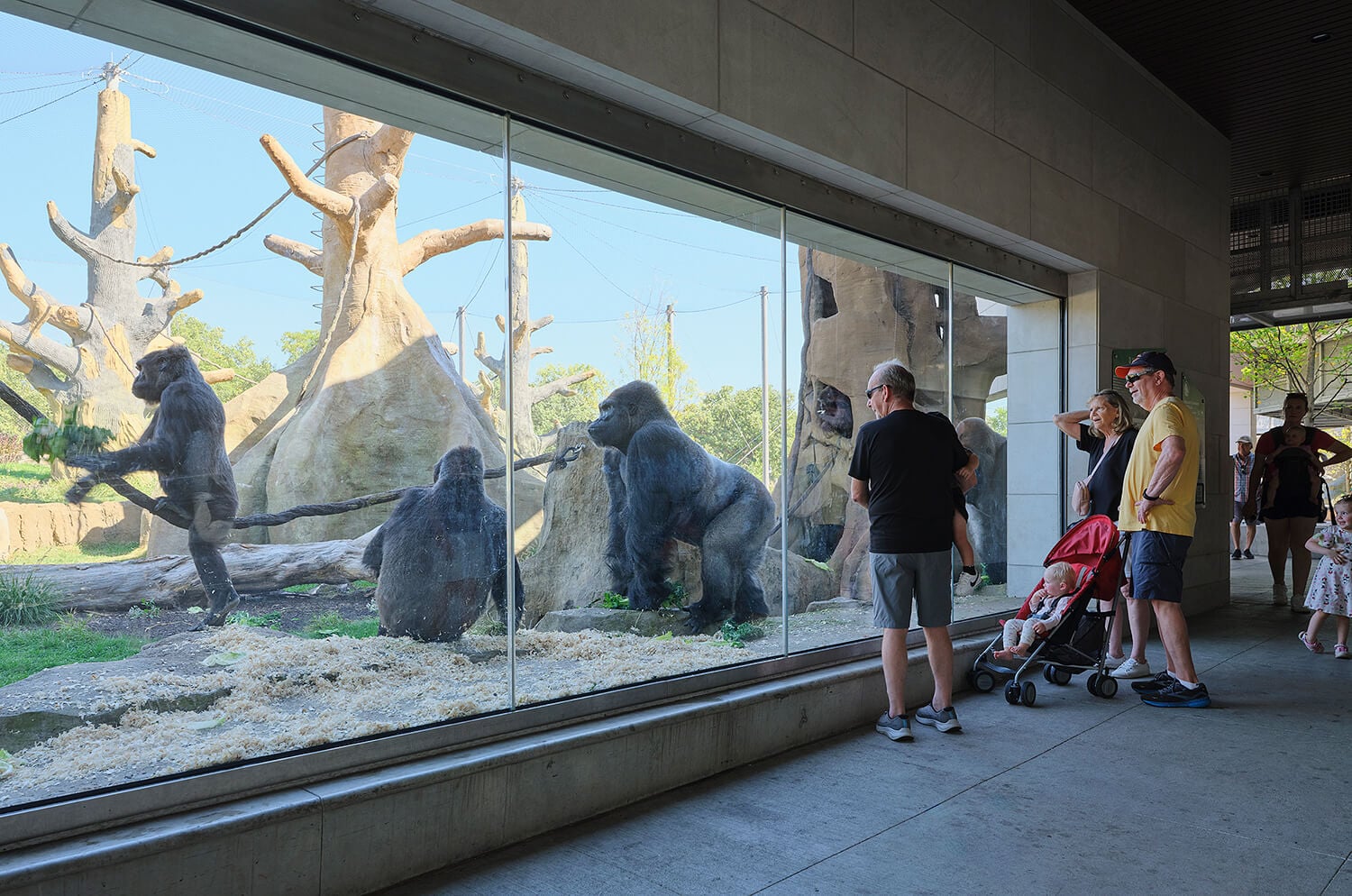
The outdoor enclosures house western lowland gorillas, Bornean orangutans, white-cheeked gibbons, and South American monkeys across four rainforest environments inspired by Africa, Asia, and South America. Mesh aviary-style structures define the habitats, with terrain variation, water features, heated rockwork, and climate-adaptive plantings. Five viewing shelters offer points of encounter between visitors and primates, while the Gorilla Conservation Center provides dedicated space for education and conservation alongside indoor habitats and an event space with views to the enclosures.
“This extraordinary space not only provides an incredibly dynamic and enriching environment for the animals in our care but also inspires guests to understand and protect some of the most endangered species on the planet,” said Dr. Mike Adkesson, president and CEO of Brookfield Zoo Chicago.
The project is the first completed phase of the zoo’s Next Century Plan, a master plan led by Booth Hansen and Jones & Jones that AN covered when it was unveiled in 2024. That $400 million plan envisions redeveloping more than 100 acres, nearly half the zoo’s property. Zoos are peculiar places, among the few where the supposed divide between nature and culture is not just questioned, but physically inhabited. They are thresholds where visitors step into constructed worlds meant to approximate wild ones, spaces that beckon a world structured not around human experience alone but around the lives of other species.
Goettsch Partners, a firm tracing its lineage to the Chicago practice started by Mies van der Rohe in 1938, describes the habitat in terms of “advanced habitat engineering,” “immersive spatial design,” and “contextual experiences for visitors,” language that keeps the human gaze at the center. Gray hardscape dominates the enclosures and they read less as living ecosystems than as carefully staged displays. The mesh walls and glass panels separating visitors from primates recall museum dioramas as much as forest canopy. Quieter in the narrative are the zoologists and conservation biologists whose work presumably shaped enclosure dimensions and the social configurations that allow a captive primate to approximate something resembling a natural life.
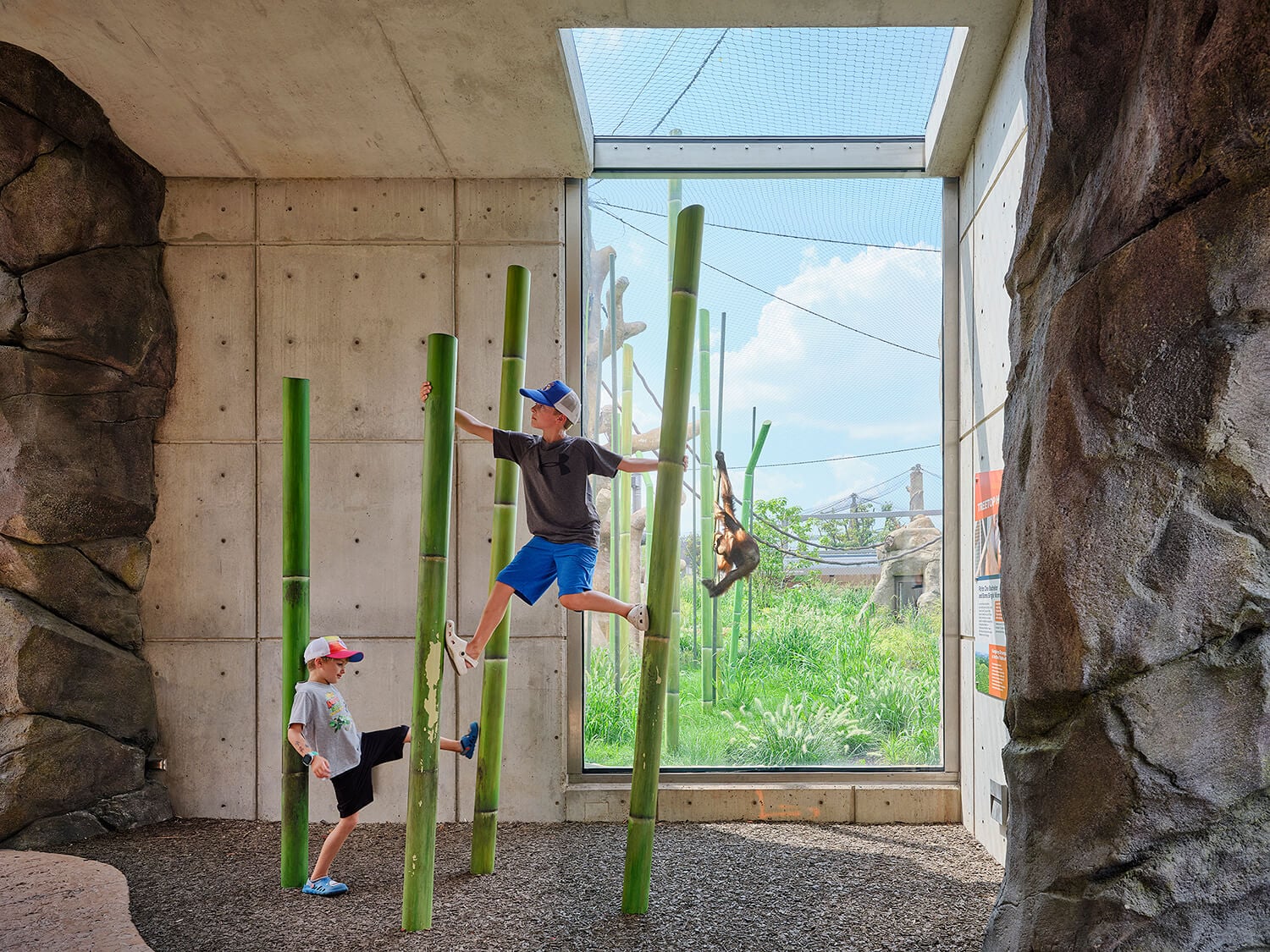
This is not unusual for zoo architecture, but it is worth lingering on—especially at a moment when the field is asking questions about designing for nonhuman lives. Primates, our closest living relatives, make these questions vivid and the stakes especially high. In an upcoming talk, zoo architect Megan Nielsen Hegstad argues that forward-thinking zoo design should begin not with spatial programming, but with “understanding animal psychology and behavior,” giving species autonomy through choice and control.
It is a call for multispecies cohabitation—architecture that treats animals not as subjects of spectacle but as cohabitants whose needs shape the building from the inside out.
→ Continue reading at The Architect's Newspaper

