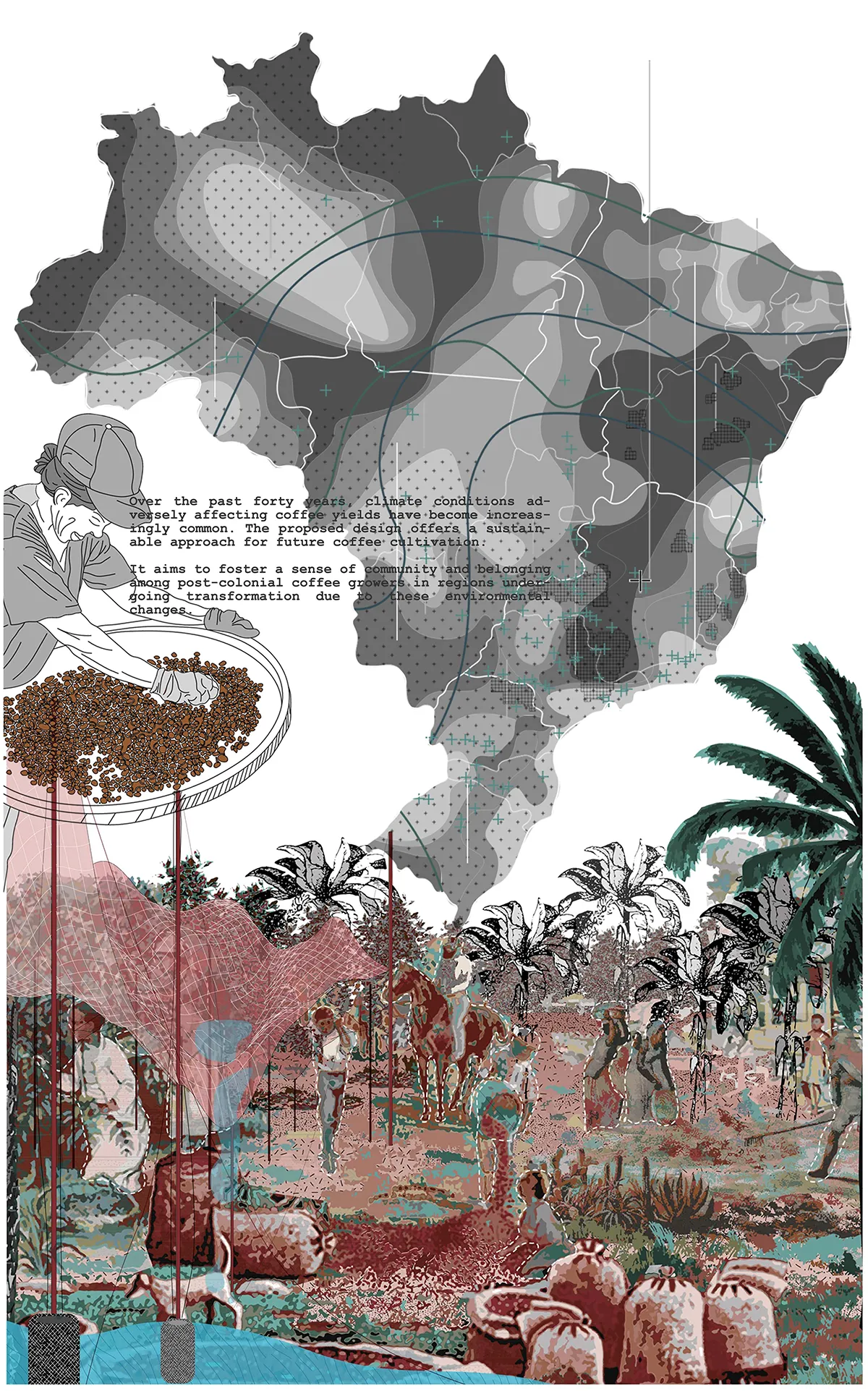
Coffee, a high-value crop, holds considerable economic importance and consistently ranks among the top three legal exports globally each year. With annual global production hovering around 150 million sacks, Brazil is the leading producer, accounting for over one-third of this total. Given its status as a prominent commodity, the cultivation and processing of coffee beans on plantations have been marked by complex challenges. These include significant concerns over the human rights of the labor force and the environmental impact of coffee production.
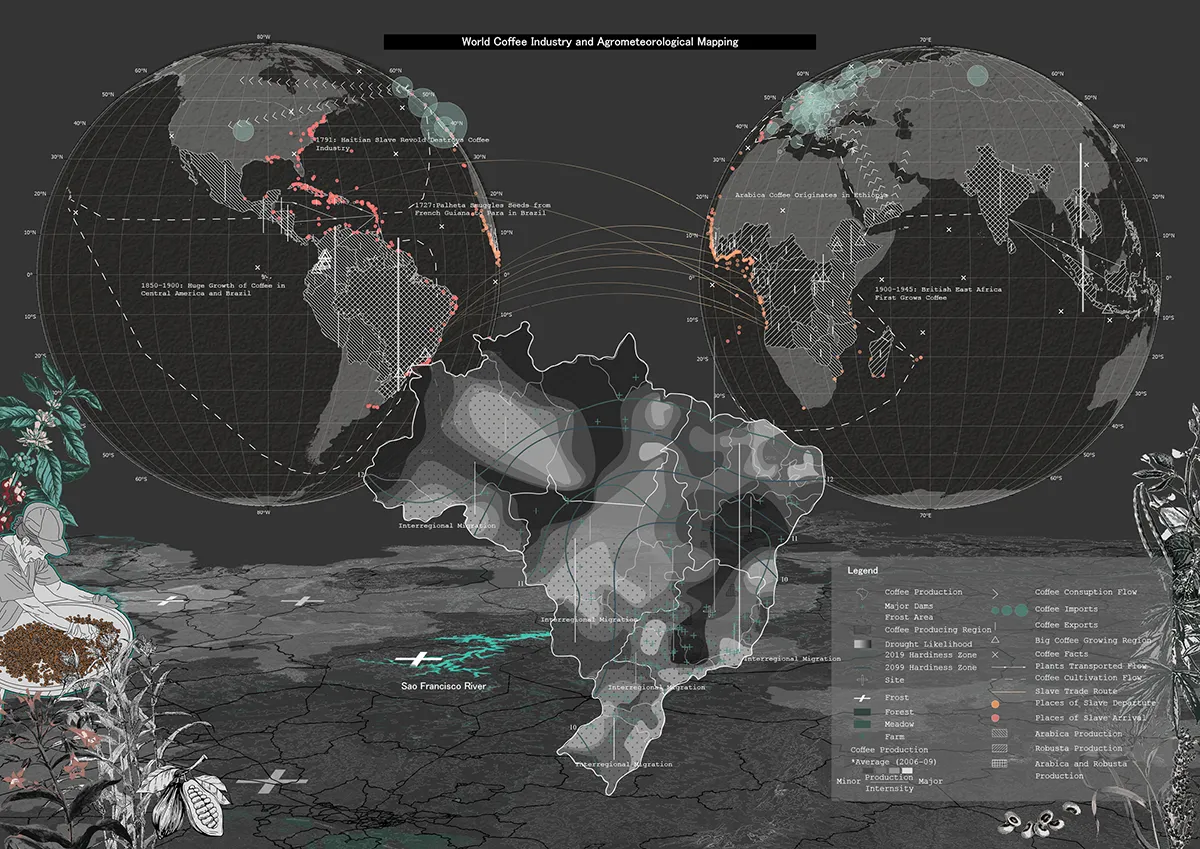
Over the past 40 years, climate conditions that adversely affect coffee yields have become increasingly common. The escalating temperatures resulting from global warming are anticipated to cause continuous systemic disruptions in worldwide coffee production. Frost, a hazard to coffee trees since their introduction to Brazil in the 18th century, remains a significant threat. The 2022 Brazilian coffee harvest, for instance, is projected to incur a loss of 10 to 12 million bags due to frost damage alone. In response to these climatic challenges, there’s a pressing need to innovate coffee production methods.
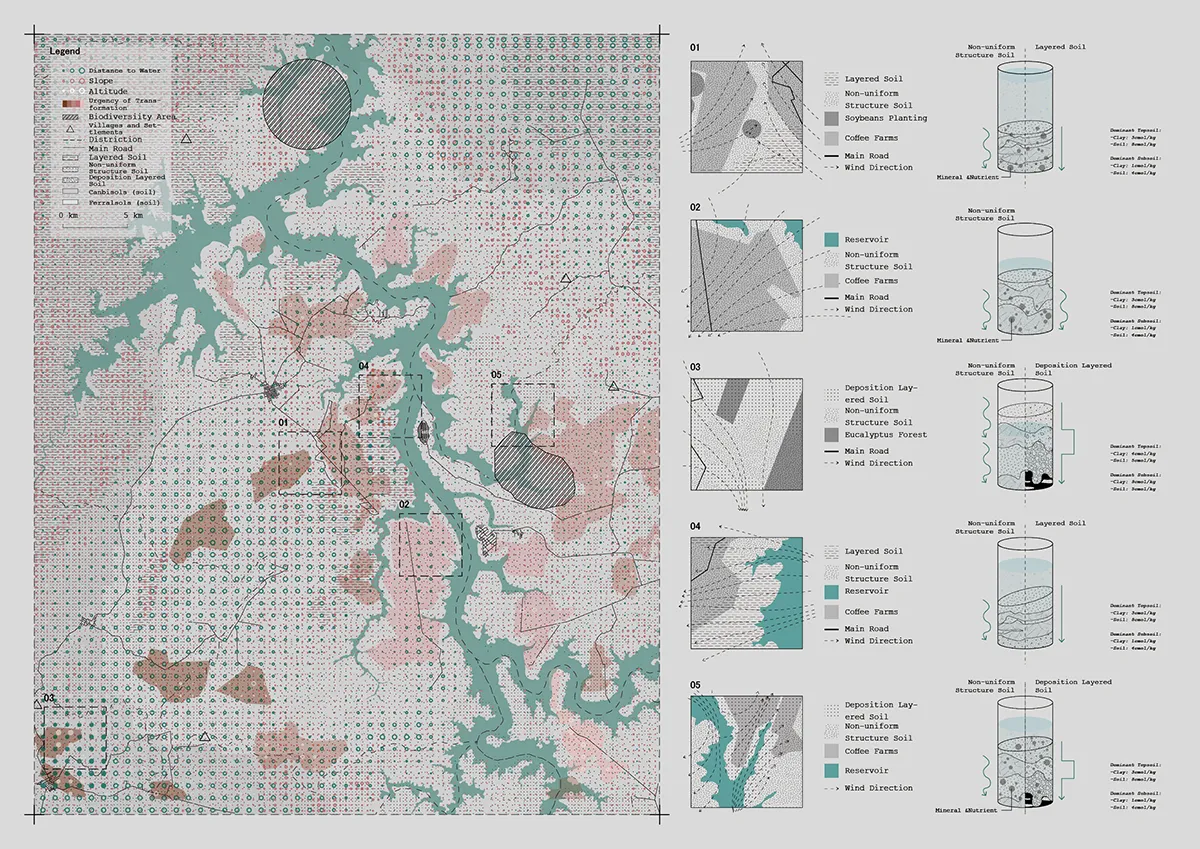
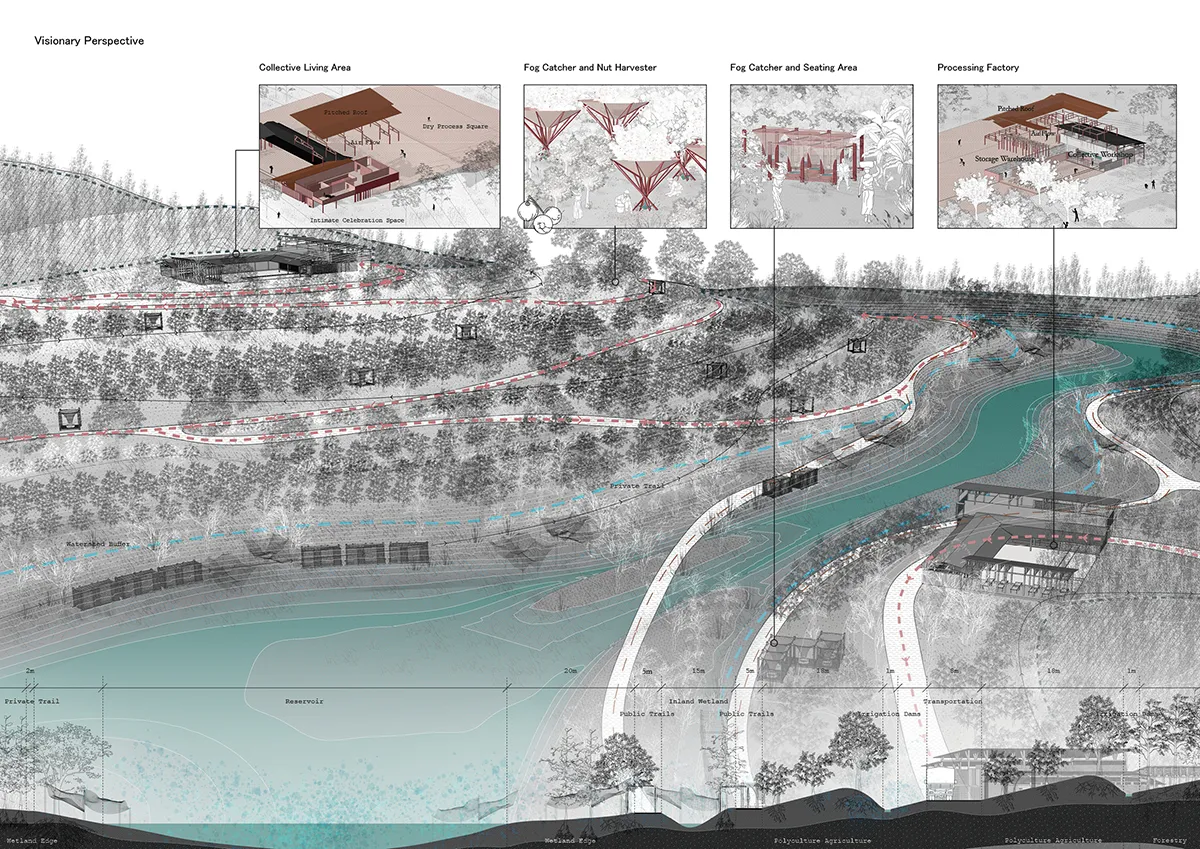
The proposed design envisions a sustainable framework for future coffee cultivation that adapts to both ecological and social transformations. By reshaping the terrain, the land is structured into distinct dry and wet zones, enabling diversified agricultural planting while strengthening resilience against environmental stressors. Landforms and strategically planted tree corridors work together to guide wind and fog through the site, forming natural wind valleys that shield coffee plants from frost, channel moisture for irrigation, and capture water for both daily and recreational use.
Beyond frost protection, these landform interventions also alter the microclimate. By providing shade and cooling, they create more comfortable living conditions for coffee cultivation and for the communities that depend on it. This approach reduces reliance on large-scale deforestation for climate adaptation, ensuring that ecological integrity is preserved while still addressing the future temperature rise.
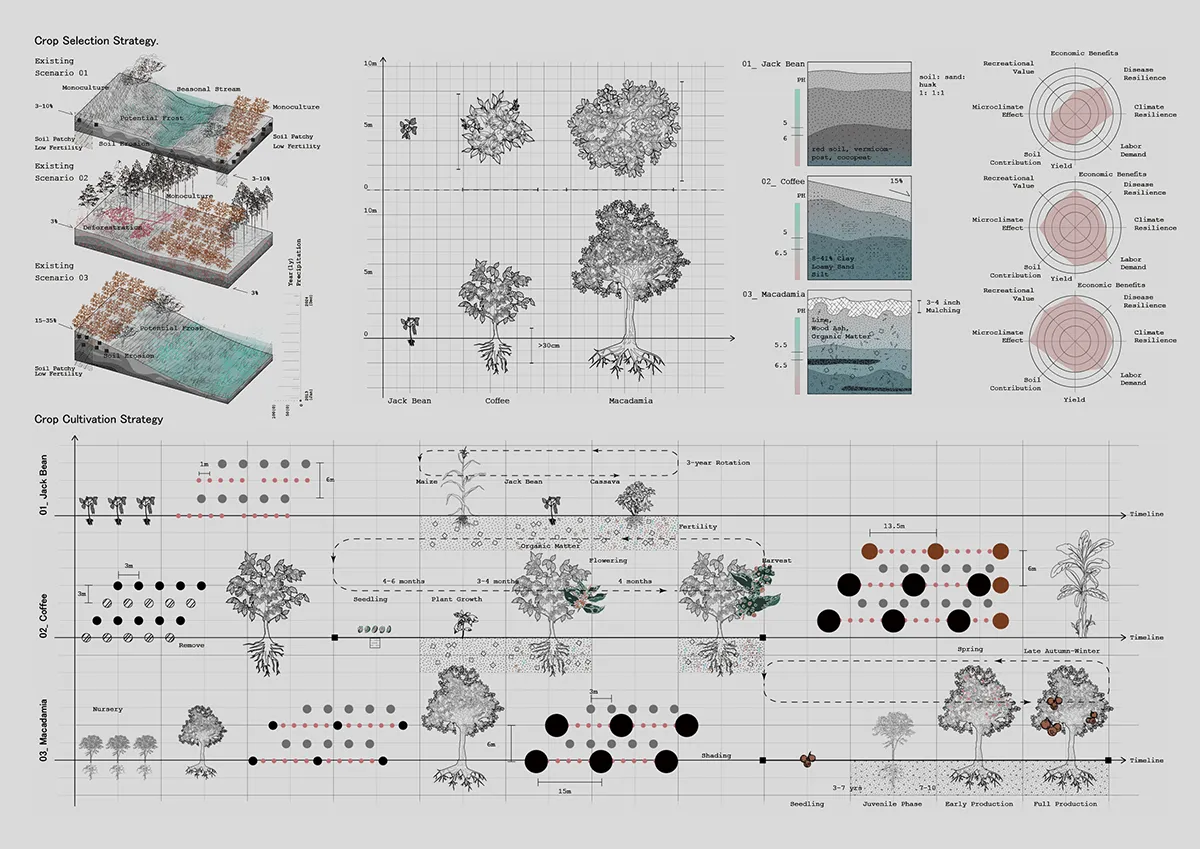
The planting process itself is conceived as a phased strategy. While transitioning away from vulnerable crops and replanting new species better suited to changing climates, growers are supported through substitute income streams, easing economic uncertainty during the shift. This gradual transition not only sustains livelihoods but also promotes ecological diversity within the farming landscape.
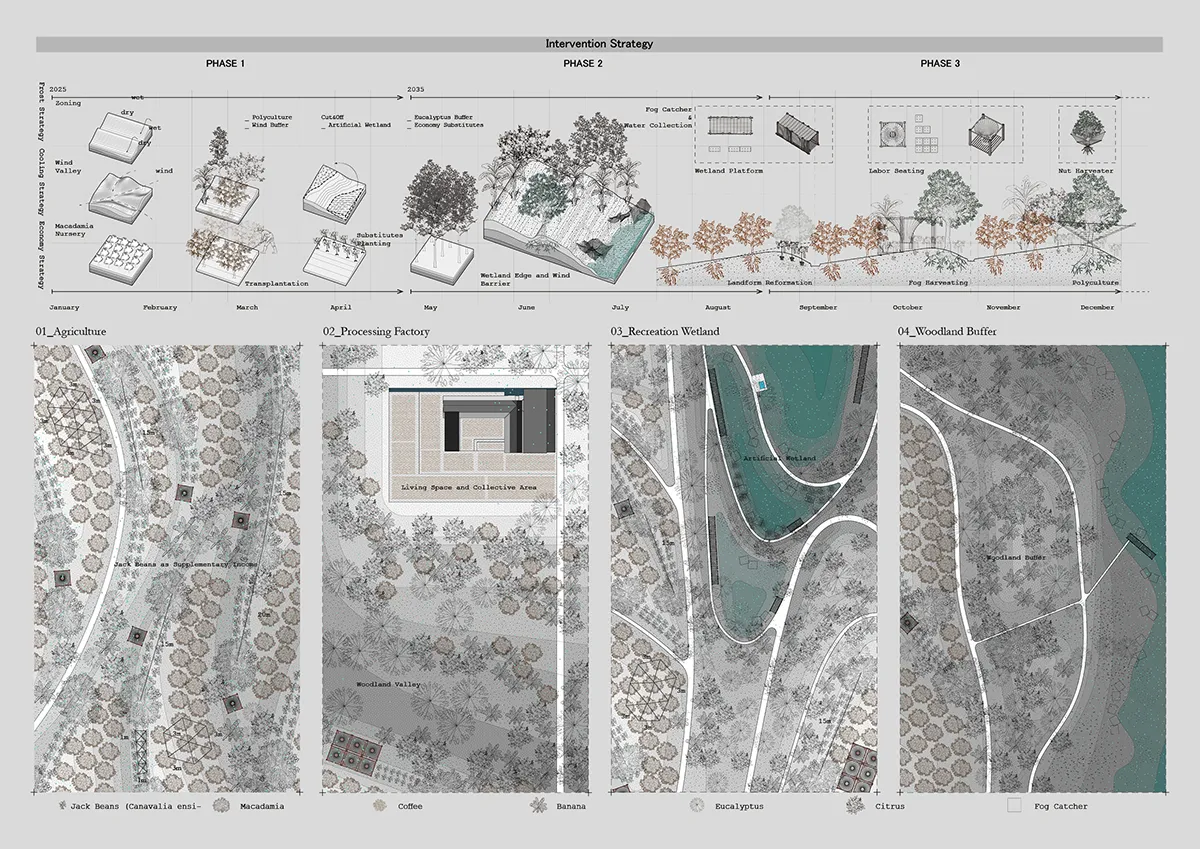
Water becomes both a functional and cultural element in the design. A series of fog catchers are introduced, each employing different methods of condensation to harvest water. Beyond their practical role, they double as shaded seating, gathering spaces, and recreational landmarks, blending labor infrastructure with social life. Trails and working platforms are integrated throughout the terrain to enhance worker efficiency while also creating opportunities for rest, gathering, and collective activity.
At its core, the design seeks to cultivate more than coffee: it fosters community resilience and belonging among post-colonial coffee growers navigating landscapes of change. Facing the challenges of climate instability and extreme weather, the project demonstrates how design can generate a sustainable balance between work and daily life—honoring the cultural heritage of coffee while preparing for an uncertain future.
Microclimate and Postcolonial Coffee Cultivation
Students:
Xinying Li – Harvard University Graduate School of Design
Qiulu Lin – University of Toronto
Supervisor: Jian Jiao
→ Continue reading at World Landscape Architecture