
Mayor-elect Zohran Mamdani on Tuesday defended his plan to end sweeps of the city’s homeless encampments, meeting with real estate developers and homelessness advocates as he seeks input on shaping his housing and homelessness policies before taking office next month.
Photo by Lloyd Mitchell
Mayor-elect Zohran Mamdani on Tuesday defended his plan to end sweeps of the city’s homeless encampments.
Speaking to reporters during a Dec. 9 press conference, Mamdani rejected earlier criticism from Gov. Kathy Hochul and Mayor Eric Adams, who have said enforcement must remain a tool to address public safety and sanitation concerns.
“What I’m opposed to is the failure that you’ve seen characterize the Adams administration’s approach,” he said. “What I’m opposed to is looking at an entire calendar year and seeing the Adams administration be unable to connect a single homeless New Yorker that was affected by those sweeps to permanent housing.”
Pressed on encampments in high-traffic areas, Mamdani said his administration would intervene only by providing guaranteed indoor alternatives, emphasizing that improving shelter safety is crucial to making indoor options more appealing than encampments.
“I don’t think pushing those New Yorkers to sleep elsewhere is the answer either. We have to create a policy that actually puts New Yorkers in a warm place, not just a marginal improvement in conditions,” he said.
“We need to ensure that when homeless New Yorkers look at their options, they no longer think that the best option for them is to sleep out on the bench like the one behind me, but instead to be in a shelter that is safer than the ones that we have today.”
Mamdani’s criticism of Mayor Adams’ sweep policy drew immediate pushback from the outgoing administration, with Deputy Mayor for Communications Fabien Levy calling Mamdani’s claim that sweeps failed to connect anyone to permanent housing “false,” stating that the city has placed 9,000 people in shelters from the subways alone and connected more than 4,000 New Yorkers from the streets to permanent housing.
“We all agree that there’s nothing dignified about living on the streets — particularly in this frigid cold — and we’ll continue to use proven methods to connect every New Yorker we can to a safe and stable home,” Levy said.
Levy added that more than 120 individuals were directly moved from encampments into shelter this year, while city efforts also focus on cleaning sites to maintain public safety and health.
While the Adams administration highlights its broader figures on moving homeless New Yorkers into shelter and permanent housing, THE CITY found that data specific to encampment sweeps shows that these operations have not produced a single permanent or supportive-housing referral in more than a year.
Mamdani talks to developers about affordable solutions
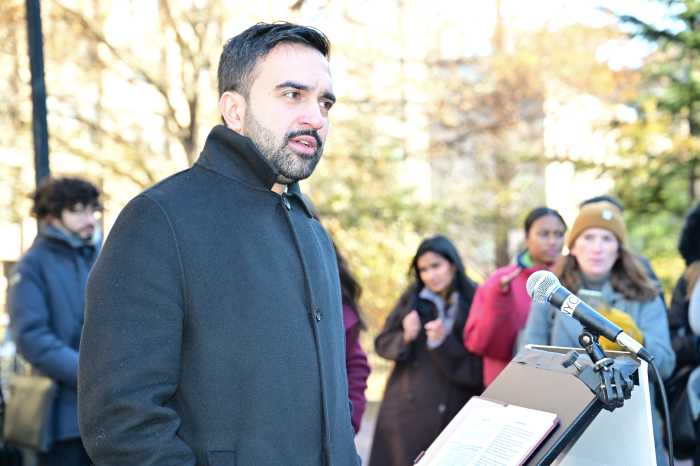
Mamdani held the press conference following a roundtable discussion he said he had with real estate developers and homelessness advocates as he seeks input on shaping his housing and homelessness policies before taking office next month.
The mayor-elect framed the discussions as a step toward collaborative solutions. However, his comments offered few exact details of how the policy will work in action and are, in the meantime, unlikely to appease critics who have warned that ending sweeps could worsen quality-of-life conditions in public spaces.
Mamdani said he discussed with developers ways to accelerate housing production and reduce bureaucratic barriers, citing challenges such as navigating multiple city agencies and the 252-day average wait to fill an affordable housing unit as evidence of systemic inefficiencies.
“The quicker we can fill those units, the fewer New Yorkers will be living outside,” he said.
“I spoke not only about my continued commitment to freeze the rent… but also my commitment to understanding the roadblocks they have faced with building more housing across the city,” Mamdani added.
Kathryn Wylde, president and CEO of the Partnership for New York City, stated that the roundtable included approximately 20 senior representatives from companies involved in financing and developing affordable housing.
Wylde said the Mayor-elect asked the group what the city government could do to encourage private investment in advancing his housing goals, including increasing the supply and reducing the time and cost involved in the construction and preservation of affordable housing. She noted that the discussion left participants “very hopeful that there will be openness to public-private collaboration in this administration.”
Later Tuesday, Mamdani met with New Yorkers who have experienced homelessness and longtime advocates to inform his plans for improving shelter conditions and expanding affordable housing.
→ Continue reading at amNY

