
After eight years of planning and development, Bridge Rockaway opened last fall in Brooklyn at the corner of Newport and Thatford avenues. The development is a new hybrid project that includes light manufacturing in its podium and supportive housing for low-income residents in the building above. The project was spearheaded by social service organization The Bridge, along with the Greenpoint Manufacturing and Design Center (GMDC). Think! Architecture & Design designed the 180,000-square-foot complex, which represents the first newly built configuration of its kind in New York City. “While the project is complex and layered, it demonstrates the potential for collaborations between multiple organizations, agencies, and architects to realize our client’s unprecedented vision,” said Think! Architecture principal Jack Esterson. Hopefully Bridge Rockaway serves as a model for future projects like this.
The project follows a concept, the hybrid urban factory, that I have been promoting through the exhibition (2011) turned book Vertical Urban Factory (2015), conferences at both Polytechnic University of Turin (2020) and Yale School of Architecture (2023), and the book Hybrid Factory/Hybrid City (2023). While Bridge Rockaway is still a one-off for the city, it shows a new openness to mixed-use buildings that incorporate light industry. In doing so, it aligns with the Department of City Planning’s support for making lighter, cleaner, and quieter industries integral to the new urban fabrication economy. This building initiative was approved last June in synergy with and complementary to the City of Yes for Economic Opportunity, an amendment to the city code aimed at revising zoning regulations to assist businesses.
After testifying at a city council land-use public hearing in 2016 on the potential to mix nonpolluting light industry with residential uses, and encouraged by Mayor Bill de Blasio’s idea of mandatory inclusionary housing, I developed the concept of mandatory inclusionary manufacturing, which requires affordable production spaces. The idea of a new type of mixed-use industrial building was not under consideration until 2018, when the TF Cornerstone teamed with GMDC to develop a market-rate site in Long Island City. The project was never built.
Other cities are pursuing this mix, as seen in Vancouver’s 2018 Strathcona village project, designed by GBL Architects, and initiatives throughout the city of Brussels, which is now an international model for vibrant new spaces for living and working. Affordability becomes the crucial issue for both housing and manufacturing space, which makes Bridge Rockaway stand out for this achievement.
The project was a gigantic undertaking that neither the nonprofits, the city, nor the developers could have imagined would take over two years of land-use changes and financing, plus an additional six years to complete construction. It is a miracle that it even happened.
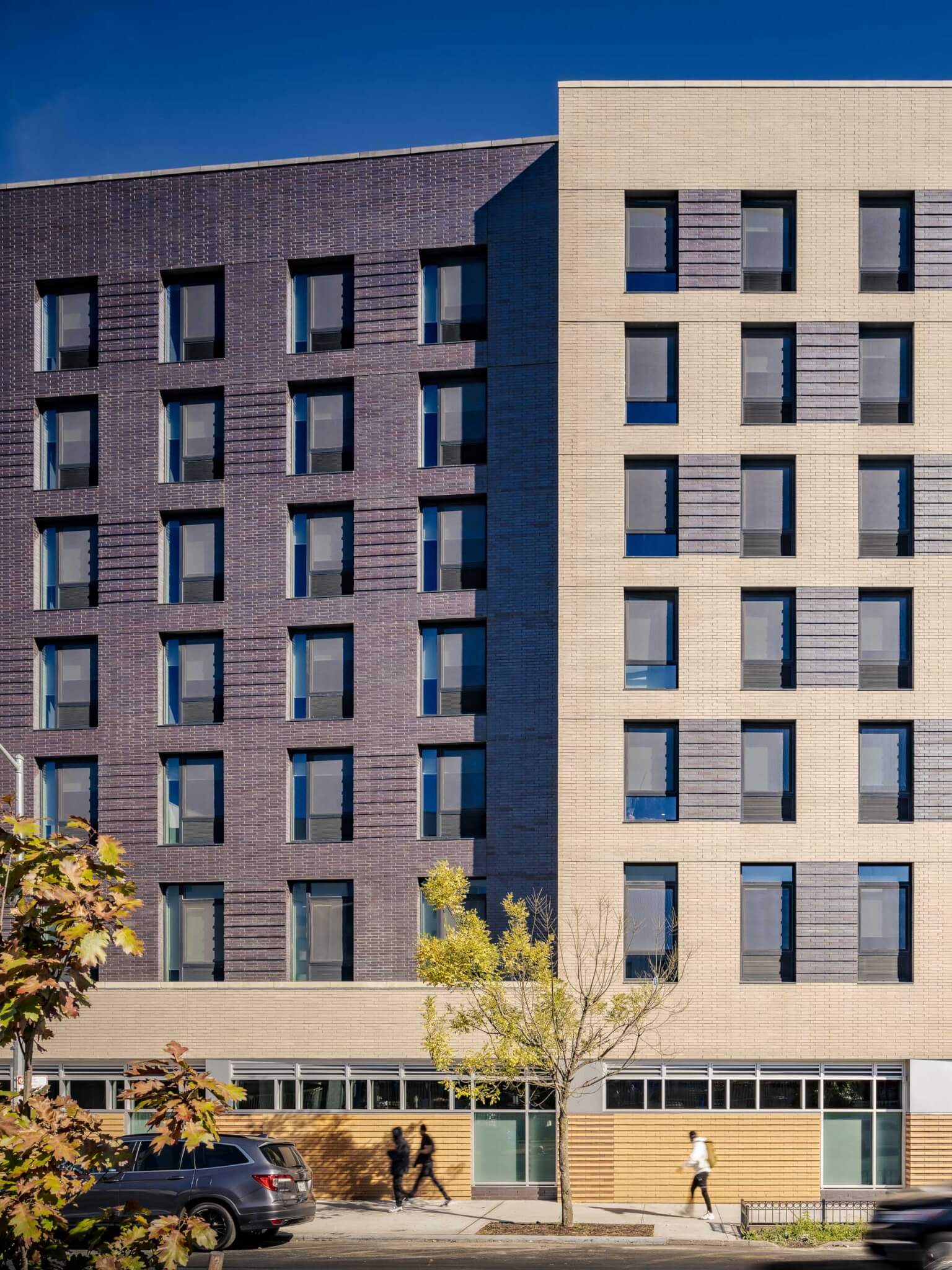
The building’s configuration has separate programs and volumes but is united under one roof, so to speak. The nonprofits, which each own a section in a condo organization, include The Bridge, a 70-year-old supportive housing organization that owns and operates 27 buildings in the city, which house over 1,600 people with mental and/or substance-abuse issues; GMDC, a local manufacturing developer that owns and manages six multi-tenant buildings, primarily in Brooklyn and Queens, for a total 700,000 square feet; and space for a still-to-be-determined community use. Mega Development, which has extensive experience in housing, was the codeveloper and contractor.
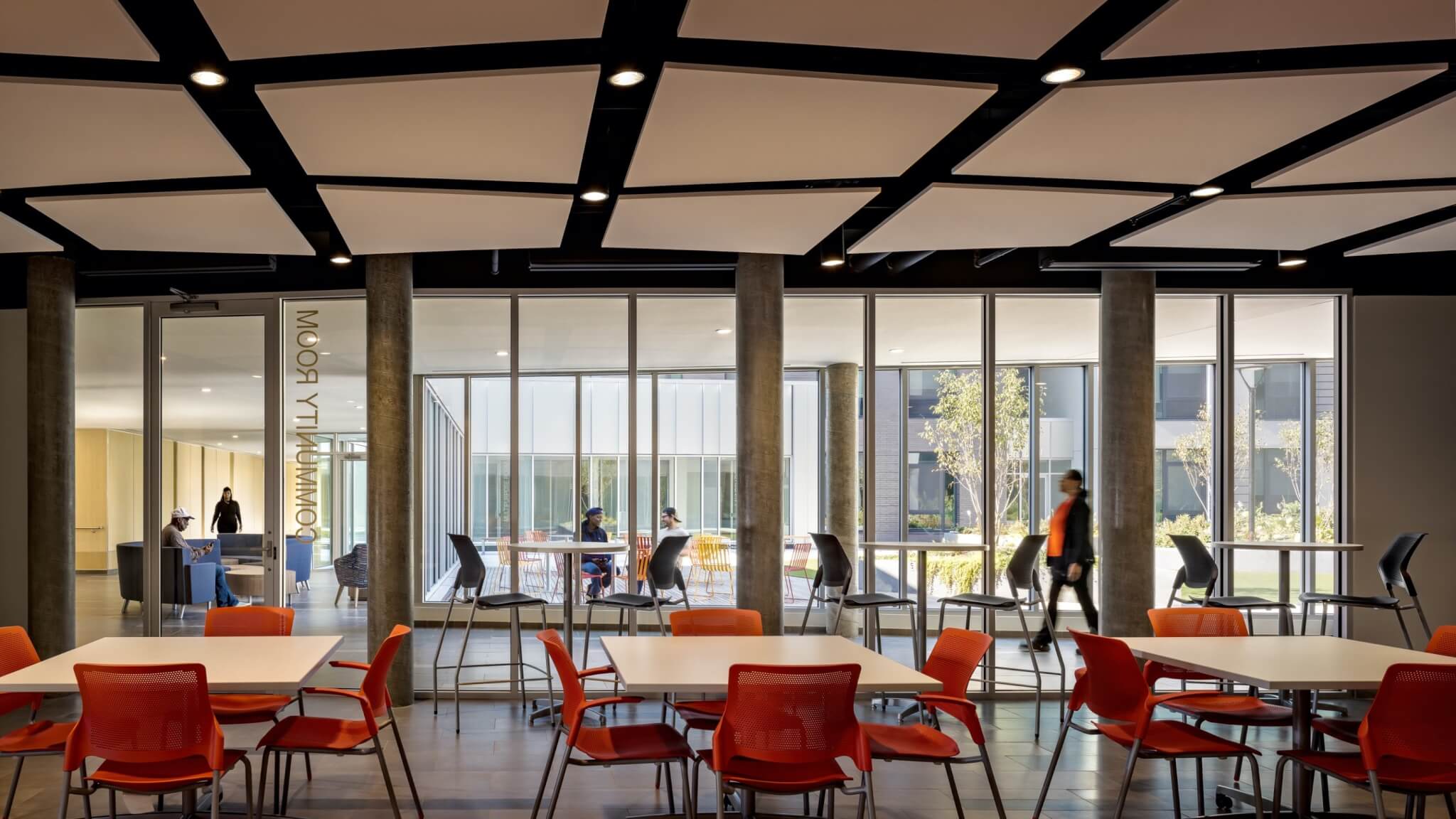
The building itself is an essay in simplicity, with massing that follows the programmatic separations. Two parallel vertical volumes, each with a slight kink, include the housing units and are reached by a double-height, light-filled entrance from which stairs lead up to the second floor. There, a glass-clad space faces the courtyard garden above the podium; The Bridge’s offices and a generous lobby filled with seating are here. Further common spaces and activity rooms, which offer shared computers, laundry, and classrooms, surround the lobby.
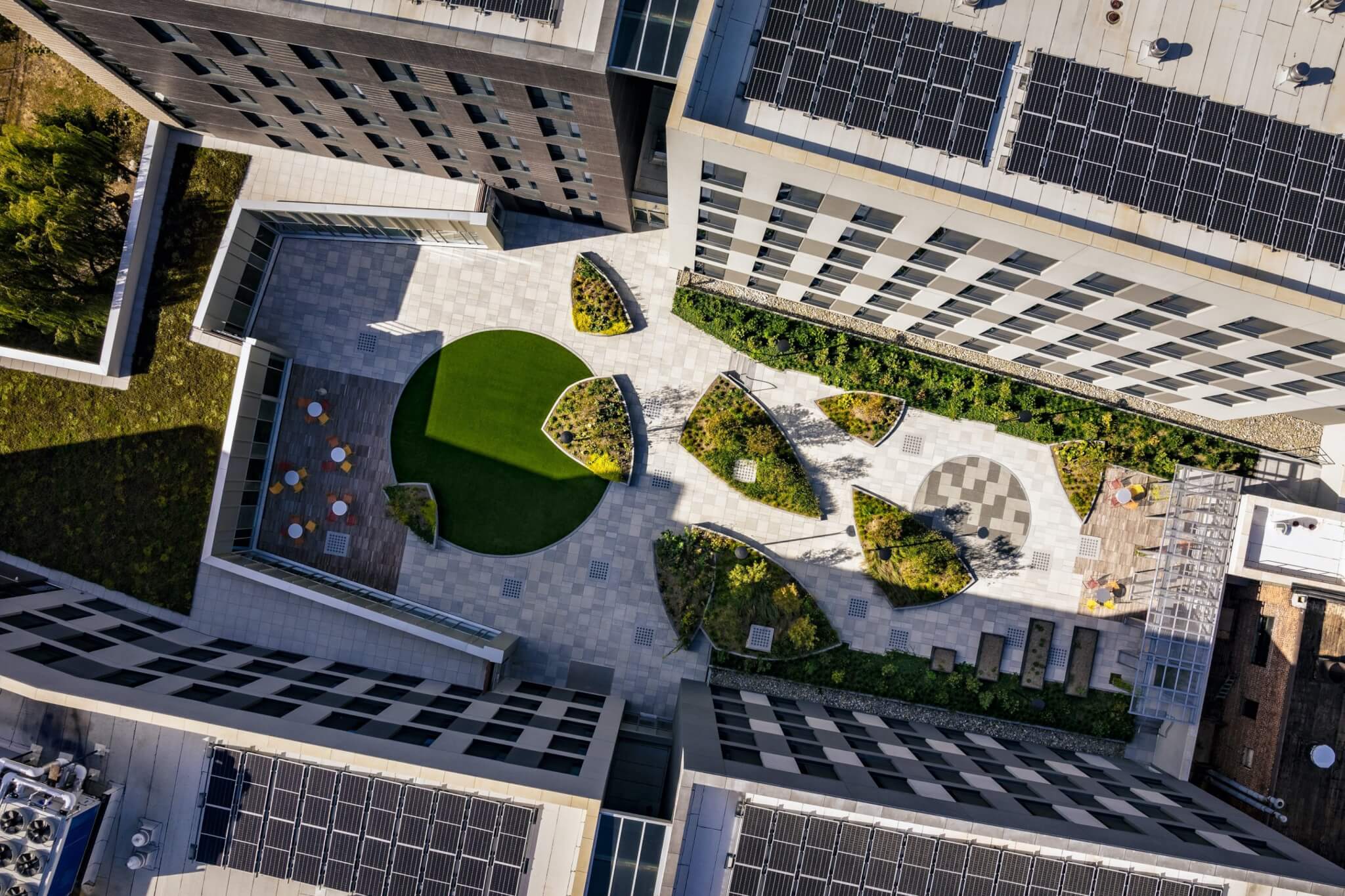
Between the two vertical residential volumes, a 14,000-square-foot landscaped courtyard creates a common outdoor space above the light industrial space at ground level. The arrangement is similar to ideas explored by NYU student researchers for my 2014 project on this same topic of mixed-use urban buildings.
GMDC operates the 39,000-square-foot rental industrial space with 12 workshops between 1,200 and 6,000 square feet in size, reserved for local start-ups, including furniture, cabinet, and plaster companies that could employ local residents. The facade of each unit joins up to make a long ribbon with a street-facing entrance and a band of clerestory windows that allow light without direct views. These are not operable, which is the first time GMDC tenants cannot open windows and must instead rely on air-conditioning, for better or worse. The exterior brickwork is a variegated orange/yellow at the base, and a large loading dock provides easy access to the industrial spaces.
The residential blocks feature punched-window openings and are clad in charcoal and beige brick. They hold 174 apartments for low-income residents and homeless veterans, including 87 affordable units, some large enough for families, and offer supportive social services from The Bridge. The team worked with the adjacent community garden to place windows on the normally blank party wall to enliven the facade. The roof has a 120 kilowatt solar array installed that will power part of the building. Both the light-industrial spaces and the residential units are fully occupied.
The building and environmental code hurdles were multifold, as the site required a major zoning change and the project presented an unusual occupancy mix for New York. There were delays due to COVID-19 and numerous public meetings, including scrutiny by the NYC Department of Environmental Protection. Due to the zoning change, the project went through a Uniform Land Use Review Procedure (ULURP) process for a text amendment that changed the zoning from R-6 (residential up to 6 stories) to M1-4 (R6A and R7A) and is also a new special mixed-use district (MX-19) in a mandatory inclusionary housing area. The team highlighted the new potential for the coexistence of living and working given the lack of toxic output in today’s clean and lean production lines, especially in small workshop spaces. To appease the community and regulators, the programs were physically separated from one another by using insulation to limit noise and vibration from the ground-level shops that could reach the residences. Additionally, vapor barriers form a protective membrane between the offices and the second-floor apartments to safeguard the tenants from any chemical processes.
While the people who live in the apartments above won’t necessarily roll out of bed to work in the spaces below, the idea of a vibrant mixed-use space that is affordable for both residents and entrepreneurs is a hopeful sign for future urbanism. Living above the store, so to speak, has once again become a way to support a dynamic neighborhood. I hope Jane Jacobs would approve.
Nina Rappaport is an urbanist, architectural critic, and educator at Kean University’s School of Public Architecture and is publications director at the Yale School of Architecture. She is also director of the think tank/consultancy Vertical Urban Factory.
→ Continue reading at The Architect's Newspaper

