
Lars Lerup died on November 5, 2025. He was an architect, author, theorist, educator, and dean who was best known for his academic leadership at UC Berkeley and Rice University. He is survived by his wife, Eva, and their son, Darius.
Lerup grew up in Växjö, Sweden. After earning initial degree in engineering in Sweden, he came to the U.S. in the 1960s to study at the University of California, Berkeley and then the Harvard Graduate School of Design. Like many European transplants, Lerup was transfixed by the vastness of United States as seen on cross-country road trips, long vistas he had previously only associated with the North Sea, according to his introduction in his 2011 book One Million Acres & No Zoning. Lerup landed in Berkeley during the height of the “student revolution” and worked for Claude Oakland, Joseph Eichler’s last architect. Later, he returned to teach at the university.
Lerup focused his design work on the scale of the single-family home, “the home, that during the twentieth century has been the most prominent aspiration of my class,” he wrote in the introduction to Villa Prima Facie, his 1978 contribution to Pamphlet Architecture, only the third in the long-running series. In this volume he explored a series of walls—soft, dry, hot, hard, and wet—set in sequence under two roof forms, one Palladian and the other a greenhouse. Lerup had a distinct, cartoony style of drawing (as seen on a 2017 cover of Texas Architect in support of a text coauthored with Scott Colman) that often illustrated his ideas.
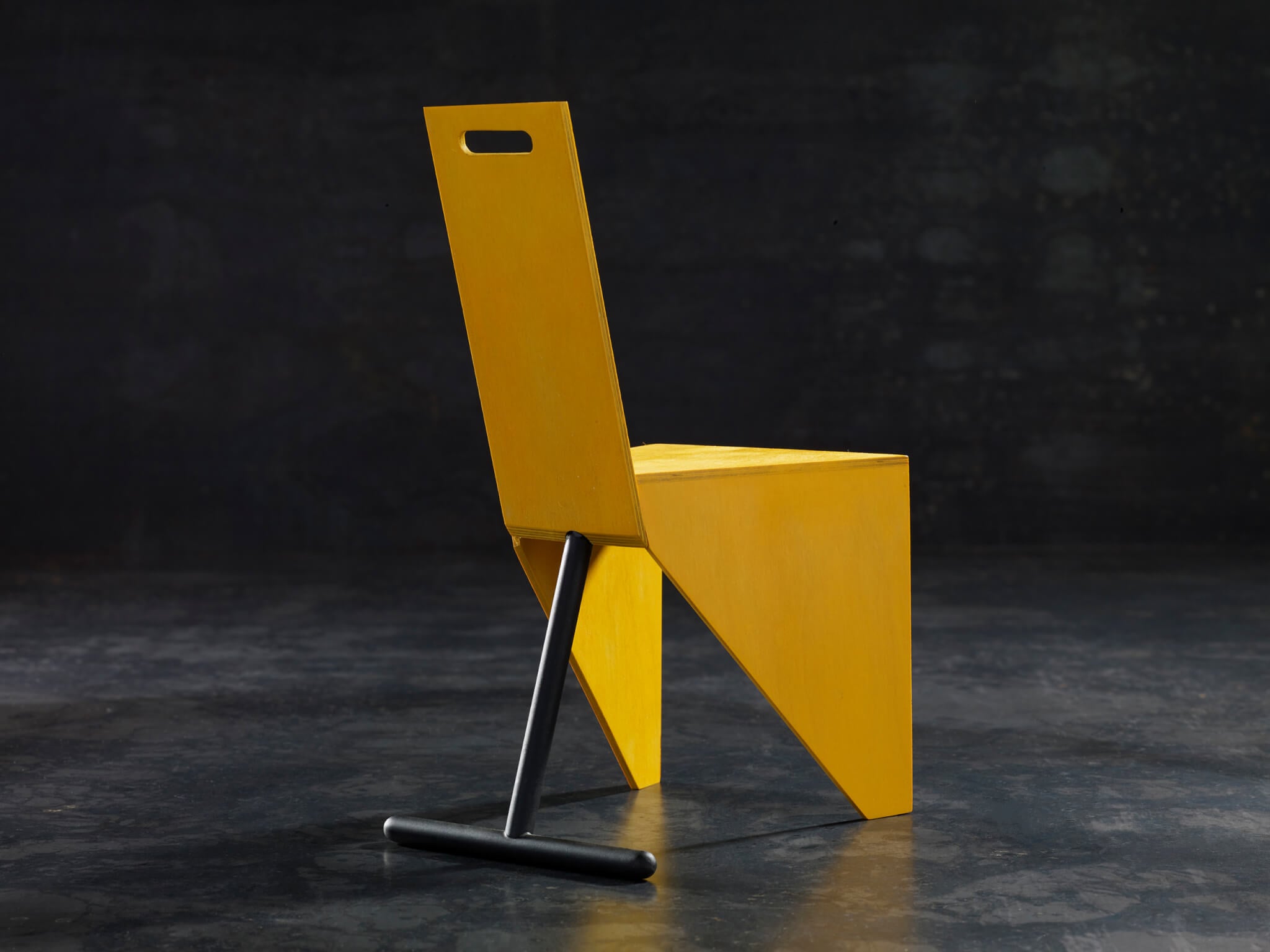
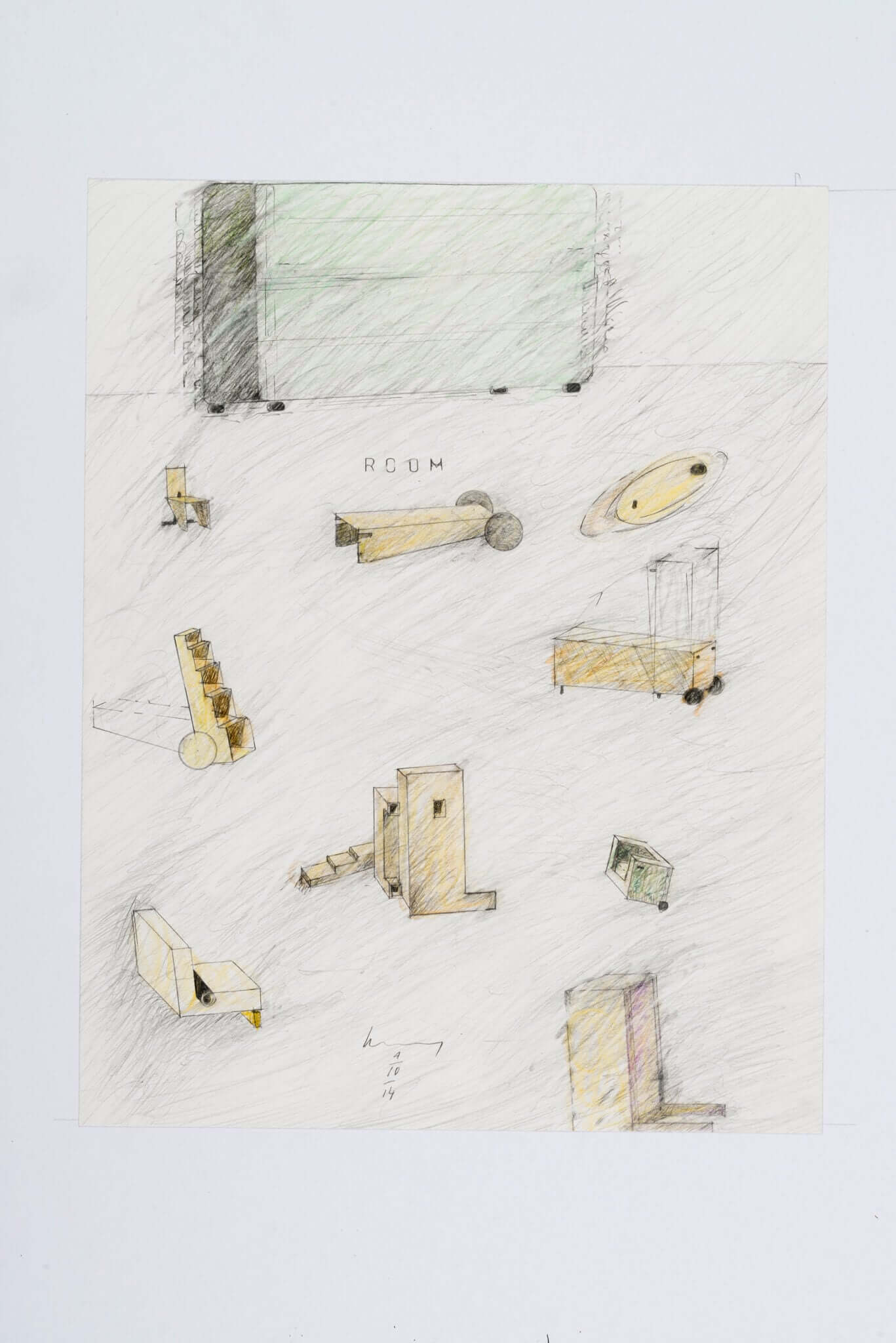
Lerup also designed objects at the scale of furniture; the Menil Collection hosted a show of them in 1999, and Lerup’s 2022 book The Life and Death of Objects explored the author’s “honesty and empathy for objects that are often ignored or discarded by our volatile consumerist culture,” as Carlos Jiménez wrote for AN in 2022.
An obsession with the psychology of domestic architecture was a warm-up for Lerup’s tenure in Houston, where he leaned into his appreciation for American suburbia. While his own design exercises skewed small-scale, his writing was consistently focused on urban-scale issues and studies. His essay “Stim and Dross,” published in Assemblage in 1994, was influential—perhaps “the best idea he ever had,” as Aaron Betsky put it. Beyond its William Gibson–inflected dialectic reading of the city split into attention-grabbing events (“optic pouches”) and background noise, it was littered with tasty linguistic morsels, like the idea of Houston’s “zoohemic canopy,” which references its tree-shaded neighborhoods that, in his sketches, hover in front of downtown’s skyline.
Lerup’s subsequent writings about cities were published in After the City (2000), One Million Acres & No Zoning (2011), and The Continuous City (2017). The last title was designed by Ian Searcy, AN’s art director.

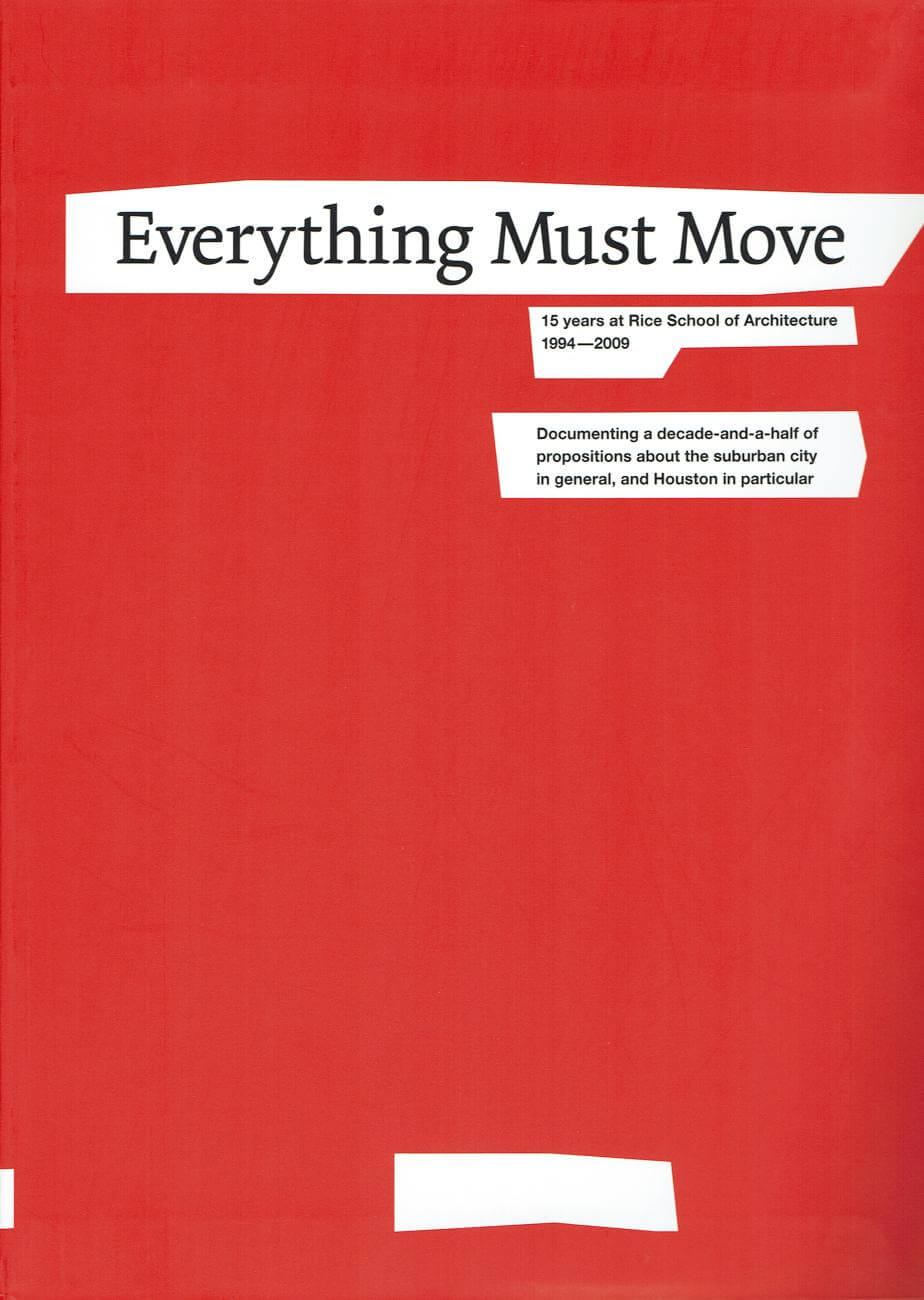
As an educator and administrator, Lerup focused his school’s energy on the conceptual potential of Houston’s sprawling ecology, a mix of both “everyday urbanism” and data-driven visualization that would both become major movements in academic circles decades later. Countless studios and thesis projects delved into the region’s forms, from its bayous to its mixed-use, no-zoning formal lawlessness. “The city,” in all its interdisciplinary glory, was the site and scale of this architect’s ambition. And motley Houston was for a time the apple of Lerup’s eye, as his adroit phraseology gave us new ways of reading its (dis)contents. The collective work of the school during Lerup’s 15 years as dean, which included guest instructors like Bruce Mau and Sanford Kwinter and a revolving door of talented faculty, was compiled in Everything Must Move, edited by Luke Bulman and Jessica Young.
Personal Notes
Sarah Whiting was the dean when I arrived at Rice as a graduate student, but Lerup was still teaching seminars. He was feisty, provocative, spirited, even cantankerous; a colleague recalled him making bad jokes and encouraging Chinese students to improve their English.
Still, Lerup led the charge to see the built environment as alive, teeming with curiosity and possibility. Much like Robert Venturi and Denise Scott Brown, he destigmatized close observation of American development long ignored—or even derided—by the architectural establishment. A storage facility could be just as interesting as a megachurch, washateria, or the Astrodome. Curt Gambetta, who earned his MArch at Rice, recalled how under Lerup, “every house, however ordinary, was a world and an ecology and a context, a fuzzy, messy, beautiful thing. For a suburban kid like myself, this was a big deal.”
When I began working as the editor of Cite: The Architecture and Design Review of Houston, Lerup was encouraging via email and over lunch. Later, he filed one review for AN: In 2023, he wrote about More City than Water: A Houston Flood Atlas. Musing on flood-porn images of floating houses divorced from foundations, he wrote that “everything has become unmoored.”
This idea was a consistent refrain for Lerup. As listed in seven aphorisms that conclude Everything Must Move, he was interested in space as “the subject-matter through which architecture can begin to track the multiplicitous forces which configure the contemporary built environment,” not form which “has become the refuge of the architectural scoundrel, whose [sic] seeks to hide in it from the forces which are rapidly hunting his discipline down.” Ultimately, he was after a “performative understanding of the built environment as a dance of matters, forces, ideas, things, economies, subjects.”
Such an ambulatory idea tracks for Lerup, a restless, eloquent intellectual who himself had become unstuck and made his way in the mirror-walled funhouse of America.
Tributes From Colleagues
Igor Marjanović, William Ward Watkin Dean and professor of the Rice School of Architecture, told AN:
I have been so fortunate to witness firsthand Lars Lerup’s unflagging energy, curiosity, and bounty—all of which he extended to me so generously as a “fellow immigrant” (as he used to say). An accomplished academic and administrator, he was also a prolific author and draftsman, trying to bring a sense of visual order to Houston and other contemporary cities. He pursued these very topics as dean of the Rice School of Architecture (1993–2009), building a rich array of academic programs and events around one of the key theoretical preoccupations of that era—the metropolitan project of architecture. This project resonated back then, but it’s timely today, too, as we grapple with the politicization urban form and ecological issues on a global scale.
Sarah Whiting, dean and Josep Lluís Sert Professor of Architecture at the Harvard Graduate School of Design, followed Lerup as dean at Rice Architecture from 2009 until 2019. She commented:
It’s hard to believe that Lars is gone—the Swede who characterized Houston more provocatively and productively than any Texan ever has, he consistently surprised with his observations that always found potential in the gritty realities of his adopted city. With his wry smile, piercing perceptions, and perpetual prodding, Lars gave one of the smallest schools in the country a big and lasting urban footprint. He will be missed.
Carlos Jiménez, a Houston-based architect and a professor at Rice School of Architecture, shared this remembrance with AN:
I am deeply saddened by the death of Lars Lerup, loyal friend and colleague that he was to me and to so many others. I now recall on first meeting him in the early 1990s, the full display of his inimitable Swedish charm riding on the speed and energy of his mind. He also warned me to not be fooled by his Scandinavian looks, for inside him flourished a Latino heart. I laughed then but was soon to discover the depths of his passion for so many things Latin, from literature, cities, customs, colors, rituals, courtyards, songs, you name it. Such was the beginning of our mutually enriching adventures in life and academic matters, too many to summarize. Lars was not only essential to my academic life, but to those of many other colleagues. He was a vigilant guardian of the academy’s central mission: Always question the condition of things. Lars loved to live well and fully. Yet also he felt ethically compelled not to sacrifice his skepticism. He yearned for the truths of knowledge and friendship. His appetite for observation was a search for truth itself, as his curiosity was boundless. Fueling his inclination to provoke was the passion that drove him to celebrate his own achievements and shortcomings, as well as those of others.
Book designer Luke Bulman earned his MArch at Rice and stayed on to design publications and posters and teach. He said his trajectory was shaped by Lerup’s “interventions at many stages of my education and career.” Bulman told AN:
At Rice School of Architecture in the 1990s and early ’00s I was first a student and then a member of the staff and faculty when Lars Lerup was dean. It was a transformative experience to be surrounded by an ever-changing circle of colleagues and visitors to the school (so many!). I began to glimmer an idea of what I wanted my practice to ultimately become: a way of mixing graphic design and architecture. Lars set the stage making that possible, through a program focused on the city as a laboratory and creative engine, but also by supporting our experimentation in graphic design. It was a whole other education, this time on the job. Mistakes were sometimes (often? who can say) made, but Lars made opportunities so we might find new challenges. “Keep going,” he’d say, “there’s so much more to do.” And there is. Godspeed, Lars.
→ Continue reading at The Architect's Newspaper

